Topstone Carbon
vsDiverge
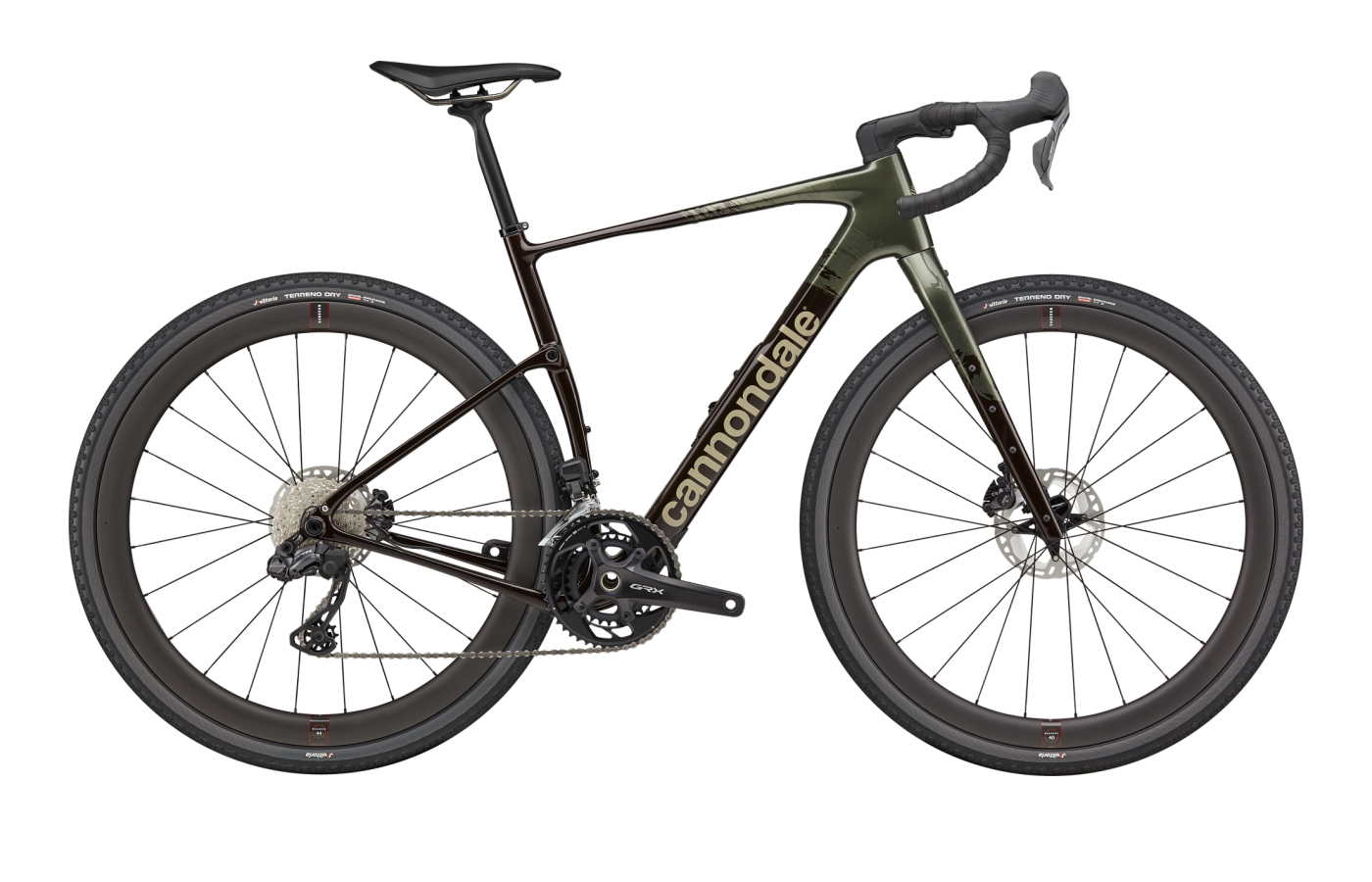
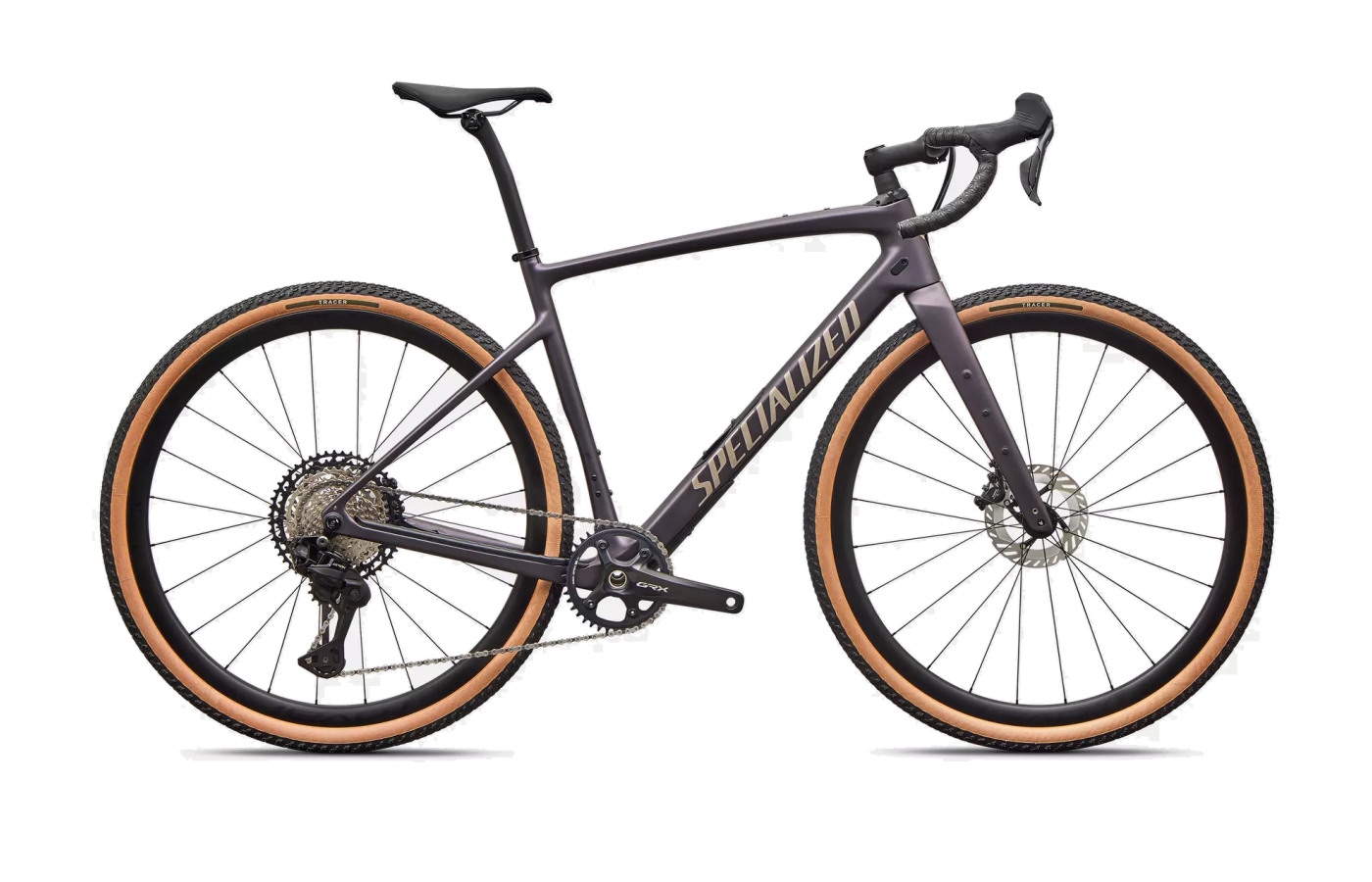
Two views on what gravel suspension should do.
The Topstone Carbon engineers compliance into the rear triangle. The Diverge isolates the rider at the bar. Same goal, very different bikes.
Topstone Carbon
- Maintenance-free rear compliance — the Kingpin pivot is bushing-driven, no shock to service, just works.
- Optional Lefty Oliver front suspension — 40 mm of damped travel, stiff, with a 100-hour service interval.
- Reserve carbon wheels on most carbon builds — Reserve's lifetime warranty is best-in-class.
- Lefty fork forks limit you to a proprietary front hub and 47 mm tire max.
- Slight pedaling 'bob' on smooth tarmac out-of-the-saddle, per The Radavist.
Diverge
- Future Shock 3.0 at the bar — 20 mm of damped travel where road buzz reaches your hands, and now serviceable on a four-year interval.
- 50 mm tire clearance with a rigid fork — or a 2.2-inch MTB tire if you really want to push it.
- SWAT 4.0 internal storage on every model — including the alloy builds, which is unusual.
- Pedal strikes are common with the stock 45 mm tires — most reviewers swap to 50 mm immediately.
- Long wheelbase and 85 mm BB drop feel less precise in tight, slow-speed switchbacks.
Editor’s analysis
Both brands agree the rider needs help over rough gravel. They just completely disagree on where to put the help.
Cannondale's Topstone Carbon and Specialized's Diverge are the two best-known production gravel bikes that take suspension seriously — and they take it in opposite directions. Cannondale builds compliance into the bike: the Kingpin pivot at the seat tube delivers up to 30 mm of rear-wheel flex through a one-bolt assembly that needs essentially no servicing. Specialized leaves the bike rigid and suspends the rider, with 20 mm of damped vertical travel built into the headset via the Future Shock 3.0 system, plus an 18 mm-deflecting Roval Terra carbon seatpost.
On geometry, the Diverge has gone further down the modern-MTB-influenced path. At size 54 it runs a 71-degree head tube, a 430 mm chainstay, and an 85 mm bottom bracket drop — long, slack, and low. The Topstone Carbon at size 54 is more conservative: 70.7-degree head tube, 420 mm chainstays, 1026 mm wheelbase against the Diverge's 1041 mm. Reach is 9 mm shorter, stack 13 mm taller. The Diverge wants to be tucked and stable at speed; the Topstone wants you upright and central for ten-hour days.
Tire clearance tells the same story. The Diverge frame officially clears 50 mm rubber (or a 2.2-inch MTB tire with ISO-spec 4 mm clearance) — the most generous in this segment of the market. The Topstone Carbon frame clears 52 mm with the rigid fork, but the optional Lefty Oliver suspension fork caps you at 47 mm, a tradeoff multiple reviewers (The Radavist, Velo) flagged as the Lefty's biggest knock against itself.
Where they actually compete is the high-end gravel race / endurance buyer who wants real off-road capability without giving up drop bars. The Diverge is the freight train — long, low, planted, designed around big tires. The Topstone is the chaos machine — lighter steering, taller stack, optional front-and-rear suspension if you want to push the envelope. Pick the Diverge if your event has a finish line. Pick the Topstone if it has a route description with the word 'route-finding' in it.
Where the builds differ.
Comparing our editor's-pick builds side-by-side. Winners highlighted row-by-row — lower price and weight, and the better-spec component, each mark a point.
Build variants & pricing
The Topstone Carbon line spans $1,799 to $7,999 across 13 builds; the Diverge runs $2,099 to $10,499 across 8. Both reach down to alloy and up to flagship-electronic.
Prices are current US MSRP. The Topstone's most distinctive option — the Lefty Oliver suspension fork — is only on three of the 13 builds; the rest use a rigid Topstone Carbon fork. Specialized's Future Shock is fitted to every Diverge, but only the 4 Pro LTD ships with the on-the-fly-adjustable 3.3 version; mid-range builds get the non-adjustable 3.2.
How they fit, how they steer.
Both at size 54. The Diverge sits 13 mm taller in stack, 9 mm longer in reach, with a 0.3-degree steeper head tube, 10 mm longer chainstays, and a 15 mm longer wheelbase — it's the longer, slacker-feeling bike on paper. The Topstone is the more upright, more central platform.
Which size should I buy?
Both lineups overlap closely in the middle sizes. The Topstone Carbon offers a tighter six-size 47–61 cm range; the Diverge runs 49–61 cm but stretches reach further on the larger sizes.
→These are starting points. Flexibility, riding style, and preferred position all shift the answer — if you’re between sizes, a professional fit beats a chart.
What the magazines said.
Published reviews from trusted cycling outlets. Click through for the full write-up.
Which one should you buy?
If you want the most planted, biggest-tire gravel bike for racing and long off-road days, get the Diverge. If you want active suspension front and rear on routes that flirt with singletrack, get the Topstone Carbon.
Topstone Carbon
If your gravel rides spill into mild singletrack and you want compliance the moment the surface goes bad — front and rear, mechanically, with no shock to fuss over — the Topstone Carbon is the bike. Best paired with the Lefty fork if your routes earn it.
Diverge
If you want maximum tire volume, a low-and-long platform that holds its line through loose corners at speed, and the best in-frame storage in the segment, the Diverge is hard to beat. Just budget for 50 mm tires day one.
Questions buyers actually ask.
Short answers to the things we get emailed about most often.
01What's the maximum tire clearance on each?
Topstone Carbon: the frame officially clears 52 mm tires with the rigid Topstone Carbon fork, but if you spec the Lefty Oliver suspension fork you're capped at 47 mm. Cannondale also notes that some swapped rigid forks open the front to 56 mm.
Diverge 4: 50 mm with the official 7–8 mm of mud clearance, or a 2.2-inch MTB tire with ISO-standard 4 mm. The frame is genuinely designed around the larger numbers — most reviewers consider the stock 45 mm tires undergunned and swap to 50 mm immediately.
02Which suspension system is more effective?
They solve different problems. Cannondale's Kingpin delivers up to 30 mm of vertical flex at the saddle — it's a rear-wheel-tracking system that helps loose climbs and rough descents. Add the optional Lefty Oliver for 40 mm of damped front travel, and you get a true dual-suspension drop-bar bike.
Specialized's Future Shock 3.0 sits in the headset and gives you 20 mm of damped travel right where road buzz reaches your hands. It's superb at killing high-frequency chatter and reducing hand fatigue but does nothing for the rear wheel; the Roval Terra carbon seatpost picks up some of that slack with 18 mm of deflection.
For smooth-but-buzzy gravel, Future Shock wins. For chunky, technical, momentum-killing terrain, the Topstone's mechanical-grip combo is the more capable system.
03How do they compare on weight?
Cannondale doesn't publish per-build weights, but reviewers measured the Lefty-equipped builds at roughly 9.8–9.9 kg, and the rigid-fork Topstone Carbon 3 GRX at 10.89 kg with pedals and a bag.
Specialized publishes weights: the Diverge 4 Pro LTD is 8.01 kg, the 4 Pro 8.39 kg, and the GRX Di2 4 Expert 8.9 kg. So at any given build tier the Diverge is meaningfully lighter — call it roughly 0.7–1.0 kg — even before you add the Lefty fork to the Topstone.
04Do both have internal frame storage?
Yes — and this is one of the few areas where the comparison is clean. Specialized's SWAT 4.0 door is on every Diverge 4 (carbon and alloy), with a larger opening than previous versions and a notably secure, rattle-free closure. Cannondale's StashPort sits in the down tube on every Topstone Carbon. Reviewers (Velo, multiple YouTube reviews) found the StashPort's effective volume reduced by an internal block-off plate, and generally rate the SWAT door as the friendlier, larger-capacity option.
05Is the Lefty fork worth the proprietary headache?
Depends on your routes. The Lefty Oliver gives you 40 mm of stiff, damped front travel with a 100-hour service interval — twice the typical gravel suspension fork. On chunky, washboarded, or technical descents, multiple reviewers (Bike Rumor, Velo) said it transformed the bike's confidence at speed.
The costs: a proprietary front hub means standard wheels won't fit, you must remove the brake caliper to pull the front wheel, and you're capped at 47 mm tires — versus 52 mm on the rigid frame.
If you swap wheels often, travel with the bike, or want the biggest possible tires, skip it. If your rides genuinely earn it, the Lefty is the closest thing to a drop-bar trail fork on the market.
06Which is the better gravel race bike?
For most US gravel race courses — long, fast, mostly graded surfaces — the Diverge 4 is the more obvious pick. It's lighter, has a more stable high-speed platform thanks to the longer wheelbase and 85 mm BB drop, and clears the wider tires racers actually want. Velo even argued the Topstone Lefty is Cannondale's 'real gravel race bike,' but for a course like Unbound or BWR, the Diverge's geometry and tire room are a better fit.
For a route with significant rough or technical terrain — think SBT GRVL's worst sections, or any race with serious singletrack — the Topstone with the Lefty fork starts pulling ahead.
07How much does the Future Shock cost to upgrade?
Specialized lists a $450 upgrade path from Future Shock 3.2 to the on-the-fly-adjustable 3.3, per Velo's coverage of the launch. That's a notable extra given that the 4 Expert build at $6,499 ships with the non-adjustable 3.2 — a recurring complaint in reviews. The 3.3 with its dial-from-locked-to-open damping is generally seen as the version most riders want.
08Are the bottom-end builds worth it?
Diverge 4 Sport Alloy ($2,099) and 4 Comp Alloy ($2,699) are notable for being the first alloy gravel bikes in the segment with downtube storage — they inherit the SWAT door and Future Shock from the carbon line. The catch: alloy builds get the spring-only, undamped Future Shock 3.1, which Granfondo described as 'noticeably less composed' than the hydraulic versions.
Topstone Carbon 3 L ($1,799) and Carbon 4 ($2,349) are the cheapest carbon-frame gravel bikes from a major brand at this price — the same Topstone Carbon frame, Kingpin rear, and StashPort, just with mechanical Shimano GRX. If you want a carbon frame and don't need a flagship spec, the Topstone's entry point is hard to match.
Similar bikes
If your priorities don’t map cleanly onto either of these, one of these adjacent bikes probably fits better.
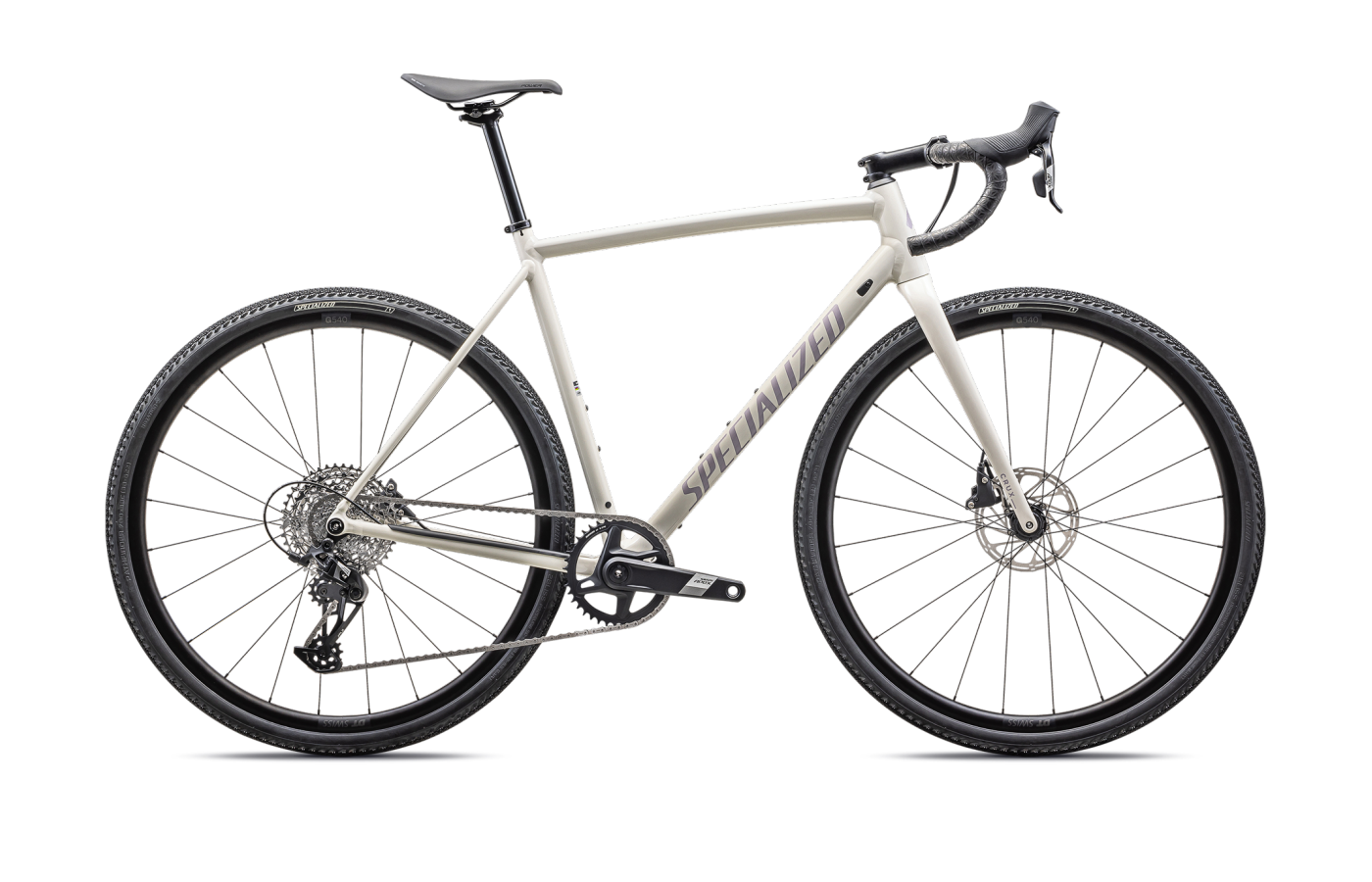
Crux
Specialized's other gravel bike — a stripped-down ultralight without Future Shock, SWAT, or any extra grams. Pick it if you want pure acceleration over comfort and storage.
Compare →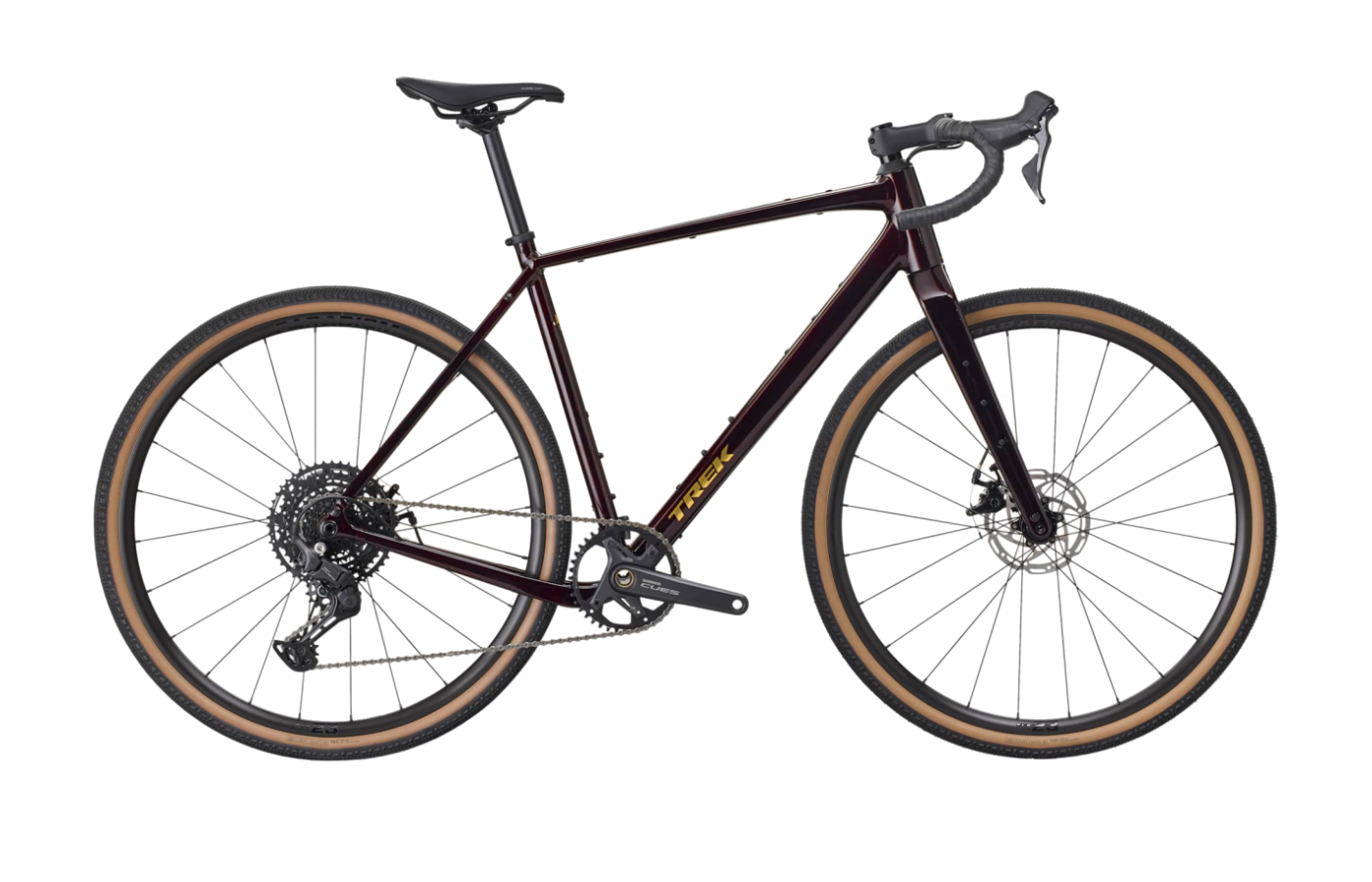
Checkpoint
Trek's stable, storage-equipped take on the same brief, using the IsoSpeed decoupler at the seat tube for rear comfort instead of a pivot. Closest direct philosophical rival to the Diverge.
Compare →Grizl
Canyon's adventure-leaning gravel bike — even bigger tire clearance than the Diverge, no integrated suspension, and direct-to-consumer pricing that undercuts both. The catch is no dealer network.
Compare →