Grail
vsDiverge
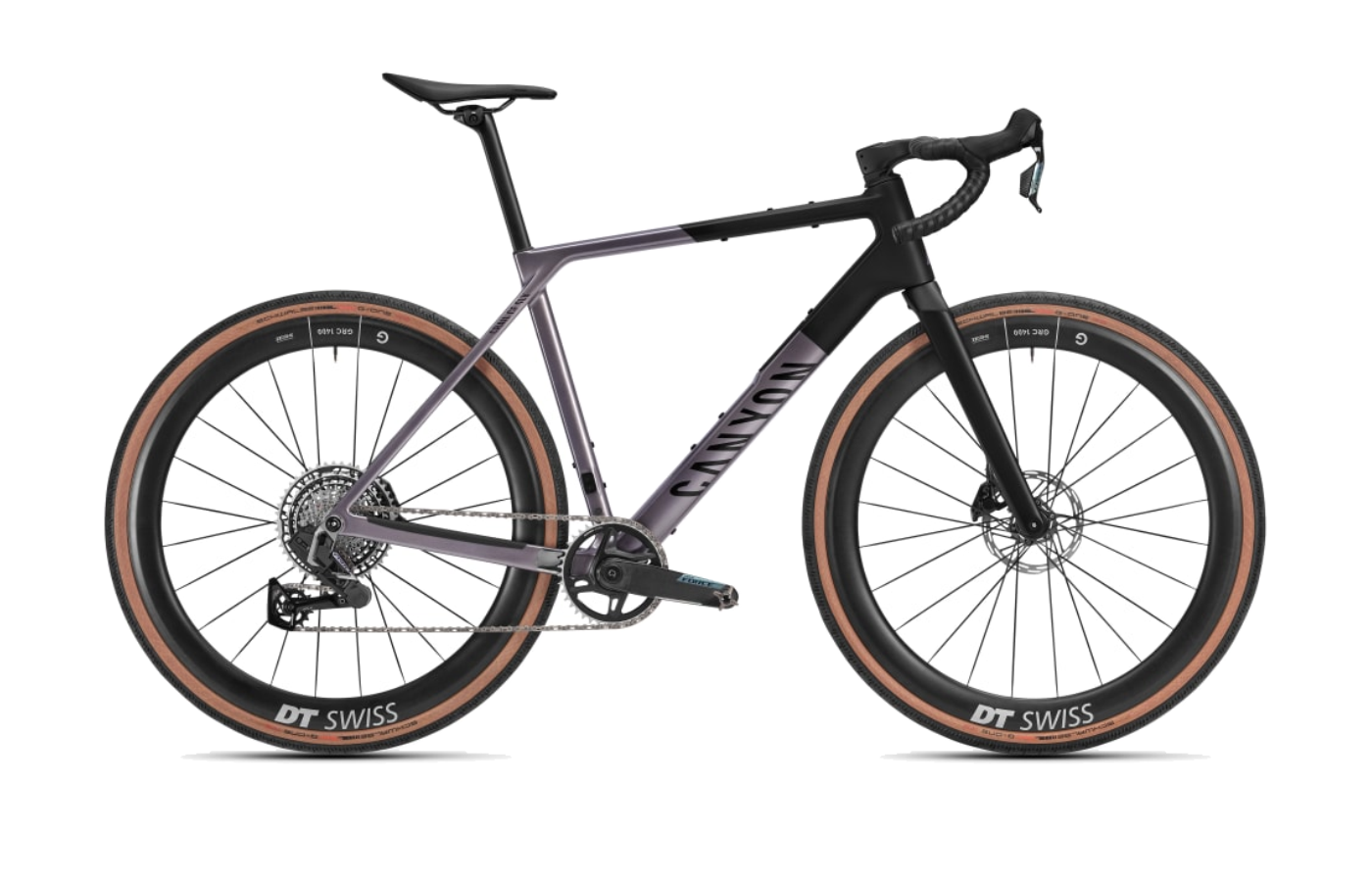
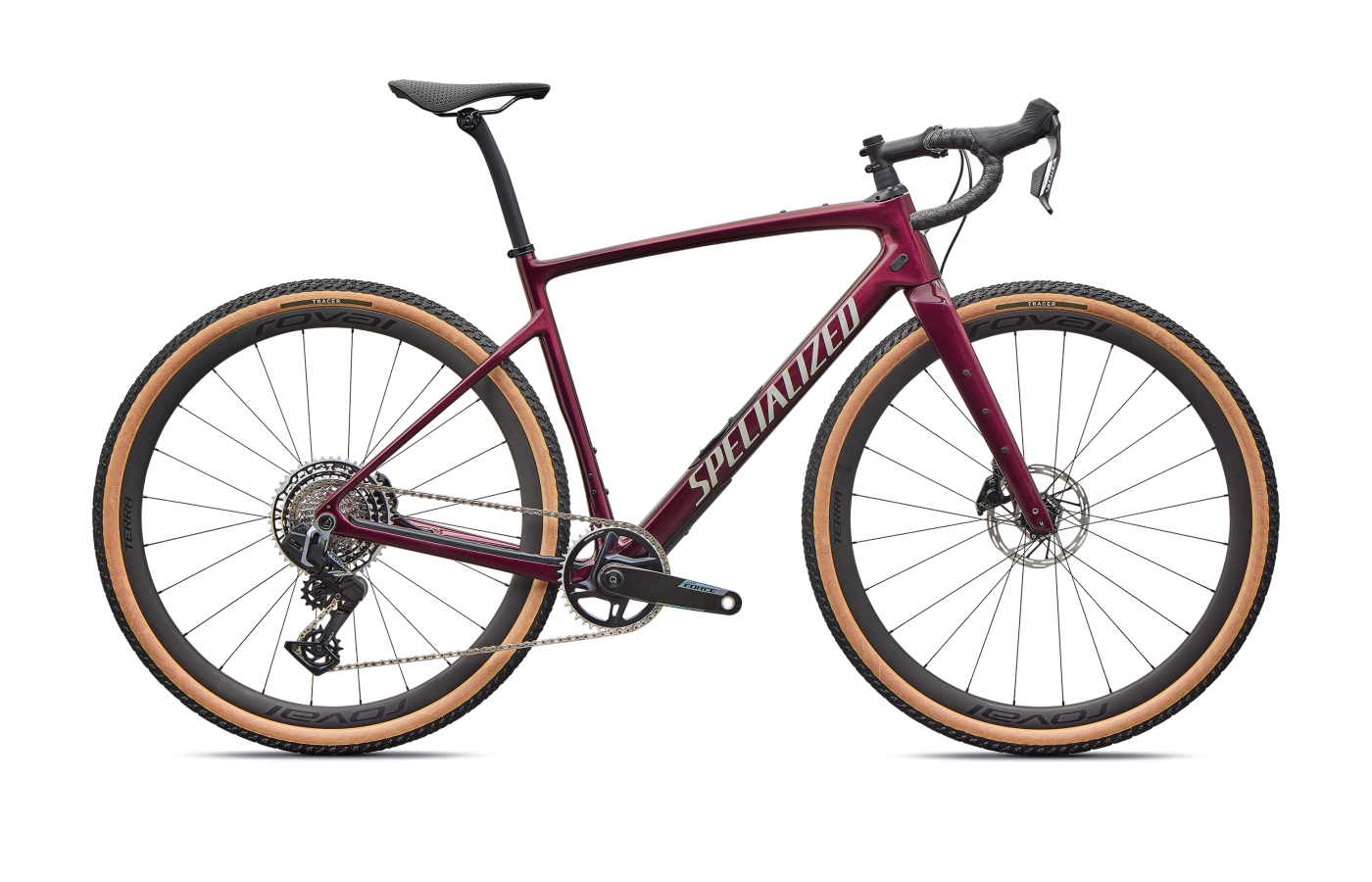
Two gravel bikes pulling in opposite directions.
The Grail is a race-first aero machine with 42 mm clearance. The Diverge is a drop-bar trail bike with Future Shock and room for 2.2-inch rubber.
Grail
- Aero-tuned frame — Canyon claims 9.1 W saved at 45 km/h vs. the previous Grail, with integrated cockpit to match.
- Class-leading value — carbon wheels and Force XPLR AXS for around $6k, a tier the competition charges $8k+ for.
- Fast, stable handling — 71.5° HTA and long wheelbase make it composed at race speeds on smoother gravel.
- 42 mm tire clearance limits it on chunky terrain — reviewers agree the Grizl is the bike if rough is the norm.
- Proprietary Double Drop cockpit locks you into a few bar widths; narrower riders frequently want to swap.
Diverge
- Future Shock 3.0 — 20 mm of front-end travel that reviewers consistently call transformative on rough, rooted terrain.
- 50 mm tire clearance (officially; fits 2.2-inch MTB tires with ISO clearance) — closer to a drop-bar hardtail than a gravel racer.
- SWAT 4.0 downtube storage plus mounts on fork, top tube, and under the BB — a genuine long-haul adventure platform.
- Premium pricing — the tier-matched Force AXS build is roughly $1,900 above the equivalent Grail.
- Stock 45 mm tires mis-match the frame and cause pedal strikes on even mellow trails; most reviewers recommend an immediate tire swap.
Editor’s analysis
This isn't a gravel-bike shootout. It's a referendum on what gravel means to you — smooth, fast, aero — or rough, rugged, and suspended.
On paper both are carbon gravel bikes with 1x drivetrains and Schwalbe or Tracer 40-ish-mm tires. Spend two minutes with the geometry numbers and the brief diverges. The Canyon Grail runs aero tube shapes borrowed from the Ultimate road bike, an integrated Double Drop cockpit, and a 9.1-watt aero claim at 45 km/h. Its seatpost is a D-shape that reviewers describe as notably stiffer than the old VCLS leaf-spring post. This is a bike designed to win Unbound on champagne gravel — and reviewers like BikeRadar and Escape Collective agreed it does.
The Specialized Diverge runs in the opposite direction. Future Shock 3.0 mounts 20 mm of vertical travel under the stem. Tire clearance is 50 mm official (or 2.2-inch MTB with ISO clearance). The bottom bracket drop is a low 85 mm, the chainstays are 430 mm, and the head angle is 71 degrees — all of it tuned to sit the rider in the bike rather than on top. Cycling Weekly called it a freight train on gravel. BikeRadar, Bike Rumor, and Velo all flagged the same wrinkle: the stock 45 mm Tracer tires under-use the frame and cause pedal strikes on even mellow singletrack. Swap to 50 mm tires and the bike starts making sense.
Fit numbers tell the story clearly. Our 173 cm test rider lands on an XS Grail and a size-54 Diverge. Reach is almost identical (385 vs 387 mm), but the Specialized sits 36 mm taller at the stack (556 vs 592 mm). That's more than a stem spacer's worth of difference — it's a different posture. The Grail is long and low and wants you in the drops at 35 km/h. The Diverge is upright and planted and wants you standing on the descents.
Put it this way: the Canyon Grail is the bike you buy to race gravel. The Specialized Diverge is the bike you buy to explore on gravel. There's overlap — both are capable at both — but the center of gravity is genuinely different, and the spec sheets are built around those centers.
Where the builds differ.
Comparing our editor's-pick builds side-by-side. Winners highlighted row-by-row — lower price and weight, and the better-spec component, each mark a point.
Build variants & pricing
The Grail starts at $2,899 and tops out at $6,099. The Diverge spans $2,099 to $10,499 and is the only one here with an alloy option plus the Pro LTD halo.
Prices are current US MSRP. Canyon's direct-to-consumer pricing consistently undercuts Specialized at a given spec tier — at our Force AXS pair, the Diverge 4 Pro runs about $1,900 above the Grail CF SLX 8 AXS. That gap buys you Future Shock, 50 mm tire clearance, and dealer support.
How they fit, how they steer.
Canyon XS vs. Diverge 54 — the fit-picked sizes for a 5'8" rider on each bike. Reach is almost identical (385 vs 387 mm), but the Diverge sits 36 mm taller at the stack and runs a 5 mm longer chainstay. The Grail is long-and-low; the Diverge is upright-and-planted.
Which size should I buy?
Size recommendations based on stack, reach, and effective top tube. The Grail runs taller stack numbers across the range than the Diverge at comparable reach — worth noting if you're between sizes.
→These are starting points. Flexibility, riding style, and preferred position all shift the answer — if you’re between sizes, a professional fit beats a chart.
What the magazines said.
Published reviews from trusted cycling outlets. Click through for the full write-up.
Which one should you buy?
If you're racing gravel and most of your miles are smooth to moderately rough, get the Grail. If you're riding rugged terrain, bikepacking, or treating your gravel bike like a drop-bar trail bike, get the Diverge.
Grail
If your calendar has Unbound, SBT GRVL, or local gravel crits, and your training roads are hard-packed or mildly chunky, the Grail delivers race-tuned aero and exceptional component value. Just know the 42 mm ceiling is a real ceiling — if your routes get genuinely rough, it'll rattle you.
Diverge
If most of your riding looks more like mountain biking on drop bars — chunky jeep track, washboard descents, the occasional singletrack shortcut — the Future Shock and 50 mm clearance will save your body over long days. Budget for an immediate tire swap to 50 mm or 2.2-inch.
Questions buyers actually ask.
Short answers to the things we get emailed about most often.
01Which is faster in a gravel race?
On smooth to moderately rough gravel, the Canyon Grail. Canyon claims 9.1 watts saved at 45 km/h vs. the previous-gen Grail thanks to revised tube shapes and the integrated Double Drop cockpit, and reviewers consistently describe it as explosively fast on the pedals. The frame is stiffer through the bottom bracket, and without 20 mm of Future Shock compressing under you, every watt goes to the rear wheel.
As courses get rougher, the gap narrows. Reviewers at Cycling Weekly and BikeRadar repeatedly call the Diverge a 'freight train' on chunky gravel — the suspension plus big tires let you hold speed where the Grail starts taking a beating.
02What's the maximum tire clearance?
Canyon Grail: 42 mm officially. Reviewers note some owners have fit 45 mm unofficially, but 42 is the number Canyon warranties.
Specialized Diverge: 50 mm officially with 8 mm of mud clearance, or up to 2.2-inch MTB tires with the 4 mm ISO minimum. That's the widest clearance in mainstream gravel and it's not close — the Diverge is a different category of bike once you run 2.2s.
03How different is the fit between the two?
Very different, despite near-identical reach. Our 5'8" default rider lands on a Canyon Grail XS (reach 385 mm, stack 556 mm) and a Specialized Diverge size 54 (reach 387 mm, stack 592 mm).
That 36 mm stack delta is real — it's roughly three big spacers. The Grail puts you long and low for aero. The Diverge sits you up and back for control. If you're coming off a road race bike, the Grail will feel natural. If you're used to a short-travel XC bike, the Diverge will.
04How much of the Diverge's weight and complexity is the Future Shock?
The Future Shock adds a few hundred grams and meaningful complexity in exchange for 20 mm of travel at the bars. Reviewers are split on whether it justifies itself on smoother terrain — BikeRadar's tester didn't notice a huge difference on the 3.2 version; Bike Rumor and Cycling Weekly both found it transformative once terrain got rough.
The top-tier 3.3 adds on-the-fly lockout adjustment (Specialized sells the upgrade kit for $450). The 3.1 on the alloy builds is spring-only, no hydraulic damping — reviewers describe it as noticeably less composed.
05Why do reviewers keep complaining about pedal strikes on the Diverge?
The Diverge's bottom bracket drop is 85 mm — one of the lowest in the gravel category — paired with 172.5 mm cranks on size 54/56 and stock 45 mm tires. That combination results in the pedals sitting low enough that reviewers including BikeRadar, Cycling Weekly, and Velo all reported clipping pedals on mellow terrain. One tester at Cycling Weekly broke his power pedals.
The fix is simple: run 50 mm tires, which the frame was clearly designed around. The geometry was drawn around 50 mm rubber, not 45.
06Can I run 2x on either one?
Canyon Grail: yes — the CF SLX 8 Di2 RS ($5,599) ships with Shimano GRX Di2 2x. Canyon notes the frame clears 1x chainrings up to 50T and 2x setups up to 52/36T with road chainlines.
Specialized Diverge 4: not in any current build. All 2026 Diverge 4 builds are 1x, from the Sport Alloy on CUES up through the Pro LTD on Red XPLR. If you need a 2x gravel setup from Specialized, the Crux is where to look.
07Which one is better value at similar spec?
The Canyon, comfortably. At the SRAM Force AXS tier — the editor's-pick build on each side — the Grail CF SLX 8 AXS runs $6,099 with DT Swiss GRC 1400 carbon wheels and a Quarq power meter. The comparable Diverge 4 Pro runs $7,999 with Roval Terra CL wheels and a Quarq power meter.
That's about $1,900 of platform tax — paying for Future Shock, dealer support, and the much wider tire ceiling. Whether that's worth it depends on how rough your riding actually gets.
08How serviceable are the integrated cockpits?
Canyon Grail: the CP0039 is a one-piece integrated bar/stem; changing length or width means a new cockpit ($400+). The standard 1 1/8" steerer does allow aftermarket swaps, but Canyon's stock bar widths start at 420 mm on XS/S, which multiple reviewers (particularly smaller riders) found too wide.
Specialized Diverge: the Future Stem is a two-piece bar-and-stem with standard interfaces — swapping a bar or stem is a normal shop job. The tradeoff is that Future Shock hardware under the stem means external cable routing, which reviewers find visually dated but mechanically friendly.
Similar bikes
If your priorities don’t map cleanly onto either of these, one of these adjacent bikes probably fits better.
Crux
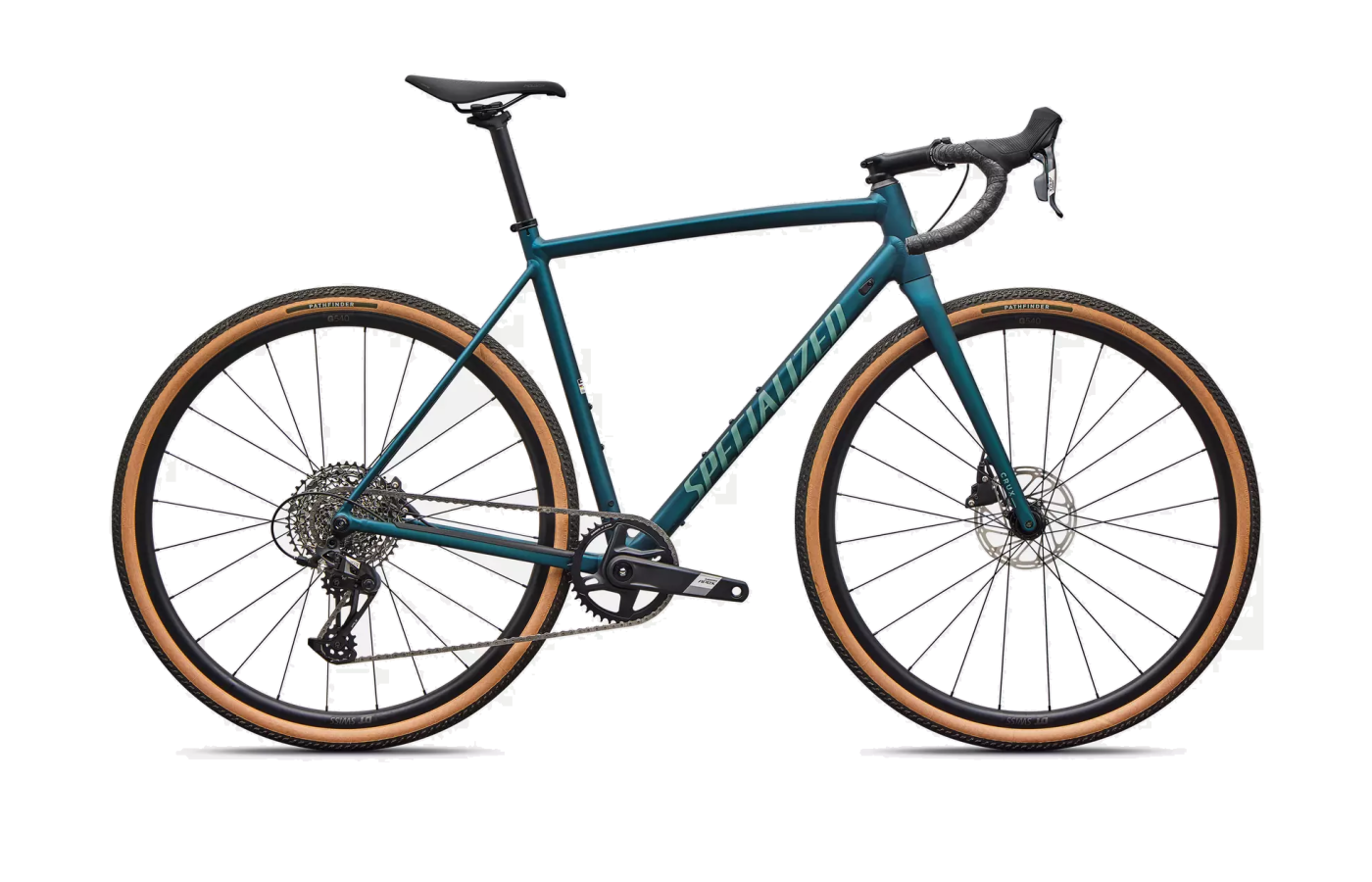
Specialized's answer to the Diverge's weight and complexity — a classical, rigid, featherweight gravel racer that competes with the Grail on speed without the Future Shock overhead. If you like the Specialized dealer network but hate the idea of a 20 mm damper under your stem, this is the pick.
Compare →Grizl
Canyon's adventure-gravel sibling to the Grail. Same direct-to-consumer value, but with more tire clearance, compliance, and mounting points — the bike you'd buy if the Grail's 42 mm ceiling and firm ride feel too race-specific.
Compare →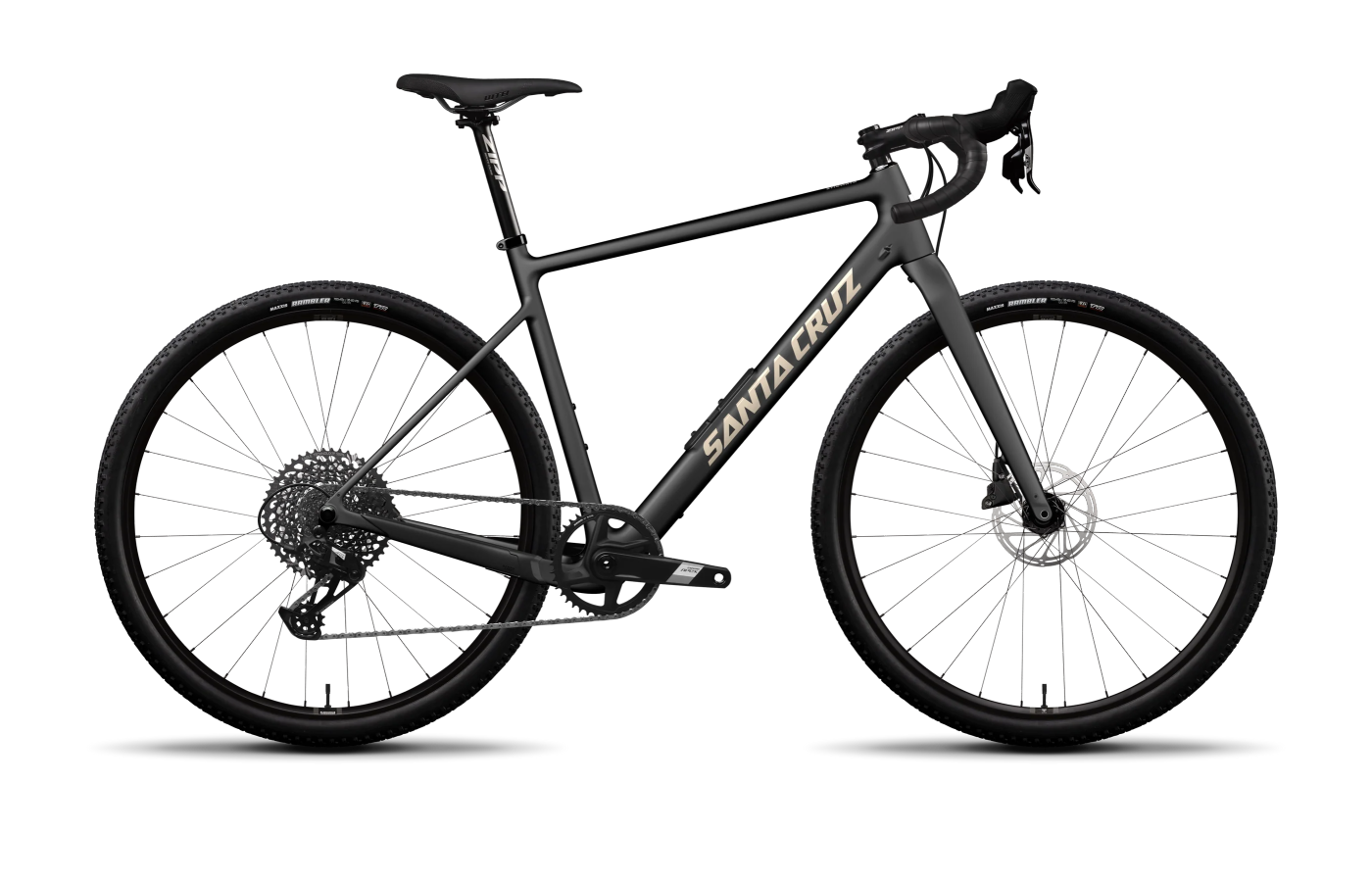
Stigmata
A middle path between the two — race-ready weight and geometry with more frame compliance than the Grail and none of the Diverge's mechanical suspension. The easiest 'neither of these feels right' answer.
Compare →