Grizl
vsWarbird
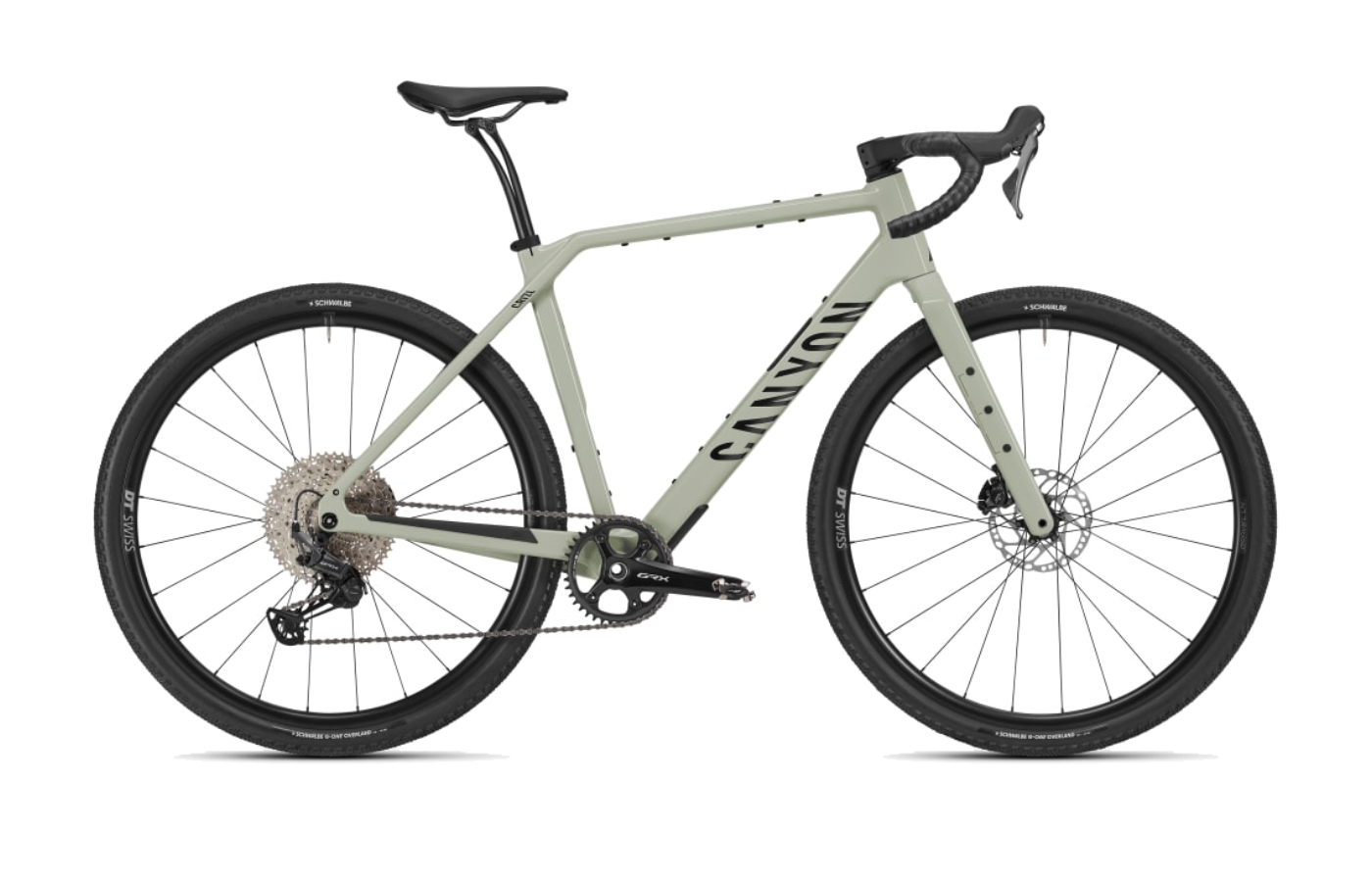
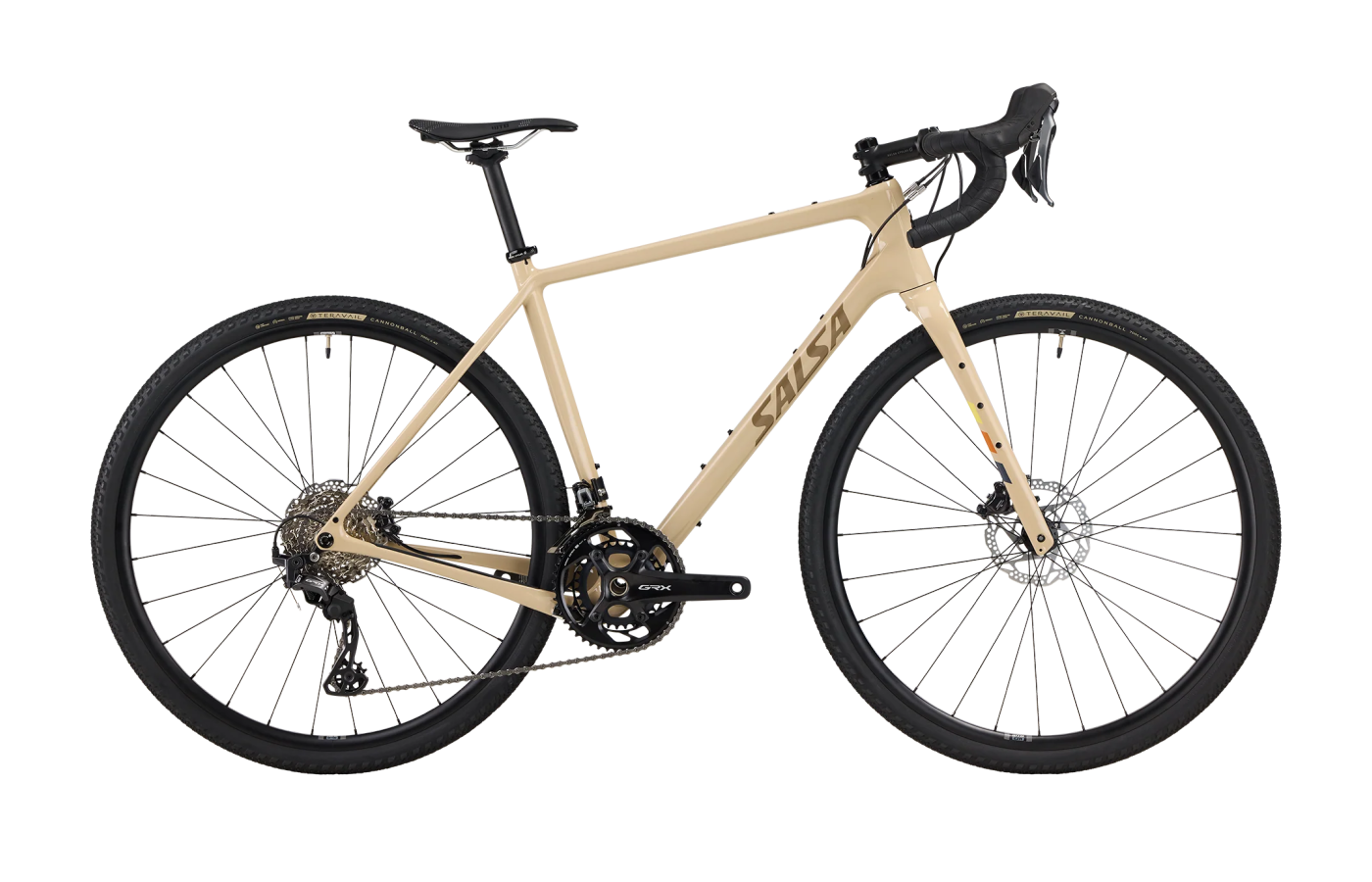
Two gravel bikes, two missions.
The Canyon Grizl is built to disappear into the backcountry for a week. The Salsa Warbird is built to win Saturday's gravel race.
Grizl
- 54 mm tire clearance — enough for 2.1-inch rubber and genuine singletrack capability.
- DTC pricing — a full-carbon GRX 12-speed build starts at $3,399, undercutting equivalent dealer-brand bikes by $900–$1,500.
- Built-in bikepacking integration — UDH, downtube storage, 20 mm-compliance VCLS seatpost stock, and an optional dynamo/lighting/USB-C system on the Escape ECLIPS builds.
- Long wheelbase and 435 mm chainstays make it 'wafty' and slow-steering compared to a race bike.
- 1x-only frame — no 2x upgrade path if you want tighter gear steps for fast group rides.
Warbird
- Lighter and livelier — shorter 430 mm chainstays and roughly 600 g less weight at the same tier make it noticeably more eager out of the saddle.
- Class 5 VRS rear end — passive vertical compliance from bowed seat stays, no moving parts, no service intervals.
- Dropper-post and 2x compatibility — 27.2 mm round seatpost and full 2x routing keep both racing and trail-curious riders' options open.
- Tire clearance caps at 45 mm on 700c — no 2.1-inch rubber, no soft-sand confidence.
- Full-build pricing runs steep against DTC competitors; reviewers consistently recommend buying the frameset and DIY-ing the rest.
Editor’s analysis
Both wear gravel tires and drop bars — but ask each one to pick a lane and they sprint in opposite directions.
On the spec sheet, the Canyon Grizl and Salsa Warbird overlap. Both are carbon, both run GRX or AXS, both ship with 42–45 mm tires. Pick one up and the philosophies diverge instantly. The Grizl is a stout, mounting-point-festooned adventure platform; the Warbird is a lighter, race-tuned classic that traces its lineage to the original Dirty Kanza.
The Grizl swings hard at the bikepacker. Tire clearance maxes at 54 mm — wide enough for 2.1-inch rubber — and Canyon's 1x-only frame commitment opens up routing for Universal Derailleur Hanger compatibility, the LOAD downtube storage hatch, and the 20 mm-flex VCLS seatpost. The top-end Escape ECLIPS build bakes in a SON dynamo hub, a Lupine battery, and integrated lights — a system that would cost over $1,200 to build aftermarket. Reviewers call it 'planted, predictable, calm and composed,' but also concede it's 'more of a boat than before' at low speeds.
The Salsa Warbird picks the opposite trade. Tire clearance stops at 45 mm with 700c wheels. Chainstays are 5 mm shorter at 430 mm. The Class 5 VRS rear triangle uses bowed seat stays to soak vibration without adding weight, and a 56 cm GRX 820 build comes in around 9.4 kg — roughly 600 grams lighter than the equivalent Grizl. Cycling Weekly ran it across town and got to work 6 minutes quicker than their daily setup. It's a race bike with bottle mounts.
The Canyon Grizl asks 'where can we go?' The Salsa Warbird asks 'how fast can we get there?' The frames overlap on paper. The riders shouldn't.
Where the builds differ.
Comparing our editor's-pick builds side-by-side. Winners highlighted row-by-row — lower price and weight, and the better-spec component, each mark a point.
Build variants & pricing
The Grizl undercuts the Warbird at every shared tier — and offers an alloy option below where the Warbird's range starts.
Prices are current US MSRP. Salsa does not offer an alloy or sub-$2,800 Warbird; if budget is tight, the alloy Grizl 6 RAW at $1,799 is the only real entry point in this comparison.
How they fit, how they steer.
The Grizl in size S sits 28.9 mm lower in stack than the Warbird at 56 cm — Canyon's sizing runs large, so a 5'8" rider lands one frame size smaller. The Warbird is 5 mm shorter in the chainstay (430 vs 435 mm) and 0.5 degrees steeper at the head tube — measurably more reactive.
Which size should I buy?
Size recommendations driven by stack, reach, and effective top tube. Conventions differ — Canyon uses XS/S/M/L letters, Salsa uses cm labels — but the fit math is the same.
→These are starting points. Flexibility, riding style, and preferred position all shift the answer — if you’re between sizes, a professional fit beats a chart.
What the magazines said.
Published reviews from trusted cycling outlets. Click through for the full write-up.
Which one should you buy?
If you ride to disappear, get the Canyon Grizl. If you ride to compete, get the Salsa Warbird.
Grizl
If your weekends involve self-supported overnighters, multi-day routes, or any situation where you'd rather have 54 mm tires and a dynamo than 600 grams less weight, the Grizl is the obvious tool. The DTC value gap is hard to argue with — you're getting a more integrated bike for less money.
Warbird
If you spend weekends at Mid-South, Unbound, or any event where the lead group disappears into a dust cloud, the Warbird is the lighter, snappier choice. It's also the better daily driver if you mix pavement and gravel — reviewers consistently note how road-capable it feels for a bike with mounting points everywhere.
Questions buyers actually ask.
Short answers to the things we get emailed about most often.
01Which is faster on a gravel race course?
The Salsa Warbird, by a meaningful margin. A 56 cm GRX 820 2x build weighs around 9.4 kg vs. roughly 10 kg for the equivalent Canyon Grizl — about 600 grams. On a flat 100-mile race that's marginal; on a course with climbing it adds up. Reviewers describe the Warbird as 'lively and quick' and 'accelerative under hard pedaling,' while the Grizl is consistently called 'planted' and 'more of a boat.'
Geometry reinforces it: 5 mm shorter chainstays and a slightly steeper head angle on the Warbird mean the bike turns and accelerates with less rider input. If your goal is the podium, the Warbird is the sharper tool.
02Which is better for bikepacking?
The Canyon Grizl, decisively. It clears 54 mm tires (vs. 45 mm on the Warbird's 700c setup), runs a 1x-only frame with UDH compatibility, has a LOAD downtube storage hatch, and ships with the 20 mm-compliance VCLS seatpost as standard.
The Escape ECLIPS variants go further with an integrated SON dynamo hub, a 3,500 mAh Lupine battery, and USB-C charging — Bikepacking.com called it a 'love letter to bikepacking' and noted the system alone would cost $1,200+ to assemble aftermarket.
The Salsa Warbird carries a load fine — three to four bottle mounts, top-tube mount, rack compatibility — but it's a race bike that accepts bags, not a platform built around them.
03What's the maximum tire clearance on each?
Canyon Grizl: 54 mm (2.1 inches) on the carbon CF frame; 50 mm on the alloy AL frame. Wide enough for genuine singletrack-capable rubber.
Salsa Warbird: 45 mm with 700c wheels, or up to 2.1 inches with 650b. The Warbird supports both wheel sizes — many reviewers run it on 650b x 47 mm WTB Byways for plusher backcountry duty.
04Can either run a 2x drivetrain?
Only the Salsa Warbird. The carbon frame is offered with both 1x (e.g., GRX 610 1x at $3,199) and 2x (GRX 820 2x at $4,299, Force AXS Wide at $6,999) drivetrains, and the routing supports both.
The Canyon Grizl is 1x-only across the entire current carbon and alloy lineup — Canyon committed to it for tire clearance and routing simplicity. If you want a road-bike-style 2x with tight gear steps for paceline work, the Grizl can't get you there.
05How does each handle compliance and rough surfaces?
Different philosophies, similar destination. The Canyon Grizl uses big tire volume (45–54 mm) plus the 20 mm-flex Canyon S15 VCLS 2.0 seatpost — every reviewer praises the seatpost specifically. Some Escape builds add a DT Swiss F132 One 40 mm-travel suspension fork for an extra layer of plush.
The Salsa Warbird has no moving parts. Salsa's Class 5 VRS uses tall, thin, outwardly-bowed seat stays and flattened chainstays that flex vertically under load. Cycle Travel Overload likened it to 'a personal suspension system that whispers, Bring it on.'
The Grizl gives you more travel and more options. The Warbird gives you simpler, lighter compliance with nothing to service.
06Which is better value?
The Canyon Grizl wins on out-the-door pricing. A full-carbon GRX 12-speed Grizl CF 7 is $3,399; the closest Warbird, the C GRX 820 2x, is $4,299. The DTC model lets Canyon undercut Salsa by $900–$1,500 at every shared tier.
Reviewers consistently note that Salsa's stronger value play is the frameset: at $2,199 for the Warbird C frame, multiple reviewers (Cycling Weekly, Bikepacking.com) recommend buying the frameset and building it up rather than taking the stock spec.
If you don't want to wrench, buy the Grizl. If you do, buy the Warbird frameset.
07What about local dealer support?
Canyon is direct-to-consumer — no dealers, no demos, returns and warranty work go through Canyon itself. Reviewers note this can be a sticking point: one user comment on Off.road.cc lamented having to be 'on your own' for post-purchase support. Test rides aren't possible.
Salsa sells through traditional bike-shop channels. You can demo a Warbird, get fit on one, and have a local mechanic warranty-service the frame. That dealer overhead is part of why the Warbird's complete builds price higher than the Grizl's.
08Which is better for mixed pavement and gravel?
The Salsa Warbird. Its lighter weight, shorter chainstays, and 70.75-degree head angle make it feel closer to an endurance road bike with fat tires. Cycling Weekly's commuter test had it 6 minutes faster to work than their personal setup. On rolling pavement it 'never feels sluggish.'
The Canyon Grizl can absolutely ride pavement, but its longer wheelbase and 45–54 mm tires make it feel less eager — reviewers describe it as 'wafty' on tarmac. If your weekly miles skew 60% road and 40% gravel, the Warbird is the better daily driver.
Similar bikes
If your priorities don’t map cleanly onto either of these, one of these adjacent bikes probably fits better.

Grail
Canyon's race-tuned gravel sibling — same DTC value as the Grizl, but tuned for the Warbird's mission. 'Reactive and enthusiastic,' per BikeRadar, with race geometry instead of expedition geometry.
Compare →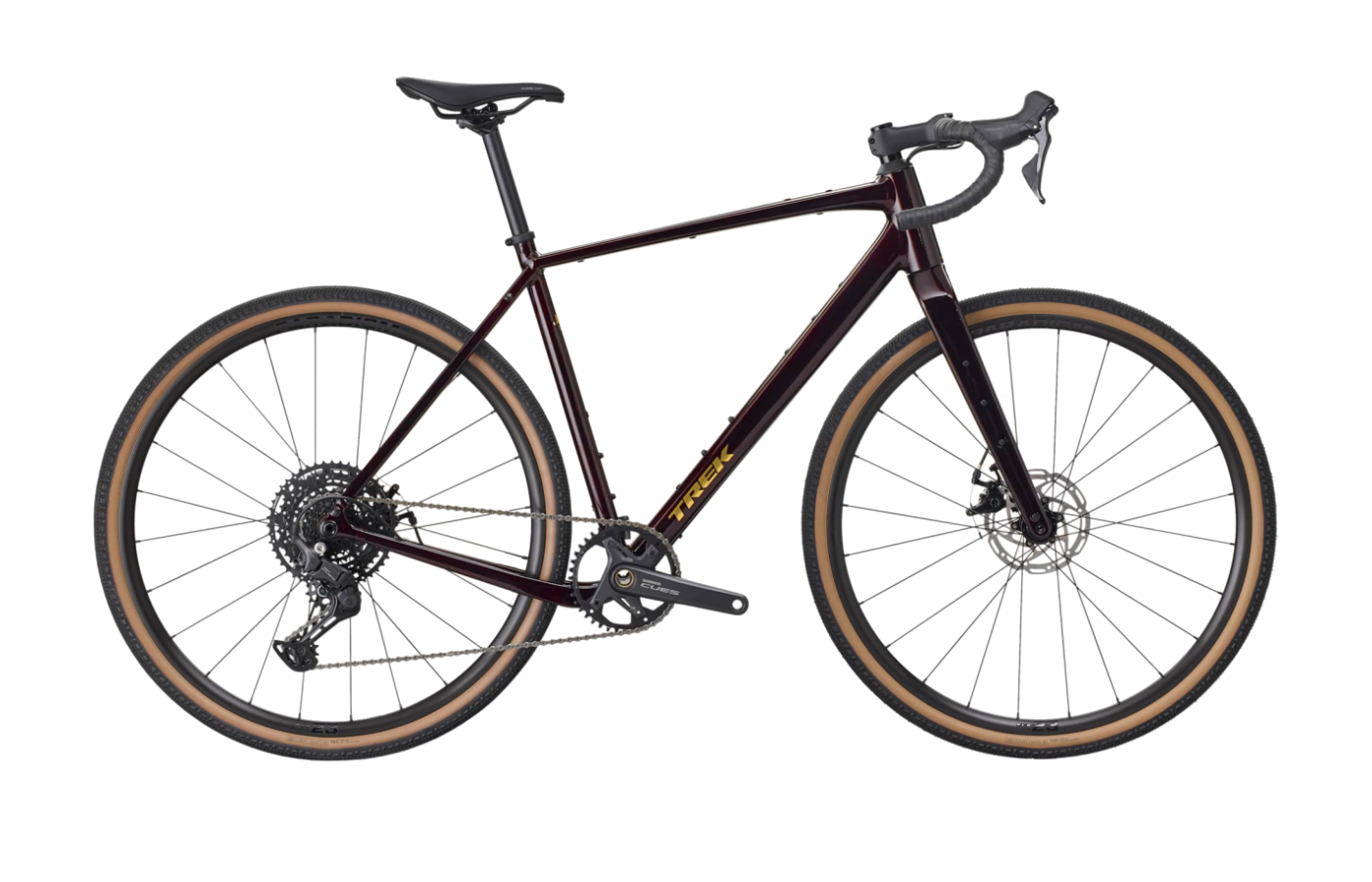
Checkpoint
Trek's IsoSpeed-decoupled answer to the Warbird — similar race-leaning intent with a vibration-filtering top tube, often spec'd more generously for the dollar than Salsa's full builds.
Compare →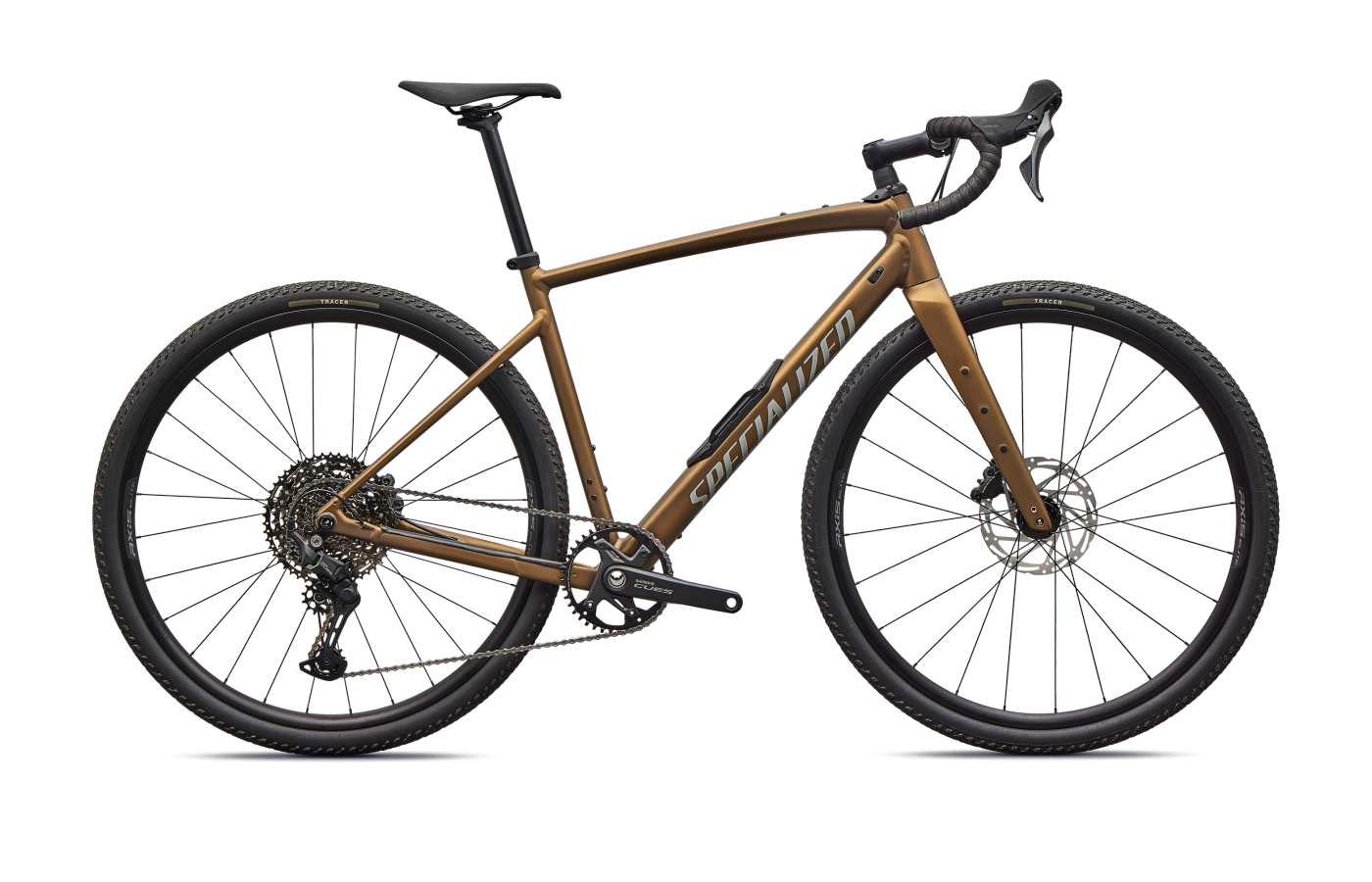
Diverge
Specialized's Future Shock front end gives 20 mm of suspension travel at the bars — plusher than either bike here on chunky terrain, but priced well above the Grizl and serviced through dealers, not direct.
Compare →