Ultimate
vsTarmac
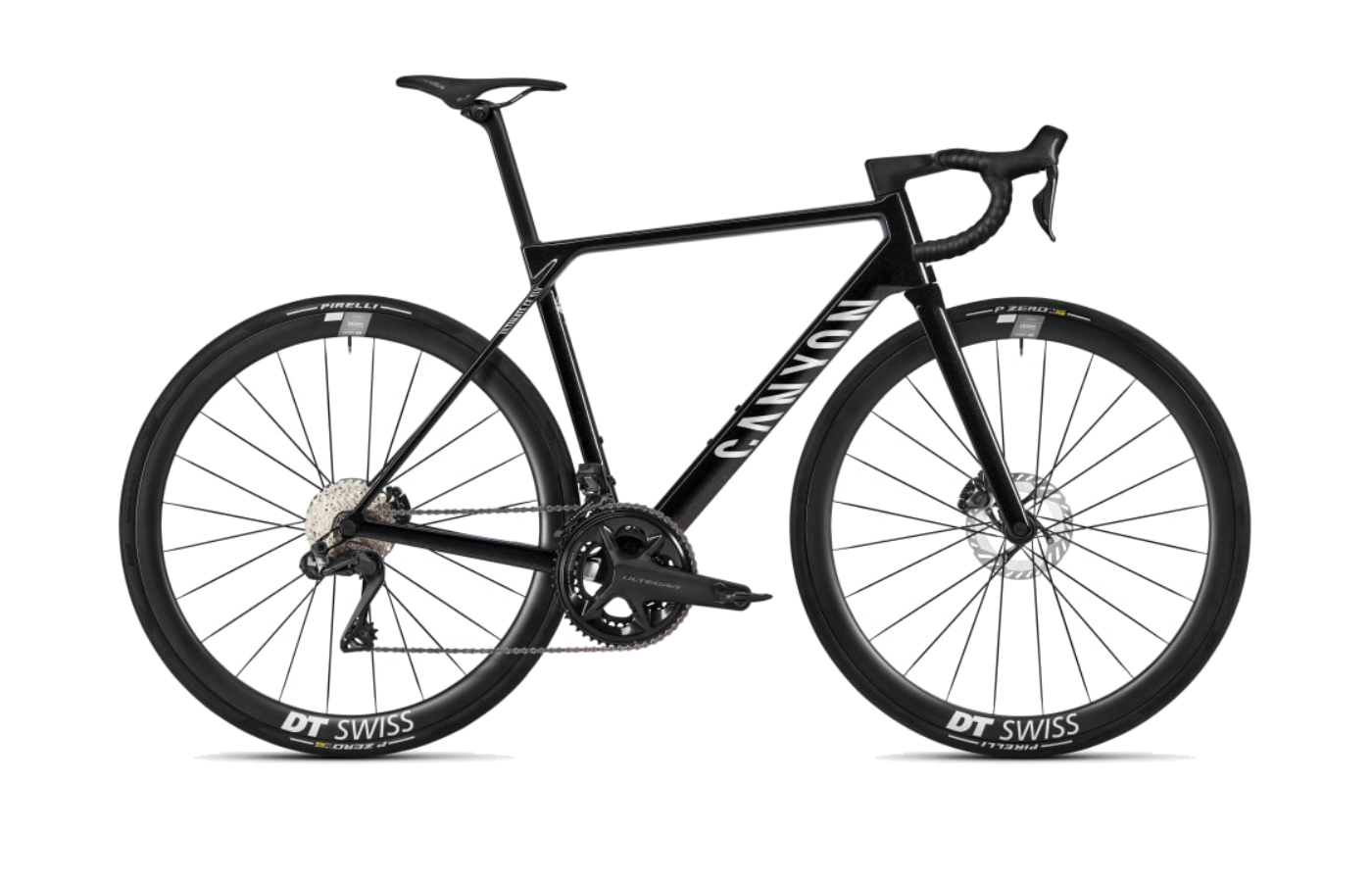
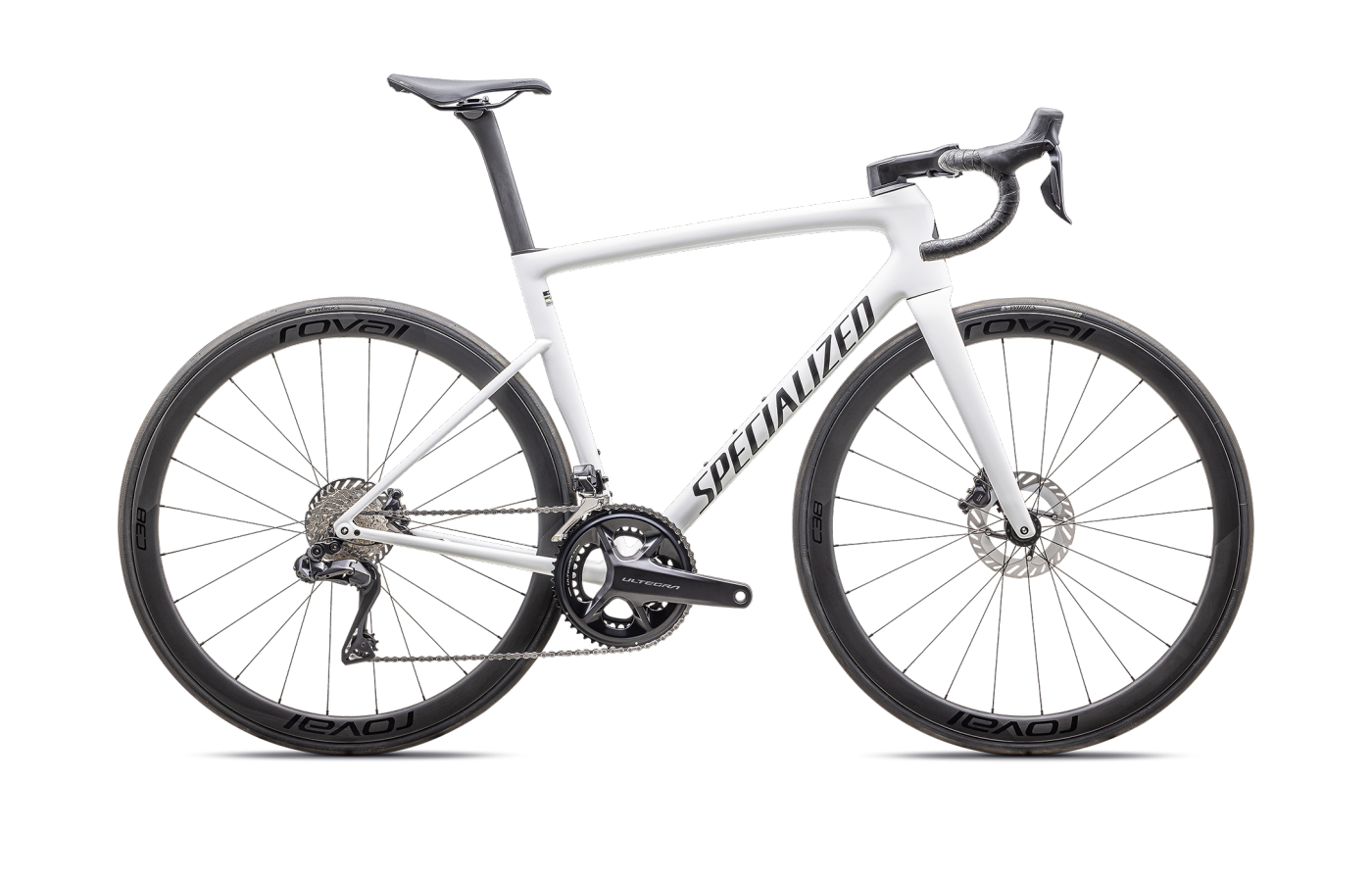
Two takes on the do-everything race bike.
The Canyon Ultimate is the lightweight all-rounder built around stiffness and direct-to-consumer value. The Tarmac SL8 is the aero-leaning flagship with the WorldTour pedigree to prove it.
Ultimate
- Better dollar-for-dollar spec — $5,999 buys Ultegra Di2, a 4iiii power meter, and DT Swiss ARC 1400 carbon wheels.
- Adjustable integrated cockpit — the CP0048 offers 50 mm width and 20 mm height adjustment without re-routing hoses.
- Wide build range — $2,899 to $10,499, from 105 mechanical-equivalent to CFR Red AXS.
- Direct-to-consumer only — no local dealer for fit, demos, or warranty hand-holding.
- Less aero on paper than the Tarmac SL8 — closer to a lightweight than a true aero-road bike.
Tarmac
- Aero-bike-fast frameset — external wind-tunnel data puts it at 209 W vs 205 W for the Cervélo S5.
- Specialized dealer network — in-person fit, demos, and warranty support nearly anywhere in the US.
- Class-leading frame weight — a claimed 685 g S-Works frame and 6.67 kg complete bike in size 56.
- Specialized markup at every tier — the equivalent build runs $500–$1,500 more than the Canyon.
- Stock 26 mm S-Works Turbo tires are universally panned by reviewers — plan to swap them.
Editor’s analysis
Both promise to be the only road bike you need — they just disagree on which corner of the triangle to defend.
Look past the marketing and these two are closer than the price tags suggest. Both are sub-7-kilo carbon race frames, both ship with full electronic groupsets and integrated cockpits, both have been pushed by WorldTour pros to recent Grand Tour stages. The Canyon Ultimate Gen 5 is built around the brand's 'Perfect Balance' pitch — light first, aero second, and Porsche-911 conservative in silhouette. The Specialized Tarmac SL8 is the louder bike: a Speed Sniffer head tube, a 6.83 kg Pro build, and Specialized's claim that it killed off the Venge because the Tarmac is now aero enough to do that job too.
On the climbs the Tarmac edges ahead — but barely. Specialized's claimed 685 g S-Works frame and 33% stiffness-to-weight gain over the SL7 produce what Bicycling called a bike that 'dances uphill with urgency.' The Ultimate CFR sits in the same weight neighborhood (~6.4 kg in CFR Di2 trim per BikeRadar) and reviewers consistently use words like 'insatiable' and 'addictive' on gradients. Both stiffen the head tube and bottom bracket; both reward out-of-saddle attacks. If your weekend is 2,000 vertical meters, you'll be happy on either.
The split shows up on the flats and in the wallet. Canyon claims a 10-watt frameset gain at 45 km/h over the previous Ultimate — meaningful, but not Aeroad-deep. Specialized claims 16.6 seconds saved over 40 km versus the SL7 and external wind-tunnel data putting the SL8 at 209 W versus 205 W for the Cervélo S5. So the Tarmac is closer to a true aero bike than the Ultimate is. The Canyon counters with price: a $5,999 CF SLX 8 with Ultegra Di2, a 4iiii power meter, and DT Swiss ARC 1400 carbon wheels undercuts the equivalent Tarmac Expert at $6,599 — and outspecs it on wheels and meter.
So pick your priority. The Specialized Tarmac SL8 is the bike if you want the sharper aero edge, the deeper dealer network, and the WorldTour halo — and you're willing to pay a Specialized markup at every tier. The Canyon Ultimate is the bike if you want the same lightweight-race DNA at a lower price, with friendlier integrated-cockpit serviceability and better stock components dollar-for-dollar.
Where the builds differ.
Comparing our editor's-pick builds side-by-side. Winners highlighted row-by-row — lower price and weight, and the better-spec component, each mark a point.
Build variants & pricing
The Ultimate starts $1,800 cheaper and tops out $3,000 lower; the Tarmac scales further at the top end and includes a 2025/2026 model year split.
Prices are current US MSRP. The Canyon range is direct-to-consumer; the Tarmac is sold through Specialized dealers and Specialized.com. Tarmac stock and pricing vary slightly by model year — both 2025 and 2026 SL8 Experts are listed.
How they fit, how they steer.
Canyon Ultimate in S vs Tarmac SL8 in 54 — the fit-picked sizes for the same rider on each bike. The Ultimate sits 5 mm lower (539 mm vs 544 mm stack) and 6 mm longer (390 mm vs 384 mm reach), with a 5 mm longer wheelbase. The Tarmac is the more upright, more compact race position.
Which size should I buy?
Size recommendations based on stack, reach, and effective top tube. Canyon uses S/M/L labels and runs longer-and-lower at each step; Specialized uses numbered sizing and is more compact at the same fit.
→These are starting points. Flexibility, riding style, and preferred position all shift the answer — if you’re between sizes, a professional fit beats a chart.
What the magazines said.
Published reviews from trusted cycling outlets. Click through for the full write-up.
Which one should you buy?
If you want the most spec for your money and don't need a dealer, get the Canyon Ultimate. If you want the sharper aero edge and Specialized service, get the Tarmac SL8.
Ultimate
If you know your fit, do your own wrenching, and want the most carbon-frame race bike for the money, the Ultimate is hard to beat. The mid-tier CF SLX 8 punches a tier above its price on components, and the integrated cockpit is one of the most adjustable in the segment.
Tarmac
If you want the bike that's measurably closer to a pure aero rig while staying climbing-light, and you value being able to walk into a shop, the Tarmac SL8 is the benchmark. You pay for the dealer network and the wind-tunnel work — but the WorldTour wins are real.
Questions buyers actually ask.
Short answers to the things we get emailed about most often.
01Which is faster on flat roads?
The Tarmac SL8, by a small margin. External wind-tunnel data cited by reviewers puts the SL8 at roughly 209 W at 45 km/h — only a few watts behind the Cervélo S5 (205 W) and Canyon Aeroad (208 W). The Canyon Ultimate Gen 5 claims a 10-watt frameset gain over the previous Ultimate, but it's not a dedicated aero bike — Canyon positions the Aeroad for that job.
In real-world terms, the gap between them is small enough that wheel choice and tire setup matter more than frame for most riders below 35 km/h.
02Which climbs better?
Effectively a tie at the top end. Canyon's flagship CFR Di2 has been weighed at around 6.4 kg by BikeRadar; Specialized claims a 6.67 kg S-Works in size 56. Both have stiff bottom brackets and reinforced head tubes, and both reward out-of-saddle attacks.
Reviewers consistently call the Ultimate 'insatiable' on climbs and the Tarmac SL8 'electric.' On a 30-minute climb, the difference between them is in the noise.
03What's the maximum tire clearance?
Canyon Ultimate: 33 mm on all Gen 5 builds, front and rear.
Specialized Tarmac SL8: 32 mm officially.
Neither is a gravel bike. For mixed-surface use, look at the Canyon Endurace or Specialized Roubaix — both clear 38 mm or wider.
04Is the Canyon really a better deal at the same price?
On the spec sheet, often yes. A $5,999 Canyon Ultimate CF SLX 8 ships with Shimano Ultegra Di2, a 4iiii Precision power meter, and DT Swiss ARC 1400 38 mm carbon wheels. The closest Tarmac SL8 Expert at $6,599 also runs Ultegra Di2 but pairs it with shallower Roval wheels.
What you give up with Canyon: a local dealer for fit, demos, warranty, and any service you can't do yourself. For mechanically confident riders who know their size, the Canyon math is hard to argue with. For riders who want hand-holding, the Specialized premium buys real-world support.
05How serviceable are the integrated cockpits?
The Canyon CP0048 is one of the most adjustable integrated cockpits on the market — 50 mm of width adjustment and 20 mm of height adjustment, with interchangeable drops on some builds, all without cutting the steerer or bleeding hoses.
The Tarmac's Roval one-piece cockpit (on S-Works and Pro builds) is stiffer and more aero, but stem length and bar width are fixed at purchase. Changing them post-purchase typically runs $450+ for the part plus labor for a hose bleed. The Expert builds use a two-piece alloy bar and stem instead, which is far more adjustable but less integrated.
06Are both compatible with mechanical shifting?
Effectively no, in current trim. Both Gen 5 Ultimate and SL8 frames are routed for electronic groupsets — the entry-level builds on each ship with Shimano 105 Di2 or SRAM Rival AXS, not mechanical. If you want a mechanical drivetrain, you're looking at older generations on the used market.
07How does the geometry compare?
Surprisingly different despite both being race bikes. At fit-picked sizes for the same rider — Canyon size S vs Tarmac size 54 — the Canyon sits 5 mm lower (539 mm vs 544 mm stack) and 6 mm longer (390 mm vs 384 mm reach). The Canyon's wheelbase is 5 mm longer (983 mm vs 978 mm), which favors high-speed stability.
The Tarmac is the more upright, more compact race position; the Ultimate is longer and lower in the same nominal fit. Less flexible riders may find the Tarmac more comfortable; riders with longer torsos may prefer the Canyon.
08What warranty do they come with?
Both frames come with a lifetime frame warranty to the original owner against manufacturing defects, and both offer crash-replacement pricing. The practical difference is the service path: a Canyon warranty claim goes through Canyon directly, ships back to the brand, and depends on Canyon's turnaround. A Specialized warranty claim goes through any authorized Specialized dealer, which typically means faster local resolution.
Similar bikes
If your priorities don’t map cleanly onto either of these, one of these adjacent bikes probably fits better.
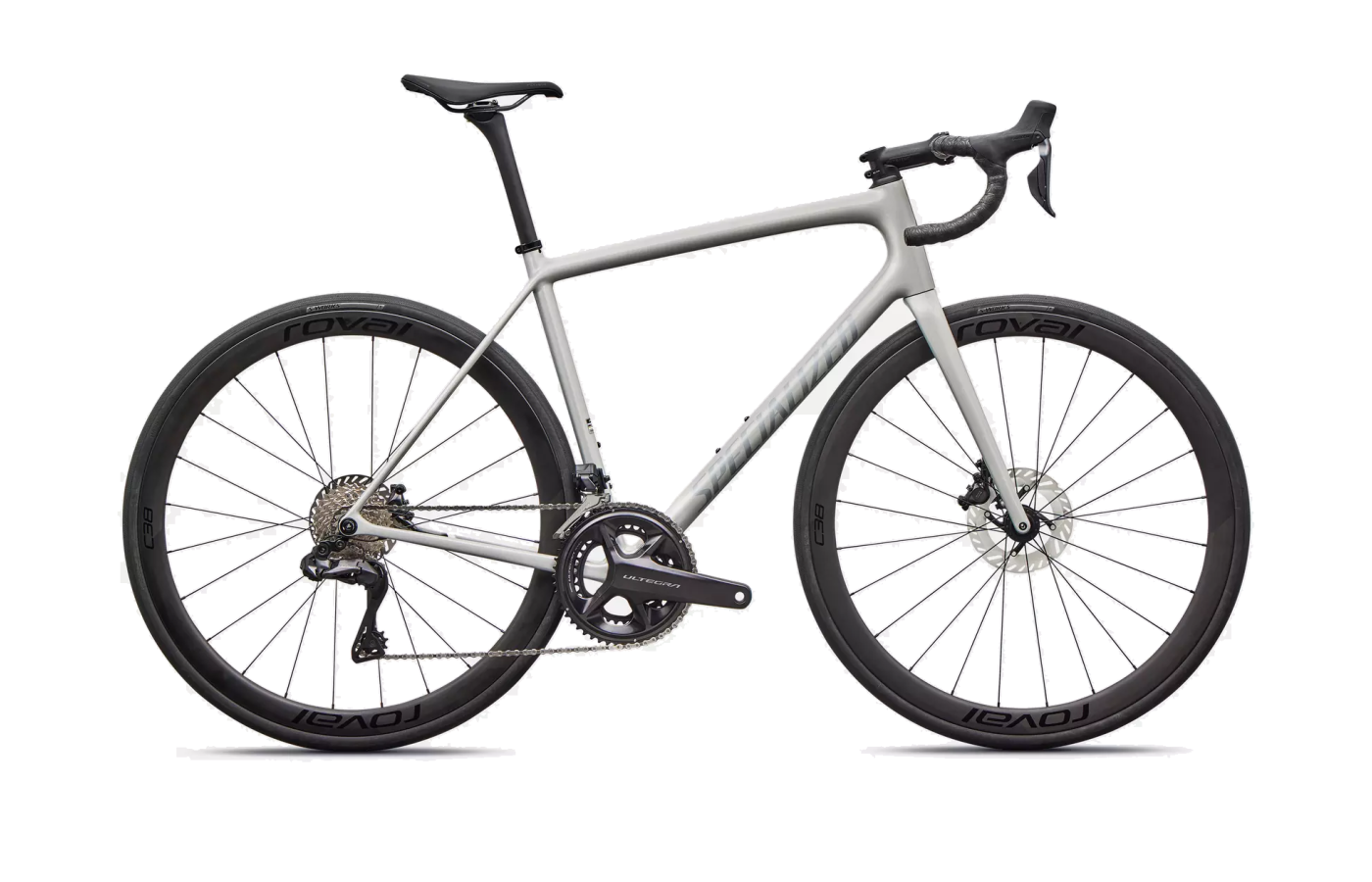
Aethos
The Specialized Aethos is the anti-aero counterpoint — sub-6 kg, classical round tubes, no integration, no aero. If you'd rather save grams than watts and live in the mountains, this is the lighter sibling to the Tarmac.
Compare →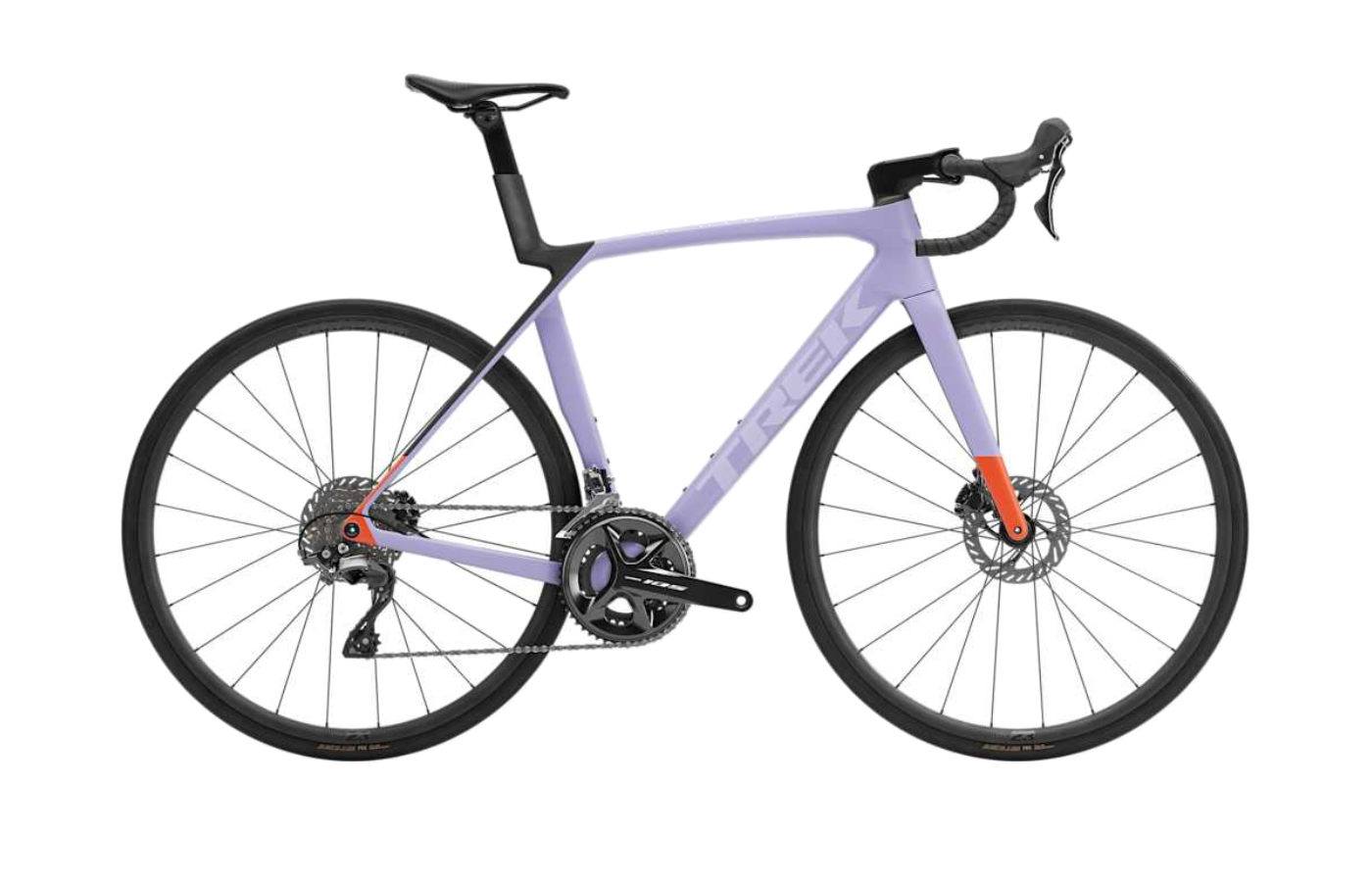
Madone
The Trek Madone is the more aggressive aero play — its IsoFlow decoupler delivers a measurable rear-end compliance neither the Ultimate nor the Tarmac can match, at the cost of weight and a more polarizing silhouette.
Compare →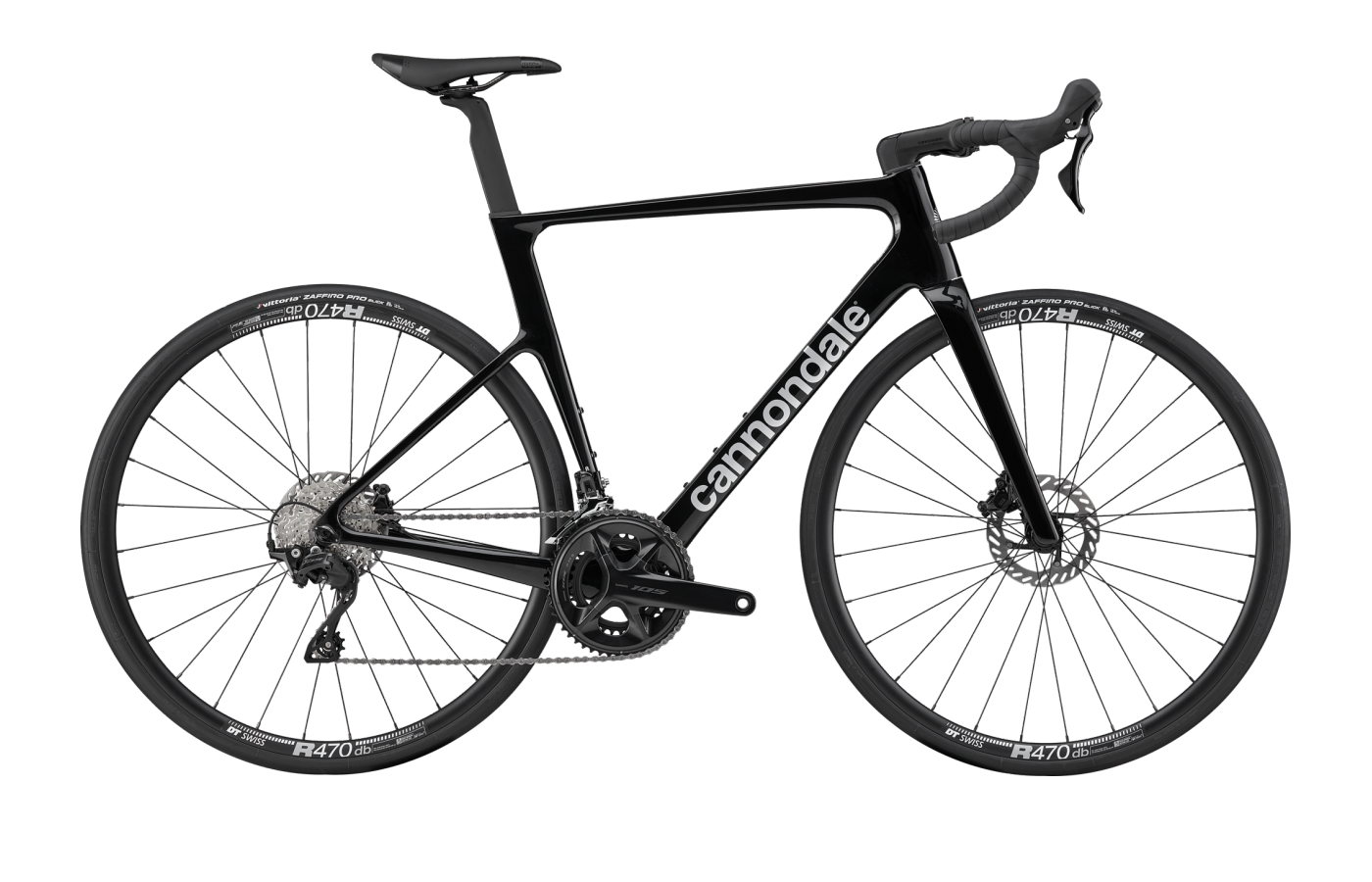
SuperSix EVO
The Cannondale SuperSix EVO splits the difference — a balanced race bike with snappier handling than the Ultimate and slightly more visual restraint than the Tarmac, often at a price between the two.
Compare →