Ultimate
vsMadone
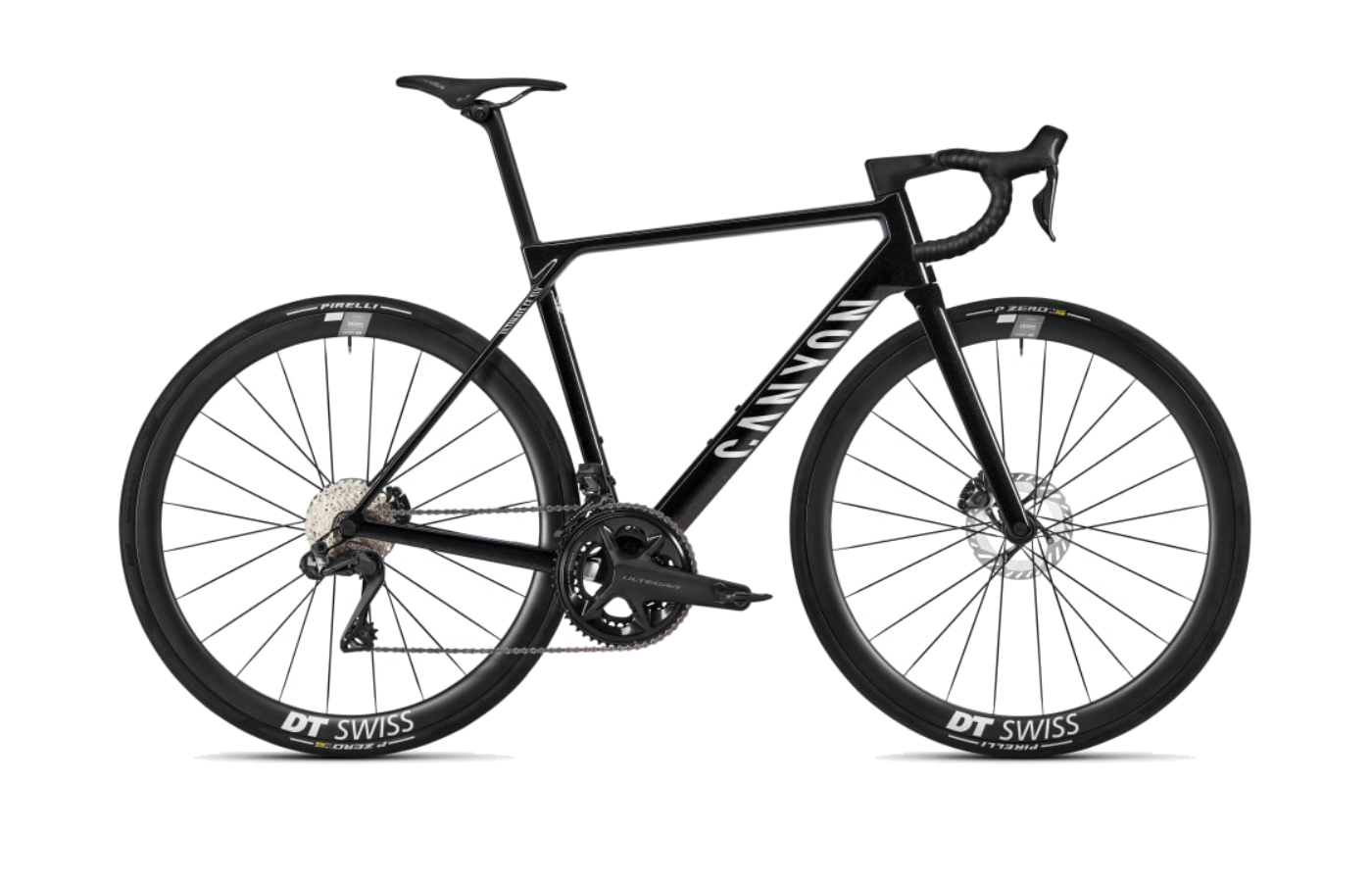
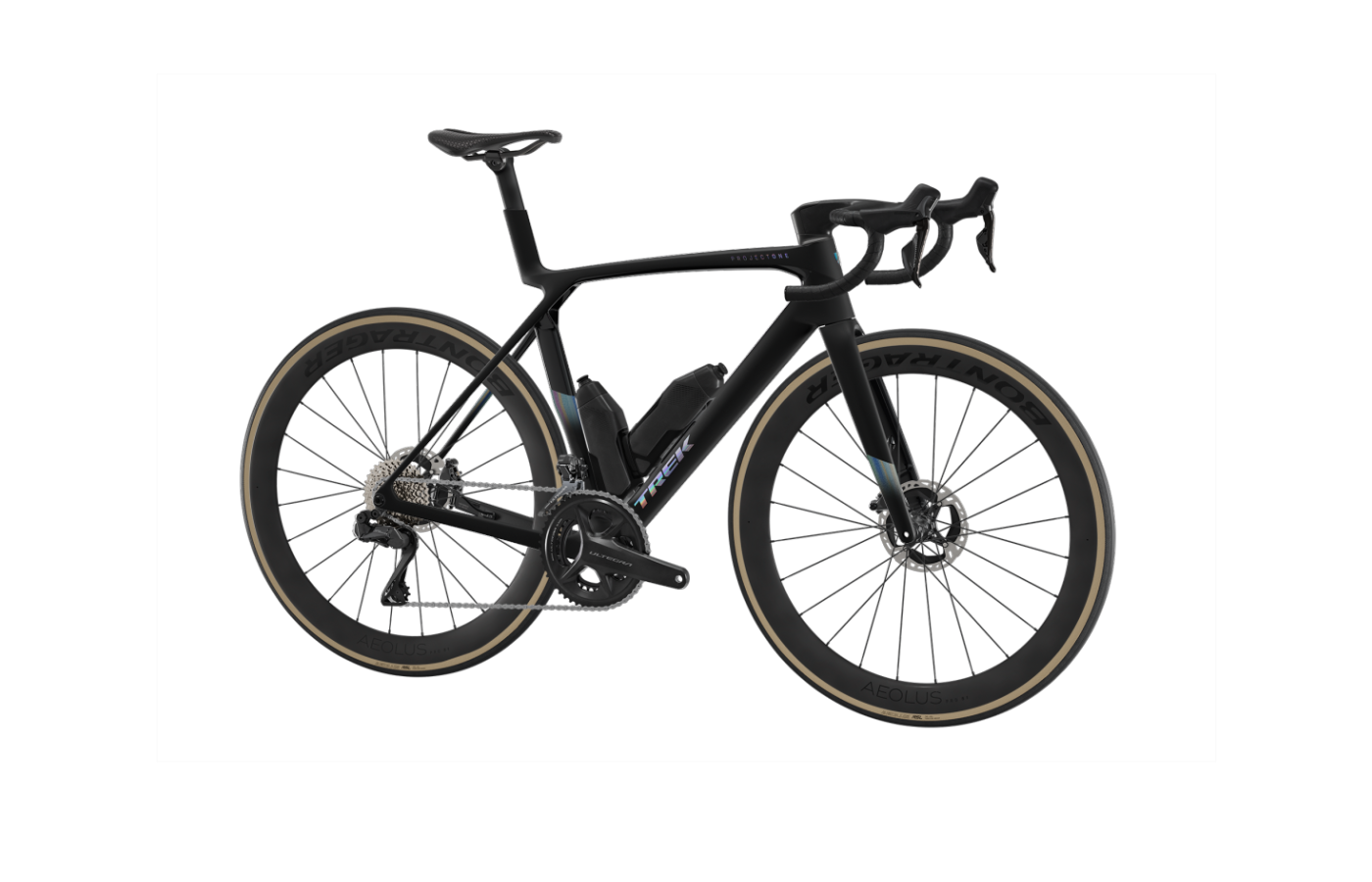
The purist's climber vs. the merged superbike.
Canyon's Ultimate is a refined, direct-to-consumer lightweight. Trek's Madone Gen 8 swallowed the Emonda and became the aero bike that also climbs.
Ultimate
- Lower price floor at $2,899 — the cheapest way into a modern carbon race frame with Shimano 105.
- Lightweight climbing pedigree — the CFR frame at ~780 g enables sub-6.5 kg builds that reviewers call "insatiable" uphill.
- Proportional chainstays (410 mm small/medium, 413 mm large) keep bigger riders balanced without the perched-over-the-rear-axle feel.
- No dealer network — fit and warranty service runs through Canyon's remote support.
- Cockpit is width-adjustable but stem length isn't swappable at purchase — a real issue if your fit is unusual.
Madone
- One-bike solution — 765 g frame weight matches the outgoing Emonda while holding aero parity with the Gen 7 Madone.
- Refined IsoFlow compliance — Trek claims an 80% jump in vertical compliance vs. Gen 7, and reviewers back it up on rough pavement.
- Dealer-backed ownership — lifetime frame warranty and a service network that Cyclefit called "best in the business."
- Steeper price across the entire range — the SL 5 starts $600 above the Ultimate's entry point and the flagship costs $3,000 more.
- Proprietary RSL aero bottles are required to hit the published drag numbers — and reviewers consistently find them impractical.
Editor’s analysis
One bike plays the long game — refine what works, keep the weight low, undercut on price. The other just ate its sibling and came back as a single platform for everything.
The Canyon Ultimate is the fifth generation of a formula that's worked since 2010 — low weight, high stiffness, minimal drama. Canyon's own tagline is "The Perfect Balance," and the pitch shows up in the numbers: a claimed 10-watt aero gain over the prior gen at 45 km/h, a 15% stiffer head tube, 33 mm tire clearance, and a CFR build that reviewers measured at roughly 6.3 kg. It isn't trying to be the fastest aero bike. It's trying to be the most complete all-rounder you can buy without a dealer.
The Trek Madone went the other direction. Gen 8 merged Trek's two flagship platforms — the aero Madone and the lightweight Emonda disappeared — into one 900 Series OCLV frame that reviewers clock at 765 g. Trek claims it's 77 seconds per hour faster than the Emonda it replaced, with an 80% jump in vertical compliance over the Gen 7 Madone thanks to a refined IsoFlow seat tube. The price of all that engineering: a starting MSRP of $3,499 on the SL 5 and a $13,499 ceiling on the SLR 9 AXS, plus a proprietary RSL aero bottle system that reviewers alternately love and curse.
On the road the character gap is real. The Ultimate rewards riders who live in the hills — BikeRadar called its climbing "insatiable," and Canyon's chainstays grow with size (410 mm on S/M, 413 mm on L) to keep the bike balanced for taller riders. The Madone Gen 8 is the one that wants to hold 40 km/h on the flats and still not get dropped on a 10% grade — but reviewers flagged a stiff Aero RSL cockpit that produces hand numbness past 80 miles, and severe toe overlap on smaller sizes.
Price is the other fault line. The Canyon Ultimate starts at $2,899 and tops out at $10,499. The Trek Madone starts at $3,499 and runs to $13,499. At roughly every tier, the Canyon is ~$2-3k cheaper — the direct-to-consumer tax, minus a dealer network, plus a demo you'll have to arrange yourself.
Where the builds differ.
Comparing our editor's-pick builds side-by-side. Winners highlighted row-by-row — lower price and weight, and the better-spec component, each mark a point.
Build variants & pricing
Both platforms run deep — Canyon from $2.9k to $10.5k in 7 builds, Trek from $3.5k to $13.5k in 9. Canyon undercuts Trek by roughly $2-3k at nearly every tier.
Prices are current US MSRP. The editor's picks here are the tier-matched Ultegra Di2 builds — Canyon CF SLX 8 Ultegra Di2 at $5,999 and Trek Madone SLR 7 at $8,999. The $3,000 gap is a real feature of the Canyon direct-to-consumer model, not a spec difference.
How they fit, how they steer.
Canyon in S vs. Madone in M — the fit-picked sizes for a 5'8" rider on each. Stack is 7 mm taller on the Madone, reach is 6 mm shorter. Head tube angles are nearly identical (72.8° vs. 72.9°), but the Canyon's chainstays match the Madone's at 410 mm despite its longer wheelbase.
Which size should I buy?
Size recommendations based on stack, reach, and effective top tube. Canyon runs 7 sizes (2XS through 2XL); Trek collapsed to 6 T-shirt sizes (XS through XL), which some reviewers found leaves awkward gaps around the mid-range.
→These are starting points. Flexibility, riding style, and preferred position all shift the answer — if you’re between sizes, a professional fit beats a chart.
What the magazines said.
Published reviews from trusted cycling outlets. Click through for the full write-up.
Which one should you buy?
If you love climbing and want the most bike per dollar, get the Canyon Ultimate. If you want one race bike that's genuinely fast everywhere and don't mind paying for a dealer, get the Trek Madone.
Ultimate
If most of your riding points uphill and you'd rather spend on a power meter and wheels than on dealer markup, the Ultimate is still the benchmark. It climbs with a CFR that's measurably lighter than the Madone SLR, and the price floor gives you real builds three grand below Trek's cheapest.
Madone
If you want a single race bike that's fast on the flats, doesn't suffer on the climbs, and comes with a dealer to sort fit issues, the Gen 8 Madone delivers the merged platform Trek spent a decade building toward. You'll pay for it — and you'll need to make peace with the aero bottles.
Questions buyers actually ask.
Short answers to the things we get emailed about most often.
01Which is faster on flat roads?
The Trek Madone Gen 8, measurably. Trek's "Full System Foil" approach shapes frame, wheels, and even the water bottles as a single aero unit, and the Gen 8 slightly exceeds the previous aero-specific Madone SLR's drag numbers at up to 40 mph. The Canyon Ultimate's own aero tweaks save a claimed 10 watts at 45 km/h over the Gen 4 — but the Madone is still the purer aero platform.
Below 30 km/h, the gap shrinks to something neither rider will feel.
02Which climbs better?
The Canyon Ultimate CFR, slightly. Reviewers measured the CFR at roughly 6.3 kg in testable builds. The Madone SLR 9 comes in around 7.0 kg in size ML with sealant and no bottles. That's ~700 g in favor of the Canyon, which translates to about 10 seconds on a 30-minute climb for a 70 kg rider.
Caveat: the Madone Gen 8 is a genuinely good climber by aero-bike standards — reviewers called it a "mountain goat" compared to the outgoing Gen 7. The Canyon wins on absolute weight; the Madone wins on weight-for-aero.
03What's the maximum tire clearance?
Canyon Ultimate: 33 mm, documented on every build.
Trek Madone: 32 mm officially. Some reviewers have reported fitting 35 mm — and a few have gone to 38 mm — but that's off-spec and could introduce toe overlap on smaller sizes.
Neither is a gravel bike, and neither was designed to be one. If you want all-road versatility, look at the Domane or the Endurace.
04How serviceable are the integrated cockpits?
The Canyon CP0048 is a one-piece integrated carbon cockpit with 50 mm of width and 20 mm of height adjustment at purchase — unusually generous for an aero cockpit. But stem length isn't changeable without replacing the whole unit.
The Trek Aero RSL is also one-piece, and reviewers flagged it as "stiff as a brick" — some reported hand numbness on rides over 80 miles. Stem length comes fixed by frame size, and swapping to a different length means a new cockpit. Trek's Project One program lets you pick stem length at order, which largely eliminates the problem if you know your fit.
05Which is the better value?
The Canyon, clearly, if you compare on raw spec parity. The CF SLX 8 Ultegra Di2 is $5,999 with a 4iiii power meter and DT Swiss ARC 1400 carbon wheels. The tier-matched Trek Madone SLR 7 (Ultegra Di2) is $8,999 — about $3,000 more.
The Trek premium buys you a dealer network, a lifetime frame warranty, and the Project One custom program. Whether that's worth $3k depends on how much you value local service and how sure you are of your fit.
06Are the aero bottles on the Madone required?
For Trek's published aero numbers, yes — the RSL Aero bottle and cage system is claimed to save 3.7 watts at 45 km/h, and it's part of the "Full System Foil" story. Reviewers consistently flagged the bottles as impractical: small 600 ml capacity, hard to fill, won't stand up on a table.
You can run standard round bottles without hurting the frame's aerodynamics much — you'll just lose the marginal watts Trek claims the system provides.
07Can I use mechanical shifting on either?
Canyon Ultimate: The Gen 5 frames are electronic-only at the top (CFR and CF SLX builds all ship Di2 or AXS). The CF builds are compatible with mechanical routing but are delivered with electronic groupsets.
Trek Madone Gen 8: The SLR frames are electronic-only. The SL frames support mechanical or electronic routing — giving you the option to run a 105 cable-actuated build if you're downgrading an older groupset.
If mechanical is a hard requirement, the Madone SL is the safer bet.
08What about the buying experience?
Canyon is direct-to-consumer: you order online, a bike shows up in a box, you finish assembly or pay a local shop to do it. No test rides unless Canyon runs an event near you. Returns are possible but involve shipping a bike back.
Trek sells through a global dealer network with demo bikes, in-person fit sessions, and Project One — a custom program that lets you specify paint, component sizes (bars, stem, crank length), and drivetrain at order. That's genuinely useful for riders who've been sized poorly before, and it's the single biggest reason to pay the Trek premium.
Similar bikes
If your priorities don’t map cleanly onto either of these, one of these adjacent bikes probably fits better.
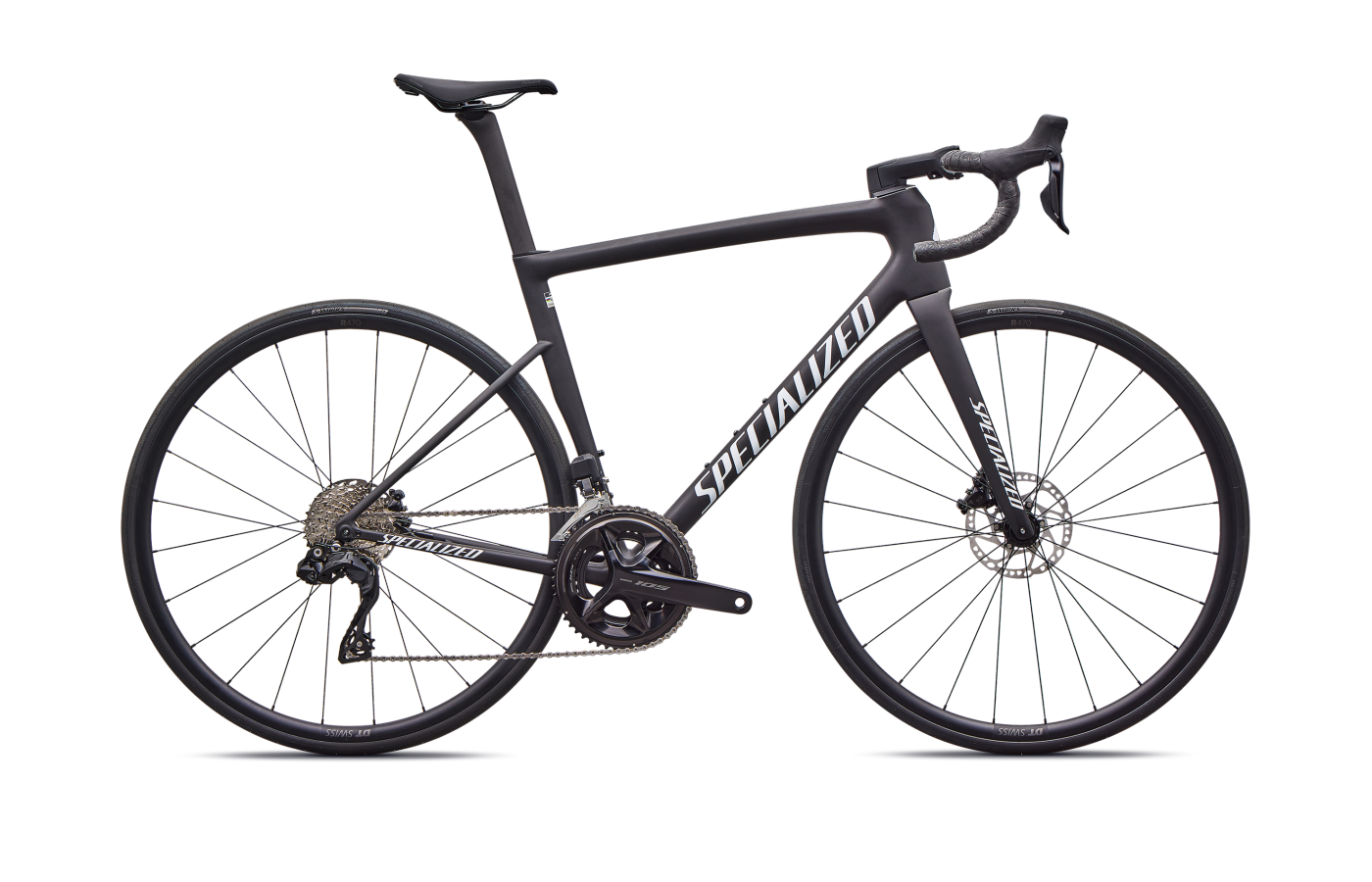
Tarmac
The original one-bike race platform that both Canyon and Trek are chasing. The SL8 is lighter than the Madone, sharper than the Ultimate, and sits between them on price — if you can find a dealer with one to demo.
Compare →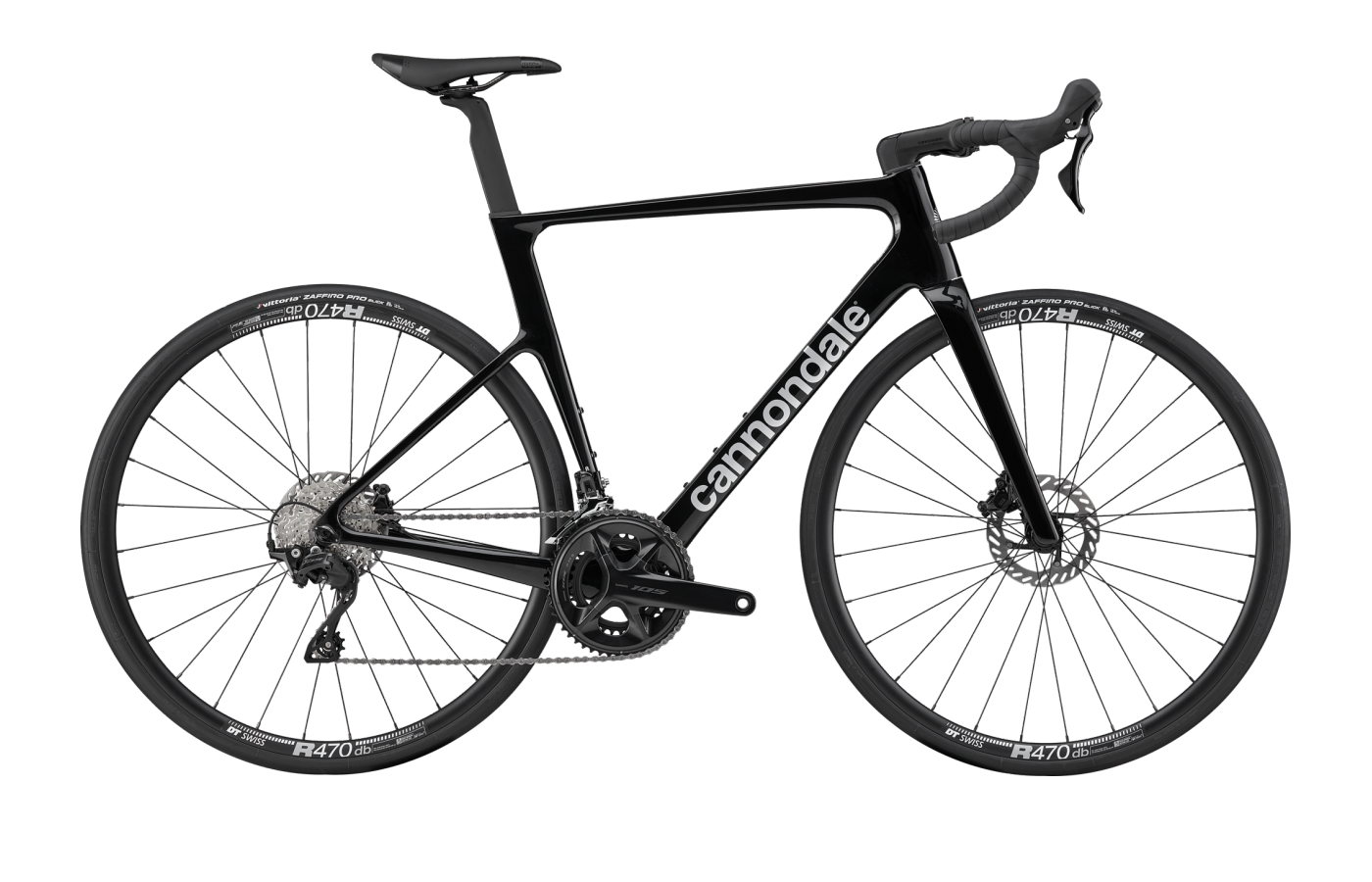
SuperSix EVO
Cannondale's aero-light all-rounder, often priced between the Canyon and Trek at equivalent tiers. Reviewers rate its ride quality and stiffness-to-weight alongside the Tarmac.
Compare →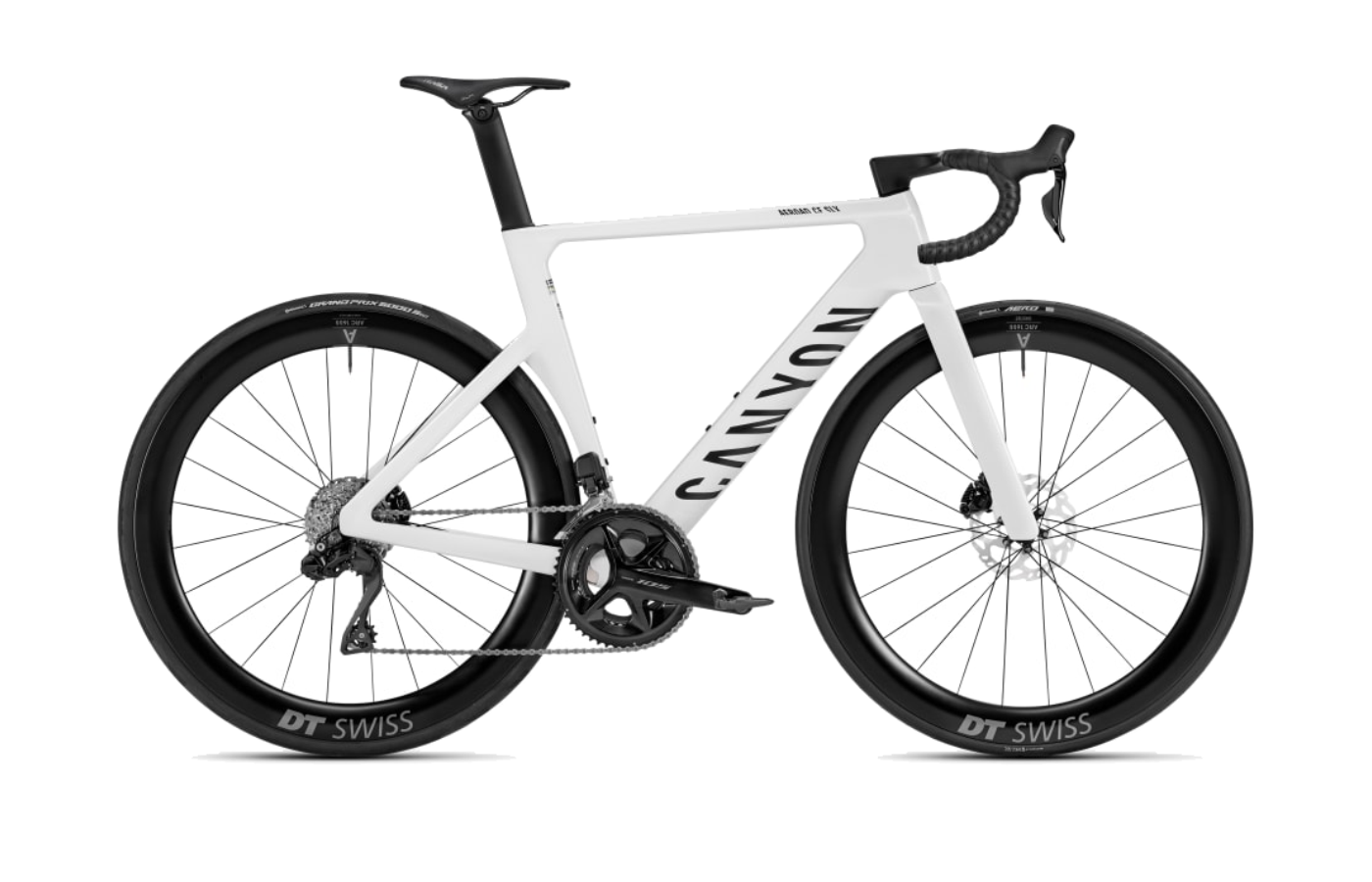
Aeroad
If you love the Canyon value play but want the Madone's flat-out aero focus, the Aeroad is Canyon's dedicated aero-race frame — deeper tubes, tighter integration, same direct-to-consumer price advantage.
Compare →