Aspero-5
vsDiverge
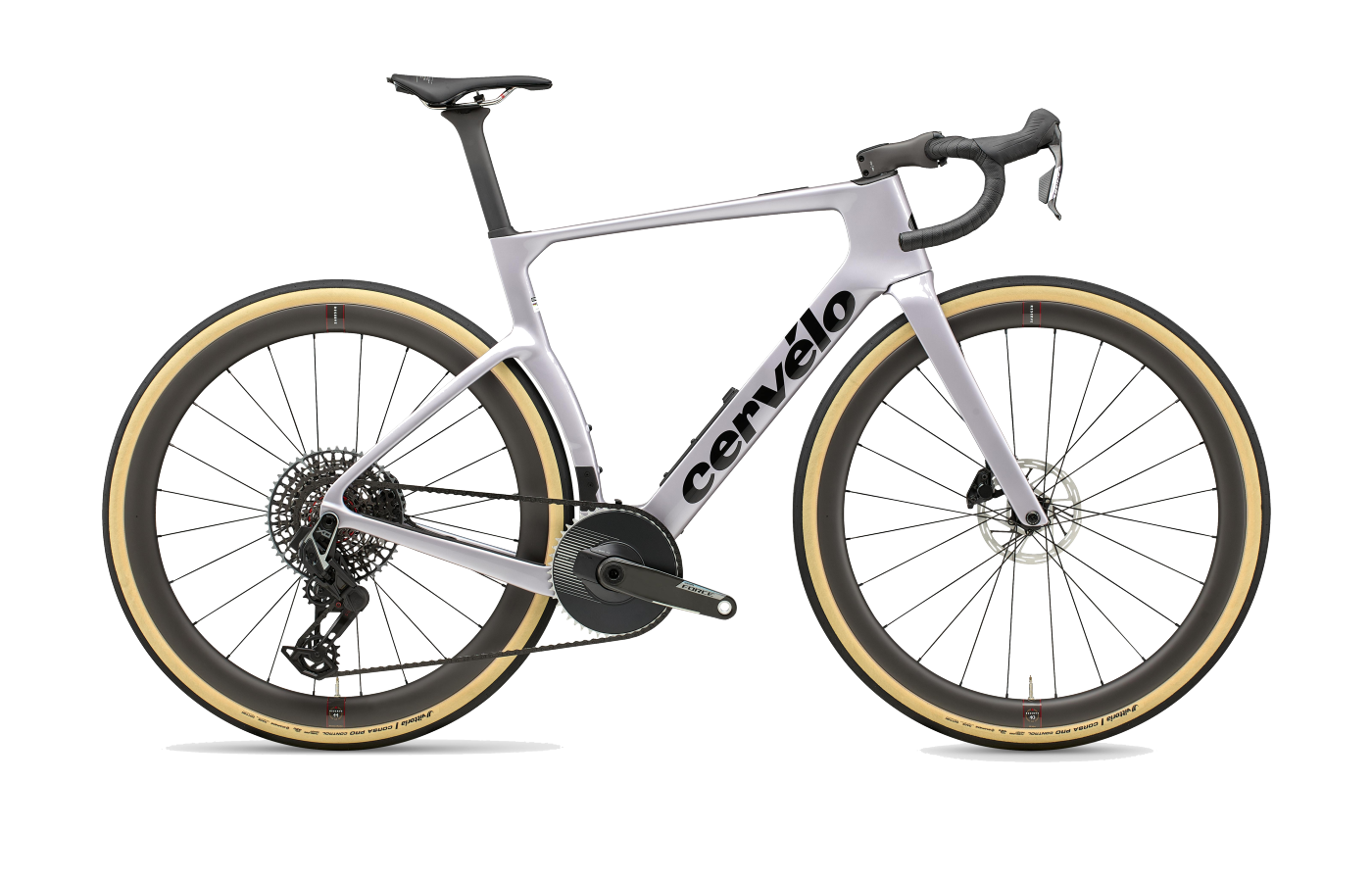
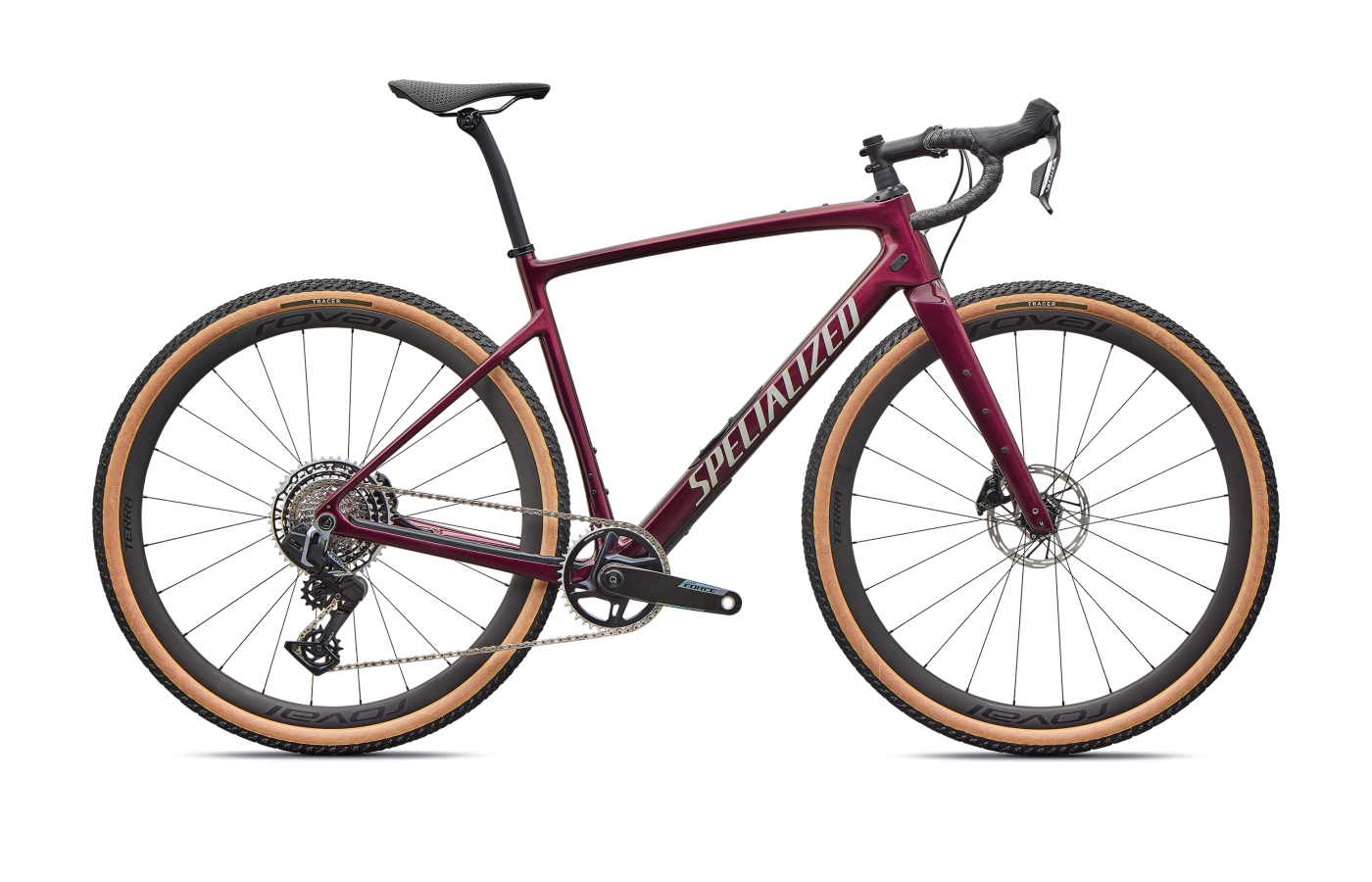
Two gravel bikes, two definitions of fast.
The Aspero-5 is an S5 with a dirt fetish. The Diverge is a freight train with 50 mm tires and a suspended cockpit.
Aspero-5
- Genuinely fast on tarmac — Velo and Cycling Weekly both argue it could replace your road bike outright.
- Sharp, road-like handling — 71.6° HTA and 422.5 mm chainstays give it Cervélo road-bike trail figures.
- Aero claim with receipts — Cervélo says 34 watts faster than the next aero gravel bike at race speed.
- Only 45 mm tire clearance — no room to grow as gravel rubber gets wider.
- Stiff, race-focused frame jolts on rooty or chunky terrain (BikeRadar, Velo).
Diverge
- 50 mm tire clearance — officially, with 7 mm of mud room, or 2.2" MTB tires at ISO clearance.
- Future Shock 3.0 — 20 mm of front-end travel, hydraulically damped on 3.2/3.3 tiers.
- Range and storage — eight builds from $2,099 to $10,499, all with SWAT 4.0 downtube storage including alloy.
- Pedal strikes with stock 45 mm tires on the 85 mm BB drop — plan on a tire swap.
- Slow and tall on pavement; not the bike if any of your miles are road race pace.
Editor’s analysis
Both call themselves gravel bikes, but they barely agree on what gravel is.
The Cervélo Aspero-5 and Specialized Diverge sit in the same race-aero-vs-adventure-gravel argument that has split the category for years. One is built around a 45 mm tire ceiling, deep aero tubes lifted from the S5, and geometry that's almost indistinguishable from a road race bike. The other gives you 50 mm of clearance (or 2.2" MTB rubber with ISO clearance), a 20 mm-travel Future Shock under the stem, and a wheelbase 29 mm longer at the same nominal size.
The Aspero-5 is the sharper instrument. At size 54 it sits 42 mm lower in stack, runs a steeper 71.6° head tube, and rides on 422.5 mm chainstays — trail numbers that BikeRadar notes are "very close" to Cervélo's road bikes. Cervélo claims it's 34 watts faster than the next-fastest gravel bike at speed, and reviewers like Velo confirm it doubles convincingly as an all-road bike. It's the bike for the rider who races Belgian Waffle Ride, Mid-South, or any event where the gravel is dry, hard-packed, and fast.
The Diverge is the planted one. Cycling Weekly called it a "freight train on gravel — fast, confident and composed," and that's the right frame: the slacker 71° head angle, 430 mm chainstays, 85 mm BB drop, and Future Shock 3.0 turn rough descents into a line-choice exercise instead of a survival exercise. The catch is that the bike is heavier, taller, and the 85 mm BB drop with stock 45 mm tires causes pedal strikes on even mellow trails (BikeRadar, Cycling Weekly) — most reviewers immediately swap to 50 mm rubber.
Put another way: the Aspero-5 is the bike you buy when you race gravel and already own a road bike — and you'd quite like to stop owning the road bike. The Diverge is the bike you buy when your gravel actually contains rocks, and you'd rather your wrists still work at hour five.
Where the builds differ.
Comparing our editor's-pick builds side-by-side. Winners highlighted row-by-row — lower price and weight, and the better-spec component, each mark a point.
Build variants & pricing
Three Aspero-5 builds, all SRAM AXS or GRX Di2, all priced above $8.8k. Eight Diverge builds spanning $2,099 alloy CUES to a $10,499 Red XPLR halo.
Prices are current US MSRP. Cervélo offers no entry-level Rival, Apex, or 105 builds on the Aspero-5 — if budget is the deciding factor, the Diverge is the only option. Both editor's picks here are SRAM Force AXS one-down builds for an apples-to-apples spec comparison.
How they fit, how they steer.
Both at size 54 — the fit-picked size for a 5'8" rider on each. The Diverge sits 42 mm taller in stack with near-identical reach (387 vs 386 mm), runs a 0.6° slacker head angle, and stretches 29 mm longer at the wheelbase. The Aspero-5 is the road-race posture; the Diverge is the planted, in-the-bike one.
Which size should I buy?
Size recommendations based on stack, reach, and effective top tube. Aspero-5 runs 48–61; Diverge runs 49–61, with notably taller stack at every common size.
→These are starting points. Flexibility, riding style, and preferred position all shift the answer — if you’re between sizes, a professional fit beats a chart.
What the magazines said.
Published reviews from trusted cycling outlets. Click through for the full write-up.
Which one should you buy?
If your gravel is fast and dry and you'd consider selling the road bike, get the Aspero-5. If your gravel has actual rocks in it, get the Diverge.
Aspero-5
If you race gravel where speeds stay above 30 km/h, the surfaces are predictable, and you've always wished a gravel bike just felt like a road bike, the Aspero-5 is the sharpest tool in the segment. Bring your own knobby tires for anything muddy.
Diverge
If your rides regularly leave the road and head into properly chunky terrain — singletrack, washboard, technical descents — the Diverge's stability, suspension, and 50 mm tire room are worth the weight and the pavement penalty. Just budget for the wider tires.
Questions buyers actually ask.
Short answers to the things we get emailed about most often.
01Which is faster on smooth gravel and pavement?
The Cervélo Aspero-5, by a meaningful margin. Cervélo claims it's 34 watts faster than the next-fastest aero gravel bike at race speed and 37 watts faster than the previous Aspero. Reviewers (BikeRadar, Velo, Cycling Weekly) consistently note it feels "much like a road bike" on tarmac and hard-packed gravel.
The Diverge feels fast in its own right but the 45 mm Tracer tires hum on pavement and the front end sits 42 mm taller — it's not pretending to be a road bike.
02What's the maximum tire clearance on each?
Aspero-5: 45 mm officially, with only ~6 mm of frame-to-tire space at the chainstays. Cycling Magazine warned that mud in that gap acts "like sandpaper against the frame" — frame protection is a good idea if you ride wet.
Diverge 4: 50 mm officially, with 7–8 mm of mud clearance, or a 2.2" MTB tire at the ISO-standard 4 mm clearance. Several reviewers strongly recommend running the wider rubber to fix pedal strikes from the 85 mm BB drop.
03How much do the geometries actually differ?
At size 54 (the fit-picked size for a 5'8" rider on both): the Diverge has 42 mm more stack (592 vs 550), 1 mm more reach (387 vs 386), a 0.6° slacker head angle (71° vs 71.6°), 7.5 mm longer chainstays (430 vs 422.5), and a 29 mm longer wheelbase (1041 vs 1012).
That's not a subtle difference — the Aspero-5 puts you in a long, aggressive road-race posture; the Diverge sits you upright and in the bike.
04Why does the Diverge get pedal strikes on stock tires?
The Diverge 4 has an 85 mm bottom bracket drop, designed to keep the bike stable when running 50 mm or 2.2" tires. With the stock 45 mm Tracers (and 172.5 mm cranks on the 54/56 frames), the pedals sit lower than the geometry intends.
BikeRadar reported clipping pedals on "pretty mellow trails," and Cycling Weekly's tester broke a pair of Garmin Rally power pedals from repeated strikes. The fix is the same one Specialized's design points to: run 50 mm or 2.2" tires.
05What's the Future Shock and is it worth it?
Future Shock 3.0 is Specialized's 20 mm-travel cartridge under the stem that absorbs vibration and small hits before they reach your hands. The Diverge ships in three tiers: 3.1 (spring only, on alloy builds), 3.2 (spring + hydraulic damping, on the Expert), and 3.3 (adjustable on-the-fly damping, on the Pro and Pro LTD).
Reviewers found 3.2 a clear comfort upgrade with one quirk — slight bounce when out of the saddle on punchy climbs. The 3.3 fixes that for $450 more (or as a paid upgrade later). The Aspero-5 has no equivalent — Cervélo's answer is tire volume.
06Can the Aspero-5 actually replace a road bike?
More credibly than most gravel bikes. Velo's review is titled "a fast gravel bike that might just replace your road bike," and Cycling Weekly went further, asking whether the all-road category still needs to exist. The aero shaping, 422.5 mm chainstays, and road-bike trail figures all support the case.
The practical caveat: with 45 mm tires you'll never feel as fast as you would on 28–30 mm road slicks, and there's no second wheelset SKU from Cervélo for road duty — you'd need to source 700c road wheels separately.
07What about budget builds?
The Aspero-5 starts at $8,850 (GRX RX825 Di2). There is no Rival, Apex, or mechanical option — it's a premium-only platform.
The Diverge starts at $2,099 (4 Sport Alloy with Shimano CUES) and offers FACT 9r carbon from $3,499 (4 Sport Carbon). All carbon and alloy frames get SWAT 4.0 downtube storage and the same updated geometry. If price matters at all, the Diverge wins on availability alone.
08Are these good for bikepacking?
The Diverge clearly. Mounts on the fork, top tube, under the bottom bracket, plus rack and fender mounts on every frame, plus SWAT 4.0 internal storage. Granfondo summarized it: "the Diverge is ready for anything."
The Aspero-5 isn't designed for it. Cervélo's tagline is literally "haul ass, not cargo" — you get a downtube storage compartment but limited external mounts. It's a race bike that allows a snack, not a touring rig.
Similar bikes
If your priorities don’t map cleanly onto either of these, one of these adjacent bikes probably fits better.

Grail
Canyon's aero gravel racer with semi-integrated cockpit and S5-rivaling drag claims, typically at a meaningful discount to the Aspero-5. The trade is direct-to-consumer fit and no local dealer.
Compare →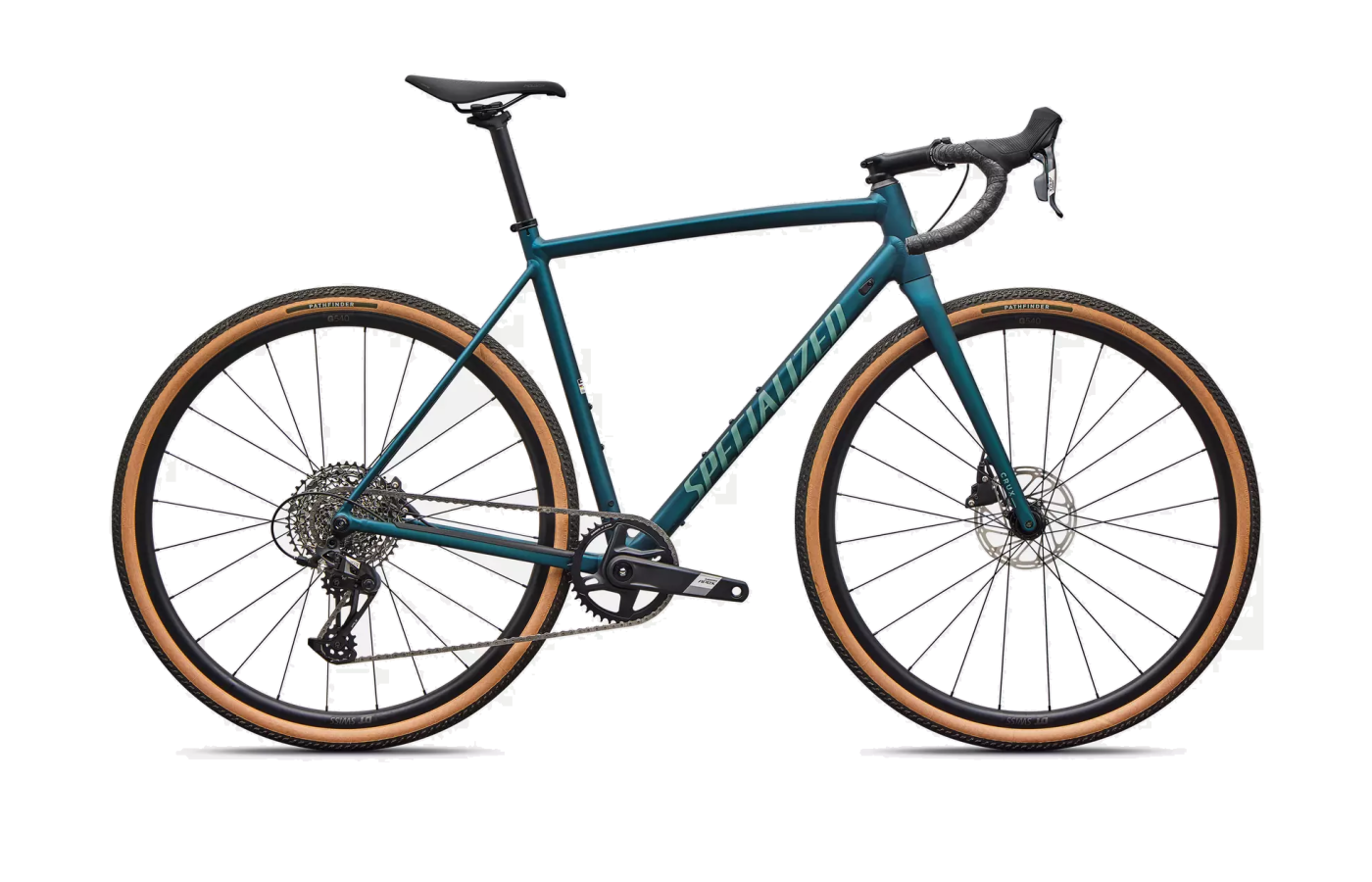
Crux
Specialized's lightweight cyclocross-bred gravel platform — same Specialized fit story as the Diverge but without the Future Shock complexity, and notably lighter. The pure climber's gravel pick.
Compare →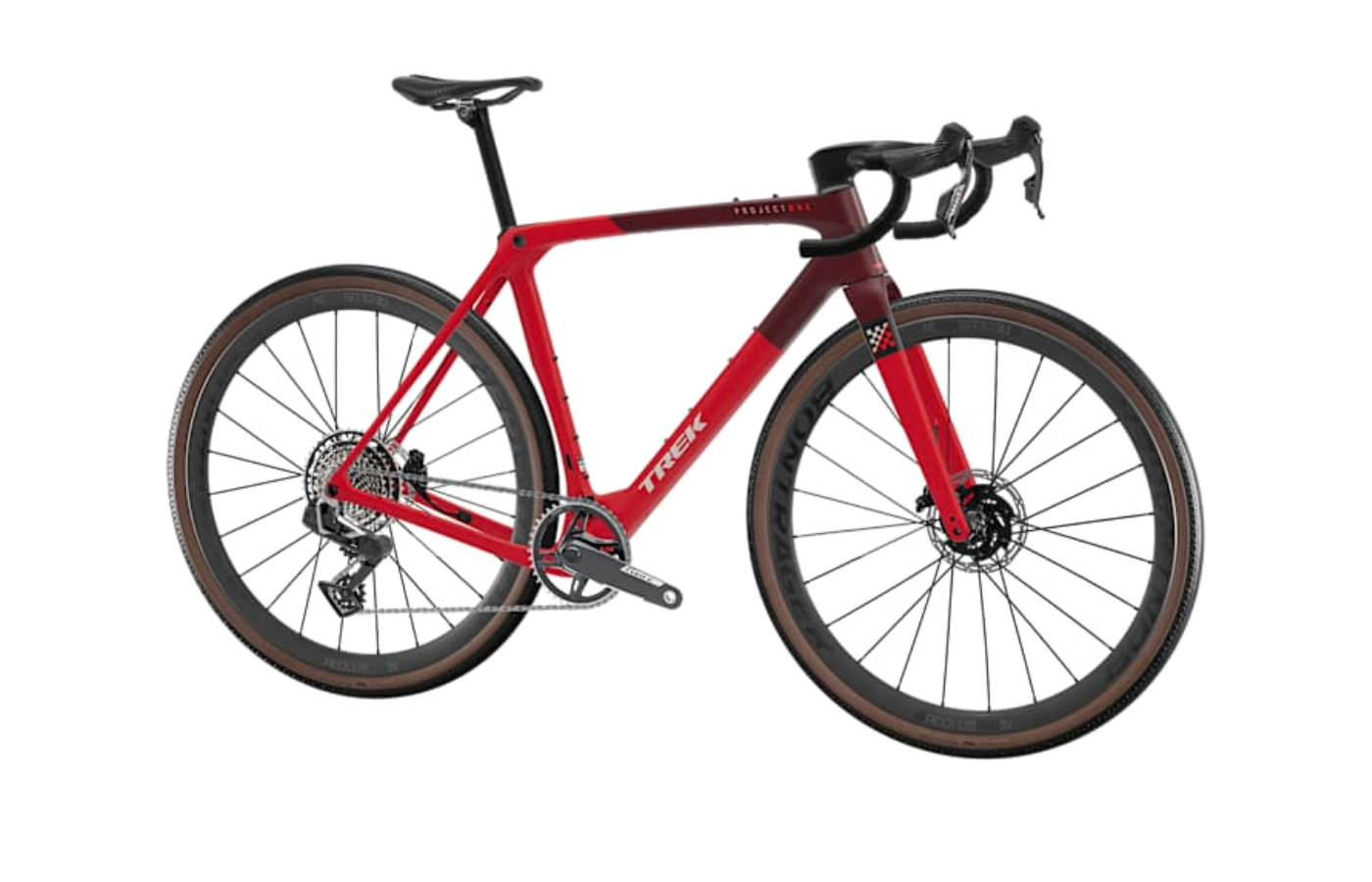
Checkmate
Trek's aero gravel racer with IsoSpeed compliance at the seatpost — a direct Aspero-5 alternative that trades pure aero numbers for some long-day comfort.
Compare →