Libre
vsDiverge
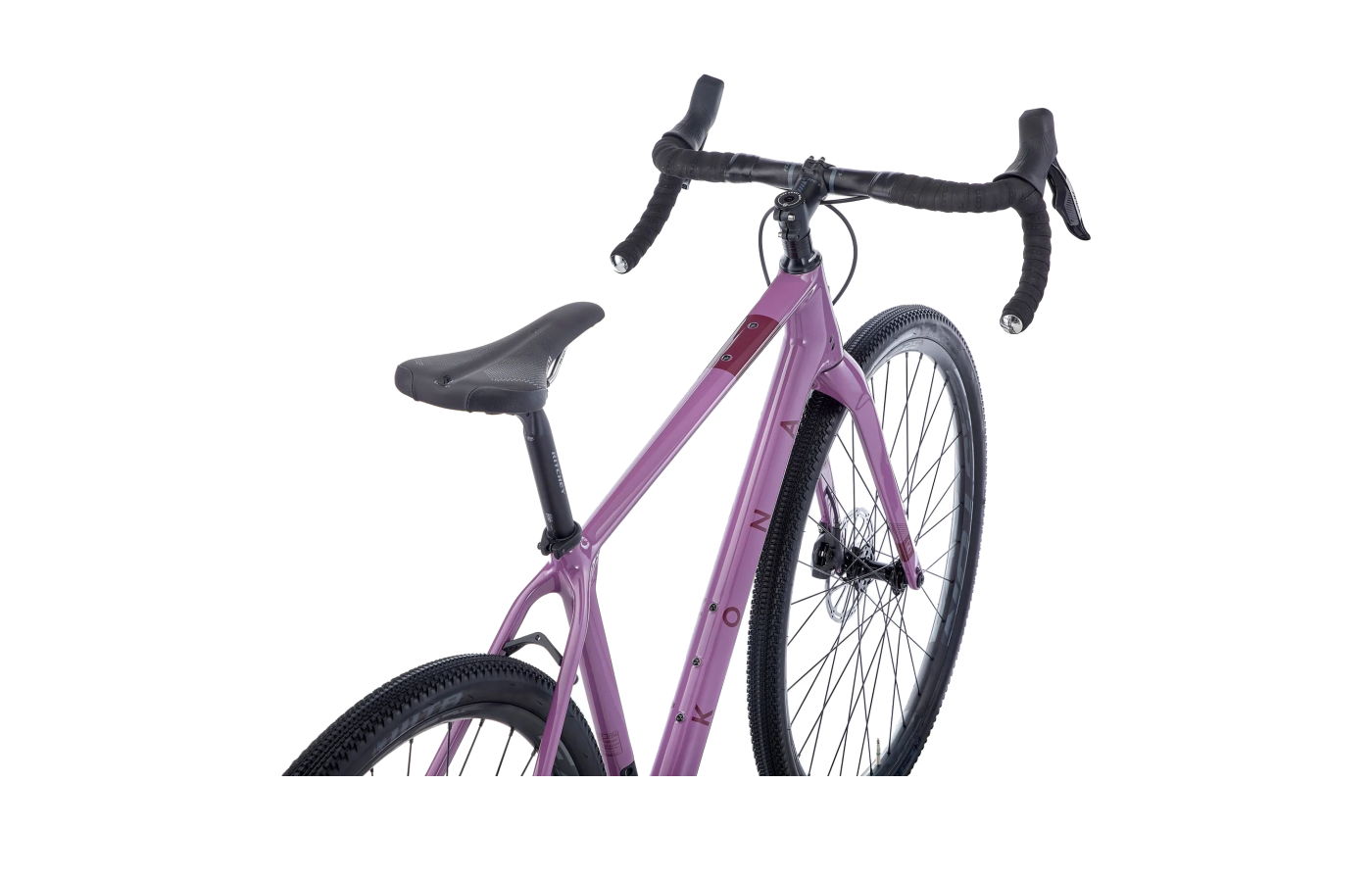
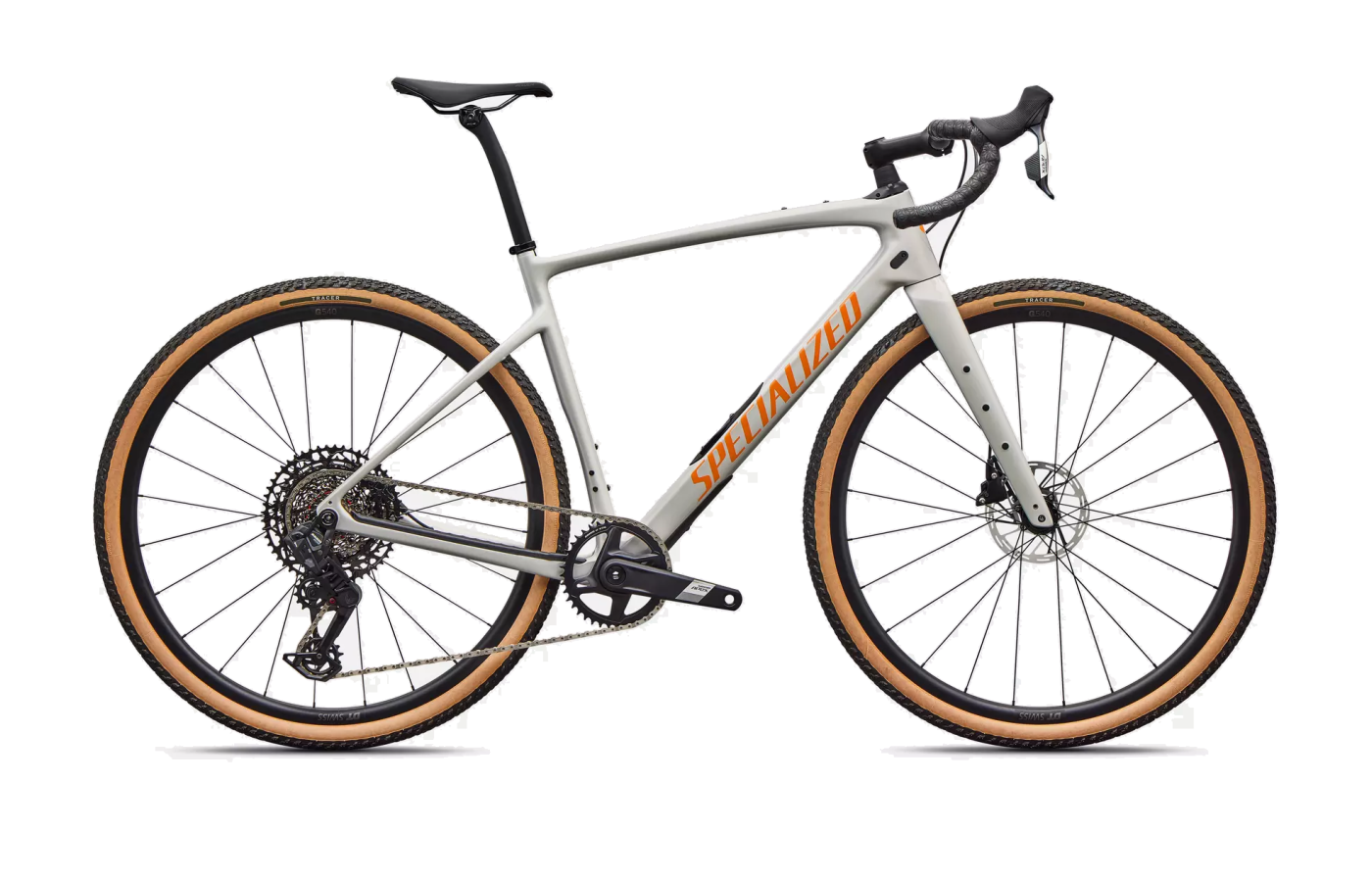
Same tire clearance, opposite philosophies.
The Libre G2 is the sharpened, rigid all-rounder. The Diverge 4 is the off-road specialist with 20 mm of front-end travel.
Libre
- Lighter, sharper carbon platform — shorter 435 mm chainstays and steeper STA make it eager to climb and accelerate.
- Wireless shifting at $4,399 — SRAM Apex AXS performs like Force in use, at two tiers less money.
- Simple, serviceable design — 27.2 mm post, UDH, threaded-stem cockpit, no proprietary suspension to maintain.
- No suspension or damping beyond tires and seatpost — rough washboard transfers to the rider.
- Stock Easton ARC 25 wheels are functional but heavy; reviewers consistently flag a wheelset upgrade as the highest-value change.
Diverge
- Future Shock 3.0 front-end — 20 mm of sprung travel takes the edge off chunky terrain and reduces long-ride fatigue.
- Massive off-road capability — 50 mm clearance with 8 mm mud room, or 2.2" MTB tires with ISO-standard 4 mm.
- SWAT 4.0 downtube storage — integrated tool-and-tube bay on every carbon and alloy build.
- 85 mm BB drop plus stock 45 mm tires causes frequent pedal strikes — plan on upgrading to 50 mm rubber immediately.
- The Expert and lower tiers ship with non-adjustable Future Shock 3.2; on-the-fly lockout costs $450 to retrofit.
Editor’s analysis
Both bikes clear 50 mm rubber. Only one thinks you need a suspension system to use it.
The Kona Libre G2 and Specialized Diverge 4 both arrived in 2025 with the same headline number — 50 mm of tire clearance — and almost nothing else in common. The Libre got racier: shorter 435 mm chainstays, a steeper seat tube, less stack, more reach, a 27.2 mm seatpost for compliance, and the rest left simple. The Diverge went the other way, doubling down on Future Shock up front, an 85 mm bottom-bracket drop, and a longer wheelbase.
On the Kona Libre, the pitch is speed-through-simplicity. The carbon frame is stiff, the geometry is just aggressive enough to feel eager without being twitchy, and there's nothing on the bike that needs servicing at a four-year interval. Reviewers call it "fast, playful, and fun" and "eager to go up" — the lightweight, carve-the-gravel archetype. The trade is that when the surface gets genuinely chunky, the rigid front end and 700x45 stock tires let you feel every hit.
The Specialized Diverge is the opposite calculus. Future Shock 3.0 adds 20 mm of sprung travel, the Roval Terra seatpost flexes another 18 mm, and the slack 71-degree HTA plus 85 mm BB drop turn it into what Cycling Weekly called a "freight train on gravel." The catch is that 85 mm drop: paired with the stock 45 mm Tracer tires, nearly every reviewer reported pedal strikes on mild terrain, and a tire upgrade to 50 mm becomes functionally mandatory.
Put simply: the Libre is the bike you buy when "gravel" means mixed-surface epics, group rides, and the occasional singletrack detour. The Diverge is what you buy when the pavement section is just how you get to the dirt.
Where the builds differ.
Comparing our editor's-pick builds side-by-side. Winners highlighted row-by-row — lower price and weight, and the better-spec component, each mark a point.
Build variants & pricing
The Diverge runs from $2,099 alloy all the way to a $10,499 Pro LTD. The Libre stops at $4,399 — one carbon build, one alloy, nothing in between.
Prices are current US MSRP. Our editor's picks match tier-for-tier at SRAM Apex AXS and within $200 on price — the Libre CR ($4,399) against the Diverge 4 Comp Carbon ($4,199). If you want Rival, Force, or Red on the Diverge, it scales up to $10,499; Kona offers nothing above the CR.
How they fit, how they steer.
The fit-picked sizes differ by sizing convention, not rider. The Libre's size 50 and the Diverge's size 54 both put a 5'8" rider in the middle of each range. The Libre sits lower and shorter (565 mm stack, 385 mm reach) with a slacker 70.5° head angle; the Diverge is taller and longer (592 mm stack, 387 mm reach) with a steeper 71° HTA and noticeably lower BB.
Which size should I buy?
Size recommendations based on stack, reach, and effective top tube. The Libre offers six sizes from 48 to 58; the Diverge offers six from 49 to 61 and runs a full size larger in stack at the middle of the range.
→These are starting points. Flexibility, riding style, and preferred position all shift the answer — if you’re between sizes, a professional fit beats a chart.
What the magazines said.
Published reviews from trusted cycling outlets. Click through for the full write-up.
Which one should you buy?
If you ride mixed surfaces and value speed and simplicity, get the Libre. If most of your miles are chunky and off-road, get the Diverge.
Libre
If your rides stitch together pavement, smooth gravel, fire roads, and the occasional singletrack shortcut, the Libre G2 is the sharper, lighter, simpler tool. It rewards effort on climbs, corners confidently at speed, and asks nothing of you at the workbench.
Diverge
If "gravel" to you means genuinely rough dirt, washboard, loose descents, or long bikepacking days, the Diverge 4 is built exactly for that. The Future Shock and low BB trade pavement sharpness for off-road confidence — and you'll feel the payoff every time the trail gets loose.
Questions buyers actually ask.
Short answers to the things we get emailed about most often.
01Which one is faster?
Depends on the surface. On smooth to moderate gravel and pavement, the Kona Libre is quicker — it's lighter (reviewers clocked test bikes around 20–21 lb), climbs more eagerly thanks to shorter 435 mm chainstays and a steeper seat tube, and has no suspension bob to damp out of standing efforts.
On chunky gravel, washboard, and loose descents, the Specialized Diverge carries speed better. Reviewers describe it as a "freight train" — the Future Shock 3.0 keeps the front wheel tracking on bumps that would deflect a rigid fork, and the slacker 71° head angle lets you push harder into fast, loose corners without tensing up.
02Is the Diverge's Future Shock worth it?
On the right terrain, yes. It's 20 mm of sprung travel at the head tube (not the fork), so it damps vertical hits from bumps, roots, and washboard without affecting steering geometry. Reviewers consistently credit it with reducing hand and shoulder fatigue on long off-road days.
The caveat is which version: the Future Shock 3.1 (alloy builds) is spring-only, 3.2 (Comp, Expert) adds hydraulic damping but no lockout, and 3.3 (Pro, Pro LTD) is adjustable from locked-out to fully open. Reviewers broadly prefer the 3.3. Upgrading 3.2 to 3.3 aftermarket costs around $450.
03How much tire can each bike actually fit?
Kona Libre G2: 700x45c officially with fenders, 700x50 without. Several reviewers comfortably fit 700x48.
Specialized Diverge 4: 700x50 with 7–8 mm of mud clearance, or a 2.2" mountain bike tire (roughly 56 mm) with ISO-standard 4 mm clearance. This is one of the widest clearances in gravel.
Both ship with 45 mm tires stock. On the Diverge, going wider isn't optional — the 85 mm BB drop causes pedal strikes with 45s. On the Libre, it's a preference.
04Why isn't the Libre available in a Rival or Force build?
Kona simply doesn't offer one. The Libre G2 comes in exactly two builds: the Base ($2,099, alloy frame, Shimano Cues mechanical) and the CR ($4,399, carbon frame, SRAM Apex AXS). That's the full lineup.
If you want a higher-tier drivetrain on a Libre, the frameset sells separately for $1,950 and you build it up. Specialized, by contrast, offers eight builds from $2,099 alloy all the way to the $10,499 Diverge 4 Pro LTD with Red AXS.
05Will the Diverge's pedal strike issue affect me?
Almost certainly, if you run the stock 45 mm tires on technical terrain. The 85 mm bottom-bracket drop, combined with 172.5 mm cranks on the 54 and 56 frames, drew consistent complaints across BikeRadar, Cycling Weekly, and Velo — pedal strikes "on even pretty mellow trails," and at least one tester broke power pedals from repeated strikes.
The fix Specialized's own engineers implicitly endorse is a 50 mm or 2.2" tire. With bigger rubber, the BB rises and the issue largely resolves. Plan on swapping tires on day one.
06Can I bikepack on either of these?
Yes, both — but they emphasize it differently. The Libre keeps two triangle bottles, a top-tube bag mount, and an under-downtube mount, but dropped some of the first-generation fork and rack mounts in the move toward racing. It's fine for a credit-card tour or a multi-day gravel trip; less ideal for fully-loaded touring.
The Diverge retains "mounts galore" — fork legs, top tube, under-BB, plus rack and fender mounts — and adds the SWAT 4.0 internal downtube storage for tools and a tube. It's the more serious bikepacking platform of the two.
07How does the maintenance compare?
The Libre is deliberately low-maintenance: threaded-style 27.2 mm seatpost, standard stem, fully guided internal cable routing with a removable BB door, UDH rear dropout. Reviewers call it "made to be easy to live with."
The Diverge has a few more service touchpoints — notably the Future Shock — but Specialized claims a four-year service interval on the hydraulic Future Shock 3.2 and 3.3. It also uses a threaded BB (a plus for longevity) and UDH. External cable routing around the Future Shock is less clean visually but simplifies hose swaps.
08Which is better as a single "gravel plus road" bike?
The Libre, clearly. Its lighter weight, higher BB, and rigid front end make it feel quicker and more connected on pavement, and it can still handle most gravel without feeling outgunned. If you only own one drop-bar bike and half your miles are paved, this is the easier pick.
The Diverge is described by reviewers as "gravel-first" — on pavement it feels "unwieldy" at low speed, the Future Shock moves under out-of-saddle efforts, and the 45 mm tires hum. It's excellent at what it's built for, but it's not the quiver-of-one bike.
Similar bikes
If your priorities don’t map cleanly onto either of these, one of these adjacent bikes probably fits better.
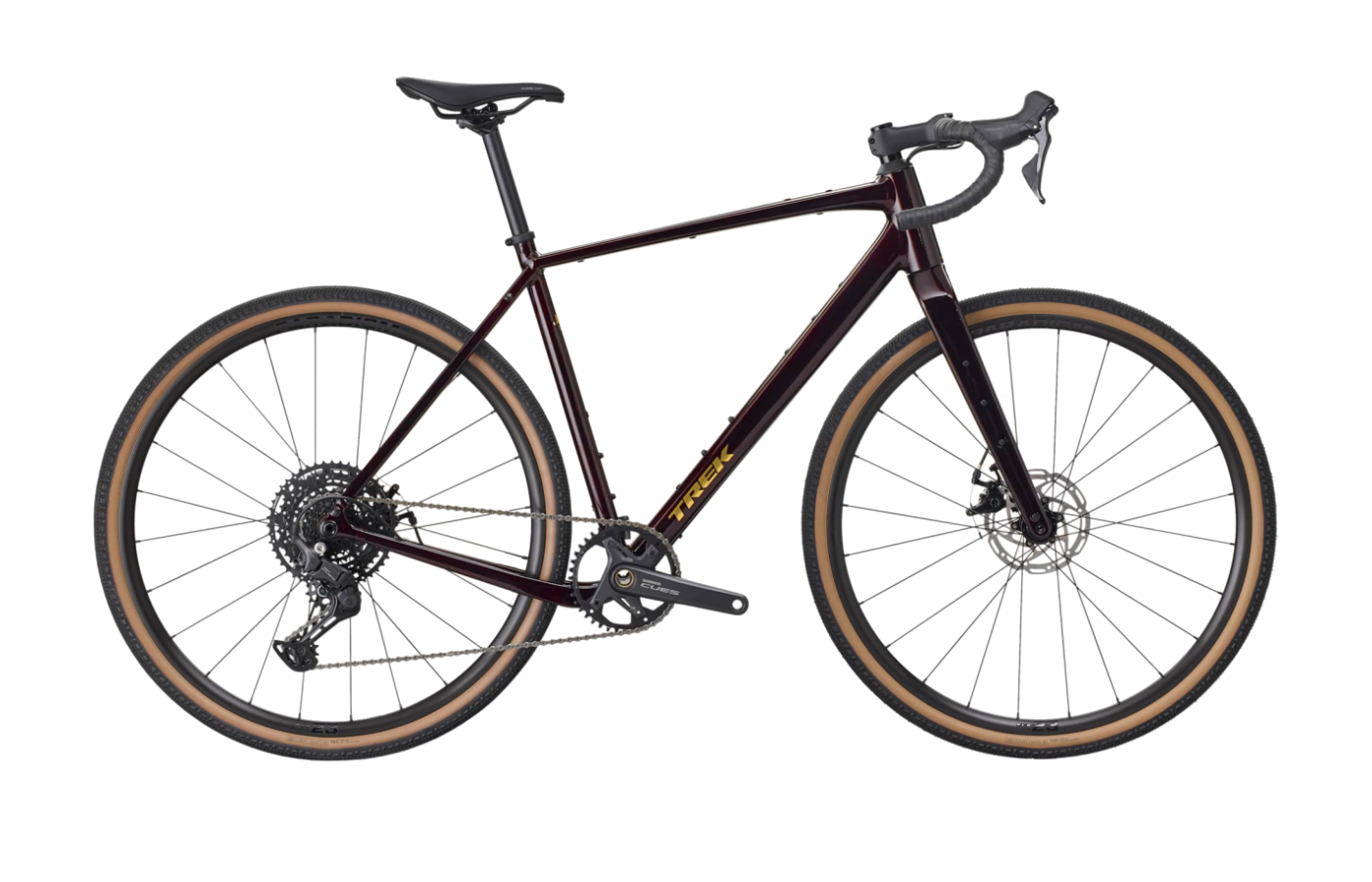
Checkpoint
Trek's carbon gravel platform with the IsoSpeed decoupler for rear compliance and extensive mounting points. Splits the difference — more comfortable than the Libre, less gimmicky than the Diverge's Future Shock.
Compare →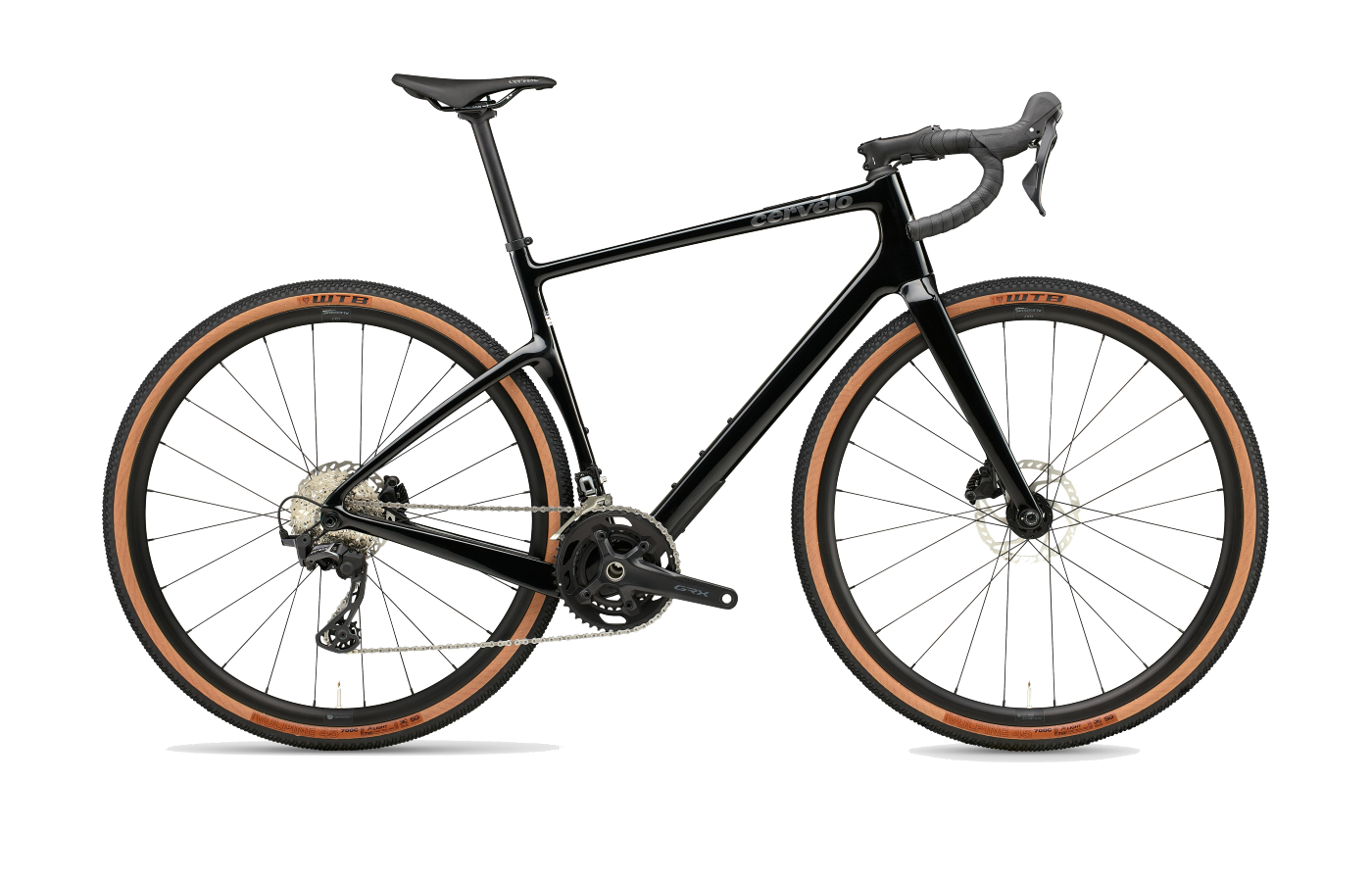
Aspero
Cervélo's pure gravel racer — sharper and more aerodynamic than the Libre, built for fast courses rather than mixed-surface epics. The pick if you're racing Unbound, not exploring.
Compare →Grizl
Canyon's direct-to-consumer adventure gravel bike — even more tire clearance and mounting points than the Diverge, rigid front end, and priced 20–30% below comparable US-brand carbon. Best if you know your fit.
Compare →