Rove
vsJourneyer
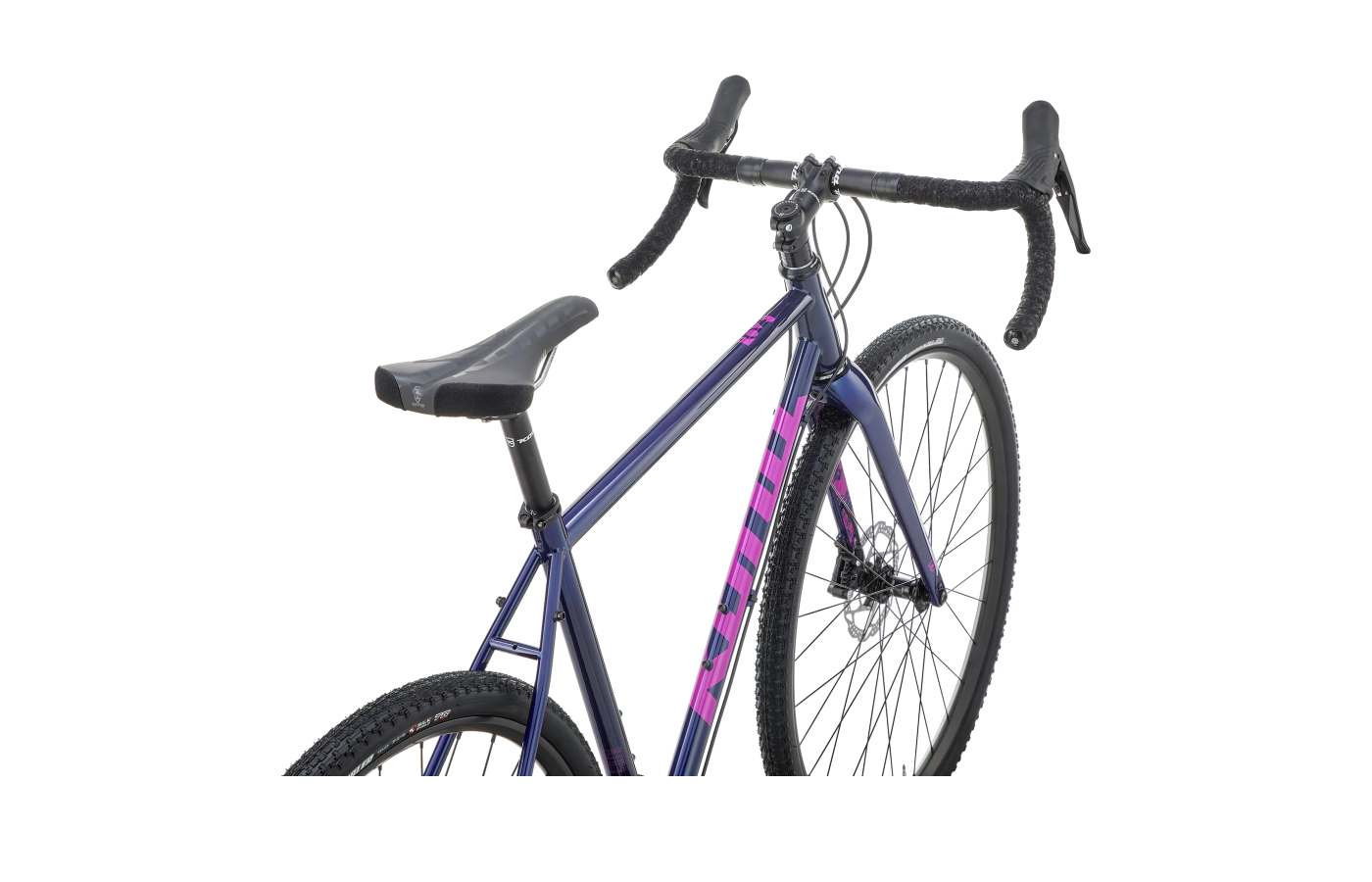
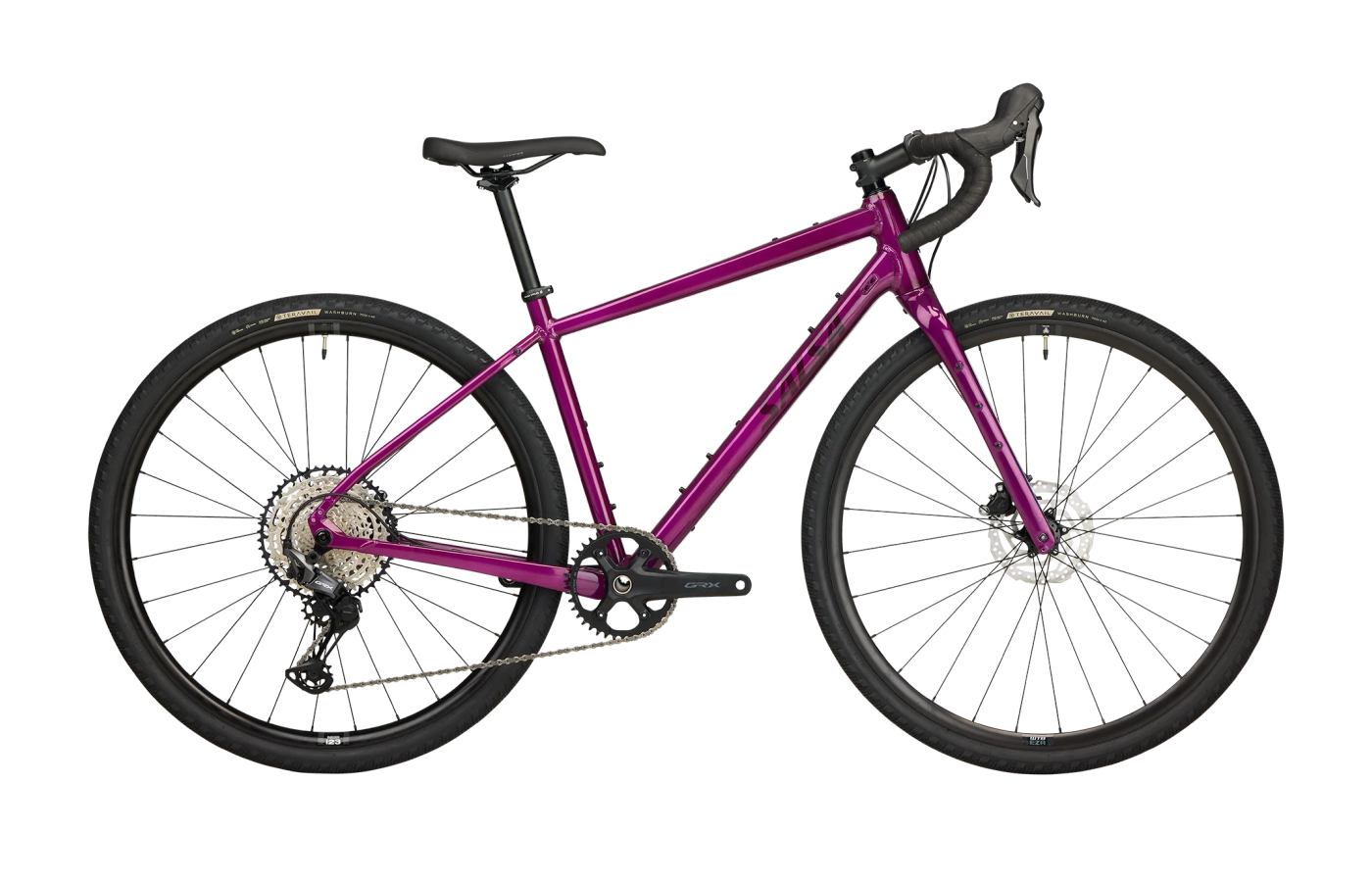
Steel soul versus aluminum everyman.
The Rove is Kona's chromoly adventure classic, tuned for loaded touring. The Journeyer is Salsa's do-it-all aluminum platform, spanning 15 builds from $629 up.
Rove
- Butted chromoly frame — compliant on rough pavement and genuinely durable for loaded touring, with no ride penalty unloaded.
- Composed under load — reviewers across the board call the Rove "rock solid" at speed and more fun with bags on than off.
- Full-carbon fork on the LTD — uncommon at this price on a steel frame, and it noticeably settles front-end chatter.
- Only 42 mm tire clearance — narrower than most gravel peers.
- Six builds total, and none below $949 — no ultra-budget entry like Salsa offers.
Journeyer
- 50 mm tire clearance — among the widest in the sub-$2.5k class, with 650b × 55 mm available too.
- 15 builds from $629 up — flat-bar, 650b and 700c, and Claris through GRX 610 drivetrains.
- Dropper-post routing — internal routing on the drop-bar frame is genuinely useful if you push the Journeyer off-road.
- Aluminum frame lacks the compliance character steel buyers are shopping for.
- Several mid-tier builds still ship with mechanical disc brakes — reviewers call that a value miss.
Editor’s analysis
Both bikes live in the same $1k–$2.5k gravel-adventure bracket — but pick up either frame and you're holding two very different ideas about what a gravel bike should be.
The Kona Rove is a steel bike first and a gravel bike second. Every build in the range except the entry-level AL 700 uses Kona's butted chromoly, paired with a long-haul geometry tuned for bikepacking composure. Reviewers describe it as "rock solid" on descents and "notably more fun to ride while bikepacking" — another way of saying it's a bike that rewards carrying stuff.
The Salsa Journeyer takes the opposite approach: a 6061-aluminum frame with a carbon Waxwing fork on mid-to-upper builds, and a catalog of 15 builds from $629 flat-bar commuters to the $2,499 GRX 610 drop-bar. Velo called it "The Happy Bike" — forgiving, confidence-inspiring, hard to hate. Where the Rove commits to one material and one mission, the Journeyer tries to be everyone's first gravel bike.
Geometry tells the same story. At the fit-picked sizes, the Kona Rove 52 runs a 71° head angle and 1036 mm wheelbase; the Salsa Journeyer 55cm slacks out to 69.5° and stretches to 1051 mm. Chainstays are 5 mm longer on the Salsa (440 vs 435), and its seat tube is deliberately short — leaving lots of exposed post for flex and standover. The Journeyer is the calmer, more planted bike. The Rove steers a touch quicker but sits lower to the ground; one reviewer flagged surprise pedal strikes in sharp corners.
Tire clearance is the other divergence. The Rove officially clears 42 mm, enough for most mixed-surface riding but narrow for a modern adventure bike. The Journeyer clears 700 × 50 mm (or 650b × 55 mm) — one of the widest at this price and a real advantage if you ever want plus-sized rubber on rough doubletrack. Put simply: the Rove is the better steel bike for serious loaded miles; the Journeyer is the more adaptable platform at nearly any budget.
Where the builds differ.
Comparing our editor's-pick builds side-by-side. Winners highlighted row-by-row — lower price and weight, and the better-spec component, each mark a point.
Build variants & pricing
The Journeyer spans a much wider range (15 builds, $629–$2,499); the Rove keeps it to six (AL 700 through LTD 36SH).
Prices are current US MSRP. The editor's picks here are the flagship GRX builds on each side — Kona Rove LTD (36SH) at $2,899 and Salsa Journeyer GRX 610 700c at $2,499 — both pairing hydraulic GRX drivetrains with full-carbon forks. Lower down the range the Journeyer reaches much further toward the budget end.
How they fit, how they steer.
Stack matches at 570 mm — but the Journeyer runs 7 mm shorter reach, 1.5° slacker head angle, and 15 mm longer wheelbase. It's the more stable, more relaxed frame; the Rove steers a touch quicker.
Which size should I buy?
Size labels differ (Kona uses cm of seat tube, Salsa uses a nominal cm label), but stack and reach are directly comparable across the range.
→These are starting points. Flexibility, riding style, and preferred position all shift the answer — if you’re between sizes, a professional fit beats a chart.
What the magazines said.
Published reviews from trusted cycling outlets. Click through for the full write-up.
Which one should you buy?
If you want a steel bike tuned for loaded bikepacking, get the Rove. If you want one versatile aluminum platform at almost any budget, get the Journeyer.
Rove
If your ideal ride involves bags on the bike and a long day ahead — gravel doubletrack, hardpack forest road, paved connectors — the Rove is the steel bike built for that. Composed under load, comfortable unloaded, and priced reasonably against other chromoly adventure bikes.
Journeyer
If you want one bike to commute, dabble in gravel, try bikepacking, and possibly never decide which it is — the Journeyer is that bike. The $629–$2,499 build spread means you can enter almost anywhere and the frame will hold up as you grow into it.
Questions buyers actually ask.
Short answers to the things we get emailed about most often.
01Which has more tire clearance?
The Salsa Journeyer, by a clear margin. Salsa officially clears 700 × 50 mm (or 650b × 55 mm) across the range — one of the widest clearances at this price point.
The Kona Rove tops out at 42 mm — enough for the 40 mm Maxxis Rambler it ships with on the LTD, but clearly narrower. If you plan on running plus-sized rubber on rough doubletrack, the Journeyer is the obvious pick.
02Steel frame vs aluminum — does it really matter?
For loaded miles, yes. Every Rove build except the entry-level AL 700 uses Kona's butted chromoly, and reviewers consistently call the ride "plush and comfortable" and "rock solid" under bikepacking loads. Bikepacking.com specifically noted the Rove LTD became "notably more fun to ride while bikepacking" — the inherent stiffness turns into an asset under weight.
The Journeyer's 6061 aluminum frame is also praised as "surprisingly comfortable" — Velo credited the lack of frame stiffness with producing a "super compliant" ride — but it doesn't have the damping character steel buyers are specifically after. If ride feel is the deciding factor, the Rove wins. If utility and build range are, the Journeyer does.
03Which is the better bike for bikepacking?
The Kona Rove, especially in LTD trim. The steel frame's stiffness manifests as a trembling-free platform when fully loaded, and Road.cc specifically rated power transfer 8/10 on the LTD. Kona spec the LTD (36SH) with Shimano GRX 12-speed 2x (46/30T × 11-36T), a full-carbon Kona Libre fork with triple mounts per blade, and 40 mm Maxxis Ramblers.
That said, the Journeyer GRX 610 is a credible alternative — 1x12 GRX with a 10-51T cassette (a much lower low gear than the Rove), a carbon Waxwing fork, and wider tire options. For most riders the Rove is the stronger loaded platform; for riders who want the lowest climbing gear out of the box, the Journeyer has it.
04What's the geometry difference in practice?
At the fit-picked sizes — Rove 52, Journeyer 55cm — stack is identical at 570 mm, but the rest diverges:
- Head angle: Rove 71°, Journeyer 69.5° (1.5° slacker on the Salsa)
- Reach: Rove 383 mm, Journeyer 376 mm (7 mm longer cockpit on the Kona)
- Wheelbase: Rove 1036 mm, Journeyer 1051 mm (15 mm longer Salsa)
- Chainstay: Rove 435 mm, Journeyer 440 mm
The Journeyer is the more planted, calmer-steering bike — Velo noted it "wanted to sit up a little (understeer) on high-speed sweeping corners." The Rove is quicker-turning but can be caught out on very tight, washed-out trails.
05How many builds does each brand offer?
Kona Rove: 6 builds, $949 (AL 700, Claris) → $2,899 (LTD 36SH, Shimano GRX 12-speed).
Salsa Journeyer: 15 builds, $629 (Flat Bar Altus) → $2,499 (GRX 610 700c). Flat-bar versions, 700c and 650b wheels, and drivetrains from Shimano Claris up through GRX 610 and Shimano CUES.
If you're shopping in the $1,000–$1,500 window, the Journeyer simply has more options. If you want a premium steel build, only the Rove offers one.
06Are the stock tires good enough?
Kona Rove LTD (36SH) ships with 700 × 40c Maxxis Rambler EXO TR — tubeless-ready, a reasonable all-rounder, and well-regarded by reviewers.
Salsa Journeyer GRX 610 ships with 700 × 42 mm Teravail Washburn Durable — also tubeless-ready. Several reviewers (Velo, Cycling Weekly) flagged the Washburn as overwhelmed on faster descents in loose terrain, suggesting a more aggressive tread for serious off-road use.
For most mixed-surface riding either stock tire is adequate. Lower-build Journeyers (Sora, Claris) ship with wire-bead, 30-TPI tires that reviewers recommend upgrading.
07Hydraulic or mechanical disc brakes?
Both editor's-pick builds — Rove LTD (36SH) and Journeyer GRX 610 700c — come with Shimano GRX hydraulic disc brakes. No contest there.
Further down the range both brands move to mechanical. Kona's base builds use Tektro or Microshift mechanicals; Salsa's lower-tier models similarly use Tektro MD-C550 mechanicals. Hydraulic gives more stopping power and better modulation, but mechanicals are field-serviceable with common tools — an advantage for remote bikepacking that reviewers (GearJunkie, mal woanders) specifically called out as a positive on the base Rove.
08Which is better for commuting?
The Journeyer, for most riders — mostly because of the price floor. The $629 Flat Bar Altus and $699 Claris 650b builds put you on a capable aluminum platform with mounting points for racks, fenders, and bottles, and the flat-bar option is friendlier for urban riding than a drop bar.
The Rove is more bike than most commuters need and starts at $949 for an alloy build, $1,399 for the steel. If you want steel and plan to grow into serious adventuring, the Rove is still a reasonable commuter. If you want the cheapest capable do-it-all, the Journeyer wins.
Similar bikes
If your priorities don’t map cleanly onto either of these, one of these adjacent bikes probably fits better.
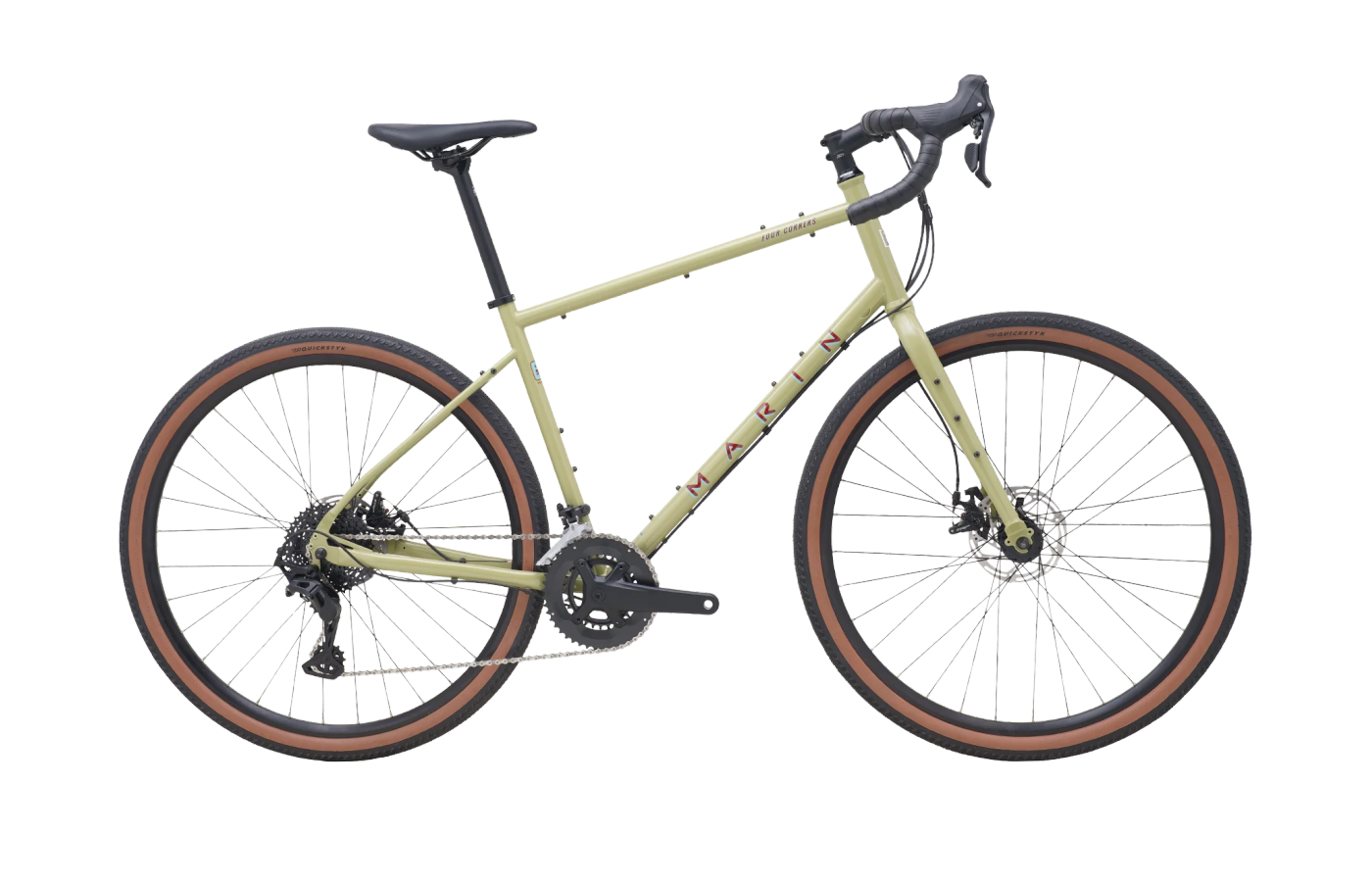
Four Corners
Marin's steel adventure bike plays the same song as the Rove — butted chromoly, long-haul geometry, every mount you could want — at a more aggressive price. If you like the Rove's material and mission but the LTD is out of budget, this is the obvious cross-shop.
Compare →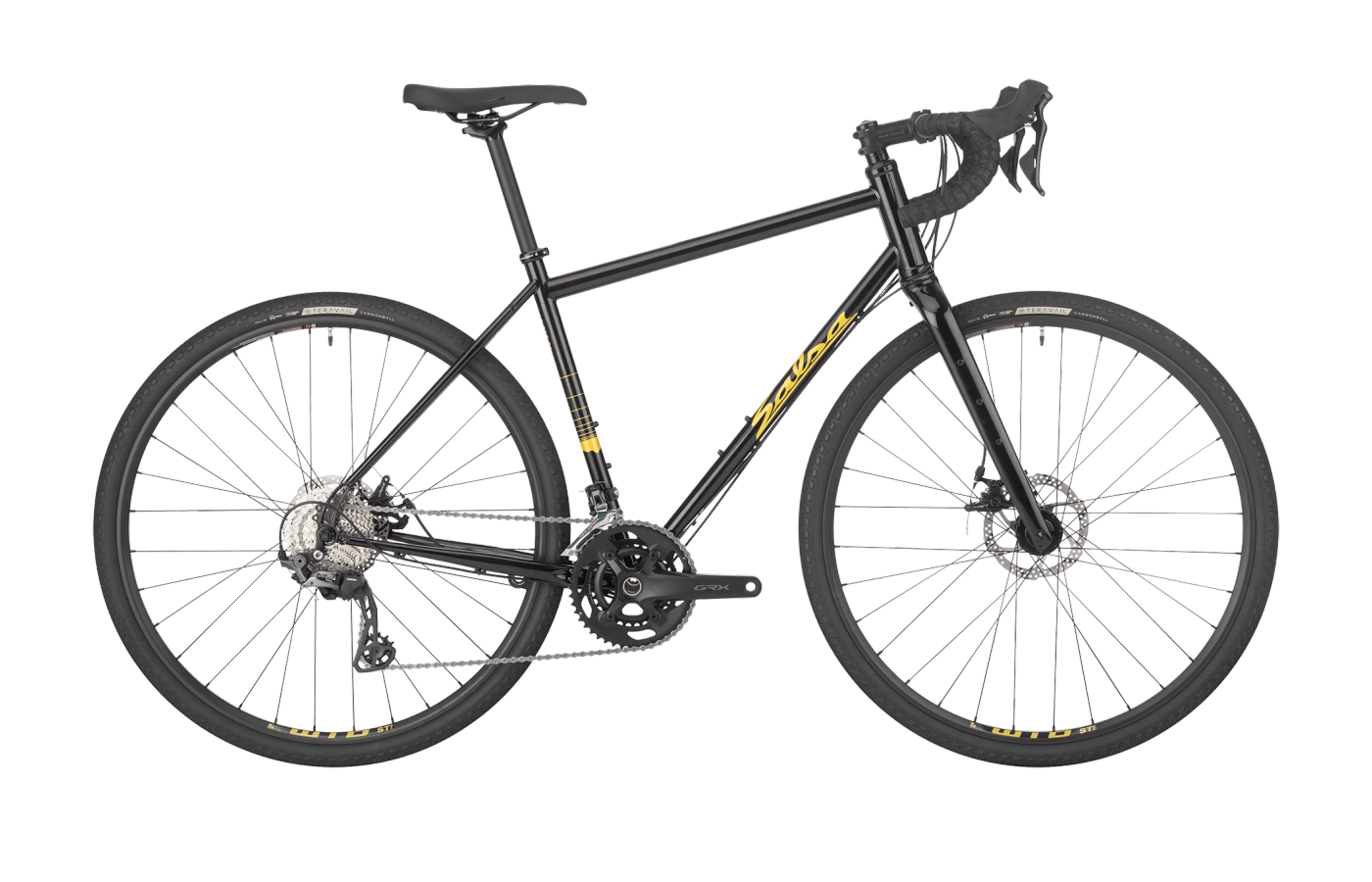
Vaya
Salsa's other steel bike. The Vaya leans further road-touring than either the Rove or the Journeyer — more paved miles than rough gravel, but with the same rack mounts and all-day geometry. Worth a look if you're halfway between a gravel bike and a classic tourer.
Compare →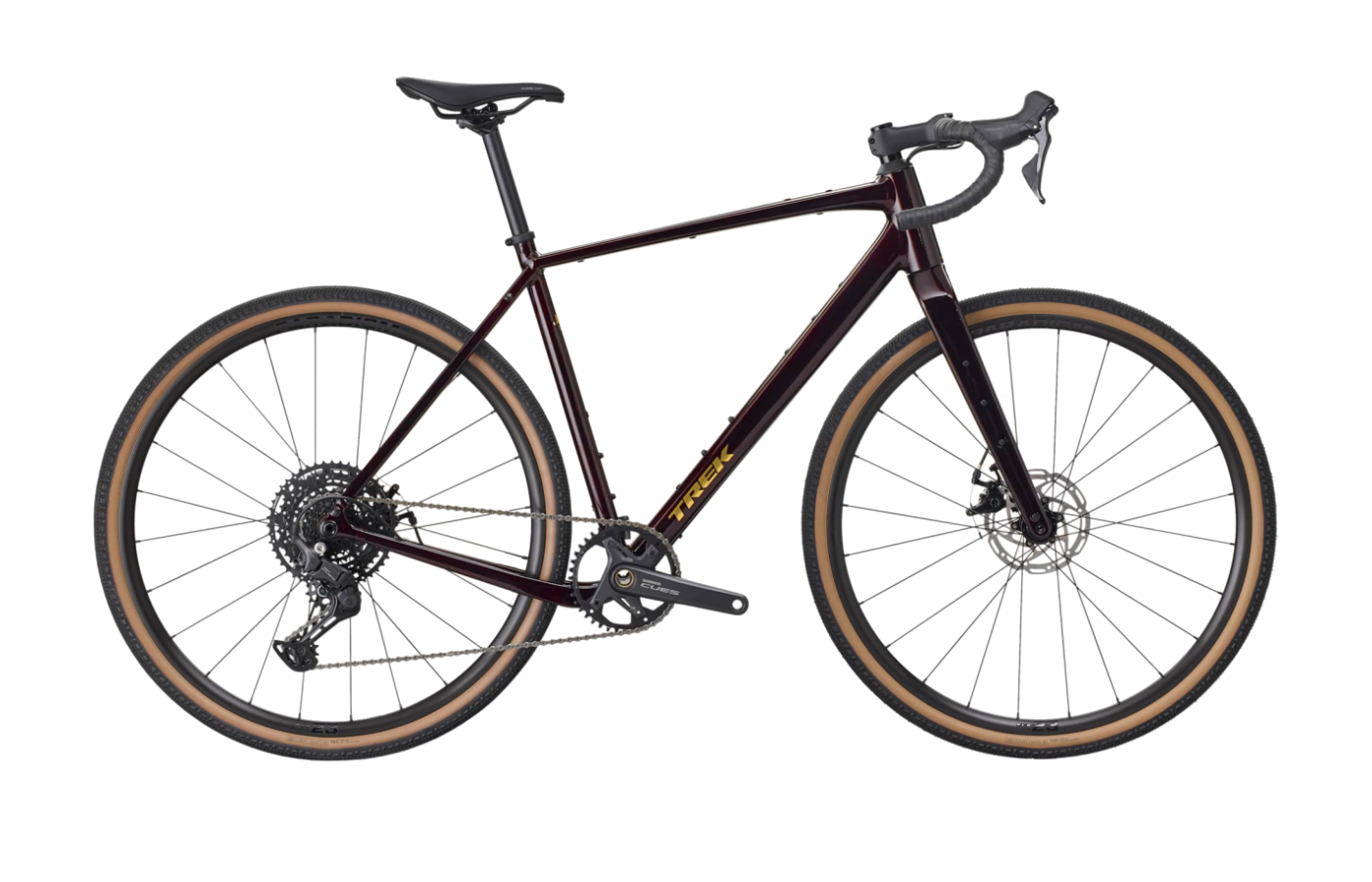
Checkpoint
Trek's mainstream gravel platform in aluminum or carbon. Faster, sharper, and more road-racy than either the Rove or the Journeyer — if you think you might want to ride a gravel race, not just a gravel tour, start here instead.
Compare →