Rove
vsDiverge
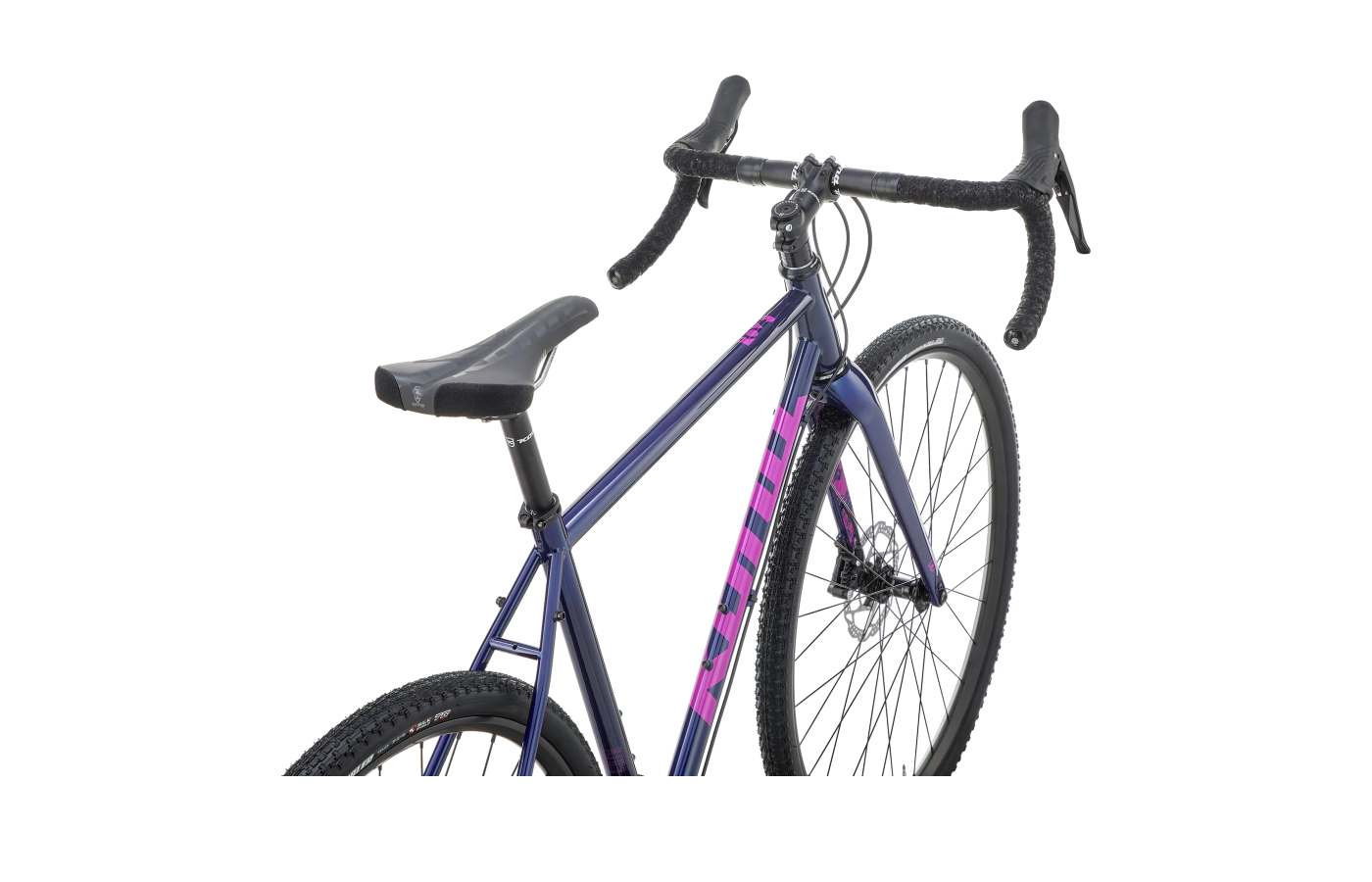
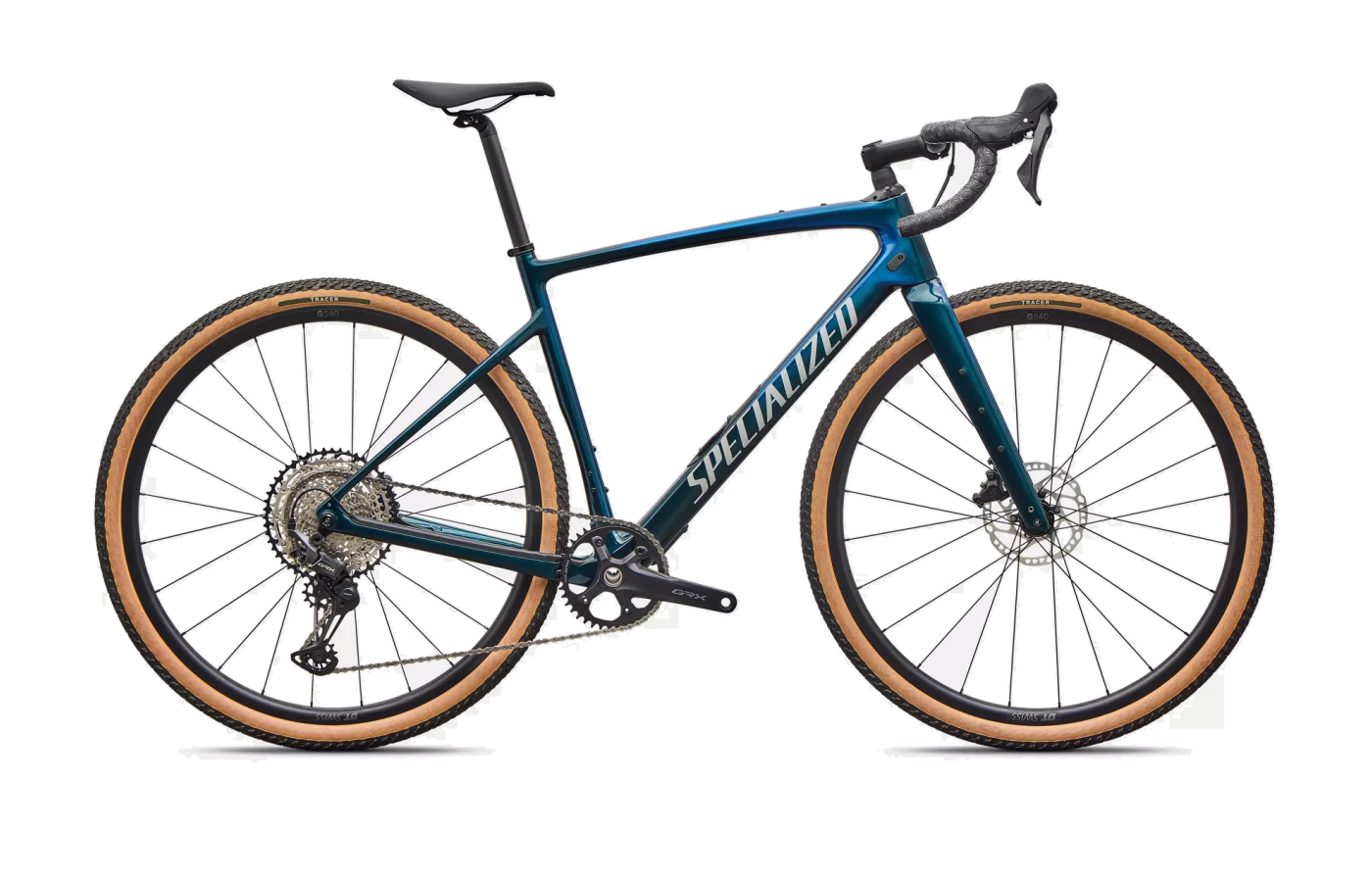
Two gravel bikes, two centuries apart.
The Rove is a chromoly steel adventure rig built around 'steel is real' and field-serviceable parts. The Diverge 4 is a carbon, suspension-fork race-adventure machine pushing gravel toward MTB.
Rove
- Whole lineup under $3k — starts at $949 (AL 700) and tops out at $2,899 (LTD); chromoly steel at every price point above that.
- Field-serviceable everywhere — external cable routing, threaded BB cups, mechanical drivetrains on most builds. Fixable in the backcountry with common tools.
- Mounts for days — three bottle cages, fork-blade triple mounts, rack and fender bosses. Bikepacking-ready out of the box.
- Tire clearance caps at 42 mm — narrower than most modern gravel bikes.
- Heavier than carbon competition (~11.1 kg / 24.5 lb on the LTD) and not the snappiest off the line.
Diverge
- Future Shock 3.0 fork — 20 mm of front travel takes the edge off chunky terrain and reduces hand fatigue on long days.
- 50 mm tire clearance — officially 50 mm with 7 mm mud clearance, or 2.2-inch MTB tires with ISO-standard 4 mm. Future-proof.
- SWAT 4.0 internal storage — downtube cargo door now on alloy models too, with a larger opening than Diverge 3.
- Carbon entry at $3,499 puts the floor above the Rove's ceiling — no head-to-head budget option.
- 85 mm BB drop with stock 45 mm tires causes pedal strikes on technical terrain — most reviewers recommend a tire swap right out of the box.
Editor’s analysis
This isn't a fight between bikes — it's a fight between eras of what gravel means.
The Kona Rove has been doing the same thing well for years: butted chromoly steel, threaded BB, mechanical disc brakes on most builds, mounts everywhere, and a price ceiling under $3k. The whole catalog tops out at $2,899 for the LTD with GRX 810 and a carbon fork. It's the bike you buy when bikepacking, commuting, and Sunday gravel are one and the same thing, and you don't want anything on the bike you can't fix in a parking lot.
The Specialized Diverge 4 is a totally different philosophy. The cheapest carbon model is $3,499 — more than the priciest Rove — and the lineup goes all the way to $10,499 for a Pro LTD with SRAM Red XPLR. Every model gets the Future Shock fork (20 mm of front travel), FACT 9r carbon or E5 alloy with internal SWAT storage, 50 mm tire clearance, and an 85 mm bottom-bracket drop borrowed from MTB. Reviewers describe the Diverge 4 as a 'freight train on gravel' — fast, planted, low.
Tire clearance tells the story neatly. The Rove clears 42 mm and ships most builds with 47c rubber on 650b wheels. The Diverge clears 50 mm — or 2.2-inch MTB tires with the ISO-standard 4 mm clearance — and is designed around a wider tire than what comes stock. One bike is from the gravel-as-comfortable-touring era; the other is from the gravel-as-mini-MTB era.
Put another way: the Rove is what you buy when you want a do-everything gravel bike for under $3k that you'll keep for fifteen years. The Diverge is what you buy when you race or aggressively explore gravel, you want a hydraulic suspension fork, and you've made peace with paying carbon-bike money for it.
Where the builds differ.
Comparing our editor's-pick builds side-by-side. Winners highlighted row-by-row — lower price and weight, and the better-spec component, each mark a point.
Build variants & pricing
The Rove tops out where the Diverge's carbon range begins. Two different markets, barely overlapping.
Prices are current US MSRP. The Rove lineup is steel ($1,399–$2,899) plus an entry alloy ($949), and never enters the carbon-frame conversation. The Diverge 4 starts in alloy at $2,099, jumps to its first carbon build at $3,499, and scales to $10,499 — every model gets the Future Shock fork and SWAT storage.
How they fit, how they steer.
Rove size 52 vs Diverge size 54 — the fit-picked sizes for a 5'8" rider on each. Same 71° head-tube angle, but the Diverge sits 22 mm taller in stack with 4 mm more reach, and runs 5 mm shorter chainstays (430 vs 435 mm). The Diverge's much lower BB drop (85 vs 72 mm) is what shapes its 'in the bike' character.
Which size should I buy?
Sizing labels differ — the Rove uses 48–58, the Diverge uses 49–61 — but both ranges cover roughly the same rider heights through the middle.
→These are starting points. Flexibility, riding style, and preferred position all shift the answer — if you’re between sizes, a professional fit beats a chart.
What the magazines said.
Published reviews from trusted cycling outlets. Click through for the full write-up.
Which one should you buy?
If you want one bike for bikepacking, commuting, and weekend gravel under $3k, get the Rove. If you race or aggressively trail-ride on gravel and want suspension and 50 mm tires, get the Diverge.
Rove
If you want a workhorse steel frame with mounts everywhere, mechanical parts you can fix anywhere, and a price tag that leaves money for bags and trips — this is still hard to beat. Comfortable loaded, dependable for the long haul, and never overspecced for what gravel actually is on most days.
Diverge
If most of your riding is dirt, you want suspension at the front, and you're chasing speed on rough terrain, the Diverge 4's geometry and Future Shock add up to a 'freight train' character that holds momentum through chunder. Plan to spend an hour swapping the stock 45 mm tires for 50 mm or 2.2-inch — that's the unlock.
Questions buyers actually ask.
Short answers to the things we get emailed about most often.
01What's the maximum tire clearance on each?
Kona Rove: 42 mm officially. Most builds ship with 47c on 650b wheels, which measure roughly the same outside diameter as a 700x32 — so 'wide tire, smaller wheel' rather than '700c gravel monster.'
Specialized Diverge 4: 50 mm officially, with 7 mm of mud clearance. The frame also fits 2.2-inch (~56 mm) mountain bike tires with the ISO-standard 4 mm clearance. Most stock builds ship with 45 mm Tracer tires, but reviewers consistently recommend going wider immediately.
02What's the deal with pedal strikes on the Diverge?
The Diverge 4 uses an 85 mm bottom-bracket drop — borrowed from modern MTB — paired with 172.5 mm cranks on the 54 and 56 cm frames. With the stock 45 mm tires, the BB ends up low enough that reviewers report striking pedals on 'pretty mellow trails' (BikeRadar) and even breaking power-pedal bodies on rocky climbs (Cycling Weekly).
The fix is straightforward: run the 50 mm or 2.2-inch tires the frame is actually designed for, which raises the BB by 5–10 mm. The Rove's BB drop is much higher (72 mm on the 54), so it doesn't have this issue.
03Does the Future Shock actually work?
Reviewers are largely sold on it. Bike Rumor calls Future Shock 3.2 'nothing short of brilliant' on roots and broken pavement; Velo's Josh Ross says it 'absolutely saved me' on a fast rough descent. The 20 mm of vertical front-end travel measurably reduces hand and shoulder fatigue on long days, and Specialized claims up to 11 watts of energy savings (their internal number, not independently verified).
The non-adjustable 3.2 version can feel slightly 'bouncy' when you're standing and stomping. The top-tier 3.3 (on the Pro and Pro LTD) adds an on-the-fly lockout that handles this. The 3.1 on the entry carbon and alloy models is spring-only with no hydraulic damping.
04Why is the Rove so much cheaper?
Different platforms, different goals. The Rove is butted chromoly steel with mechanical disc brakes on most builds, external cable routing, a threaded BB, and parts you can buy at any shop. There's no proprietary integration tax. The whole lineup runs $949–$2,899.
The Diverge starts at $2,099 in alloy and jumps to $3,499 for its cheapest carbon build. You're paying for the FACT 9r carbon frame, the hydraulic Future Shock fork (a serious piece of engineering), SWAT internal storage, and on the upper builds, electronic shifting and Roval carbon wheels. Different bike, different math.
05Can either bike handle real bikepacking?
Yes — and both lean into it.
Rove: Three bottle mounts, fork-blade triple mounts on the LTD's carbon fork, rack and fender bosses, and Bikepacking.com explicitly notes the LTD becomes 'notably more fun to ride while bikepacking' once loaded — its torsional stiffness shows up as stability, not harshness, under bags.
Diverge 4: Mounts on the top tube, fork legs, under the BB, and rack/fender bosses on every model. SWAT 4.0 internal downtube storage adds usable cargo space without a bag. The carbon Future Shock fork limits some traditional rack options, so check fitment if you're running a full front rack.
06Steel vs carbon — does it matter for ride feel?
On the Rove, the chromoly frame is consistently described as 'plush,' with the natural damping of steel taking the edge off road buzz. The 650b x 47c tires (most builds) do most of the heavy lifting on bigger hits.
On the Diverge, the FACT 9r carbon is stiffer and lighter than steel, but the comfort comes from a different place: the Future Shock fork at the front and the 18 mm of deflection in the Roval Terra carbon seatpost (on builds that include it) at the rear. The result is similar end comfort, achieved very differently — and the Diverge weighs roughly 2–3 kg less than the equivalent Rove.
07Which is better for mixed road + gravel days?
The Rove handles mixed-surface days fine — it's a steel road bike with wider tires, basically. Reviewers describe it as 'comfortable on cobblestones' and capable on city streets.
The Diverge 4 is more polarizing. Cycling Weekly and Specialized themselves position it as a 'gravel-first machine' rather than a do-it-all — if you want gravel-and-pavement parity, the Specialized Crux is the better Specialized pick, not the Diverge. The 45 mm stock tires hum on tarmac, and the Future Shock has subtle out-of-saddle movement that some find distracting on smooth roads.
08What about long-term reliability?
Rove: Cromoly steel frame, threaded BB, external cables, mostly mechanical drivetrains — about as low-fuss as a modern gravel bike gets. Reviewers across the lineup describe it as a 'worry-free' build that'll 'take you on many exciting adventures for years to come.'
Diverge 4: Threaded BB (a real plus), SRAM UDH dropout (no more bent hangers), and Specialized says the hydraulic Future Shocks (3.2 and 3.3) have a four-year service interval. SWAT storage is reportedly more weather-sealed than past generations. The complexity is higher than the Rove, but the headline maintenance items are well-engineered.
Similar bikes
If your priorities don’t map cleanly onto either of these, one of these adjacent bikes probably fits better.
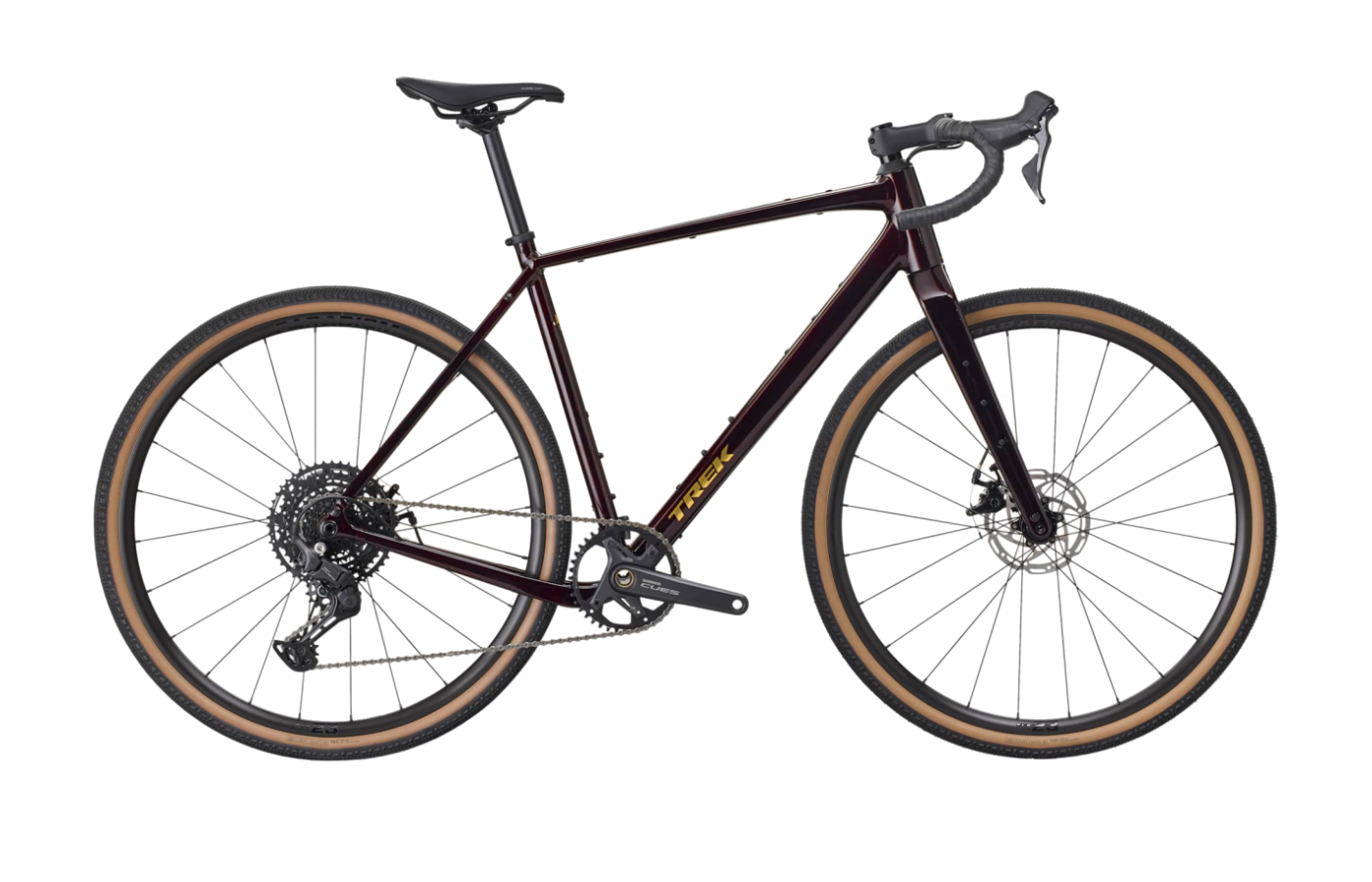
Checkpoint
Trek's race-adventure carbon gravel platform, with IsoSpeed compliance instead of a sprung fork. Splits the difference between the Diverge's MTB-leaning aggression and a more traditional carbon gravel feel.
Compare →Grizl
Canyon's adventure-gravel pick — rugged build, mounts everywhere, generous tire clearance, and direct-to-consumer pricing. Closest spiritual sibling to the Rove if you want carbon and aren't allergic to skipping the local-shop experience.
Compare →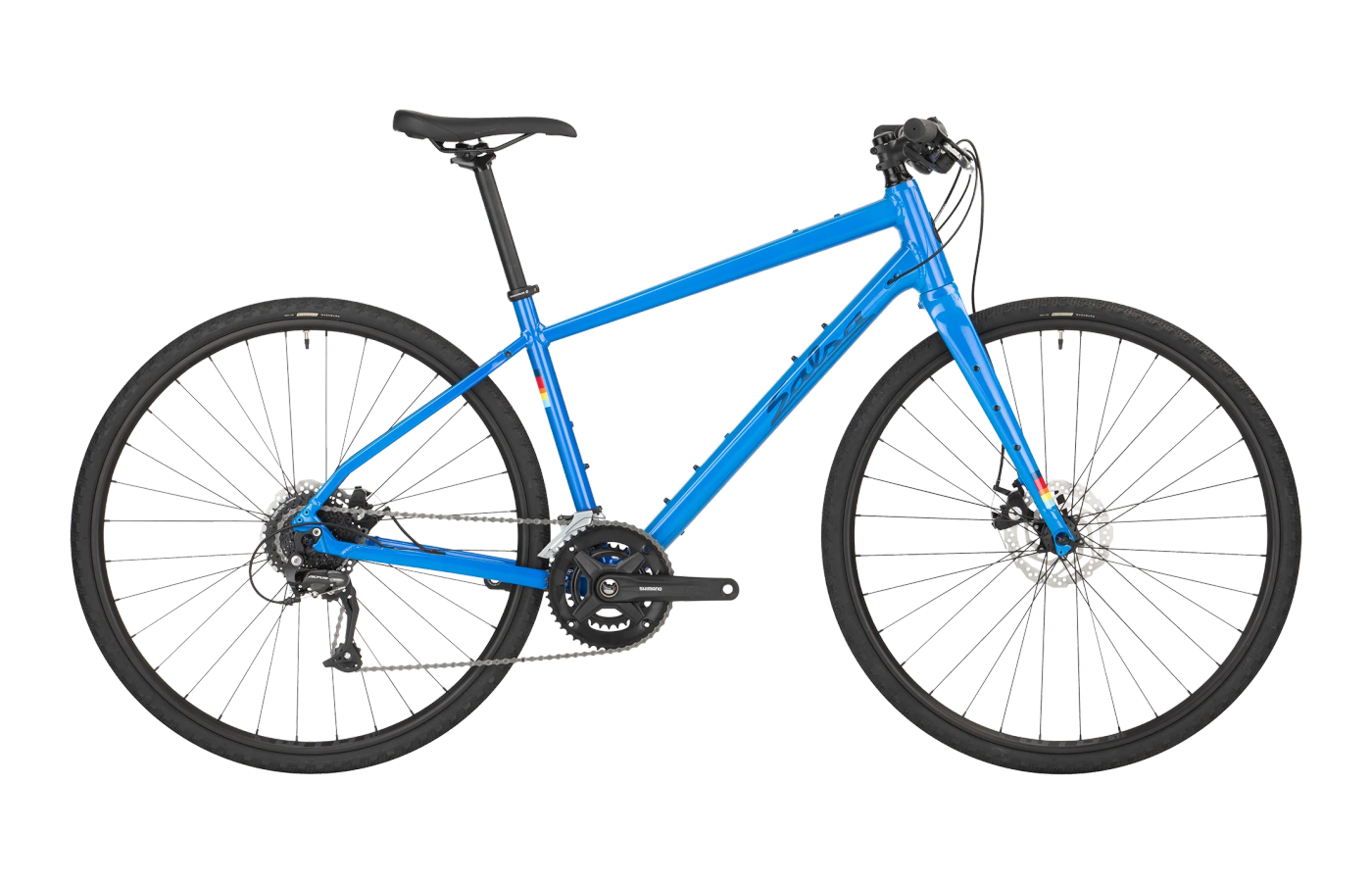
Journeyer
Salsa's value-focused alloy gravel platform with the same mounts-and-mileage philosophy as the Rove, often at a lower price. The pick if you want adventure-ready gravel for less than the Rove LTD.
Compare →