Alpine Trail
vsSlash
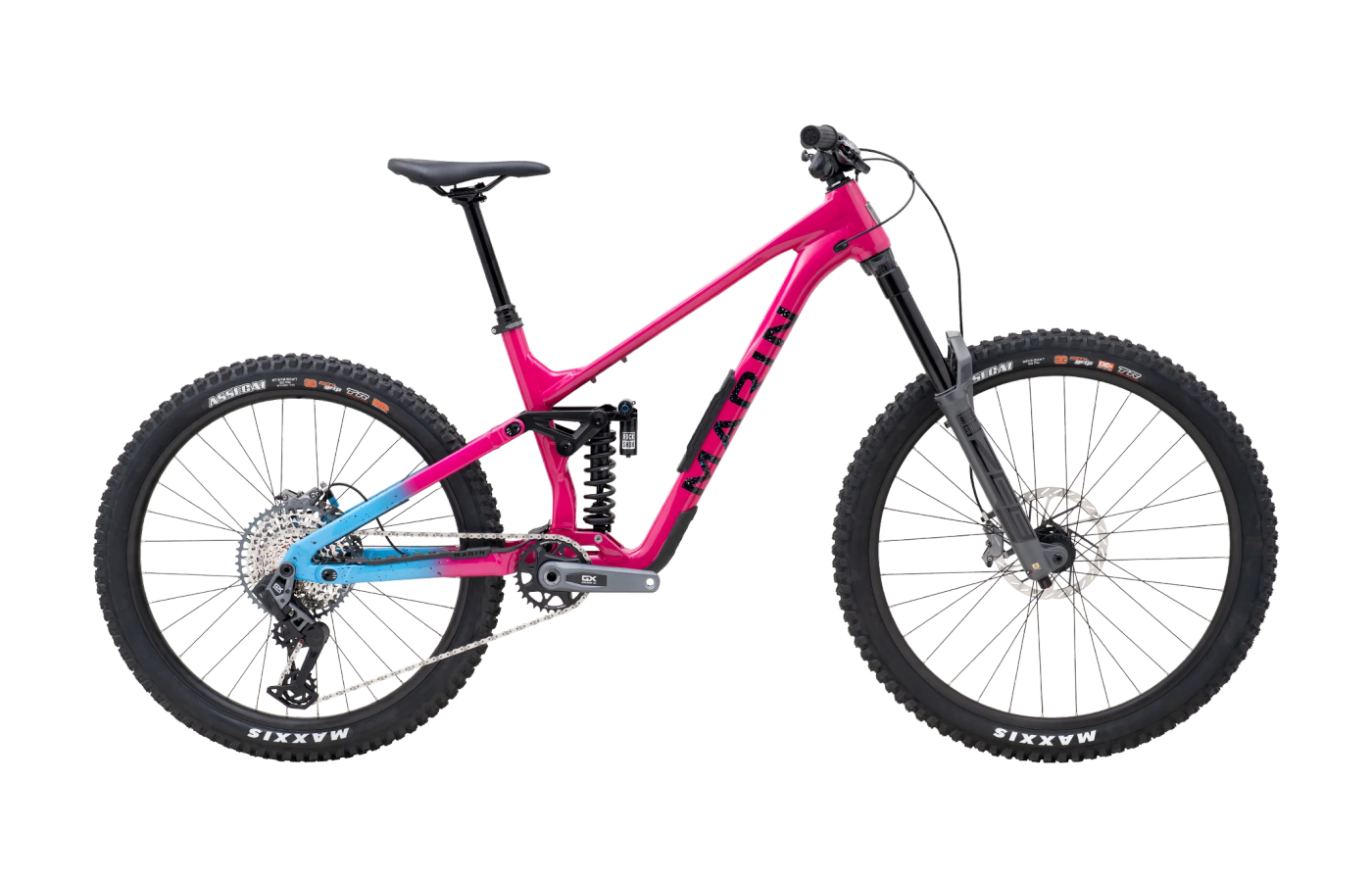
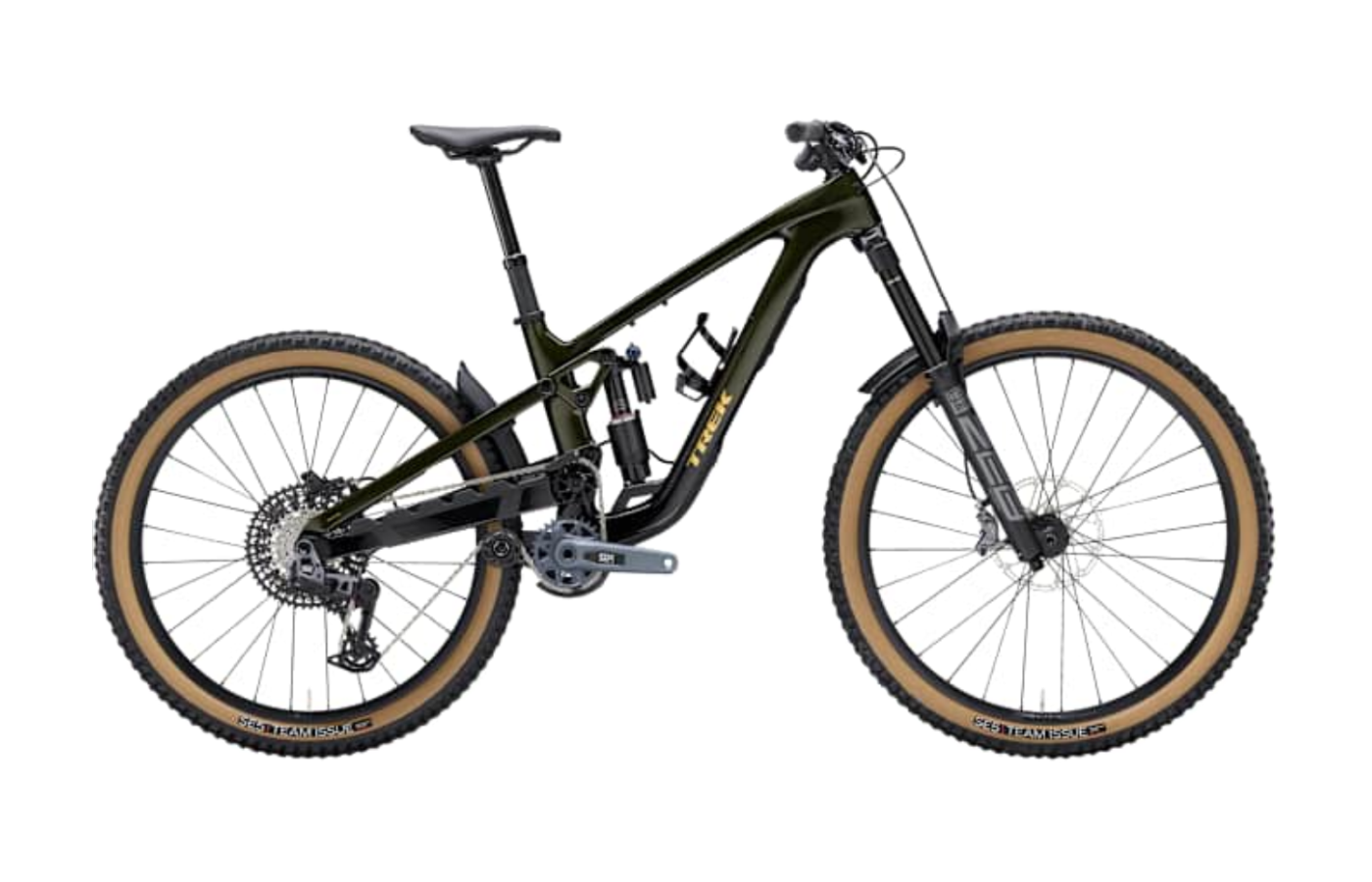
Two enduro bikes, two suspension philosophies.
The Marin Alpine Trail is a value-packed alloy gravity bike with a flip-chip for everything. The Trek Slash is a high-pivot carbon bruiser built to swallow the rough.
Alpine Trail
- Twelve geometry configs — two flip chips and angle-adjust headset cups give meaningful, tool-light personality changes.
- RockShox Ultimate suspension on the XR builds — ZEB Ultimate fork and Super Deluxe Coil Ultimate shock at a price most rivals run Select+.
- Aluminum-honest pricing — the lineup tops out at $5,199, well under most carbon enduros.
- Heavy at 17–18 kg, with a 'plodding' climbing personality reviewers consistently flag.
- House-brand wheels and SRAM DB8 brakes on the XR are the first things most testers replace.
Slash
- High-pivot composure — rearward axle path swallows square-edged hits in a way no four-bar at this travel can match.
- Vivid Ultimate rear shock delivers a near-coil suppleness with air-spring tunability — a recurring highlight across reviews.
- Carbon and alloy options from $4,399 to $11,499 — buyers can enter the platform without the OCLV price tag.
- Idler drivetrain adds drag, noise, and meaningful maintenance overhead vs a conventional layout.
- Stock Bontrager SE5/SE6 tires are universally panned — plan on a $100–$150 swap day one.
Editor’s analysis
This isn't enduro vs enduro. It's alloy adjustability against high-pivot composure — and the gap between them is wider than the spec sheet suggests.
On paper, the Marin Alpine Trail and Trek Slash share a category and not much else. Both run 170 mm forks, both sit at 63-ish degrees up front, both use a mullet (29/27.5) wheel pairing in stock trim, and both review reliably as enduro bike of the year contenders. Past that, they diverge fast — different frame material, different suspension layout, different price floor.
The Marin is the simpler animal: a 6061 aluminum frame, four-bar Horst-link MultiTrac 2 LT suspension, 160 mm of rear travel, and three builds spanning $3,499 to $5,199. Marin's pitch is adjustability — two flip chips and an angle-adjust headset cup give you up to twelve geometry configs without touching a tool any harder than a 5 mm hex. Reviewers (Pinkbike, BikeRadar, Flow) call it a 'downduro weapon' and an 'unapologetic downhill machine.' The catch: it's heavy, around 17–18 kg depending on build, and the stock Maxxis Assegai MaxxGrip dual-tire setup drags hard on the climbs.
The Slash picks the technical high road. A high-pivot layout with a 19-tooth idler, OCLV Mountain Carbon (or Alpha Platinum alloy on the cheapest builds), 170 mm of rear travel, and a rearward axle path that lengthens the back center by ~17 mm at sag. The whole point is to stop hanging up on square-edged hits. Bike Perfect calls it 'smooth, calm, and balanced.' The Loam Wolf says it 'absolutely devours hits of all sizes.' Trade-offs are baked in too: the idler adds drag and noise, the carbon flagship runs $11k+, and reviewers universally pan the stock Bontrager SE5/SE6 tires as 'too flimsy' for the chassis.
Put plainly: the Marin is the bike you buy when you want maximum descending capability for the money and you'll fettle to taste. The Slash is the bike you buy when you'd rather pay for a chassis that does the work — and you accept the maintenance bill that comes with a high-pivot drivetrain.
Where the builds differ.
Comparing our editor's-pick builds side-by-side. Winners highlighted row-by-row — lower price and weight, and the better-spec component, each mark a point.
Build variants & pricing
Marin sells alloy only — three builds from $3,499 to $5,199. Trek's range runs $4,399 to $11,499 across alloy and OCLV carbon, with the carbon builds carrying the bulk of the lineup.
Editor's picks here are tier-matched on drivetrain (both SRAM GX Eagle AXS T-Type), but the platforms diverge on frame material — the Marin XR AXS is aluminum because Marin doesn't currently sell a carbon Alpine Trail, while the Trek 9.8 GX AXS is OCLV Mountain Carbon. The $2.5k price gap reflects that frame difference, not a comp tier mismatch.
How they fit, how they steer.
Reach is close — 460 mm on the Marin M, 468 mm on the Trek ML — and stack is nearly identical (634 vs 632 mm). The big delta is the seat tube angle: the Marin's 79.0° plants you over the bottom bracket, the Trek's 73.8° sits you further back.
Which size should I buy?
Frame sizing differs by convention — the Marin uses S/M/L/XL while the Trek adds an ML in the middle. Both ranges overlap in the meat of the rider-height curve.
→These are starting points. Flexibility, riding style, and preferred position all shift the answer — if you’re between sizes, a professional fit beats a chart.
What the magazines said.
Published reviews from trusted cycling outlets. Click through for the full write-up.
Which one should you buy?
If you want maximum descending bike per dollar and you're happy to fettle, get the Marin. If you want a chassis that hides its size at speed and you're not afraid of a high-pivot service bill, get the Slash.
Alpine Trail
If you ride bike park laps, shuttle days, and aggressive enduro with the occasional pedal back to the top, the Alpine Trail XR AXS gets you 90% of the chassis capability of bikes costing twice as much. Plan to upgrade the wheels and brakes within a season — the savings cover it.
Slash
If your trails are steep, fast, and rough, and you want a bike that feels two sizes smaller at speed than it does at the trailhead, the Slash is the segment benchmark. The high-pivot composure is real — just budget the time and money to keep the idler clean and the tires upgraded.
Questions buyers actually ask.
Short answers to the things we get emailed about most often.
01Which is the better descender?
Both are class-leading, but in different ways. The Trek Slash wins on raw chunk-eating — the high-pivot rearward axle path lets the rear wheel get out of the way of square-edged hits in a way the Marin's Horst link can't replicate. Bike Perfect, Flow, and The Loam Wolf all call out the 'flawless composure' on rough, fast terrain.
The Marin Alpine Trail is more interactive. Reviewers (Pinkbike, Blister) note it 'whips around every corner' and rewards an active rider with pop and slash. If your terrain is rolling and corner-heavy rather than blown-out and rocky, the Marin's lighter front-end response often feels more fun.
02Which climbs better?
The Trek Slash, surprisingly. Trek tuned the high-pivot for ~100% anti-squat throughout the travel, and reviewers (BikeRadar, Bike Perfect) consistently note it 'rides lighter than the scale suggests' on smooth climbs.
That said, the Slash has a documented 'stalling' sensation on chunky technical climbs — the rearward axle path that helps descending works against you when trying to muscle a rear wheel up over a root or ledge at low speed.
The Marin Alpine Trail is the more honest climber: heavier, draggier (the stock dual-Assegai MaxxGrip setup is a documented sin on smooth climbs), but with a 79° effective seat tube angle that plants the rider over the bottom bracket. Most reviewers swap the rear tire to a faster compound and call it good.
03Aluminum or carbon — does it matter here?
It matters more than usual because the Marin doesn't offer carbon at all and the Trek's identity is the carbon platform. The Slash 8 Gen 6 ($4,399, alloy) and Slash 9 ($5,799, alloy) get you onto the high-pivot chassis without OCLV — but you're carrying ~39 lb at the cheapest build.
The Marin Alpine Trail lineup is alloy-only, full stop. Marin's pitch is that the 6061 hydroformed frame is durable, repairable, and lets them spend the budget on the suspension instead. For aggressive bike park riders who eat frames, that's a real argument.
04How much extra maintenance does the Slash's high-pivot drivetrain require?
Real, but manageable. Cycling Magazine and The Loam Wolf both note that the 19-tooth upper idler stays quiet and efficient when clean, but gets loud and draggy fast in wet or muddy conditions — they estimated a perceived ~10% efficiency loss when neglected, vs Trek's claimed 3%.
There's also a documented chain-drop issue early in the model run that Trek addressed with a service bulletin (correct lower-guide spacer config) and an updated upper idler with a longer tooth profile. Owners should verify both. The Marin's conventional Horst link has none of this — chain on, ride.
05What about tire clearance?
Both clear up to 63.5 mm (≈2.5") tires, which is right where most enduro builds sit. Both ship with a mullet wheel setup (29" front, 27.5" rear) and both can be converted to full 29" — the Marin via a flip chip, the Slash via a separately-sold shock mount.
The Trek Slash with the 29" rear wheel option is noted by Blister as making the 'sweet spot' of the bike feel larger and more centered, at the cost of the mullet's slashy agility.
06How adjustable are the geometries, really?
The Marin Alpine Trail is exceptional here. Two flip chips (chainstay length + BB height; wheel size) and an angle-adjust headset cup (±0.75°) yield up to twelve geometry configurations. Reviewers (Pinkbike, Blister, Bike Magazine) confirm the changes are meaningful — not marketing-spec — and the bike's character genuinely shifts between the slacker bike-park config and the steeper local-trail one.
The Trek Slash offers an angle-adjust headset (±1°) and a flip chip for suspension progression. The chainstays are size-specific and fixed, though the high-pivot design grows the effective rear center by ~11–17 mm at sag. Less explicit fettling, more 'the suspension does it for you.'
07Which has the better stock spec for the money?
The Marin XR AXS at $5,199 punches above its price — RockShox ZEB Ultimate and Super Deluxe Coil Ultimate are top-tier suspension that competing bikes at this price spec at Select+ level. SRAM GX Eagle AXS T-Type, SRAM Code Bronze brakes. Weak links are the house-brand wheels and the DB8 brakes on lower XR builds.
The Trek 9.8 GX AXS T-Type at $7,699 brings carbon frame, carbon wheels, GX AXS T-Type, and ZEB Select+/Vivid Select+ suspension. Premium across the board, but reviewers near-universally call out the stock Bontrager SE5/SE6 tires as inadequate — budget another $150 for tires you'll actually trust on the descents this bike was built for.
08Which holds up better long-term?
Both ride hard and both come with lifetime frame warranties. The Marin alloy frame is genuinely durable; reviewers (Loam Wolf, Flow) note hardware stays tight and the frame protection is meticulous. Watch the main pivot bolt — Bike Magazine reported it backing out without Loctite.
The Trek Slash frame is overbuilt in the same way, but the high-pivot system adds wear points (idler, lower guide, longer chain) and the early chain-drop and idler-spacing issues — though addressed under warranty — point to a chassis that demands more attention than a conventional layout. Trek's customer support reputation is excellent, which helps.
Similar bikes
If your priorities don’t map cleanly onto either of these, one of these adjacent bikes probably fits better.
Capra
The direct-to-consumer enduro bruiser — high-spec parts at lower prices than either of these bikes. Worth a look if the Marin's value pitch is what got you here, and you don't need a local dealer.
Compare →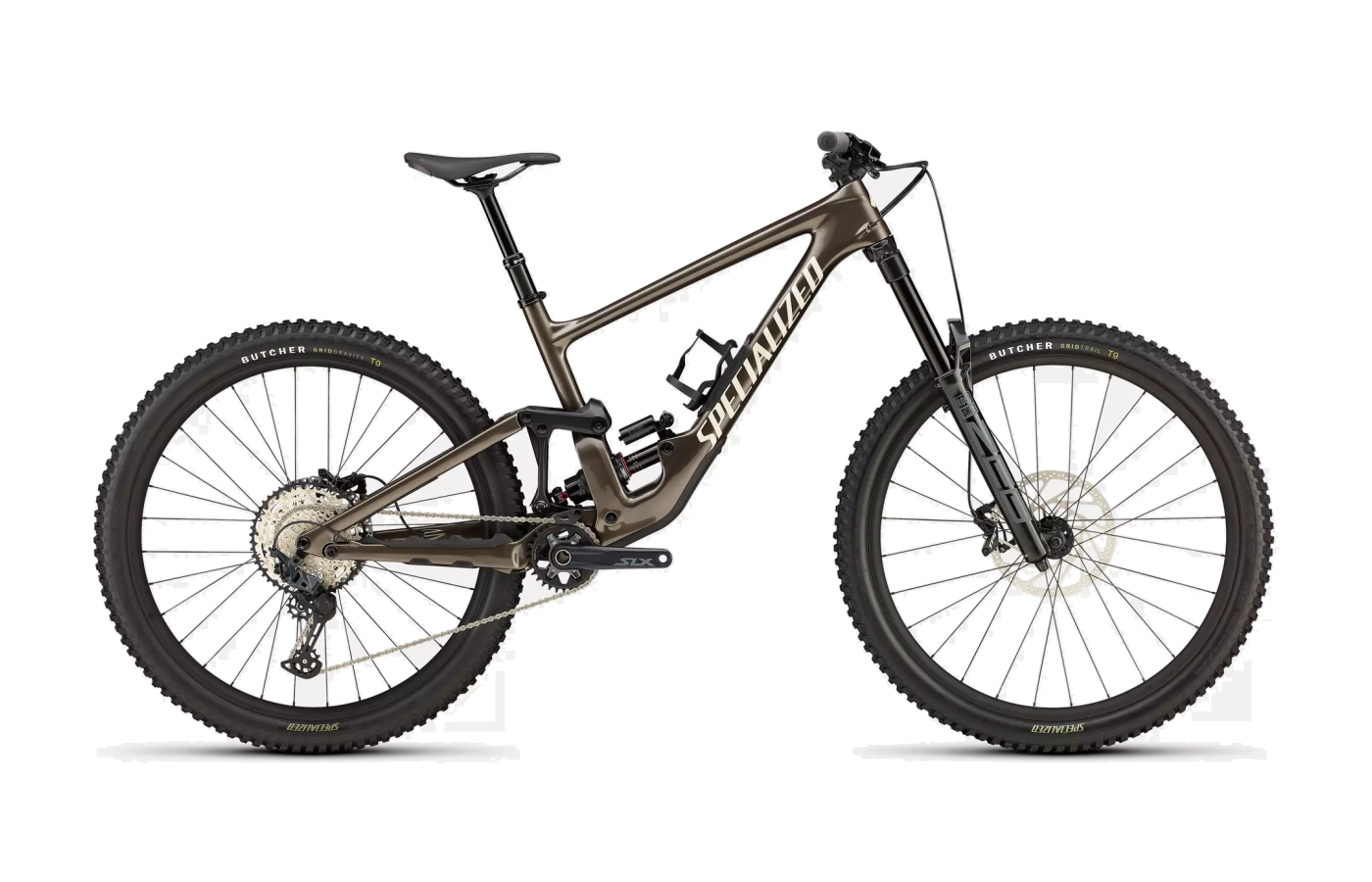
Enduro
Specialized's long-running enduro benchmark, with FACT carbon and the Genie suspension platform. A more conventional layout than the Slash but every bit as composed at speed — and more refined on the climbs.
Compare →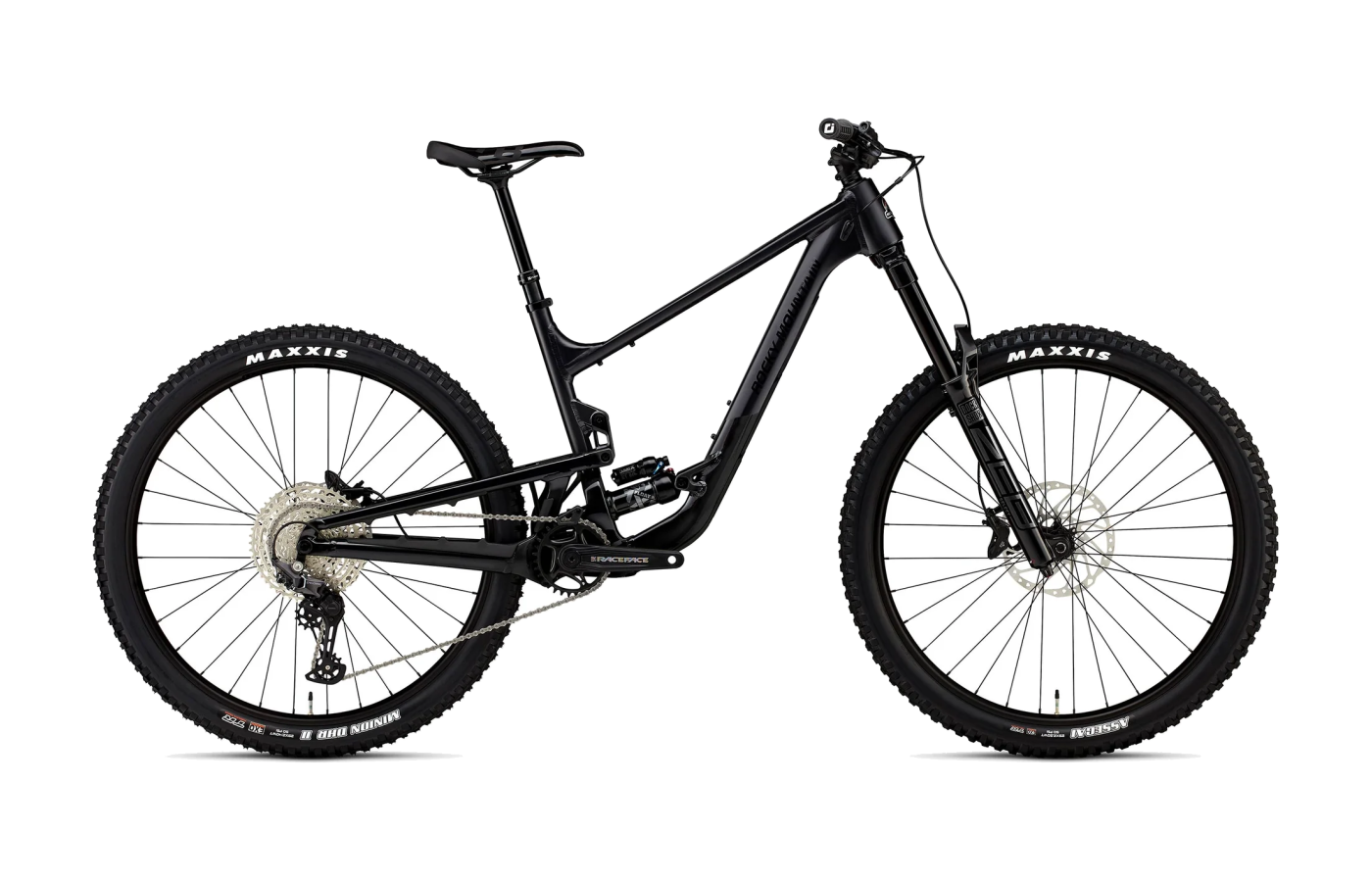
Altitude
Rocky's Ride-9 adjustable geometry system rivals the Marin's flip-chip count, and the carbon frame splits the difference on price between Alpine Trail and Slash. A genuine third option for adjustability hunters.
Compare →