Stigmata
vsDiverge
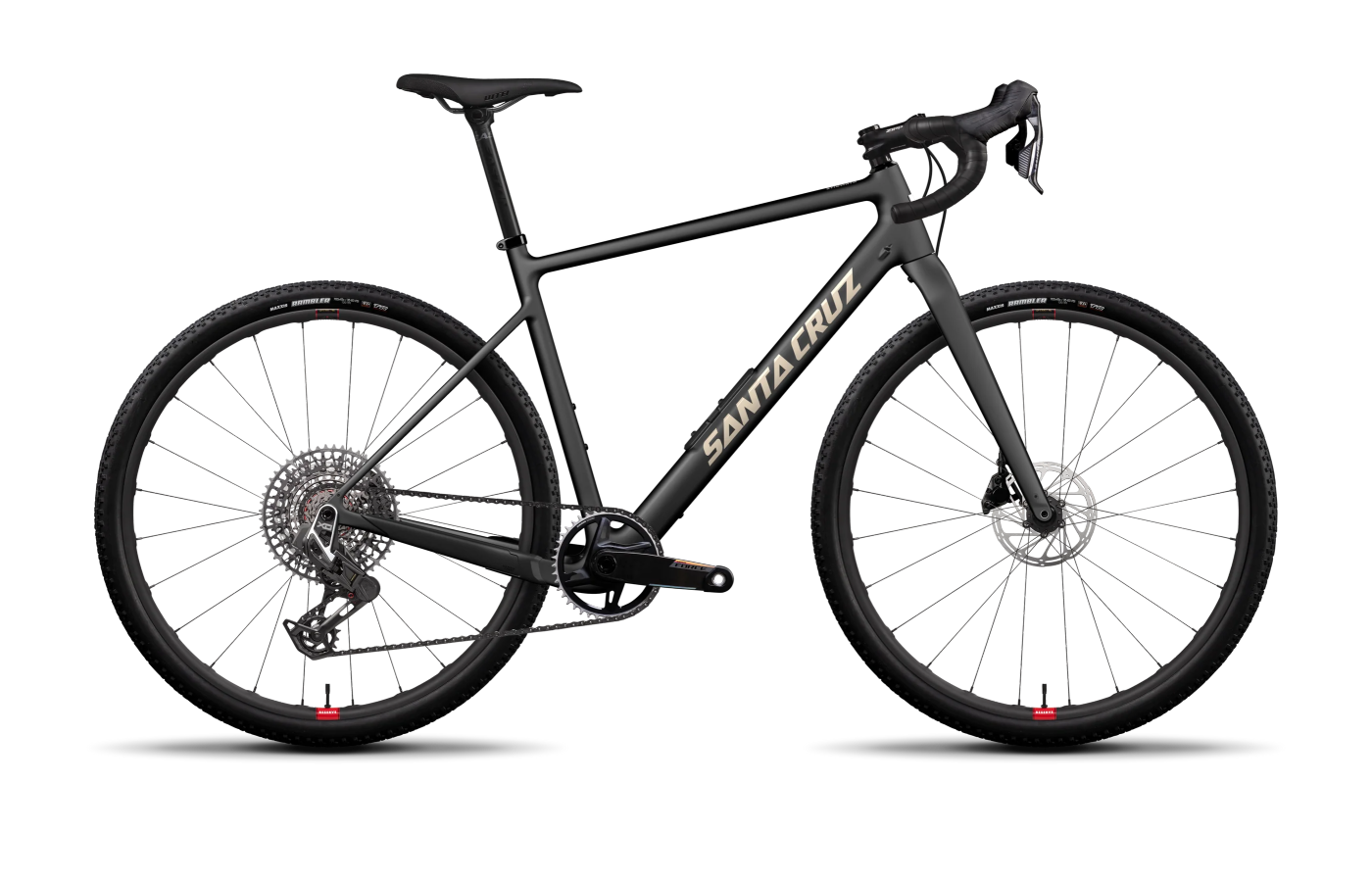
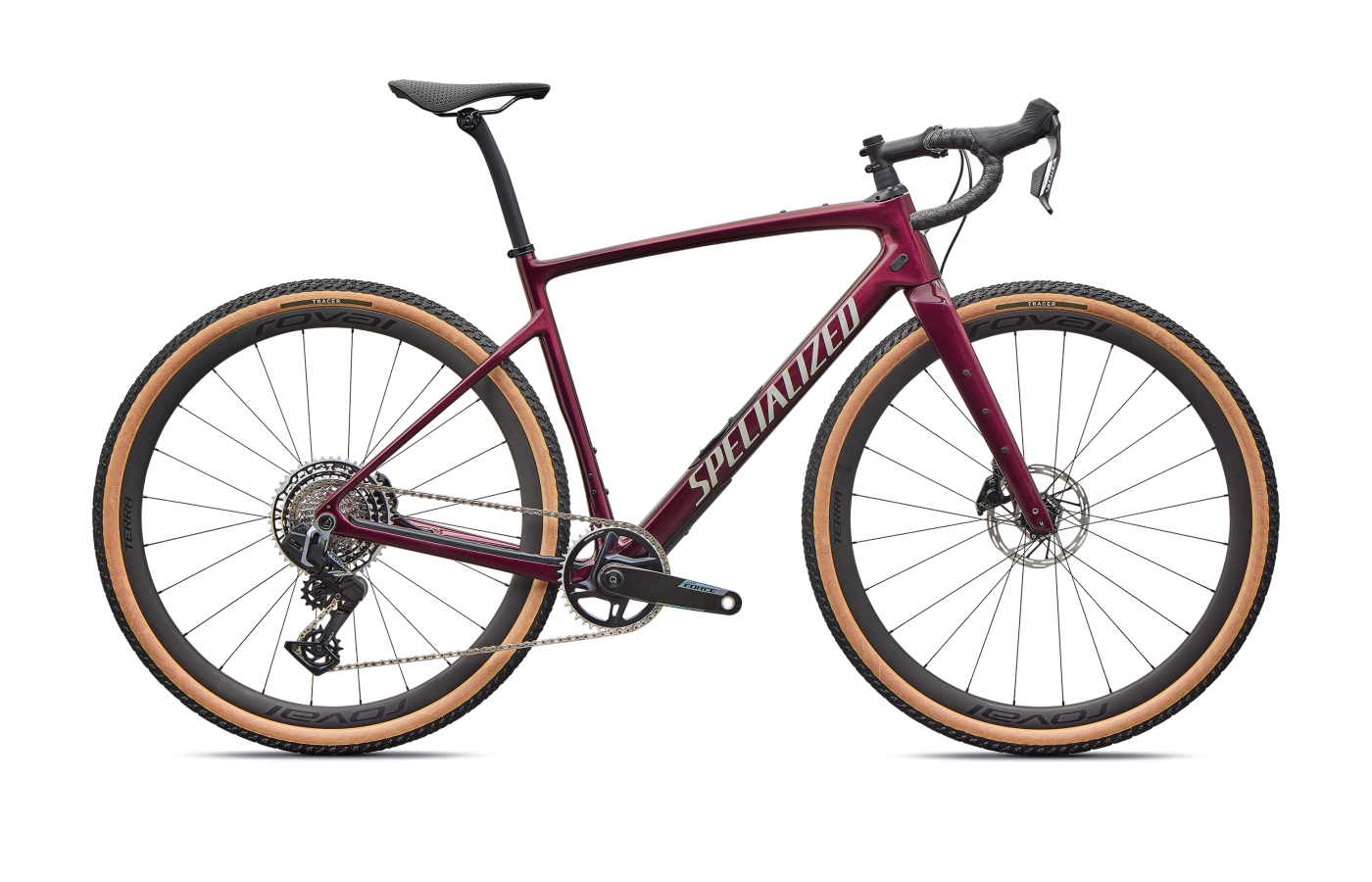
Two takes on the mountain-bike-ification of gravel.
The Stigmata gets there with raw geometry and a 40 mm fork option. The Diverge gets there with Future Shock and a freight-train wheelbase.
Stigmata
- Progressive geometry pays off — 69.5° HTA, 87 mm trail, and a 1,043 mm wheelbase on SM make it effortlessly stable on chunky descents.
- Top-tier carbon on every build — the $4,149 Apex and $7,549 flagship share the same Carbon CC layup.
- Home-mechanic friendly — threaded BB, 27.2 mm round post, external cable routing, UDH. No integration headaches.
- Starts at $4,149 — no alloy option, no sub-$4k entry.
- Frame is ~230 g heavier than the Diverge 9r, and the bike skews sluggish in the heavier Rudy-fork builds.
Diverge
- Future Shock works — 20 mm of damped travel at the stem genuinely keeps hands fresh over washboard and broken pavement.
- Wide price span — same SWAT 4.0 storage and Future Shock from $2,099 alloy up to $10,499 Red AXS.
- Lighter frame, more gear — 1,150 g in size 56 (per Velo) and the biggest in-frame storage in the class.
- Stock 45 mm tires on an 85 mm BB drop = frequent pedal strikes. Plan to swap to 50 mm.
- The non-adjustable Future Shock 3.2 on the Expert model feels bouncy out of the saddle — the adjustable 3.3 is a $450 upgrade.
Editor’s analysis
Both bikes answer the same 2025 question — how far off-road should a gravel bike go? — with completely different engineering.
The Stigmata 4 and Diverge 4 sit at the deep end of the gravel pool, each with 50 mm tire clearance, mountain-bike-inspired geometry, and a bias toward dirt over pavement. But walk past the marketing and the engineering philosophies split hard. The Santa Cruz Stigmata trusts geometry — a slack 69.5-degree head tube, a long 87 mm trail figure, and a stubby 70 mm stem — to deliver stability. The Specialized Diverge trusts mechanisms — the 20 mm Future Shock at the stem, a flexing Roval Terra carbon seatpost, and an 85 mm bottom bracket drop that plants the rider deep in the chassis.
The Santa Cruz Stigmata is the mechanic-friendly one. External cable routing around the headset, a 68 mm threaded BB, a 27.2 mm round seatpost, UDH dropout. Every model uses the top CC carbon layup — no tiered frame, no FACT 9r vs 11r hierarchy to shop around. Reviewers like Dave Rome (Escape Collective) and Alvin Holbrook (Velo) repeatedly call it one of the most home-garage-friendly carbon bikes on the market. The price of that clarity: it's not the lightest frame at 1,380 g, and Santa Cruz's lineup starts at $4,149 — no alloy option, no sub-$4k entry.
The Specialized Diverge plays the opposite hand. The FACT 9r carbon frame is lighter (1,150 g in size 56 per Velo), and Specialized offers the platform down to $2,099 in E5 alloy with the same SWAT 4.0 storage and Future Shock. But you live with proprietary complexity: a Future Shock damper that comes in three tiers (3.1/3.2/3.3), a low 85 mm BB drop that reviewers at BikeRadar and Cycling Weekly flag for pedal strikes on stock 45 mm tires, and a spec sheet most testers say demands an immediate swap to 50 mm rubber.
So the pick is less about which is faster and more about who you trust with the comfort. If you want a bike that gets smoother because of how it's shaped, the Specialized Diverge is the clearer answer. If you'd rather the bike stay mechanically simple and let a 40 mm Rudy fork do the talking when you want softer, the Santa Cruz Stigmata is it.
Where the builds differ.
Comparing our editor's-pick builds side-by-side. Winners highlighted row-by-row — lower price and weight, and the better-spec component, each mark a point.
Build variants & pricing
The Stigmata spans $4.1k–$7.5k across five SRAM builds, all on CC carbon. The Diverge doubles that range — $2.1k alloy to $10.5k Red AXS — across eight builds.
Prices are current US MSRP. The Force AXS trims compared here are the closest tier match across platforms — both are SRAM Force AXS on each brand's top carbon. Santa Cruz's cheapest Force build ($6,849) comes in under the equivalent Diverge 4 Pro ($7,999), though the Diverge adds Future Shock 3.3 and a Quarq power meter at that tier.
How they fit, how they steer.
Reach is almost identical (Stigmata SM: 390 mm vs Diverge 54: 387 mm), but the Diverge stack is 28 mm taller — a more upright fit for the same rider. The Stigmata counters with a 1.5° slacker head tube and ~22 mm more trail, which is why the Rudy-fork option exists.
Which size should I buy?
Size recommendations use stack, reach, and effective top tube. Santa Cruz uses XS–XXL labels; Specialized uses 49–61 — pick by cockpit length rather than by name.
→These are starting points. Flexibility, riding style, and preferred position all shift the answer — if you’re between sizes, a professional fit beats a chart.
What the magazines said.
Published reviews from trusted cycling outlets. Click through for the full write-up.
Which one should you buy?
If you want to underbike on drop bars with standard parts you can service at home, get the Stigmata. If most of your gravel is fast, long, and washboarded, get the Diverge.
Stigmata
If the best rides near you are technical singletrack and chunky forest roads where a hardtail would be overkill but a road bike is a bad idea, the Stigmata is the sharper tool. You give up some weight and pavement speed in exchange for a chassis that stays composed when the terrain doesn't.
Diverge
If your rides are 100-mile days on washboard, loose gravel, and broken pavement — and the finish line matters more than the singletrack detour — the Future Shock plus the low-slung 85 mm BB drop is a fatigue-killing combination. Budget for a 50 mm tire swap up front.
Questions buyers actually ask.
Short answers to the things we get emailed about most often.
01Which is more capable off-road?
Both are unusually capable gravel bikes, but they get there differently. The Santa Cruz Stigmata leans on raw geometry — a 69.5° head tube, ~87 mm trail, and suspension correction for a 40 mm Rudy fork — to feel like a drop-bar hardtail. The Specialized Diverge leans on mechanisms — Future Shock at the stem, a flexing seatpost, an 85 mm BB drop — to stay composed over high-frequency chatter.
On technical singletrack, reviewers consistently give the Stigmata the edge, especially with the Rudy fork. On fast washboard and long gravel grinds, the Diverge's Future Shock keeps hands and arms fresher.
02What's the tire clearance on each?
Stigmata: 50 mm officially (1x builds). Multiple reviewers confirm that clearance is the real number and not marketing.
Diverge: 50 mm with 7–8 mm of mud clearance, or a 2.2" MTB tire with the ISO-standard 4 mm clearance.
Practically, both are at the upper limit of what a drop-bar bike fits today, and both are specced stock with 45 mm Tracer or Rambler tires that leave a lot of real-world room.
03Why do reviewers complain about pedal strikes on the Diverge?
The Diverge 4 has an 85 mm bottom bracket drop — deliberately low so that riders sit "in" the bike with wider 50 mm tires. But Specialized ships most builds with 45 mm tires and 172.5 mm cranks on the 54 and 56 frames, which drops the pedals below where the frame was designed to put them.
BikeRadar, Cycling Weekly, and Velo all flag this independently. The fix every reviewer recommends is the same: swap to 50 mm tires (or 2.2" MTB tires) immediately. The Stigmata's 423 mm chainstays and higher BB don't have this problem to the same degree.
04How do they compare on weight?
The Stigmata CC carbon frame is claimed at 1,380 g for a size medium — deliberately heavier than the prior generation in exchange for compliance and durability.
The Diverge 4 FACT 9r frame is claimed at 1,150 g in size 56 (per Velo). About 230 g lighter.
At the compared builds — Force AXS trim on both — the Stigmata Force AXS RSV comes in at 8.68 kg and the Diverge 4 Pro at 8.39 kg. Close enough that you won't feel it; the geometry differences will dominate ride feel long before the weight does.
05Can I bikepack on either?
Yes. The Diverge is the more equipped of the two — carbon and alloy models both get the SWAT 4.0 downtube storage, multiple bottle cage mounts, top-tube bag bosses, and rack/fender mounts. It's explicitly pitched as an "ultimate getaway vehicle."
The Stigmata has the Glovebox in-frame storage with tailored neoprene bags, but lacks dedicated rack mounts — you'll rely on strap-on bikepacking bags. For structured touring or commuting with racks, the Diverge is the better pick. For lighter self-supported rides, either works.
06Is the Future Shock actually serviceable?
Yes — and this is an upgrade from prior versions. Per Specialized, the hydraulic Future Shock 3.2 and 3.3 are fully serviceable with a four-year recommended service interval. Adjusting spring rate or adding preload tokens can be done at home with basic tools.
The earlier, unserviceable reputation came from previous Future Shock generations. The 3.0 family is designed to be essentially fuss-free for the life of the bike.
07How do the drivetrain options differ?
The Stigmata 4 is SRAM-only across the range — Apex mechanical, Rival AXS, and Force AXS, mostly in 1x XPLR setups with optional Eagle mullet builds using an X0 or GX rear derailleur and a 10–52t cassette. Great for climbing, spins out on pavement.
The Diverge 4 offers more variety — Shimano CUES, GRX, and GRX Di2 alongside SRAM Apex, Rival, and Force AXS. Top-end 4 Pro LTD gets the new 13-speed SRAM Red XPLR with a Quarq power meter. If you want Shimano, the Diverge is the only option here.
08Which should I buy?
Match the bike to the terrain. If you ride technical, rooty, rocky gravel and the idea of running a 40 mm RockShox Rudy fork appeals to you, the Stigmata is the purer expression of that philosophy. If you ride long, fast, washboarded gravel and broken pavement and want the bike to mute the high-frequency chatter so you can stay in the drops for six hours, the Diverge's Future Shock is worth the extra complexity.
Budget matters too — the Diverge starts at $2,099 alloy, which is thousands below the Stigmata's $4,149 entry.
Similar bikes
If your priorities don’t map cleanly onto either of these, one of these adjacent bikes probably fits better.
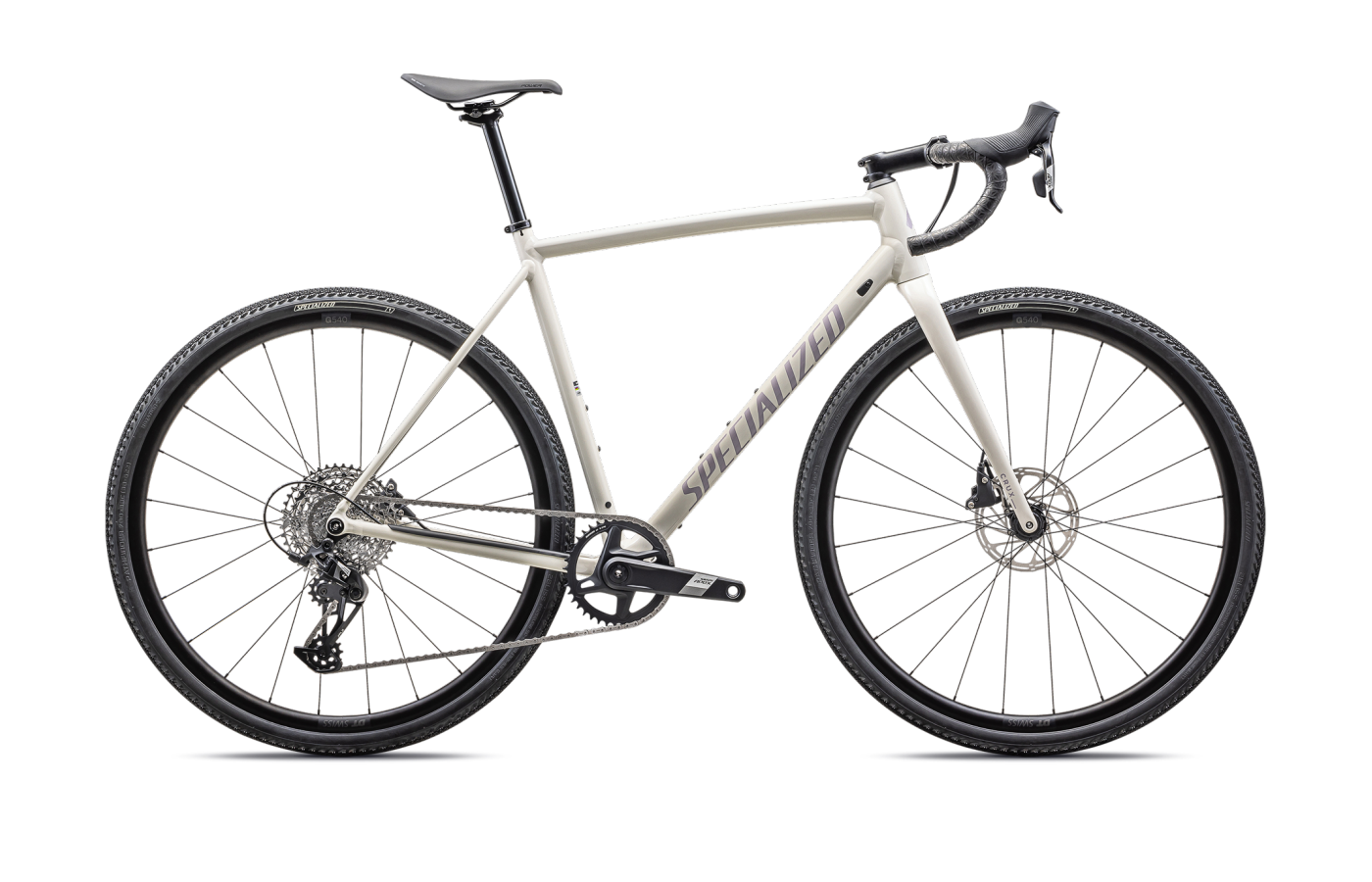
Crux
The lightweight, simple racer in Specialized's range — no Future Shock, no in-frame storage, just a sub-800 g frame for the rider who wants speed over features. If the Diverge seems like too much bike, the Crux is the answer.
Compare →Szepter
Shares the Stigmata's slack, mountain-bike-inspired geometry and often ships with the same RockShox Rudy fork — at direct-to-consumer pricing that undercuts Santa Cruz by a meaningful margin. No local dealer, know your fit.
Compare →Grizl
The adventure-tuned alternative to the Diverge — massive tire clearance, bikepacking mounts everywhere, no proprietary damper to service. Best for riders who want capability without the integration.
Compare →