Aethos
vsTarmac
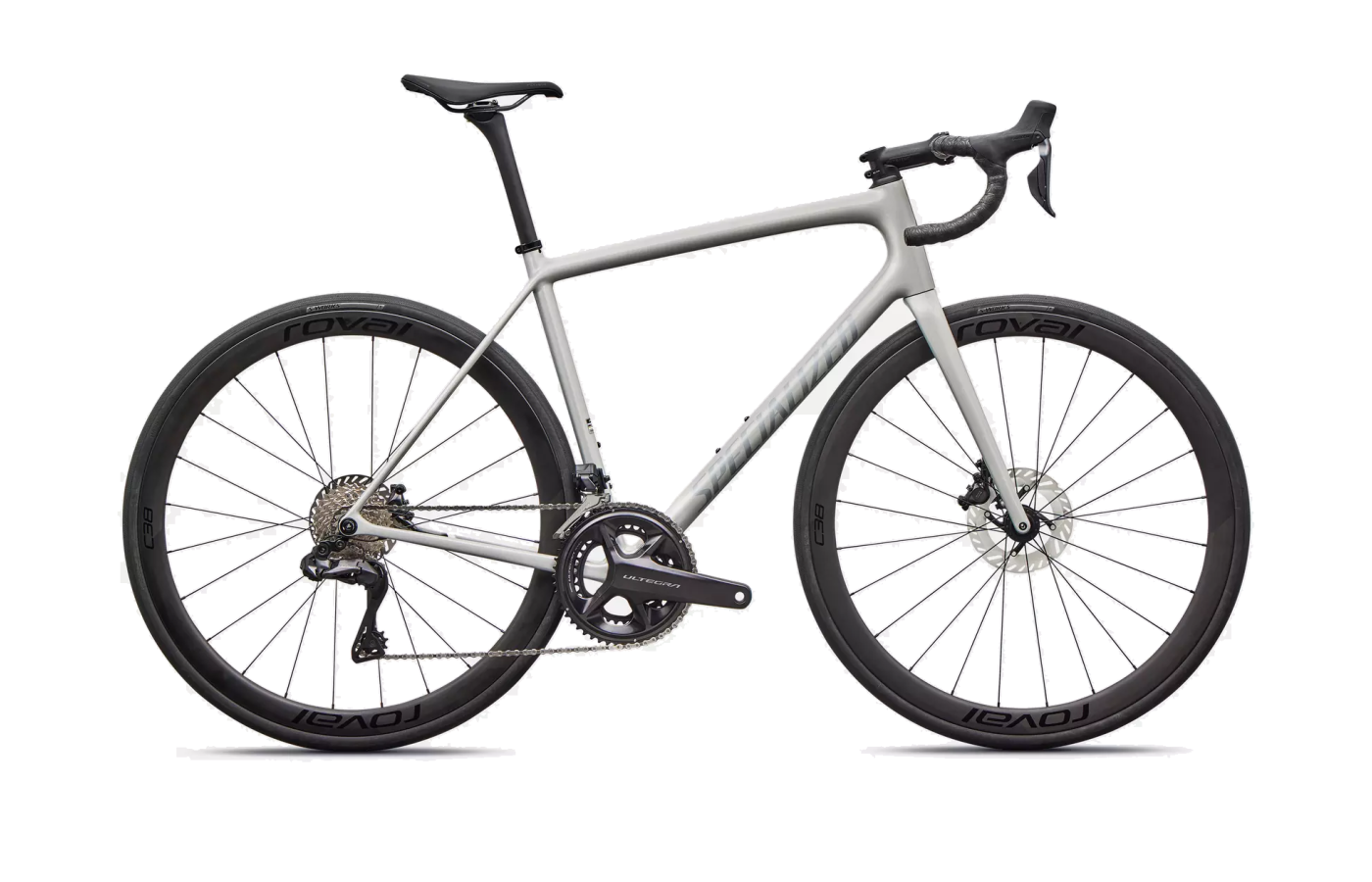
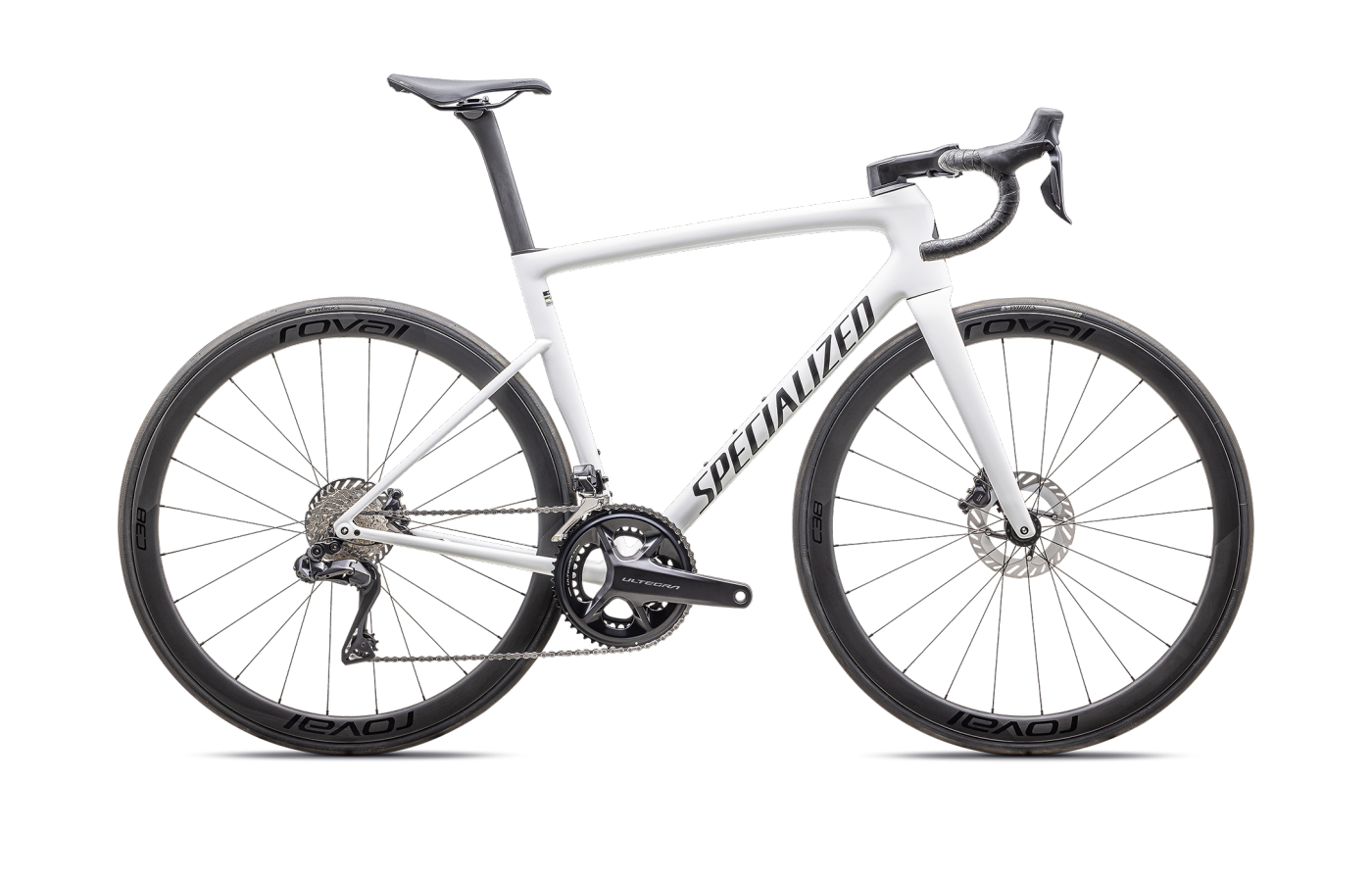
Same brand, two religions.
The Tarmac SL8 is Specialized's all-rounder race bike. The Aethos 2 is the climber's bike for riders who don't care what the wind tunnel said.
Aethos
- Lightest disc-brake frame in production at a claimed 595 g (S-Works FACT 12r) — complete bikes hit 6.05 kg.
- 35 mm tire clearance — widest in the segment, opens the door to light all-road and chip-seal duty.
- Magic-carpet ride feel — round tubes, refined layup, and Alpinist composite-spoke wheels deliver near-titanium compliance.
- No aero optimization — loses momentum on flats and headwinds compared to the Tarmac.
- Premium-only lineup: $6,599 entry, no Rival or 105 builds.
Tarmac
- Aero-bike fast at race pace — Specialized claims 16.6 seconds saved over 40 km vs the SL7 at 45 km/h, with a 209 W tunnel number that rivals dedicated aero bikes.
- Sharper race geometry — 73° HTA, 978 mm wheelbase at size 54; reviewers call the handling 'telepathic.'
- Wider build range — starts at $4,699 for the SL8 Comp, giving a true budget entry point that the Aethos doesn't have.
- Narrower 32 mm tire clearance limits all-road versatility vs the Aethos.
- Stiffer ride — reviewers note 26 mm stock tires can feel 'lifeless' until you swap to 28-30 mm.
Editor’s analysis
This isn't a fight between platforms — it's a fight between what kind of fast feels good.
On paper, both bikes share the same Specialized DNA: FACT carbon, threaded BSA bottom bracket, Roval cockpits, S-Works Turbo tires. Both top out near $14,000 and both can be had with full Dura-Ace Di2 or SRAM Red AXS. But spend a few minutes on the geometry and meta-reviews and the philosophies pull apart hard.
The Tarmac SL8 is built around aero numbers. Specialized cites a 33% better stiffness-to-weight ratio over the SL7 and an external wind-tunnel figure of 209 watts at 45 km/h — close to the Cervelo S5 and Canyon Aeroad despite being substantially lighter. The Speed Sniffer head tube and integrated Roval Rapide cockpit do the work; the geometry is unapologetic crit-bike (73° HTA at size 54, 978 mm wheelbase, 32 mm tire clearance).
The Aethos 2 ignores the wind tunnel entirely. The S-Works frame is a claimed 595 g — Granfondo calls it the lightest disc brake frame in the world. Round tubes, no aero pretense, 35 mm tire clearance, and a brand-new geometry that is 15 mm taller in stack than the Tarmac at size 54 (559 vs 544) with the same 384 mm reach. Specialized engineers describe it as a bike built for ride feel, not stat sheets — Velo's reviewer called it 'a ti bike built out of carbon.'
Put bluntly: the Tarmac wants to win the sprint. The Aethos wants you to want to keep riding. If most of your saturdays are about chasing flat-road averages and racing local crits, the Tarmac is the obvious answer. If they're about loading up vertical meters and noticing the view, the Aethos is the obvious answer. Both are right — for different riders.
Where the builds differ.
Comparing our editor's-pick builds side-by-side. Winners highlighted row-by-row — lower price and weight, and the better-spec component, each mark a point.
Build variants & pricing
Both range from premium to flagship. The Tarmac stretches further down — to $4,699 for the SL8 Comp — while the Aethos starts at $6,599.
Prices are current US MSRP. The Aethos has no Rival- or 105-tier build; if your budget is under $6,000, the Tarmac is the only option in this comparison.
How they fit, how they steer.
Both at size 54 — the fit-picked size for a 5'8" rider on each bike. The Aethos sits 15 mm taller in stack with identical 384 mm reach, runs a half-degree slacker head tube (72.5° vs 73°), and has a 14 mm longer wheelbase. Translation: more upright, more stable, less crit-bike.
Which size should I buy?
Size recommendations based on stack, reach, and effective top tube. Both ranges share the 49–61 size grid; the Aethos sits taller across the board.
→These are starting points. Flexibility, riding style, and preferred position all shift the answer — if you’re between sizes, a professional fit beats a chart.
What the magazines said.
Published reviews from trusted cycling outlets. Click through for the full write-up.
Which one should you buy?
If you race or chase flat-road averages, get the Tarmac. If you live for climbs and long days, get the Aethos.
Aethos
If your favorite rides finish at the top of something and you'd rather feel the bike than measure it, the Aethos 2 is the cleaner answer. Lightest frame in the segment, 35 mm tire clearance for chip-seal and light gravel, and a new geometry that finally settles the front end at speed without losing playfulness in the corners.
Tarmac
If you race local crits, chase fast group rides, or want one bike that does everything from the Sunday century to the county-line sprint, the Tarmac SL8 is still the benchmark. Aero-bike fast on flats, 'telepathic' handling, and the only one of the two with a sub-$5k entry point.
Questions buyers actually ask.
Short answers to the things we get emailed about most often.
01Which is faster on flat roads?
The Tarmac SL8, comfortably. Specialized's wind-tunnel data has the SL8 at 209 W to hold 45 km/h — within a few watts of dedicated aero bikes like the Cervelo S5 and Canyon Aeroad. The Aethos 2 has no aero shaping; round tubes, shallow 33 mm Alpinist rims, and an exposed cockpit on lower builds. Granfondo's testers explicitly noted the Aethos 'loses momentum just as fast' on long flat stretches and headwinds.
At social-ride speeds under 30 km/h the gap closes to something you won't feel. Above 35 km/h it's measurable.
02Which climbs better?
The Aethos 2, and the gap is bigger than a typical aero-vs-light comparison. The S-Works Aethos frame is a claimed 595 g vs the S-Works Tarmac's 685 g — about 90 g of frame alone, with complete-bike weights as low as 6.05 kg for the Aethos S-Works against 6.6–6.7 kg for the Tarmac S-Works.
Reviewers consistently describe the Aethos as 'dancing effortlessly up nasty switchbacks' (Granfondo) with 'explosive acceleration' on punchy ramps. The Tarmac climbs well for a do-everything race bike — it's just not in the same conversation as the Aethos when the road tilts up.
03What's the maximum tire clearance?
Aethos 2: 35 mm — the widest in the modern road segment. Reviewers consistently recommend running 30 mm or 32 mm tubeless to unlock the frame's comfort, since the stock 28 mm S-Works Turbos under-use the available space.
Tarmac SL8: 32 mm officially. Stock builds ship with 26 mm or 28 mm tires; most owners upgrade to 28-30 mm tubeless for better grip and compliance.
Neither is a gravel bike — for that, look at the Specialized Crux.
04How does the geometry differ at the same size?
At size 54 (the fit-picked size for a 5'8" rider on both bikes), the Aethos 2 sits 15 mm taller in stack (559 mm vs 544 mm), with identical 384 mm reach. Head tube angle is 72.5° on the Aethos vs 73° on the Tarmac, and the Aethos wheelbase is 14 mm longer (992 vs 978 mm).
The practical effect: the Aethos rides more upright, tracks more confidently in a straight line, and gives up some of the Tarmac's flickable, on-rails crit-bike feel. The Aethos 2 is a deliberate move away from the original Aethos's Tarmac-derived geometry.
05Do I have to live with the integrated cockpit?
On the Tarmac SL8 S-Works and Pro builds, yes — the Roval Rapide cockpit is one piece with no pre-purchase length customization, and Cycling News flagged this as the bike's biggest fit headache. The Expert and Comp builds use a two-piece bar and stem instead, which is friendlier to fit changes.
The Aethos 2 uses the new Roval Alpinist Cockpit II on Pro and S-Works builds, also one piece but available in 13 sizes. Lower Aethos Expert builds get a Specialized Pro SL alloy stem with a separate carbon bar — fully adjustable. Both frames use a standard 1 1/8" steerer, so aftermarket cockpit swaps are possible.
06Are both lifetime-warranty?
Yes. Both frames carry Specialized's lifetime frame warranty to the original owner against manufacturing defects, and both qualify for crash-replacement pricing if you damage the frame in a crash. Servicing is identical: both use a threaded BSA bottom bracket (universally praised by reviewers for ease of maintenance) and SRAM Universal Derailleur Hanger compatibility on the Aethos 2.
07Which is better value at the entry price?
Different math on each side. The Aethos 2 Expert at $6,599 gets you a FACT 10r frame (705 g claimed), Shimano Ultegra Di2, and Roval C38 wheels — a mid-carbon Aethos with electronic shifting.
The Tarmac SL8 Expert at $6,599 also gets you Ultegra Di2 and Roval C38 wheels on the same FACT 10r layup. Apples-to-apples, the two Expert builds are remarkably matched on price and component spec.
For sub-$6k buyers the Tarmac wins by default — its $4,699 Comp build (Rival AXS, DT Swiss R470) is the only sub-$5k option between the two platforms.
08Does either bike share parts with a Tour de France winner?
The Tarmac SL8 is the active WorldTour race bike — Soudal Quick-Step and SD Worx have ridden it at the highest level since 2023. The platform's race pedigree is real and recent.
The Aethos is explicitly not a UCI-legal pro race bike — Specialized built it for connoisseurs, not the WorldTour. Per the Velo reviewer, the Aethos's lightweight frame engineering actually fed into the Tarmac SL8's development, particularly around the bottom bracket and rear triangle. So the Tarmac inherited Aethos DNA, not the other way around.
Similar bikes
If your priorities don’t map cleanly onto either of these, one of these adjacent bikes probably fits better.
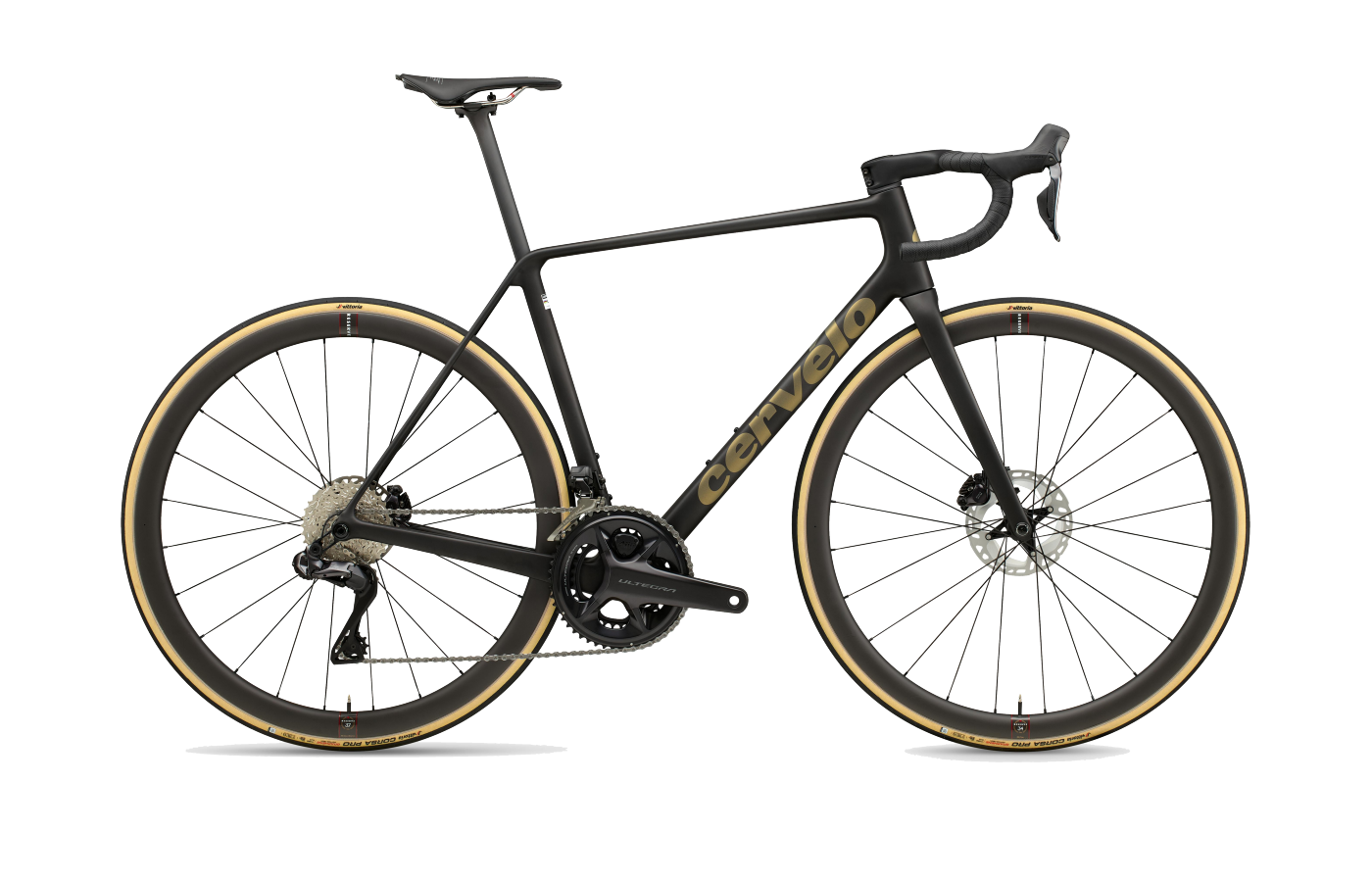
R5
Cervelo's pure climber and the Aethos's most direct rival on the scale — one of the few bikes that genuinely challenges the S-Works Aethos for the lightest-disc-brake-frame title.
Compare →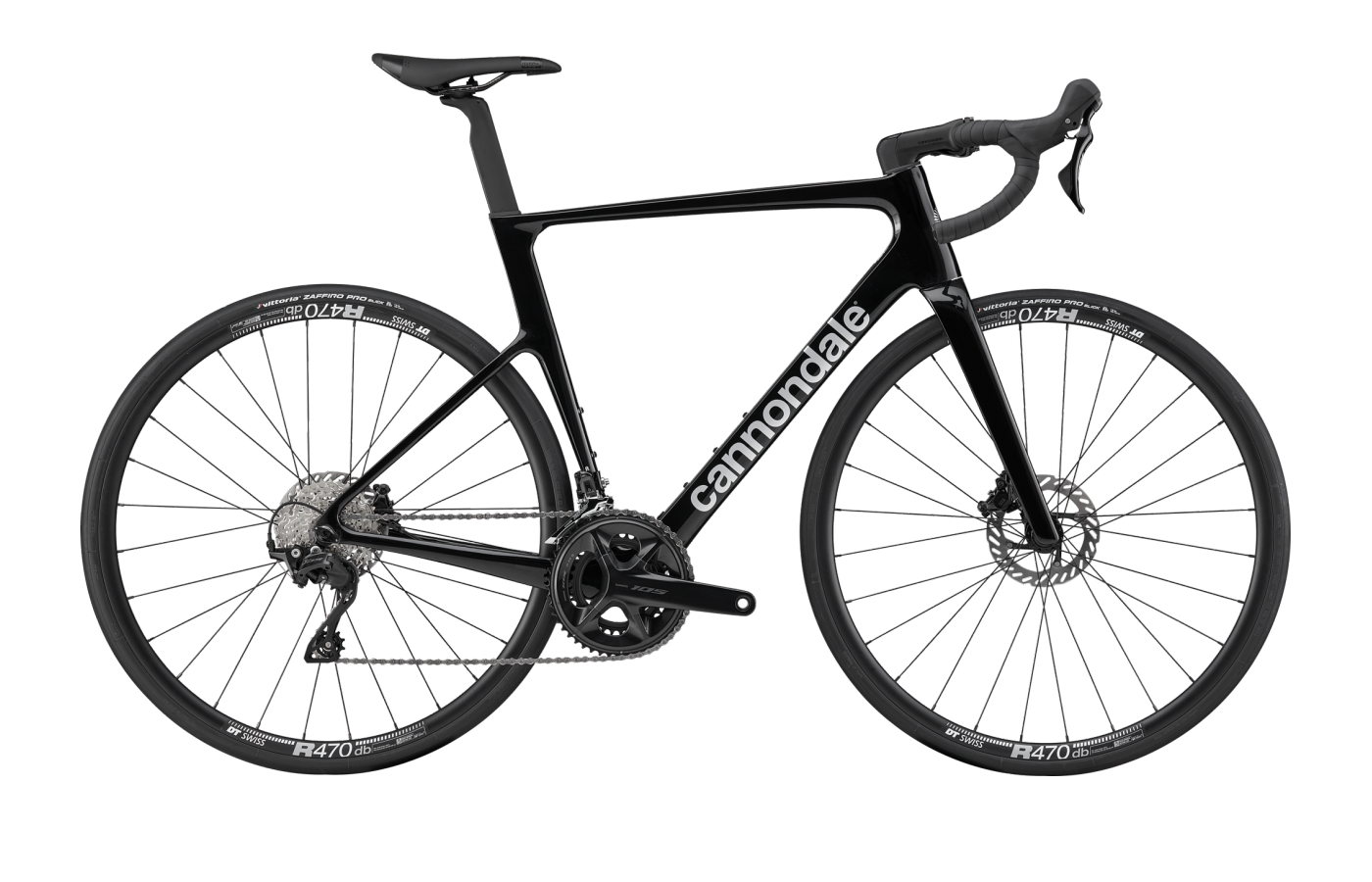
SuperSix EVO
Cannondale's all-rounder is the closest geometric and philosophical analog to the Tarmac SL8 — similar aero-light blend, generally perceived as a stiffer, more aggressive ride.
Compare →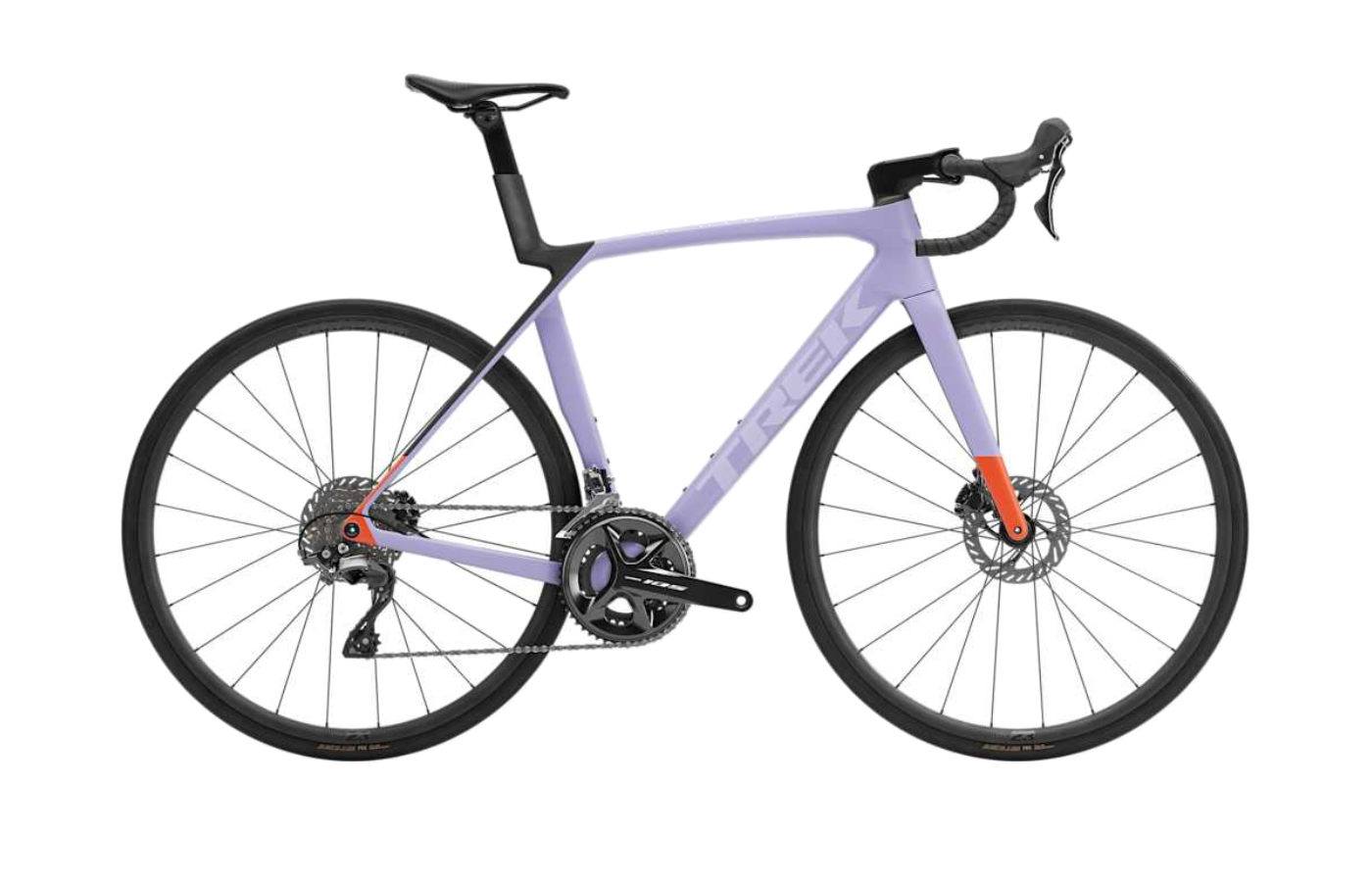
Madone
Trek's aero-race flagship adds the IsoFlow decoupler for a noticeably softer rear end than the Tarmac. If you want the SL8's flat-road speed but more compliance over long days, this is the one.
Compare →