Diverge
vsCheckpoint
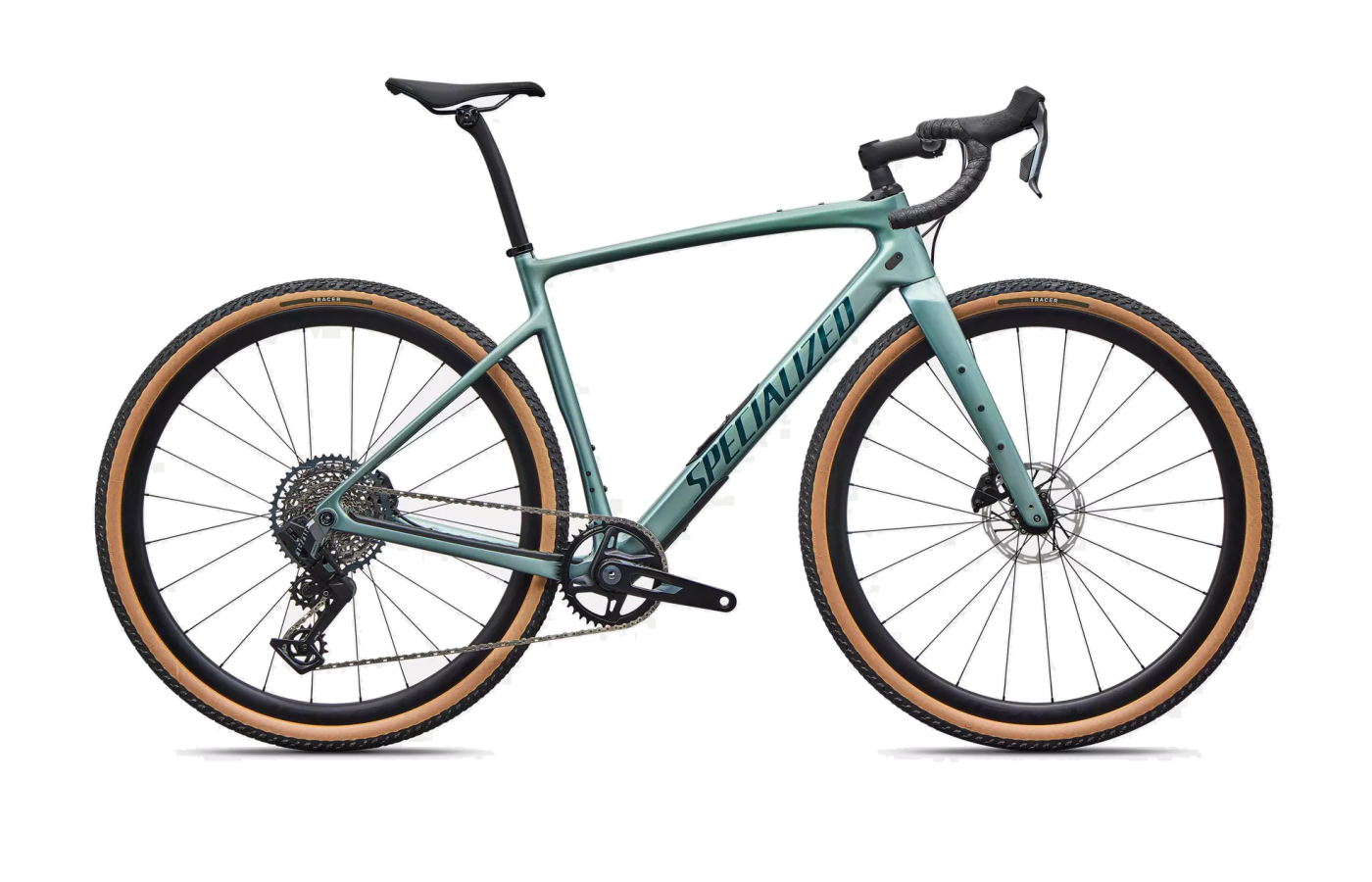
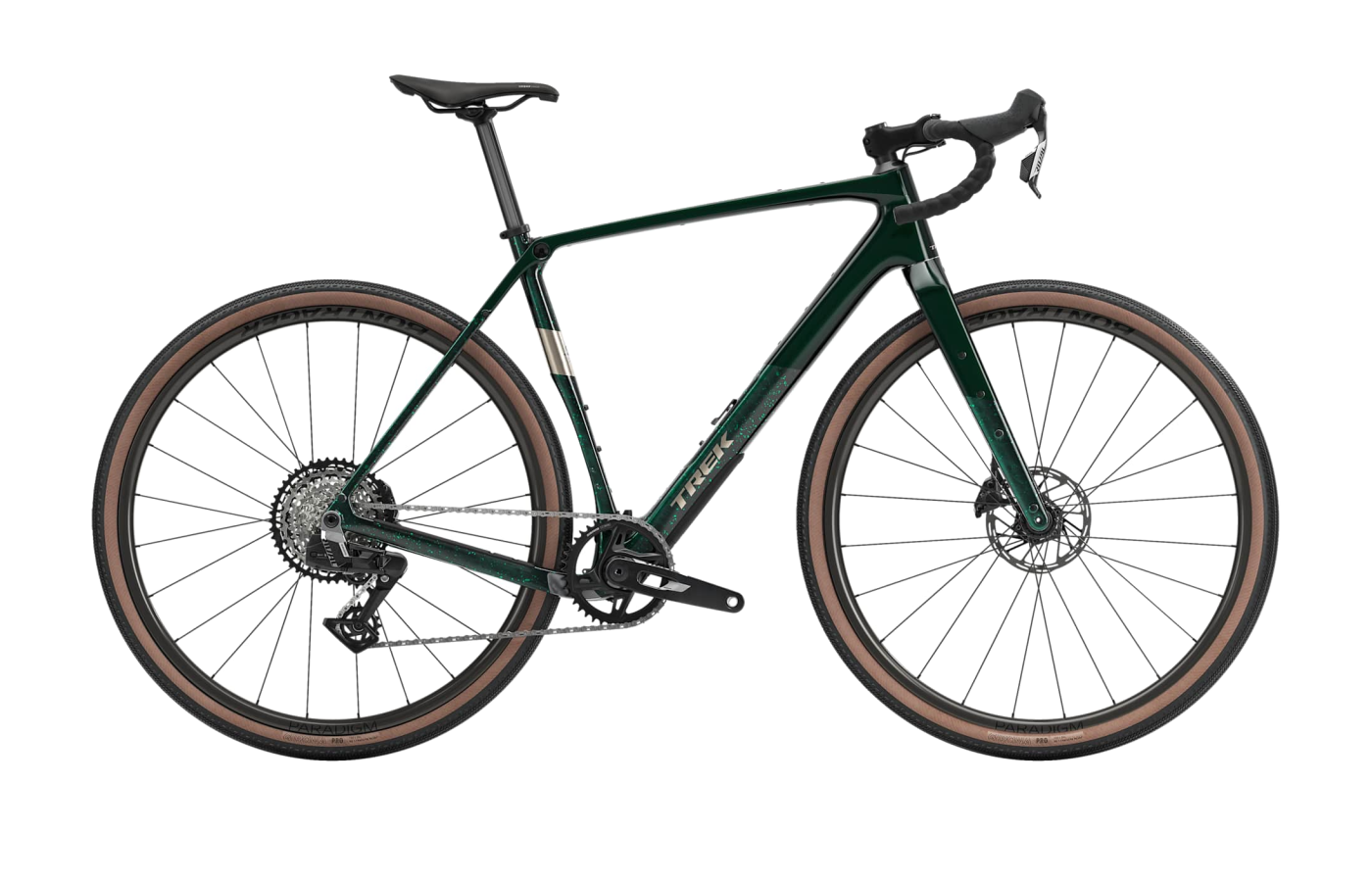
Two gravel bikes, two ideas of comfort.
The Diverge 4 suspends the rider's hands with a 20 mm Future Shock and chases the dirt. The Checkpoint Gen 3 mutes the rear with IsoSpeed and chases the long day.
Diverge
- Future Shock 3.0 — 20 mm of front-end travel that genuinely keeps hands fresh on chunky descents.
- MTB-leaning geometry — 71° HTA, 85 mm BB drop, 1041 mm wheelbase at size 54 makes it a freight train on loose terrain.
- SWAT 4.0 storage — larger door than Gen 3, secure rattle-free fit, present on both carbon and alloy frames.
- Low 85 mm BB drop plus 172.5 mm cranks on size 54/56 — pedal strikes are common on stock 45 mm tires.
- Roughly $1,800 more than the equivalent Trek build at the Rival AXS tier.
Checkpoint
- Endurance-tuned geometry — taller stack and shorter reach put the rider upright; reviewers stay 'fresh' on multi-hour days.
- IsoSpeed decoupler — rear-only compliance with no moving parts, no service interval, no bouncy out-of-saddle feel.
- Better value at every tier — Force AXS flagship undercuts the Specialized Pro by $1,500; the ALR 5 starts at $2,299.
- Through-the-headset cable routing makes mechanical-shift cable swaps painful (one shop quoted $200 in labor).
- 27.2 mm seatpost can slip in the carbon frame without liberal carbon paste — multiple testers reported it.
Editor’s analysis
Both clear 50 mm rubber and weigh within a hair of each other — but they get there from opposite directions.
On paper the Specialized Diverge and Trek Checkpoint look like the same bike: carbon main frames, 50 mm tire clearance, internal downtube storage, UDH, T47 (or threaded) bottom brackets, 1x SRAM AXS as the default. Same category, same target buyer. Spend ten minutes on each, though, and the philosophies fall apart in different directions.
The Diverge picks dirt and commits. Its 71-degree head angle (sizes 54+), 1041 mm wheelbase at size 54, and 85 mm bottom-bracket drop borrow heavily from modern XC geometry — long, low, planted. The Future Shock 3.0 above the head tube gives 20 mm of vertical travel where your hands sit, and reviewers across the board describe it as a 'freight train' on rough washboard. That low BB has a price: every reviewer with a 172.5 mm crank pedal-struck on mellow trails until they swapped to wider tires.
The Trek points the other way. Trek explicitly handed the racing job to the new Checkmate and pulled the Specialized Checkpoint back into 'Gravel Endurance' territory: shorter reach (386 mm at size S vs the previous gen), 11 mm taller stack at size L, a steeper 71.4-degree head angle on the small, and a traditional 76 mm bottom-bracket drop. The IsoSpeed decoupler at the seat cluster mutes high-frequency buzz at the saddle — subtle, no moving suspension, no maintenance. Reviewers consistently call the result 'composed' and 'fresh after four hours.'
Put another way: the Diverge is the bike you buy when your gravel routes have a singletrack connector. The Trek Checkpoint is the bike you buy when your gravel routes have 30 km of pavement before the dirt starts.
Where the builds differ.
Comparing our editor's-pick builds side-by-side. Winners highlighted row-by-row — lower price and weight, and the better-spec component, each mark a point.
Build variants & pricing
Both ranges span carbon and alloy frames, but the Trek starts $600 cheaper and tops out $4,000 lower than the Specialized halo build.
Prices are current US MSRP. The editor's-pick row above compares the Diverge 4 Expert ($5,999, Rival AXS) against the Checkpoint SL 6 AXS Gen 3 ($4,199, Rival AXS) — the closest tier-matched pairing. Specialized Diverge tops out at $10,499 (4 Pro LTD); the Checkpoint flagship is the SL 7 AXS at $6,499.
How they fit, how they steer.
Fit-picked sizes for a 5'8" rider: Diverge 54 vs Checkpoint S. Stack differs by 36 mm (Diverge 592 vs Checkpoint 556) with reach within 1 mm — the Specialized sits the rider noticeably more upright at the same reach. Head angles are nearly matched (71° vs 71.4°); the Diverge's 85 mm BB drop sits 9 mm lower than the Trek's 76 mm.
Which size should I buy?
Specialized uses numeric sizes (49–61); Trek uses letter sizes (XS–XL). The two ranges cover similar rider heights but with offset stack/reach pairings — confirm fit on each chart separately.
→These are starting points. Flexibility, riding style, and preferred position all shift the answer — if you’re between sizes, a professional fit beats a chart.
What the magazines said.
Published reviews from trusted cycling outlets. Click through for the full write-up.
Which one should you buy?
If your rides start where the pavement ends, get the Diverge. If your rides start at the front door, get the Checkpoint.
Diverge
If your local routes are sandy two-track, rocky doubletrack, and the occasional singletrack connector, the Future Shock and slack, low-slung geometry pay off every ride. Plan to swap to 50 mm tires immediately to clear the pedal-strike problem.
Checkpoint
If your gravel routes start with pavement, end with pavement, or you want a single bike that commutes Monday and bikepacks Saturday, the Checkpoint's upright fit, IsoSpeed comfort, and lighter price tag make more sense. The geometry is friendlier to riders who don't want to commit to an off-road specialist.
Questions buyers actually ask.
Short answers to the things we get emailed about most often.
01Which has more tire clearance?
Both clear 50 mm officially. The Specialized Diverge frame is rated for 50 mm with 8 mm of mud clearance, or even a 2.2-inch (~56 mm) MTB tire with the ISO-standard 4 mm clearance. The Trek Checkpoint is also rated for 50 mm.
In practice the Diverge has the slight edge for very wide rubber, but both will fit any gravel tire on the market today.
02Why does the Diverge pedal-strike so much?
Two things stack: an aggressive 85 mm bottom-bracket drop (vs Trek's traditional 76 mm) plus 172.5 mm cranks on the 54 cm and 56 cm frames. Reviewers from BikeRadar, Cycling Weekly, and Velo all reported strikes on stock 45 mm tires — Cycling Weekly's tester actually broke a Garmin Rally power pedal.
The fix is the same one Specialized's own engineers recommend: run the wider 50 mm tires the frame was designed for. That bumps ride height by ~3 mm and largely solves it.
03How does Future Shock compare to IsoSpeed?
They're solving different problems. Future Shock 3.0 is a real spring-and-damper unit with 20 mm of vertical travel above the head tube — your hands move, the frame doesn't. It's effective on high-frequency chatter and square-edge hits, but it's a serviceable mechanical part (Specialized claims a four-year interval).
IsoSpeed is a passive decoupler at the seat cluster that lets the seat tube flex relative to the top tube. There's no spring, no damper, no maintenance — just a few millimeters of compliance under the saddle. It mutes road buzz without bouncing under pedaling.
Neither is better in absolute terms; they target different ends of the bike. Future Shock helps your hands and shoulders, IsoSpeed helps your back and saddle.
04Which is a better value?
The Trek, fairly clearly. The Checkpoint SL 7 AXS Gen 3 — the flagship — is $6,499 with Force AXS, Bontrager Aeolus Elite 35V carbon wheels, and IsoSpeed. The closest-equivalent Specialized is the Diverge 4 Pro at $7,999 (Force AXS, Roval Terra CL alloy wheels). The Trek includes carbon wheels at the lower price.
At the value end the gap widens further: the Checkpoint ALR 5 starts at $2,299 with the same geometry as the carbon SL; the cheapest carbon Specialized starts at $3,499 and the cheapest Diverge of any kind is $2,099 (alloy, Shimano CUES).
05Can I bikepack on either?
Yes, both are well-designed for it. Both frames carry mounts on the top tube, fork legs, and under the bottom bracket plus rack and fender mounts; both have internal downtube storage (the Trek SL only — the Specialized Diverge SWAT door is on both carbon and alloy frames).
The Trek's slightly more upright geometry is friendlier with a loaded front end. The Specialized's MTB-adjacent geometry is friendlier on technical loaded descents. Either works.
06Are the alloy versions worth considering?
Trek's ALR 5 ($2,299) is the standout — it keeps the same Gen 3 geometry, 50 mm clearance, UDH, and carbon fork as the SL series, just without IsoSpeed and the carbon downtube. Multiple reviewers called it the best sub-$2,500 gravel bike on the market.
Specialized's alloy Diverges also keep the SWAT storage and modern geometry, but ship with the cheapest Future Shock 3.1 (spring only, no hydraulic damping). It's described as 'noticeably less composed' than the 3.2/3.3 found on the carbon bikes — and it can't be upgraded to 3.3 without swapping the head tube assembly.
07Does either still support a front derailleur?
Trek does, Specialized doesn't on the Gen 4 carbon frames. The Checkpoint frame has a removable FD hanger — every current build is 1x AXS or CUES, but you can install a 2x setup if you want one. The Diverge 4 carbon frames are 1x-only.
If you live somewhere with sustained pavement climbs and want closer gear spacing, that's a real differentiator.
08What about long-term serviceability?
Both have lifetime frame warranties to the original owner. Trek's dealer network is the largest in North America; Specialized is close behind. Both use threaded bottom brackets (T47 on Trek, threaded BSA-spec on Specialized).
One caveat: the Trek's cables run through the headset, which is fine for the wireless AXS builds but a real pain on the mechanical CUES alloy builds — one shop quoted $200 in labor for a shift-cable swap that costs $25 on an externally routed bike. If you're considering a CUES Checkpoint, factor that in.
Similar bikes
If your priorities don’t map cleanly onto either of these, one of these adjacent bikes probably fits better.
Crux
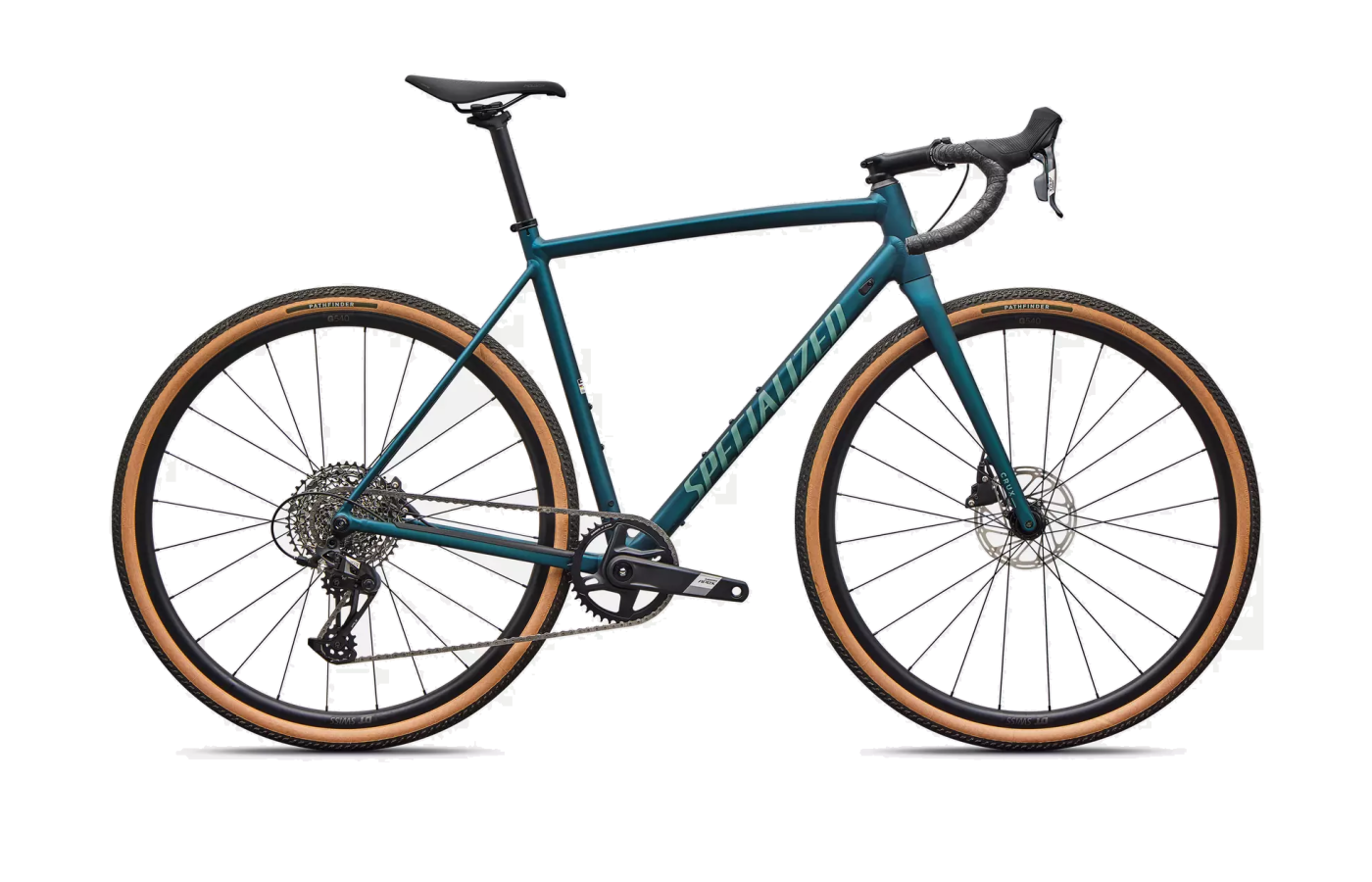
If the Diverge's complexity puts you off — Future Shock, integrated stem, low BB — the Specialized Crux is the anti-Diverge: a sub-7 kg traditional gravel race bike, no suspension, no SWAT, just lightweight carbon. Specialized still sells both for a reason.
Compare →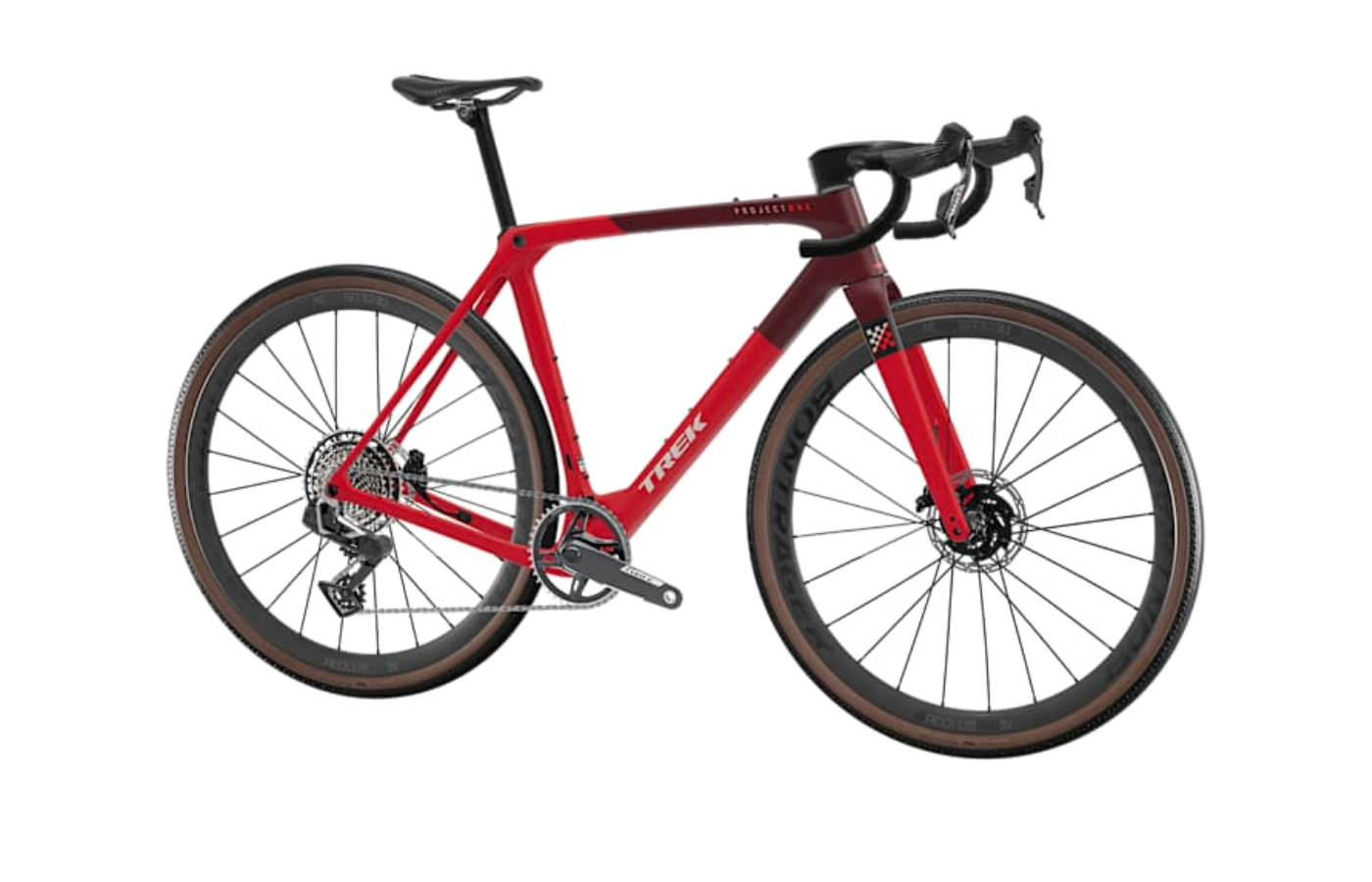
Checkmate
Trek's dedicated race-oriented gravel rig and the bike that absorbed the racing job the Checkpoint used to do. Lighter, more aero, steeper geometry — for the rider who wants Trek's handling without the Checkpoint's endurance bias.
Compare →Grizl
Canyon's adventure-gravel answer with the same 50 mm clearance and downtube storage as the Diverge and Checkpoint, usually for noticeably less money. The catch is the direct-to-consumer model — no local dealer for fit help or warranty work.
Compare →