Enduro
vsSlash
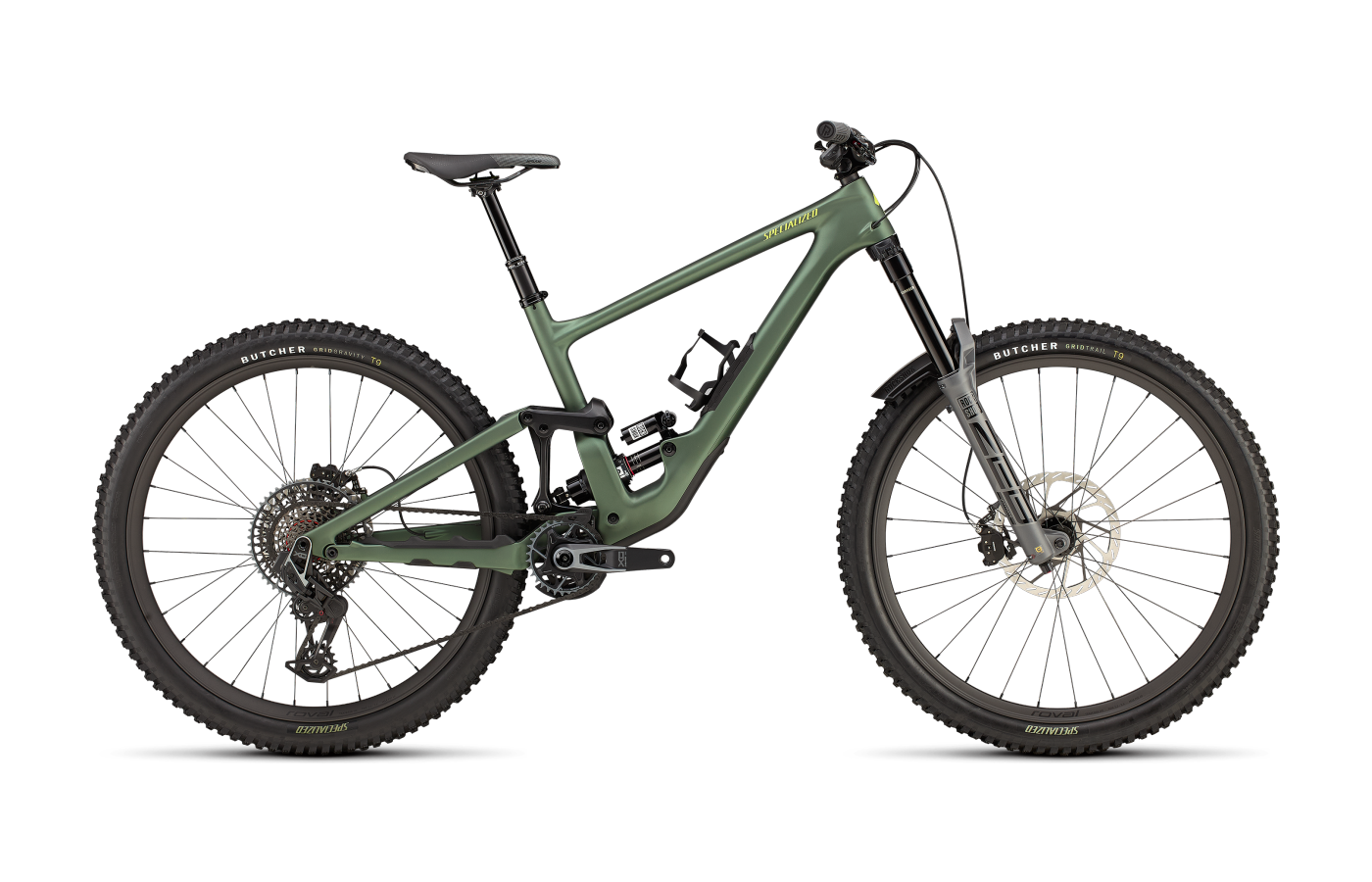
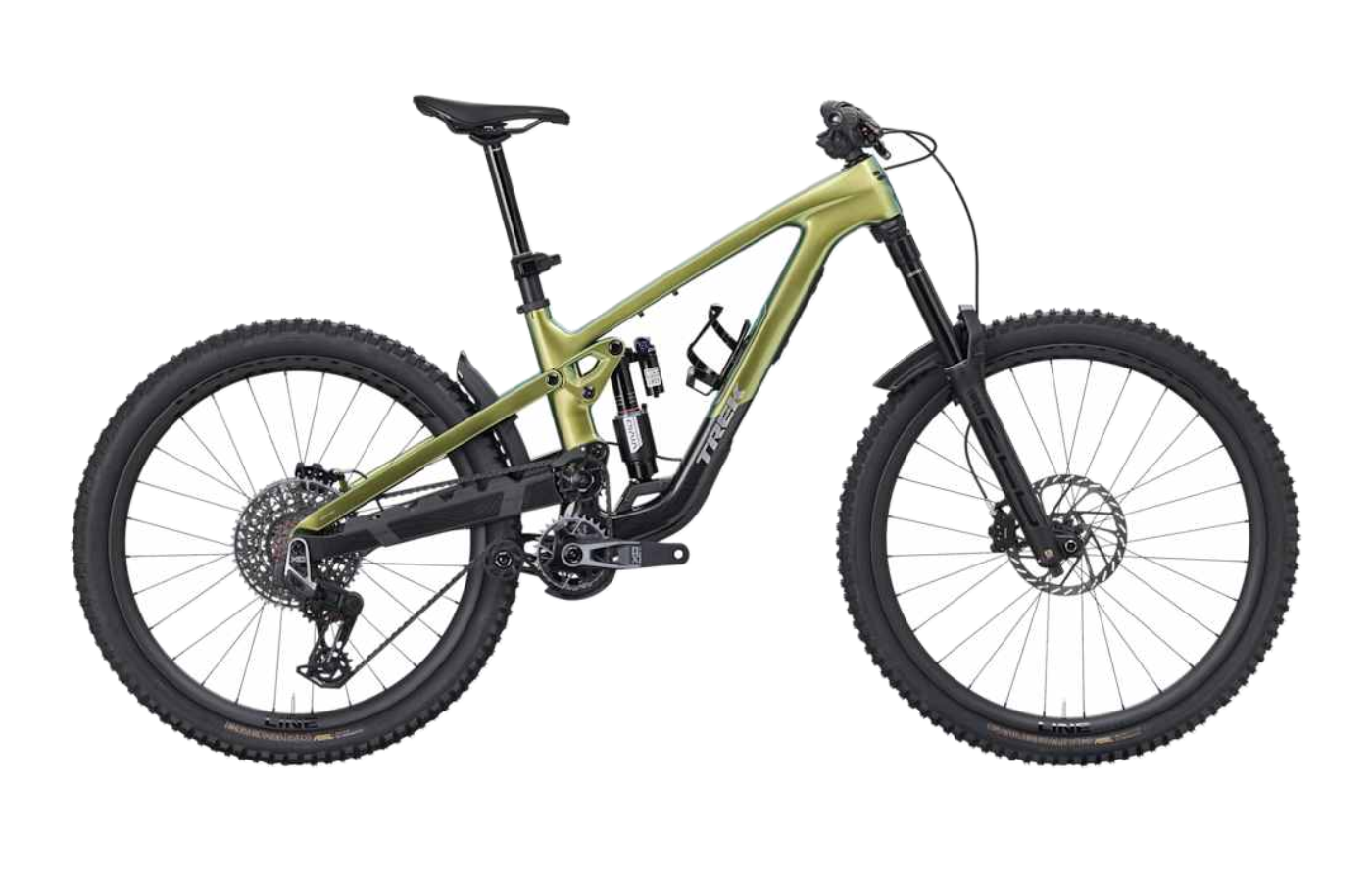
Two 170 mm bruisers, two suspension philosophies.
The Enduro is a Demo-derived Horst-link plow. The Slash Gen 6 is a high-pivot, idler-driven cheat code. Same travel, very different rear ends.
Enduro
- Climbs surprisingly well for 170 mm — 40% more anti-squat over the prior gen and a 76-degree effective seat tube angle.
- Composed at speed — Demo-derived Horst link delivers the magic-carpet feel reviewers cite repeatedly.
- SWAT downtube storage is the best-executed in the segment; threaded BB and integrated frame protection round it out.
- Carbon-only — entry price is $4,999 for the Comp, no aluminum option.
- Stock GRID Trail tires were widely panned as too thin for the bike's gravity intent.
Slash
- Class-leading rear suspension — RockShox Vivid Ultimate plus high-pivot rearward axle path nets a coil-like feel reviewers loved.
- Mullet wheels add agility the 27.5 rear keeps the bike from feeling like a pure-29er anchor in tight corners.
- Aluminum entry point — the Slash 8 starts at $4,399 with the same high-pivot kinematics as the carbon flagship.
- Idler drivetrain demands meticulous maintenance; reviewers reported real-world drag well above Trek's claimed 3%.
- Bontrager SE5/SE6 stock tires and Line Pro 30 carbon wheels were almost universally flagged for upgrade.
Editor’s analysis
Both bikes are basically downhill rigs that pretend to climb — the question is which kind of downhill rig you want.
On paper the overlap is real. Both run 170 mm front and rear. Both ship on a RockShox Zeb fork and a Vivid Ultimate rear shock at the top of the range. Both use carbon main frames and live somewhere between $5k and $9k. Pick either, point it down something steep and rough, and you will go fast. The interesting fight is in the linkage.
Specialized Enduro is the refined version of an idea Specialized has been chasing since the Demo: a Horst-link rear end with a more rearward axle path, big anti-squat (a claimed 40% bump over the prior Enduro), 442 mm chainstays across all four sizes, and a head angle that sits at 64.3 degrees in the high flip-chip setting. The result is the bike reviewers keep calling a magic carpet — exceptionally plush at speed, planted under braking, and surprisingly composed climbing for 170 mm of travel. The trade is ground-hugging character on mellow trails, where some testers found it boring.
Trek Slash Gen 6 took a more radical swing. It's a high-pivot bike with a 19-tooth idler, mixed-wheel (29 front / 27.5 rear) on every size from M up, a 63.3-degree head tube angle, and an Active Braking Pivot that keeps the suspension working when the brakes are dragging. The rearward axle path is more pronounced than the Enduro's — Trek lets the rear center grow roughly 17 mm under compression on a Large — and the Vivid Ultimate hung off it gets a near-coil suppleness reviewers raved about. Cost of admission: idler drag, fussier drivetrain maintenance, and a known early-production chain-drop issue Trek has since addressed with an updated idler tooth profile.
Put simply: Specialized Enduro is the long-travel race bike that climbs better than it has any right to. Trek Slash is the bike-park-first bruiser that uses a mullet to claw back agility a pure 29er high-pivot wouldn't have. They cross over in the middle, but they live in different garages.
Where the builds differ.
Comparing our editor's-pick builds side-by-side. Winners highlighted row-by-row — lower price and weight, and the better-spec component, each mark a point.
Build variants & pricing
Both flagship X0 Transmission builds land within $200 of each other; below that, the lineups diverge quickly.
Prices are current US MSRP. The Specialized Enduro is carbon-only with just two builds (Pro $8,499 / Comp $4,999), so the mid-range gap is wide. Trek's Slash range is broader — seven builds spanning $4,399 to $8,699, including aluminum models that bring the high-pivot frame to a far lower entry price.
How they fit, how they steer.
Compared at the fit-picked sizes for a 5'8" rider — Enduro S2 vs Slash ML. The Slash sits 16 mm taller in stack, runs a full 1.0 degree slacker head angle (63.3 vs 64.3), and carries 11 mm more trail; the Enduro is 31 mm shorter in reach with 8 mm shorter chainstays.
Which size should I buy?
Both ranges cover the typical enduro spread. Specialized's S-sizing decouples reach from seat tube — pick by reach preference; Trek's M/ML/L gives you a half-step in the middle of the size run that 29er-only platforms usually skip.
→These are starting points. Flexibility, riding style, and preferred position all shift the answer — if you’re between sizes, a professional fit beats a chart.
What the magazines said.
Published reviews from trusted cycling outlets. Click through for the full write-up.
Which one should you buy?
If you want one bike that races enduro and earns its own climbs, get the Enduro. If you want maximum downhill cheat code with mullet agility, get the Slash.
Enduro
If your big days involve real climbing and the descents are rough but not all bike-park, the Enduro's Horst-link efficiency and lighter feel pay off. It's the more well-rounded race bike of the two — calmer at speed than its travel suggests, and more willing on the way up than a high-pivot.
Slash
If most of your descending is shuttle laps, lift access, and the gnarliest enduro tracks, the Slash's high-pivot rear end and Vivid Ultimate shock are the closest thing to a coil-DH ride at 170 mm. Mullet wheels keep it from feeling like a freight train in corners. Just budget for tires.
Questions buyers actually ask.
Short answers to the things we get emailed about most often.
01Which one descends faster?
Reviewers give the Slash Gen 6 a slight edge on the very roughest, fastest terrain — the high-pivot's rearward axle path (the rear center grows roughly 17 mm under compression on a Large) lets it hold speed through square-edge hits in a way the Enduro's Horst link can't quite match. Add the RockShox Vivid Ultimate's coil-like feel and the slacker 63.3-degree head angle, and it becomes the more obvious plow.
The Enduro isn't far behind — at 64.3 degrees it's still very slack, and its Demo-derived suspension is widely praised as a magic carpet. On flowier or more varied terrain the gap closes to nothing.
02Which one climbs better?
The Enduro, by a clear margin on technical climbs. Specialized increased anti-squat by ~40% over the prior generation and the effective seat tube angle is 76 degrees — reviewers were repeatedly surprised by how well it pedals for a 170 mm bike.
The Slash is no slouch — Trek tuned around ~100% anti-squat throughout the travel and the seat angle is steeper still at ~77 degrees — but the high-pivot's idler adds measurable drag (Trek claims 3%, some testers felt closer to 10%), and the rearward axle path can make the rear wheel stall against square-edge obstacles at low speed. The Slash is a wincher; the Enduro is a climber.
03What's the deal with the Slash's idler pulley?
The 19-tooth upper idler is what enables the Slash's high-pivot layout — it routes the chain over the main pivot so the suspension can use a more rearward axle path without the chain pulling against it. Done well, it eliminates pedal kickback and lets the wheel move out of the way of impacts.
The trade-offs are real. Reviewers reported audible drag when the drivetrain is dirty, more wear points (extra chain length plus the idler and lower guide), and an early-production chain-drop issue Trek addressed with an updated idler tooth profile and a service bulletin clarifying lower-guide spacing. Buy used carefully, or buy new with the latest revision.
04Are these mullet bikes?
Slash Gen 6: yes on most sizes. M, ML, L, and XL ship with a 29-inch front and 27.5-inch rear. Size S is full 27.5. A 29-inch rear conversion is possible via a separate shock mount sold by Trek.
Specialized Enduro: no — full 29 across the entire range, all four sizes (S2 through S5). If you specifically want the agility a mullet adds in tight corners, only the Slash gives it to you out of the box.
05How much do they weigh?
Top-tier carbon builds land within roughly half a kilogram of each other. The Enduro Pro is a claimed 16.04 kg (35 lb 5.8 oz) with X0 Transmission, and the Slash 9.9 X0 AXS comes in at 16.53 kg (36.45 lb) on a size M with sealant.
The Slash gets significantly heavier as you move down to aluminum — the alloy Slash 9 has been measured close to 18 kg (39 lb) once shod with appropriate tires. The Enduro doesn't have an alloy option, so the floor is higher but the ceiling is similar.
06Can I run a coil shock on either?
Yes on both, with caveats. The Enduro's leverage curve is described by Specialized as progressive enough for coil — multiple reviewers ran one and called it a monster truck, with the trade being some loss of pop on mellower terrain.
The Slash also accepts a coil — the frame ships with the Vivid Ultimate air shock, which reviewers already described as coil-like, so the marginal gain from a true coil is smaller. Both bikes use a 230 x 65 mm trunnion-mount shock on the Slash side and a 205 x 60 mm trunnion on the Enduro side, so make sure you're shopping the right size.
07What's the tire clearance?
Specialized Enduro: 58 mm (roughly 2.3 inch) per the spec sheet — both bikes ship 29x2.3 stock.
Trek Slash: 63.5 mm (2.5 inch) — wider, in part because the rear wheel is 27.5 on most sizes, leaving more room in the rear triangle. Both bikes are designed around aggressive 2.4–2.5 inch enduro/DH tires; neither will swallow a true 2.6 plus tire.
08Which is more reliable long-term?
The Enduro frame is widely considered robust, with the notable exception of the headset cracking issue on 2020–2021 frames; Specialized addressed it for 2022 and later, and reviewers reported swift warranty turnarounds. The 14-bearing rear linkage isn't cheap to service, but the threaded BB and SWAT integration are well-loved.
The Slash Gen 6 is overbuilt at the frame level, but the high-pivot drivetrain demands more attention — reviewers saw idler-pulley wear and the well-publicized early-production chain-drop issue. Trek's response (updated idler, service bulletin, free parts shipped to dealers) has been good, but expect more drivetrain maintenance than on the Enduro.
Similar bikes
If your priorities don’t map cleanly onto either of these, one of these adjacent bikes probably fits better.
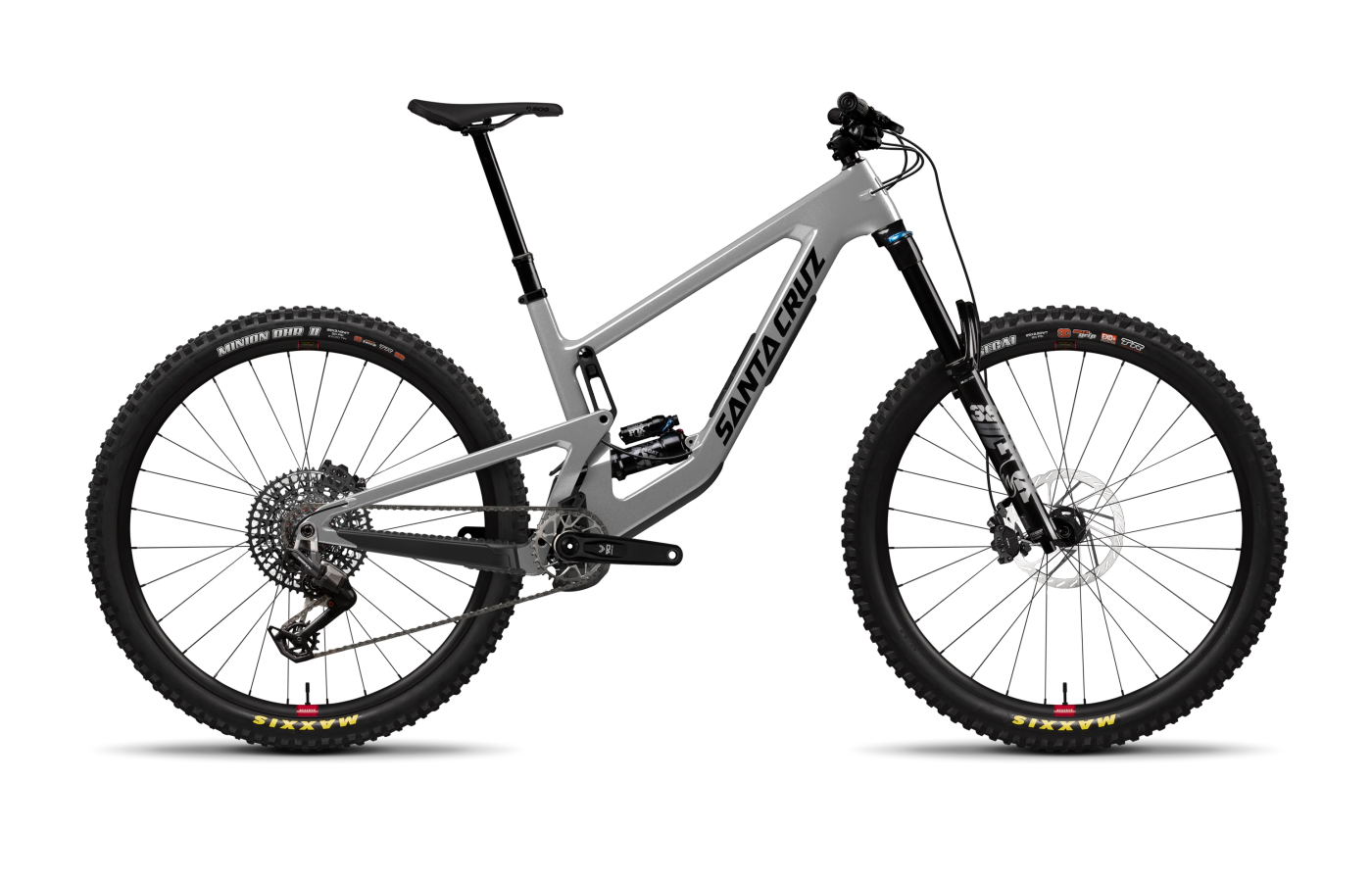
Megatower
The Megatower is the Enduro's most direct rival — another long-travel 29er Horst-link bike with downhill-grade composure that climbs better than its travel suggests. Pick this if you like the Enduro's philosophy but want VPP suspension instead.
Compare →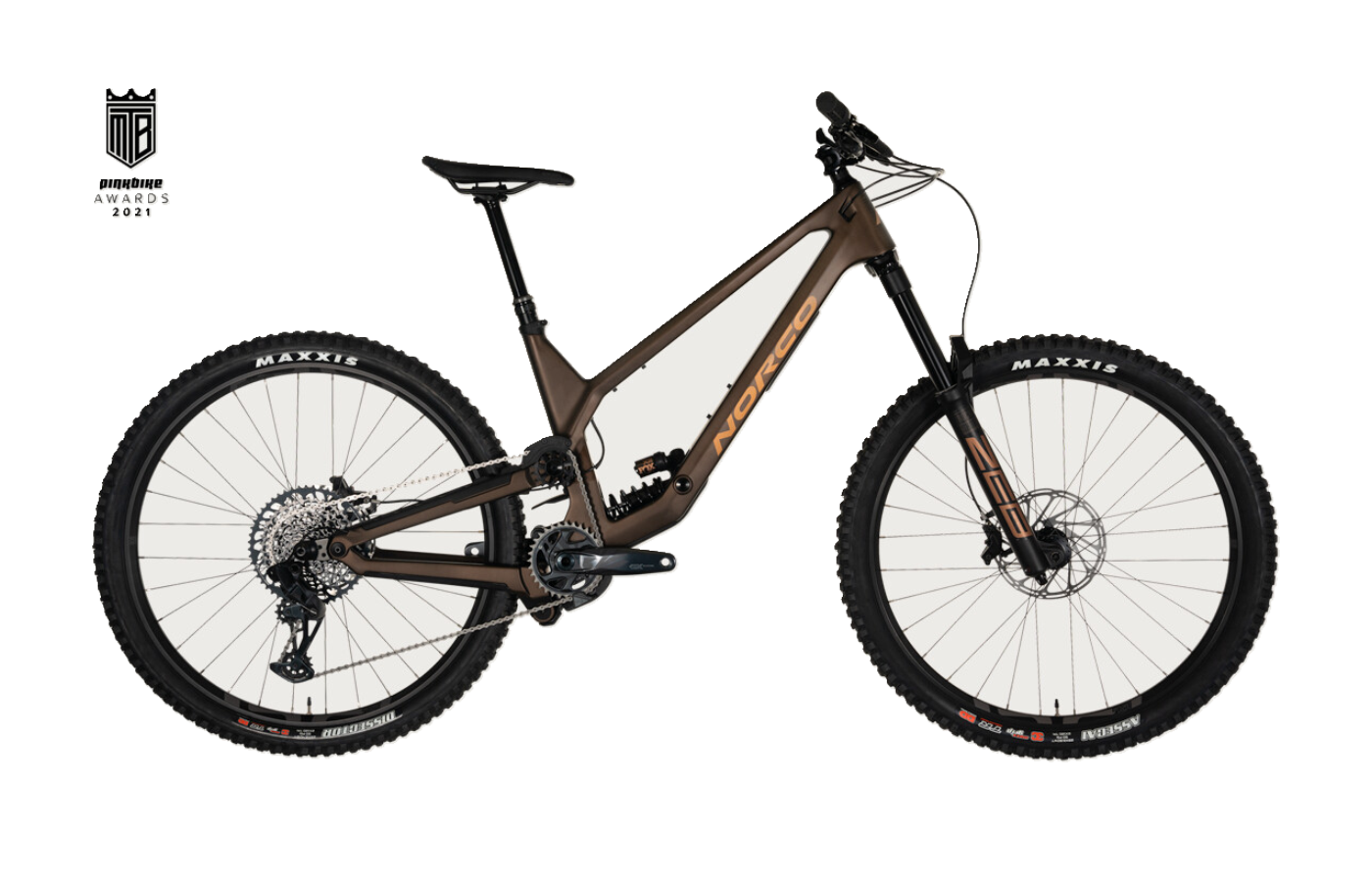
Range
Norco Range — the other big high-pivot 29er in the segment. Closer in design philosophy to the Slash than the Enduro, but a pure 29er rather than a mullet, so it trades the Slash's tight-corner agility for outright big-wheel speed.
Compare →Capra
YT Capra — the direct-to-consumer value play in this category. Aggressive geometry and proven kinematics for materially less money; the catch is no local dealer and you live with whatever spec YT chose.
Compare →