Cutthroat
vsJourneyer
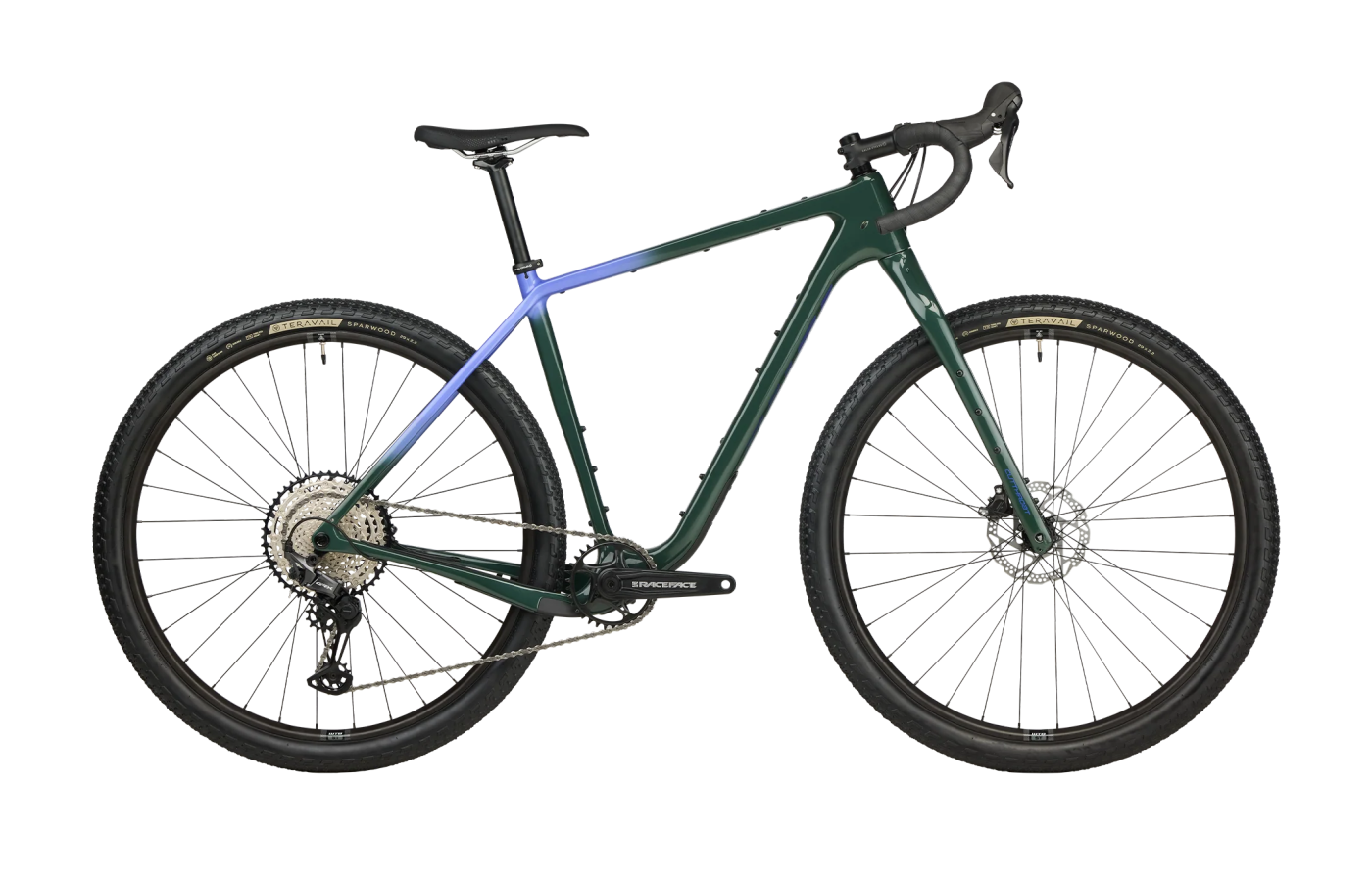
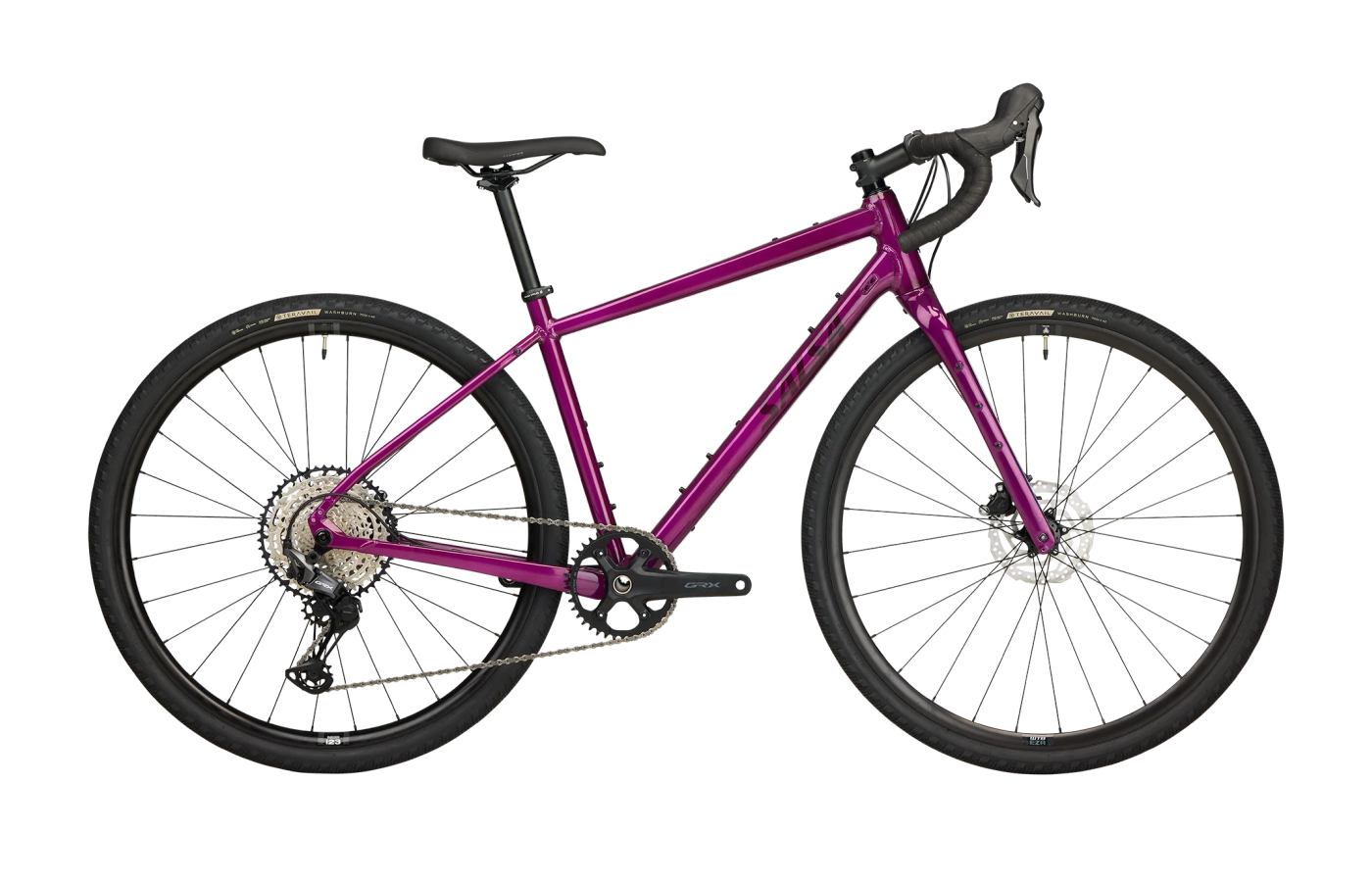
Same brand, two universes of gravel.
The Salsa Cutthroat is a carbon Tour Divide weapon with 29x2.2 MTB tires. The Salsa Journeyer is the alloy do-anything bike that starts at $629.
Cutthroat
- 61 mm tire clearance — officially up to 29x2.4, suspension-corrected for a 100 mm fork if you ever want one.
- Carbon frame and 32%-more-compliant V2 fork — the most compliant rigid front end in the gravel/adventure segment.
- 20+ frame mounts for direct-mount frame bag, fork cages, and bottle bosses on every size.
- Carbon-only lineup starts at $3,499 — no budget alloy build exists.
- Press-Fit BB92 bottom bracket draws creak complaints (though Salsa argues the design needs it).
Journeyer
- Entry price under $700 for a real gravel platform with thru-axle and dropper-routing options higher up the range.
- 15 builds across drop and flat bar in 700c and 650b — easy to find one that matches budget and use case.
- English threaded bottom bracket — easy to service forever, no creak debate.
- Aluminum-only frame — no carbon option even at the top of the range.
- Stock wheels are heavy (~2 kg) and an obvious early upgrade.
Editor’s analysis
Salsa builds both, and that's about where the similarities end — one is a purpose-built ultra-endurance racer, the other is the most welcoming gravel platform in the catalog.
The Salsa Cutthroat was designed around one race: the Tour Divide, a self-supported 2,745-mile push from Banff to the Mexican border. Everything about the V2 — the high-modulus carbon frame with Salsa's Class 5 VRS, the 32%-more-compliant carbon fork, the 29-inch MTB wheels, the 61 mm tire clearance, the suspension-corrected 483 mm axle-to-crown — is in service of staying fast and comfortable across days of mixed terrain. Reviewers call it "the mountain biker's road bike." It starts at $3,499 and tops out near $8,000.
The Salsa Journeyer is the opposite end of Salsa's gravel philosophy: a 6061-T6 aluminum frame, an English threaded bottom bracket, 15 builds spanning $629 to $2,499, and a personality reviewers nicknamed "The Happy Bike." It clears 700c x 50 mm or 650b x 55 mm tires, fits a dropper, and accepts more mounts than most riders will ever fill. It's the bike Salsa points the gravel-curious at — and the one that converts them.
On the road, the gap is exactly what the spec sheets predict. The Salsa Cutthroat floats over chunky terrain that bogs down a normal gravel bike — Bicycling reported "floating atop fist-size rocks" on it. The Salsa Journeyer is more interactive, more playful, and audibly working underneath you when the surface gets rough. Both feel stable thanks to long wheelbases (1090 mm Cutthroat 56cm vs 1051 mm Journeyer 55cm) and slack head angles (69deg vs 69.5deg), but the Cutthroat carries that stability into terrain the Journeyer would rather you walked.
The honest framing: these aren't competitors so much as bookends. The Salsa Cutthroat is what you buy when you've already decided gravel means multi-day off-pavement adventures and you want the best tool for that job. The Salsa Journeyer is what you buy when "gravel" still means "the bike I'll use for everything that isn't pure tarmac" — and you want a frame that can grow with you for under two grand.
Where the builds differ.
Comparing our editor's-pick builds side-by-side. Winners highlighted row-by-row — lower price and weight, and the better-spec component, each mark a point.
Build variants & pricing
We picked GRX 610 1x on both sides — same Shimano tier, same drivetrain, but the Salsa Cutthroat's carbon frame costs $1,200 more than the Salsa Journeyer's alloy.
Prices are current US MSRP. The lineups don't really overlap — the Salsa Cutthroat starts at $3,499 (carbon GRX 810 2x) and goes to $7,999; the Salsa Journeyer tops out at $2,499 and starts at $629. There is no Cutthroat at Journeyer money, and no Journeyer at Cutthroat money.
How they fit, how they steer.
Compared at the fit-picked sizes for each bike. The Salsa Cutthroat sits 50 mm taller in stack (619.5 vs 570.0) with 9 mm less reach — meaningfully more upright. Wheelbase is 39 mm longer and chainstays 5 mm longer, which is what you feel as rock-solid stability.
Which size should I buy?
Both ranges go from ~52 to 60 cm. The Salsa Cutthroat's effective stack runs taller across every shared size because of its long suspension-corrected fork.
→These are starting points. Flexibility, riding style, and preferred position all shift the answer — if you’re between sizes, a professional fit beats a chart.
What the magazines said.
Published reviews from trusted cycling outlets. Click through for the full write-up.
Which one should you buy?
If you've already decided gravel means multi-day adventures over rough terrain, get the Cutthroat. If you want one bike that will let you figure out what gravel even means to you, get the Journeyer.
Cutthroat
If your goal events are the Tour Divide, the Arkansas High Country Race, or any week-plus self-supported route on mixed gravel and singletrack, the Salsa Cutthroat is purpose-built for that exact mission. The carbon frame, MTB tires, and 20+ mounts will pay back the price every day you're out there.
Journeyer
If you want one bike for commuting, weekend gravel, light bikepacking, and the occasional rail-trail with friends — and you'd rather spend $1,500 than $5,000 — the Salsa Journeyer is the obvious pick. Reviewers call it 'The Happy Bike' for a reason.
Questions buyers actually ask.
Short answers to the things we get emailed about most often.
01Which bike is better for the Tour Divide?
The Salsa Cutthroat, by design. It was literally engineered around the Tour Divide route — the route is printed on the down tube. The 29x2.2 MTB tires, suspension-corrected carbon fork, 20+ mounts, and direct-mount frame bag are all there for self-supported multi-day racing on chunky surfaces.
The Salsa Journeyer can do extended bikepacking, but it tops out at 700c x 50 mm tires and weighs noticeably more — fine for shorter trips on smoother routes, less ideal for two weeks of rough Forest Service road.
02What's the maximum tire clearance on each?
Salsa Cutthroat: 61 mm officially — Salsa rates it for 29 x 2.4" tires, and reviewers note the V2 fork can fit up to 2.8" if you push it.
Salsa Journeyer: 50 mm on 700c, or up to 55 mm (some reviewers report 2.4" on 650b). Plenty for most gravel; not in the same league as the Cutthroat for chunky singletrack.
03Why is the Cutthroat so much more expensive?
Three reasons. Frame material: the Salsa Cutthroat is high-modulus carbon top to bottom; the Salsa Journeyer is 6061-T6 aluminum with a carbon fork on most builds. Component spec: Cutthroat builds use SRAM AXS Transmission electronic groups at the top end; Journeyer tops out with Shimano GRX 610 mechanical. Intended buyer: the Cutthroat is a niche ultra-endurance race bike, the Journeyer is the broad-appeal entry point.
The gap is real and informative — Salsa is not pretending these are the same kind of product.
04Can the Journeyer handle bikepacking?
Yes — Salsa designed it that way. The frame has triple mounts on the fork, top tube and downtube mounts, and bottle bosses inside the main triangle. Higher-tier builds get thru-axles, the Waxwing carbon fork, and internal routing for a dropper.
Where it lags the Salsa Cutthroat is on the rougher end of the spectrum: less tire clearance, more frame weight, and a less compliant front end. For weekend overnighters and week-long trips on smoother dirt, it's a great choice. For the Great Divide, the Cutthroat is the right tool.
05Is the press-fit bottom bracket on the Cutthroat actually a problem?
It's the most-debated thing about the bike. Several reviewers (GearJunkie, Bicycling, Road.cc) called out the BB92 press-fit standard as creak-prone in general. Salsa argues it's required to hit the Cutthroat's tire clearance, chainstay length, and pedaling stiffness simultaneously.
In practice, Bikepacking.com reported zero issues over thousands of miles on both V1 and V2. Manufacturing tolerances seem to have caught up with the standard. The Salsa Journeyer sidesteps the debate entirely with an English threaded BB.
06Which is better for a brand-new gravel rider?
Almost certainly the Salsa Journeyer. The relaxed geometry, predictable handling, and broad price range mean a beginner can get on a real Salsa platform for $629–$1,500 and not feel under-equipped. Velo nicknamed it "The Happy Bike" precisely because it's so welcoming.
A new rider on a Salsa Cutthroat is buying a $4,000+ bike whose strengths only show up on terrain a beginner won't ride for years. Save the money, get the Journeyer, upgrade later if you outgrow it.
07Do they share any components?
A few. Both ship with the Salsa Guide stem and most drop-bar Journeyer builds use the Salsa Cowbell flared bar — close cousin to the Salsa Cowchipper bar that ships on the Cutthroat (the Cutthroat's Cowchipper has a 24-degree flare; the Cowbell flares 12 degrees). Both also share Salsa's preference for Teravail Washburn or Sparwood tires depending on width.
08Can I run the Cutthroat with a suspension fork?
Yes — uniquely so. The Salsa Cutthroat's 483 mm axle-to-crown rigid carbon fork is suspension-corrected for a 100 mm travel 29er suspension fork without altering the bike's geometry. That's a real upgrade path for riders who eventually want to push it deeper into MTB terrain.
The Salsa Journeyer is not suspension-corrected; swap to a sus fork and the geometry will go significantly slacker than designed.
Similar bikes
If your priorities don’t map cleanly onto either of these, one of these adjacent bikes probably fits better.

Fargo
Salsa's original bikepacking platform — steel, more upright, less race-focused than the Cutthroat. The Salsa Fargo is the choice if you want field-repairable steel and a Sunday-touring rather than ultra-racing personality.
Compare →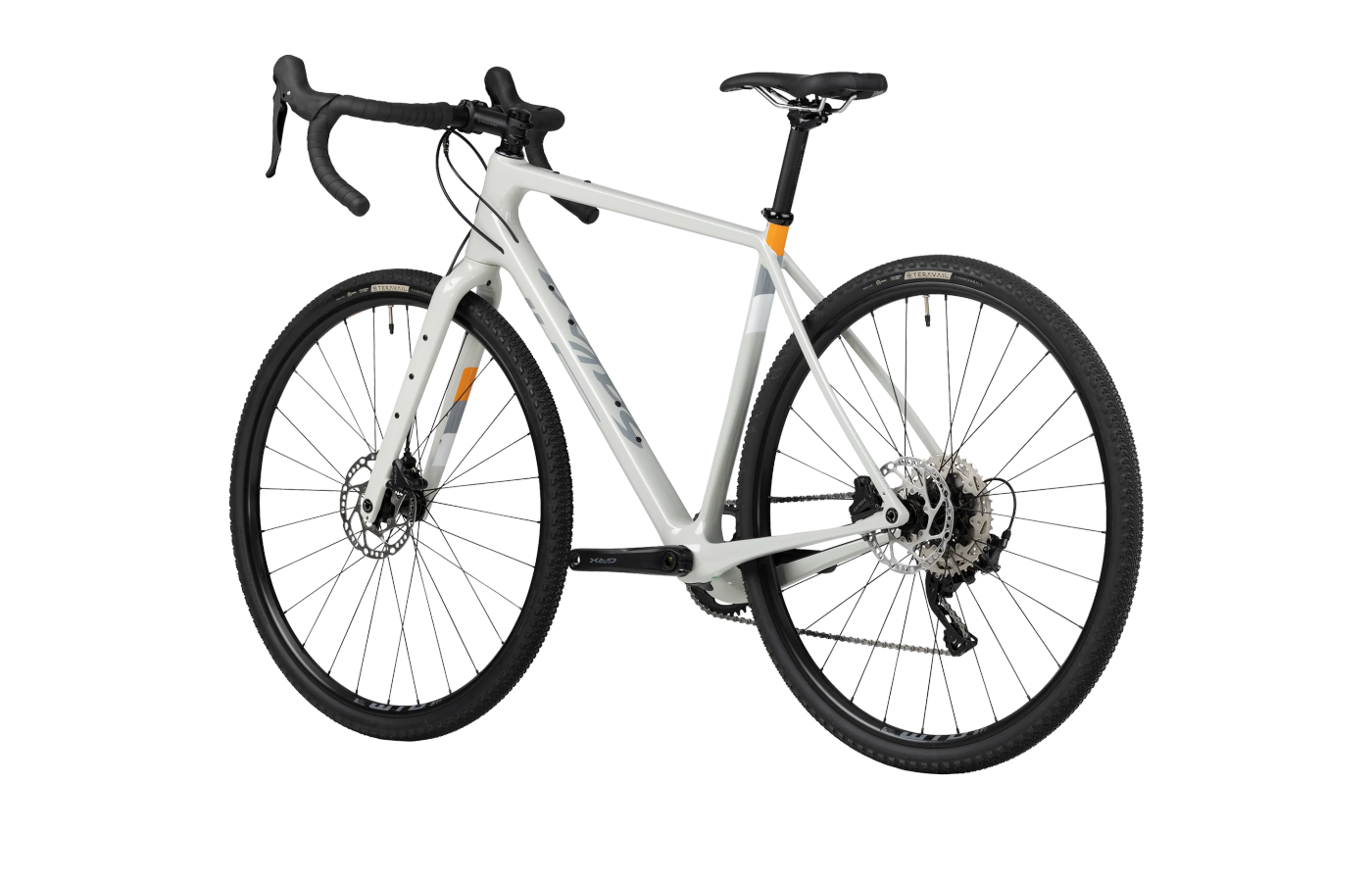
Warbird
Salsa's carbon gravel race bike. The Salsa Warbird is faster than the Journeyer on smooth gravel and lighter than the Cutthroat — but doesn't have the tire clearance or MTB-spec geometry for the rougher stuff.
Compare →Grizl
Direct-to-consumer aggressive gravel with massive tire clearance and bikepacking mounts. The Canyon Grizl is what you cross-shop if you want Cutthroat-style adventure capability for closer to Journeyer money.
Compare →