Cutthroat
vsDiverge
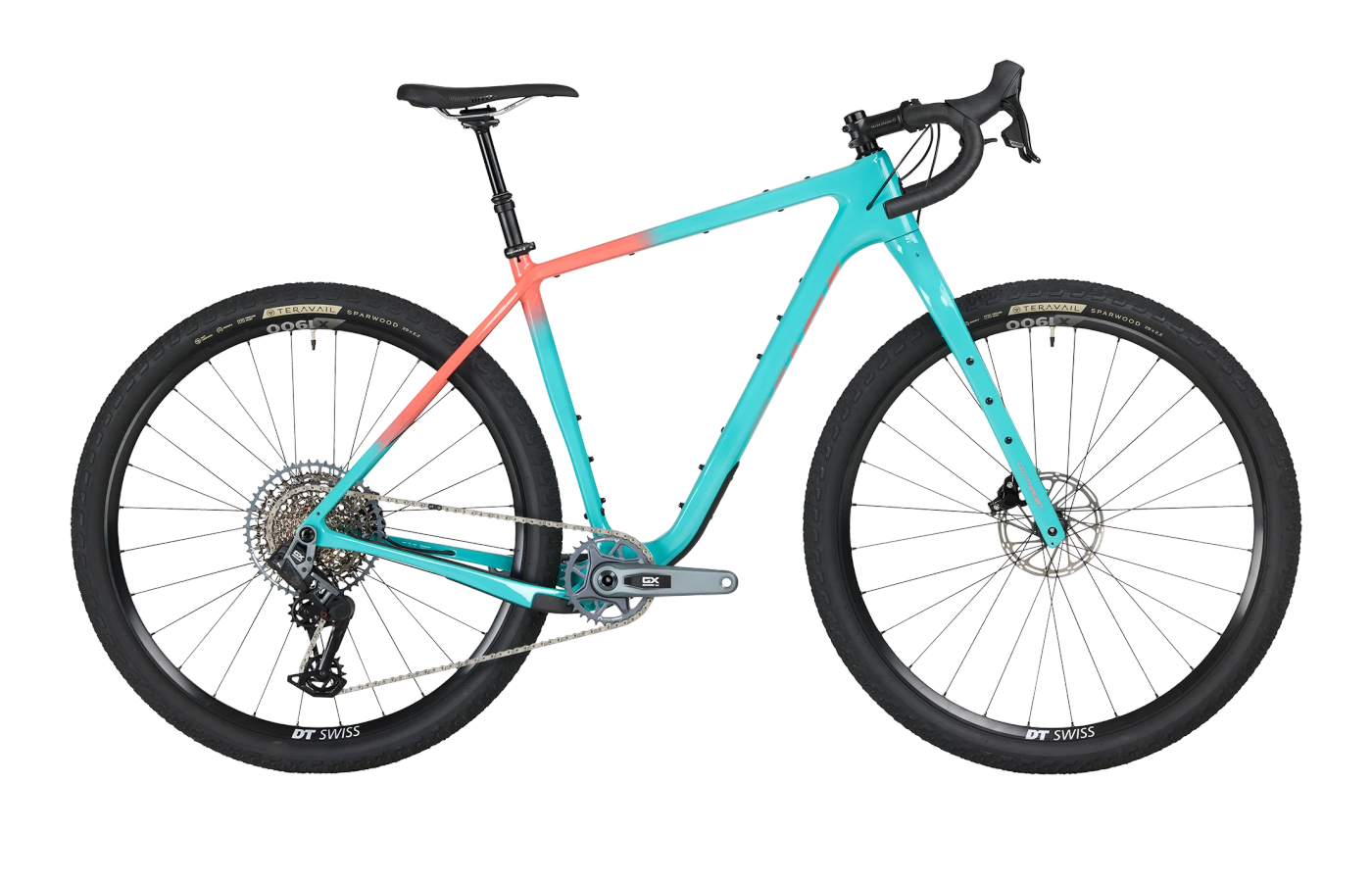
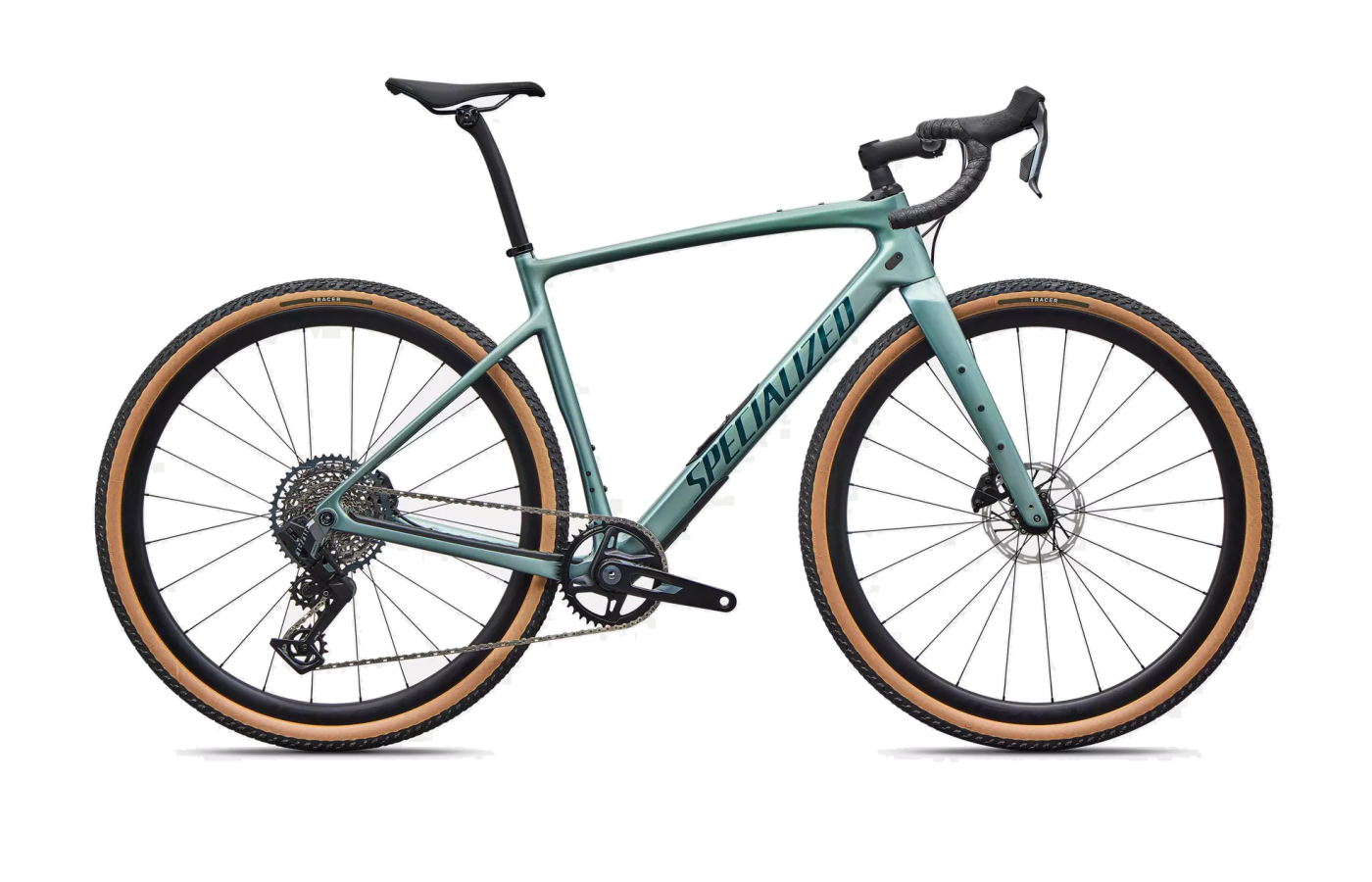
Two carbon adventure rigs, two definitions of 'gravel.'
The Cutthroat is a drop-bar 29er built around the Tour Divide. The Diverge 4 is a modern gravel race bike built around suspending the rider.
Cutthroat
- MTB-class capability — 29 x 2.2" stock rubber, 61 mm of clearance, and a fork suspension-corrected for a 100 mm 29er upgrade.
- Bikepacking pedigree with 20+ frame and fork mounts, plus Salsa's strap-free direct-mount frame bag.
- Composure on rough terrain — a 69° head tube and 1090 mm wheelbase keep the bike planted at speed where pure gravel bikes get nervous.
- Slow-speed steering needs more rider input than a race-oriented gravel bike.
- Press-fit BB92 has a divisive reputation — reviewers split between zero issues and creak concerns.
Diverge
- Future Shock 3.0 — 20 mm of front-end travel that takes the edge off chatter without the weight of a true suspension fork.
- Wider build range — $2,099 alloy to $10,499 RED LTD, with the same modern geometry across the lineup.
- SWAT 4.0 downtube storage and a threaded BB — small details that pay off over years of ownership.
- Pedal strikes on the stock 45 mm tires — most reviewers immediately swap to 50 mm or 2.2" rubber.
- Less ground clearance and shorter chainstays mean it gives up the Cutthroat's MTB-trail capability.
Editor’s analysis
This isn't really a gravel-bike comparison — it's a question of how far off-road you want to ride before you'd rather be on a mountain bike.
On paper both are carbon, drop-bar, 1x-friendly, and built to be ridden for days on end. Look at the geometry and the lineage and the gap opens fast. The Salsa Cutthroat is the evolution of the Tour Divide bike — 29" wheels only, 69-degree head tube, a 1090 mm wheelbase at size 56cm, and 61 mm of tire clearance. The Specialized Diverge 4 is a gravel race platform that grew teeth this generation: 71-degree head tube, 1060 mm wheelbase at size 56, 430 mm chainstays, and a Future Shock cartridge under the stem giving 20 mm of front travel.
The Salsa Cutthroat picks one job and refuses to compromise it. It's suspension-corrected — the 483 mm axle-to-crown fork length means you can bolt a 100 mm 29er fork on without wrecking the geometry. Reviewers describe it as "more like a drop bar cross-country MTB than a pure gravel bike" (Rideonmagazine), with stability that lets you "pop over eight- to twelve-inch logs as well as any rigid XC racer" (Bicycling). The catch is the same as the strength — long, slack, and not what you want for a Saturday road group ride.
The Specialized Diverge 4 hides its mountain-bike ambitions behind better road manners. The Future Shock 3.0 system smooths chatter through the bars; the Roval Terra carbon seatpost adds 18 mm of rear deflection. Geometry is slack-er than its predecessor but still 2 degrees steeper than the Cutthroat at the head tube — it'll change direction faster on a fire road, then start to feel "unwieldy" (Cycling Weekly) when the trail tightens up. The 85 mm bottom bracket drop and stock 45 mm tires draw a near-universal complaint about pedal strikes; nearly every reviewer recommends an immediate swap to 50 mm rubber or 2.2" MTB tires (the frame fits both).
Put the two side by side and the choice writes itself. Buy the Cutthroat if your gravel rides veer into singletrack, your trips last a week, and you'd consider bolting on a suspension fork in five years. Buy the Diverge 4 if most of your riding is fast gravel with the occasional pavement connector, and you want a bike that finishes a race and a Sunday century in the same week.
Where the builds differ.
Comparing our editor's-pick builds side-by-side. Winners highlighted row-by-row — lower price and weight, and the better-spec component, each mark a point.
Build variants & pricing
The Cutthroat is carbon-only, $3,499 to $7,999. The Diverge 4 spans alloy and carbon, $2,099 to $10,499 — a much broader funnel.
Prices are current US MSRP. The Cutthroat doesn't sell an alloy build — its entry price is the GRX 810 2x carbon at $3,499. The Diverge 4 starts $1,400 lower on its alloy CUES build, with the same SWAT storage and Future Shock as the carbon frames.
How they fit, how they steer.
Comparing the fit-picked sizes for each bike. The Cutthroat 56cm sits 27 mm taller in stack and 2 mm shorter in reach than the Diverge 54 — a noticeably more upright cockpit. Wheelbase runs 49 mm longer on the Cutthroat (1090 vs. 1041), and head tube angle is 2° slacker (69° vs. 71°).
Which size should I buy?
Sizing conventions differ — the Cutthroat runs 52/54/56/58/60cm, the Diverge runs 49/52/54/56/58/61. The bikes overlap in the middle but you'll generally size up one label on the Cutthroat versus the Diverge for the same stack.
→These are starting points. Flexibility, riding style, and preferred position all shift the answer — if you’re between sizes, a professional fit beats a chart.
What the magazines said.
Published reviews from trusted cycling outlets. Click through for the full write-up.
Which one should you buy?
If you ride drop bars on singletrack and bikepack for days, get the Cutthroat. If you race fast gravel and want one bike that does pavement too, get the Diverge 4.
Cutthroat
If your favorite rides involve overnight bags, doubletrack, and the option of singletrack, the Cutthroat is purpose-built for you. It's the closest thing in the gravel category to a drop-bar hardtail — composed at speed, suspension-corrected for upgrades, and packed with mounts.
Diverge
If you're riding mostly fast gravel with the occasional connector road and want a bike that's competitive at the local race series, the Diverge 4 is the better tool. Future Shock pays dividends over a six-hour day, the broader build range fits more budgets, and small details like SWAT storage age well — just budget for the immediate tire swap.
Questions buyers actually ask.
Short answers to the things we get emailed about most often.
01Which one is actually better for bikepacking?
The Salsa Cutthroat, by a meaningful margin. It was designed around the Tour Divide and it shows — the frame has 20+ mounts including three-pack bosses on each fork leg, multiple bottle cages inside the main triangle (three on larger sizes), and a custom direct-mount frame bag that bolts to the frame without straps.
The Diverge 4 is no slouch — it has fork, top tube, rack, and fender mounts, plus the SWAT 4.0 downtube storage cubby. But it's tuned for fast gravel days, not multi-week self-supported expeditions. If your loaded weight regularly exceeds 15 kg, the Cutthroat's longer wheelbase, slacker geometry, and wider tires will feel meaningfully more composed.
02Can either of these handle real singletrack?
Both can — the Cutthroat handles it noticeably better. The Cutthroat ships with 29 x 2.2" tires, has clearance for 2.4" (some reviewers report fitting 2.8" in the fork), and the 483 mm axle-to-crown fork length lets you swap to a 100 mm-travel 29er suspension fork without wrecking the geometry. Bicycling describes it as able to "pop over eight- to twelve-inch logs as well as any rigid XC racer."
The Diverge 4 clears 50 mm gravel tires officially, or 2.2" MTB tires with the ISO-standard 4 mm clearance. With the wider rubber it's a strong technical-gravel bike — but the 85 mm bottom bracket drop means pedal strikes are a real issue on rocky terrain unless you size up your tires.
03What's the deal with the Diverge's pedal strikes?
The Diverge 4 has an 85 mm bottom bracket drop — significantly lower than the Cutthroat's 70 mm. Combined with the stock 45 mm Specialized Tracer tires and 172.5 mm cranks (on 54cm and 56cm frames), it strikes pedals on terrain where you wouldn't expect it. BikeRadar reported pedal strikes "on even pretty mellow trails." Cycling Weekly broke a set of Garmin Rally power pedals from repeated strikes.
The fix is straightforward: swap to 50 mm or 2.2" tires. The frame clearance is there. But it's a real cost — figure $100–$200 for a tire upgrade on top of the bike price. The Cutthroat's higher BB and stock 2.2" rubber sidesteps the issue entirely.
04How much does the Future Shock actually help?
It's the Diverge 4's headline feature — a sprung cartridge under the stem giving 20 mm of vertical travel. Reviewers consistently describe it as effective at smoothing out high-frequency chatter and taking the edge off square hits, with subjective fatigue reductions on long days.
There are three tiers. Future Shock 3.1 (alloy builds and the Sport Carbon) is spring-only, no damping. Future Shock 3.2 (Comp through Pro) adds hydraulic damping but is non-adjustable — some reviewers note a slight "bouncy" feel during out-of-saddle climbs. Future Shock 3.3 (Pro LTD only) adds on-the-fly lockout and is widely regarded as the best version. The 3.3 upgrade kit costs $450 if you want to retrofit it later.
05Which is faster on actual pavement?
The Diverge 4, by a clear margin. Its 71° head tube, 71 mm of trail, 430 mm chainstays, and 1041 mm wheelbase (size 54) are still designed primarily for gravel, but the 45 mm tires roll noticeably faster on tarmac than the Cutthroat's 2.2" Sparwoods, and the more aggressive cockpit position helps on long road sections.
The Cutthroat won't embarrass itself on pavement — one reviewer reported hitting 37–38 mph on asphalt — but the long wheelbase, slack head angle, and heavy off-road rubber make it a deliberate effort at road pace. If your rides include significant pavement connectors, the Diverge is the more honest pick.
06Press-fit vs. threaded bottom bracket — does it matter?
It's the most-debated spec on the Cutthroat. The frame uses a press-fit BB92, which has a reputation for creaking and being more involved to service than a threaded shell. Salsa defends the choice on engineering grounds — the wider shell allows for the tire clearance, chainstay length, and pedaling stiffness they wanted.
Reviewer experience splits cleanly. GearJunkie, Bicycling, and Road.cc would prefer threaded; Bikepacking.com reports zero issues over 1,400+ miles on the V1 and V2. The Diverge 4 uses a threaded bottom bracket, which is unambiguously easier to service and less prone to creaks. If long-term low-fuss ownership is a priority and you don't mind the tradeoffs, this favors the Diverge.
07Which fits a wider range of riders?
The Diverge 4, in two ways. First, the size range: 49 / 52 / 54 / 56 / 58 / 61 cm covers shorter and taller riders than the Cutthroat's 52 / 54 / 56 / 58 / 60 cm. Second, the build range: $2,099 to $10,499 versus the Cutthroat's $3,499 to $7,999. The Diverge has an alloy entry point and a true halo build; the Cutthroat is carbon-only with a narrower spread.
That said, the Cutthroat's range covers most adult riders and the carbon-only lineup means every build gets the compliance benefits of the VRS frame and fork.
08What about warranty and resale?
Both come with a lifetime frame warranty to the original owner against manufacturing defects, plus crash-replacement programs at reduced pricing.
Resale-wise, Specialized's much larger production volume cuts both ways: more buyers exist on the used market, but supply is also higher, so depreciation is roughly typical for a major-brand carbon gravel bike. Salsa's lower volume and dedicated bikepacking following tends to hold value reasonably well in the used adventure-bike segment, particularly for the carbon Cutthroat builds.
Similar bikes
If your priorities don’t map cleanly onto either of these, one of these adjacent bikes probably fits better.

Fargo
The Cutthroat's steel-framed older sibling — same drop-bar 29er silhouette, more upright fit, and the durability and roadside-repairability that steel touring riders insist on. Heavier and slower, but built to outlive its rider.
Compare →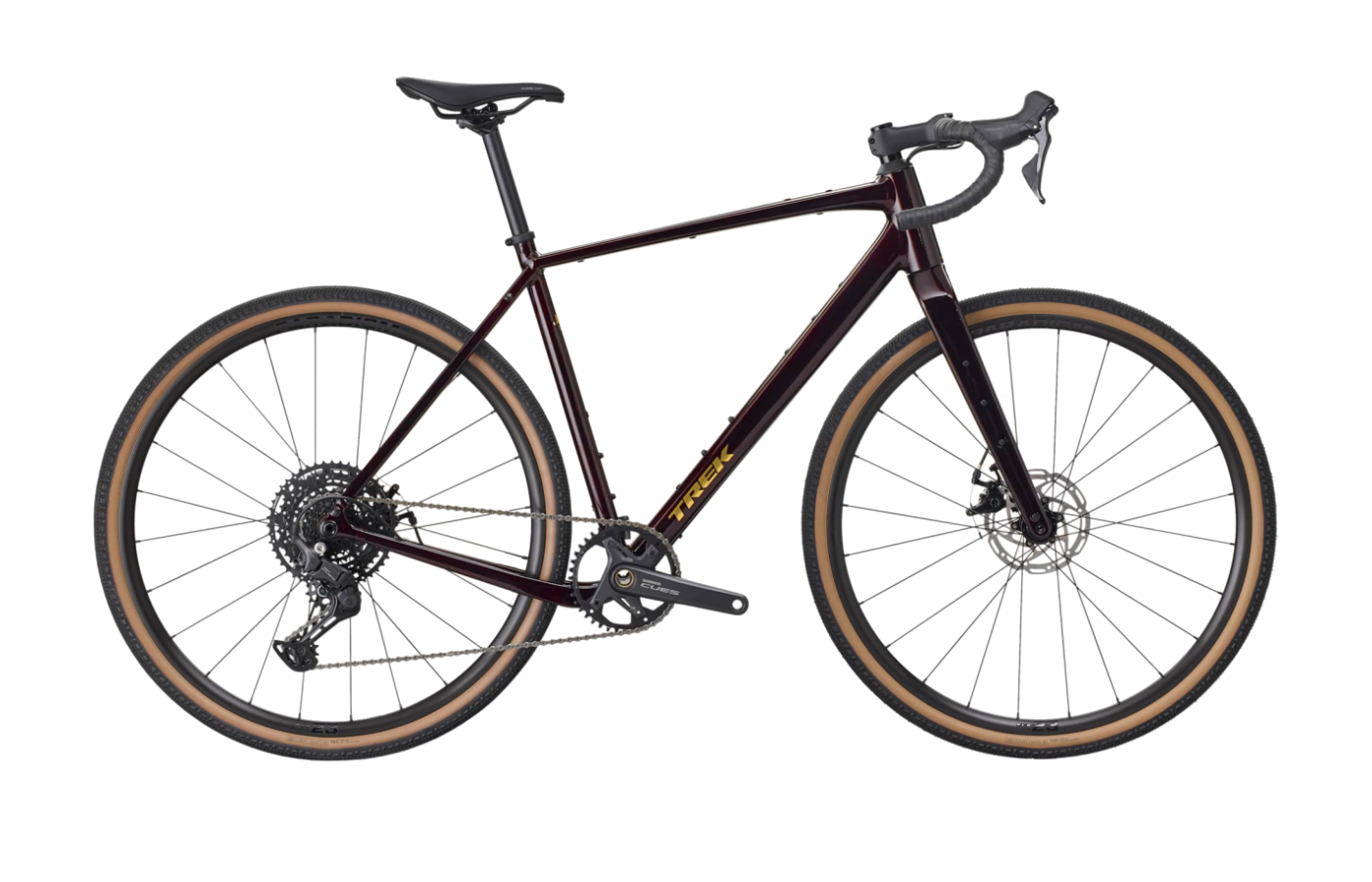
Checkpoint
Trek's direct Diverge competitor — carbon, racy gravel geometry, and IsoSpeed rear compliance instead of Future Shock. The cleaner play if you want Diverge-style versatility without the Future Shock service interval to think about.
Compare →Grizl
Canyon's adventure-leaning gravel bike at direct-to-consumer pricing — generous tire clearance, big mounting suite, and a more traditional gravel cockpit than the Cutthroat's MTB-flavored stance. The price-to-spec value pick of the three.
Compare →