SuperSix EVO
vsTarmac
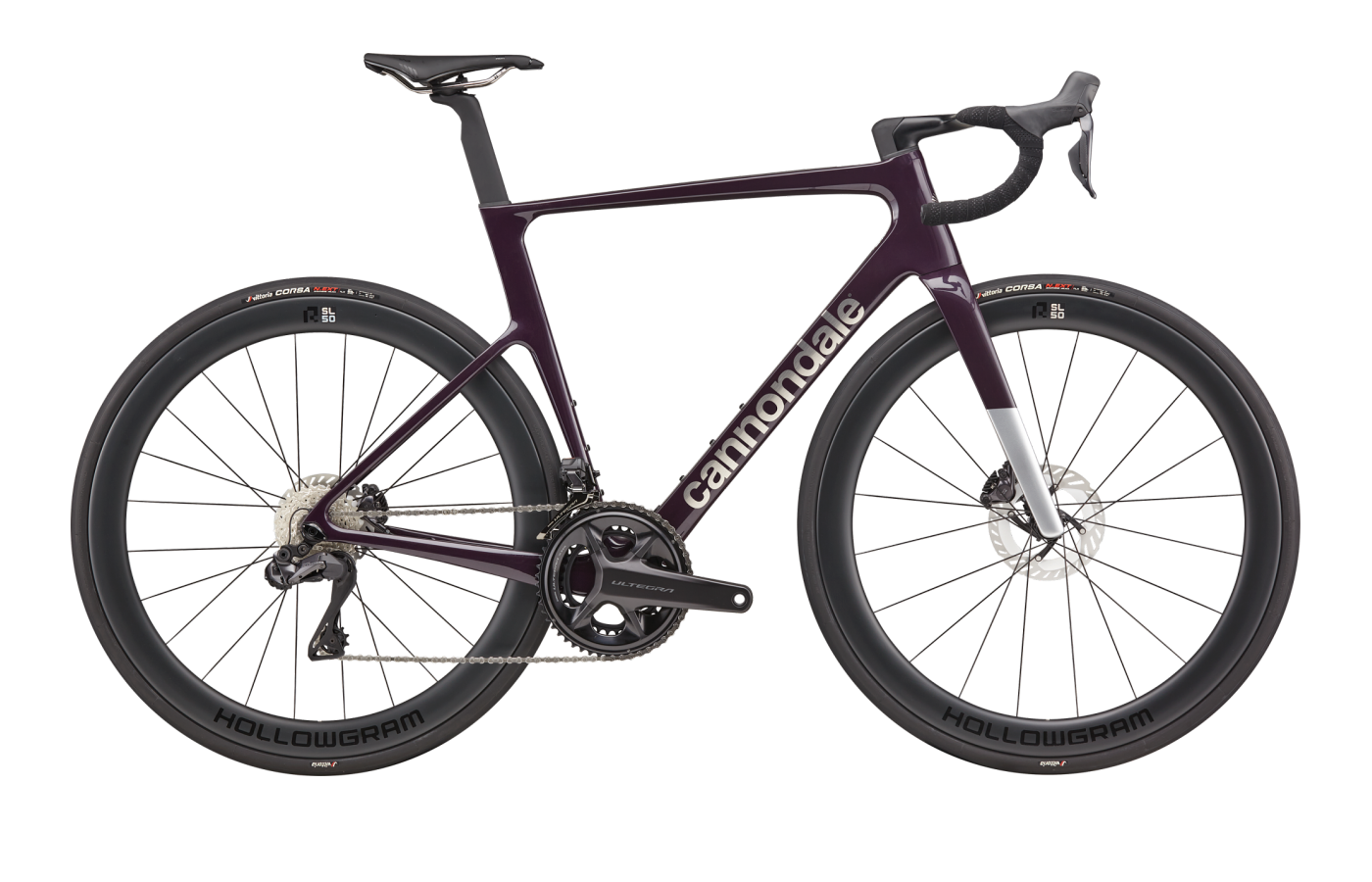
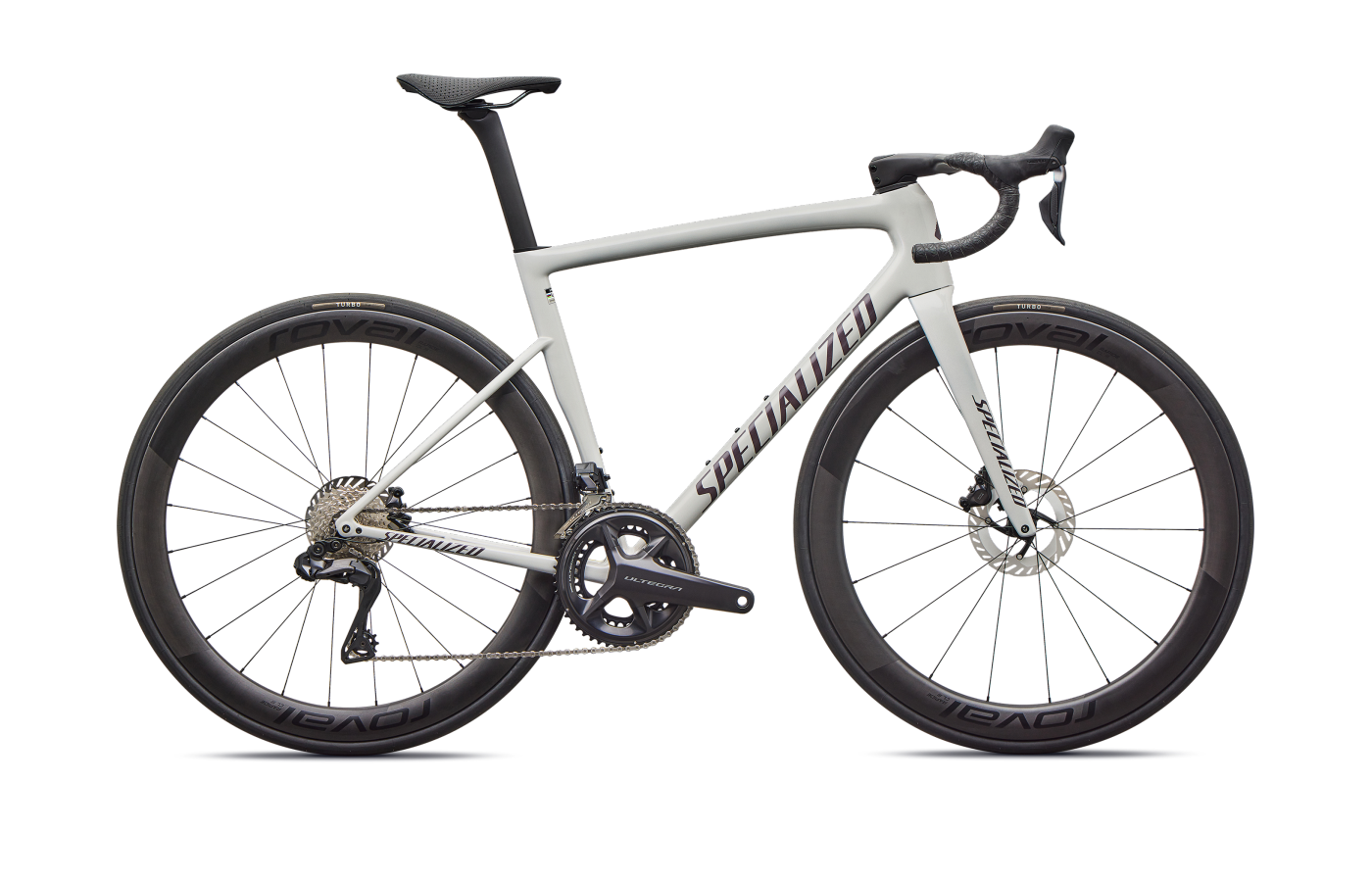
Two race all-rounders, two cockpit philosophies.
The SuperSix EVO chases composure and serviceability. The Tarmac SL8 chases the steepest, lowest, sharpest race position in the segment.
SuperSix EVO
- Lower price floor — the SuperSix EVO 6 starts at $2,999 with 105, $1,700 below the cheapest Tarmac.
- Standard headset bearings — the Delta steerer hides cables without a proprietary headset, and the front end accepts conventional round stems.
- More forgiving front end — a 1,010 mm wheelbase and 71.2° HTA at size 54 give it the segment's planted descending feel.
- Power meters are not standard on most builds — add ~$500–$800 if you want one on day one.
- Stock 25 mm tires on several mid-builds underuse the 32–34 mm clearance.
Tarmac
- Lighter frame — the FACT 12r S-Works comes in around 6.7 kg, with the FACT 10r Pro at ~7.25 kg.
- Power meter standard across nearly every Di2/AXS build — a real ~$500 saving on the spec sheet.
- Sharper, more aggressive race position — 11 mm lower stack and 1.8° steeper HTA than the EVO at size 54.
- Integrated Roval cockpit on Pro and S-Works limits stem swaps to a ~$450 part change.
- Stock 26 mm S-Works Turbo tires get widely panned in reviews — most testers swap immediately.
Editor’s analysis
Same WorldTour bracket, same threaded BB, same 32 mm tire clearance — and yet they ride like they were built for different riders.
The Cannondale SuperSix EVO and Specialized Tarmac are the two flagship all-rounders that finally killed off their brands' dedicated aero bikes — the Tarmac SL8 absorbed Specialized's Venge program, the EVO Gen 4 pulled the same trick on the SystemSix. Both run threaded BSA bottom brackets, both clear a 32 mm tire (with reviewers fitting 34 mm on the EVO), and both ship in builds from low-tier mechanical 105 up to flagship Dura-Ace Di2 and Red AXS.
Where they diverge is the front end. At size 54, the Tarmac sits a full 11 mm lower in stack (544 vs 555) and runs a 73.0° head tube angle against the SuperSix EVO's 71.2°. The wheelbase is 32 mm shorter on the Tarmac (978 vs 1,010). That adds up to a bike that feels — in reviewer language — "telepathic" and "jittery" depending on the rider; the SuperSix EVO, with its longer wheelbase and slacker front, is the one consistently described as "planted" and "sure-footed" at speed.
The Tarmac SL8 leans into the racer-first pitch: a Speed Sniffer head tube, an integrated Roval Rapide cockpit on Pro and S-Works trims, and a riding position that several testers warned would punish riders without the flexibility to live in the drops. The SuperSix EVO is the more pragmatic flagship — Cannondale put the mid-tier 3 build at $6,999 with 105 Di2, dropped a fully-finished alloy-cockpit "6" at $2,999, and engineered the new Delta steerer so the head tube takes standard headset bearings. It's a race bike that keeps an honest eye on owners who actually have to maintain it.
Put another way: the Tarmac is the bike you buy when you want to optimize the next race. The SuperSix EVO is the bike you buy when you want to race well, train more, and not need a $450 cockpit to change your stem length.
Where the builds differ.
Comparing our editor's-pick builds side-by-side. Winners highlighted row-by-row — lower price and weight, and the better-spec component, each mark a point.
Build variants & pricing
Both ranges span ~$10k. The SuperSix EVO opens at $2,999 with 105; the Tarmac's cheapest build is $4,699.
Prices are current US MSRP. The Cannondale lineup runs deeper into the budget end — there is no SL8 build at the SuperSix EVO 6's $2,999 price. Conversely, Specialized includes power meters on nearly every Di2/AXS build, while Cannondale does not.
How they fit, how they steer.
Both at size 54 — the fit-picked size for a 5'8" rider on each bike. Reach is identical at 384 mm and chainstays match at 410 mm, but the Tarmac sits 11 mm lower in stack with a 1.8° steeper head tube and a 32 mm shorter wheelbase.
Which size should I buy?
Size recommendations based on stack, reach, and effective top tube. Both ranges cover roughly the same rider span; the SuperSix EVO sizes run from 44 to 61, the Tarmac from 44 to 61.
→These are starting points. Flexibility, riding style, and preferred position all shift the answer — if you’re between sizes, a professional fit beats a chart.
What the magazines said.
Published reviews from trusted cycling outlets. Click through for the full write-up.
Which one should you buy?
If you want a planted, low-maintenance race bike that scales down to a $3k entry, get the SuperSix EVO. If you want the steepest, lowest, sharpest position with a power meter included, get the Tarmac SL8.
SuperSix EVO
If you spend more time training than racing and want a bike that doesn't punish a less-than-pro fit, the SuperSix EVO is the friendlier flagship. The longer wheelbase and slacker front end inspire confidence on long descents, and the standard headset and threaded BB make ownership cheap.
Tarmac
If you can hold a low position for hours and you race more than you train, the Tarmac SL8 is the sharper tool. The lower stack and steeper HTA reward riders who want to attack — and the standard power meter means you can chase numbers from day one.
Questions buyers actually ask.
Short answers to the things we get emailed about most often.
01Which is faster?
The published wind-tunnel numbers favor the Tarmac SL8 by a small margin — Specialized cites a ~16-second advantage over 40 km at 45 km/h vs. its predecessor, and external testing puts the SL8 at 209 W to hold 45 km/h, only a few watts off dedicated aero bikes like the Cervélo S5.
The SuperSix EVO Gen 4 closed most of that gap with its own redesign — Cannondale claims 12 watts saved over the previous EVO at 45 km/h. At realistic group-ride speeds below 35 km/h, neither bike's aero advantage is something a rider will feel.
02Which climbs better?
Close enough to call a draw at the same trim. Cannondale claims a top-spec LAB71 Dura-Ace SuperSix at the UCI 6.8 kg limit in size 56. A Specialized S-Works Tarmac SL8 in similar trim is reported at ~6.67 kg.
At the editor's-pick tier — Hi-Mod 2 vs SL8 Pro — both are Ultegra Di2 carbon builds in the low-7 kg range. The bigger climbing difference comes from position, not weight: the Tarmac's lower front end lets stronger riders get aero on shallow gradients, while the SuperSix's taller stack is friendlier on long sustained climbs.
03What's the maximum tire clearance?
Cannondale SuperSix EVO: 32 mm officially. Multiple reviewers (BikeRadar, Cyclingnews, Cycling Weekly) report fitting 34 mm in practice with room to spare.
Specialized Tarmac SL8: 32 mm officially. Testers consistently fit 30 mm comfortably; the limit is closer to a true 32 mm.
Neither is a gravel bike — for anything rougher than chip-seal, look at a Roubaix or Topstone.
04Which is easier to service and live with?
The SuperSix EVO is the more owner-friendly bike. The Delta steerer hides cables but uses standard headset bearings, the front end is compatible with conventional round stems via wedges, the BSA threaded BB is universally praised by mechanics, and Cannondale moved the Di2 battery to a dedicated downtube port to keep it out of the seatpost.
The Tarmac SL8 also runs a threaded BB and clean routing, but the Pro and S-Works trims ship with the integrated Roval Rapide cockpit — changing a stem length is roughly a $450 part swap and a hose bleed.
05Do they come with power meters?
Tarmac SL8: Yes, on nearly every Di2 and AXS build. The Expert ships with SRAM Force E1 power, the Pro with 4iiii on Ultegra or Force E1 on SRAM, and the S-Works with Quarq or 4iiii Pro.
SuperSix EVO: Only on a subset. The Hi-Mod 1 includes a 4iiii PRECISION 3+ Pro on Dura-Ace, and the SRAM-equipped builds (LAB71 SRAM, EVO 1) include SRAM Power Meter cranks. The Hi-Mod 2 and Ultegra-Di2 EVO 2 do not — that's a real $500–800 add-on if you want power on day one.
06Can I get either with mechanical shifting?
Cannondale: Yes — the SuperSix EVO 4 ($5,499) and SuperSix EVO 6 ($2,999) ship with Shimano 105 mechanical. The frame is explicitly designed to accept mechanical routing, which several reviewers called out as unusually buyer-friendly for a modern superbike.
Specialized: No — the SL8 is wireless/electronic-only across the entire current lineup. The cheapest build (SL8 Comp at $4,699) is SRAM Rival AXS.
07Which has the more comfortable ride?
Both gained meaningful compliance over their predecessors — Specialized claims a 6% bump over the SL7 via thinner seat tube and Aethos-style rear, Cannondale's thinner seat tube and aero seatpost serve the same goal.
In practice, reviewers consistently describe the SuperSix EVO as the smoother of the two on rough roads, partly because the longer wheelbase and slacker HTA mute high-speed twitch. The Tarmac SL8 is praised as comfortable for a race bike, but several testers flagged the stock 26 mm tires as the weak link — moving to a true 28 or 30 mm rubber transforms the ride.
08Which holds value better used?
Both Specialized S-Works and high-spec Cannondale flagships depreciate roughly 30–40% over three years on the used market. Specialized's larger production runs make finding a used Tarmac easier; Cannondale's lower volumes mean the SuperSix sometimes holds slightly better because supply is thinner.
Both brands offer crash-replacement pricing (typically 40–60% off a new frame) for original owners, and both come with a lifetime frame warranty against manufacturing defects.
Similar bikes
If your priorities don’t map cleanly onto either of these, one of these adjacent bikes probably fits better.
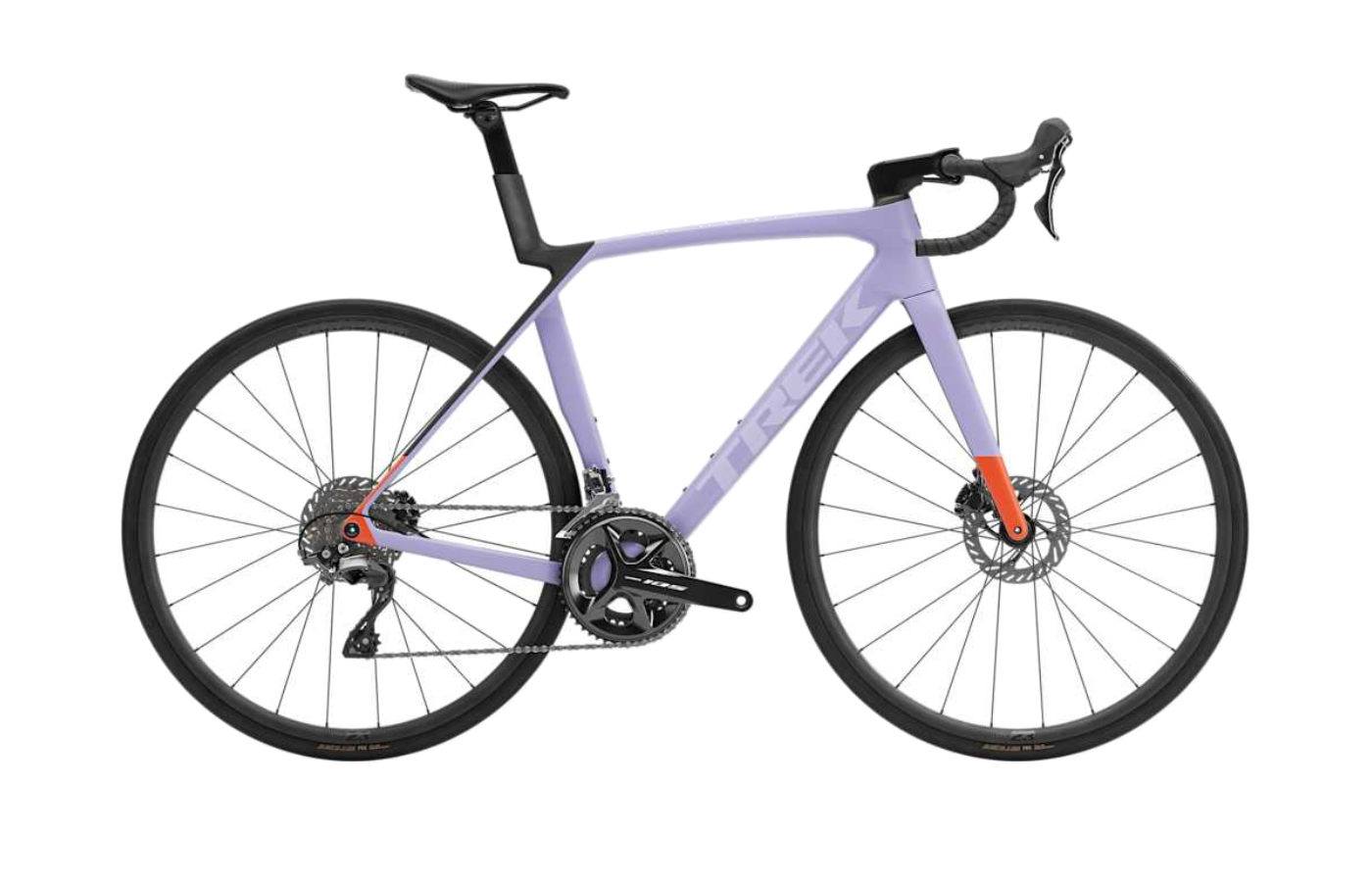
Madone
Trek's aero-race flagship with the IsoFlow decoupler — claims top-tier wind-tunnel numbers but adds a compliance cutout that softens choppy roads more than either of these two.
Compare →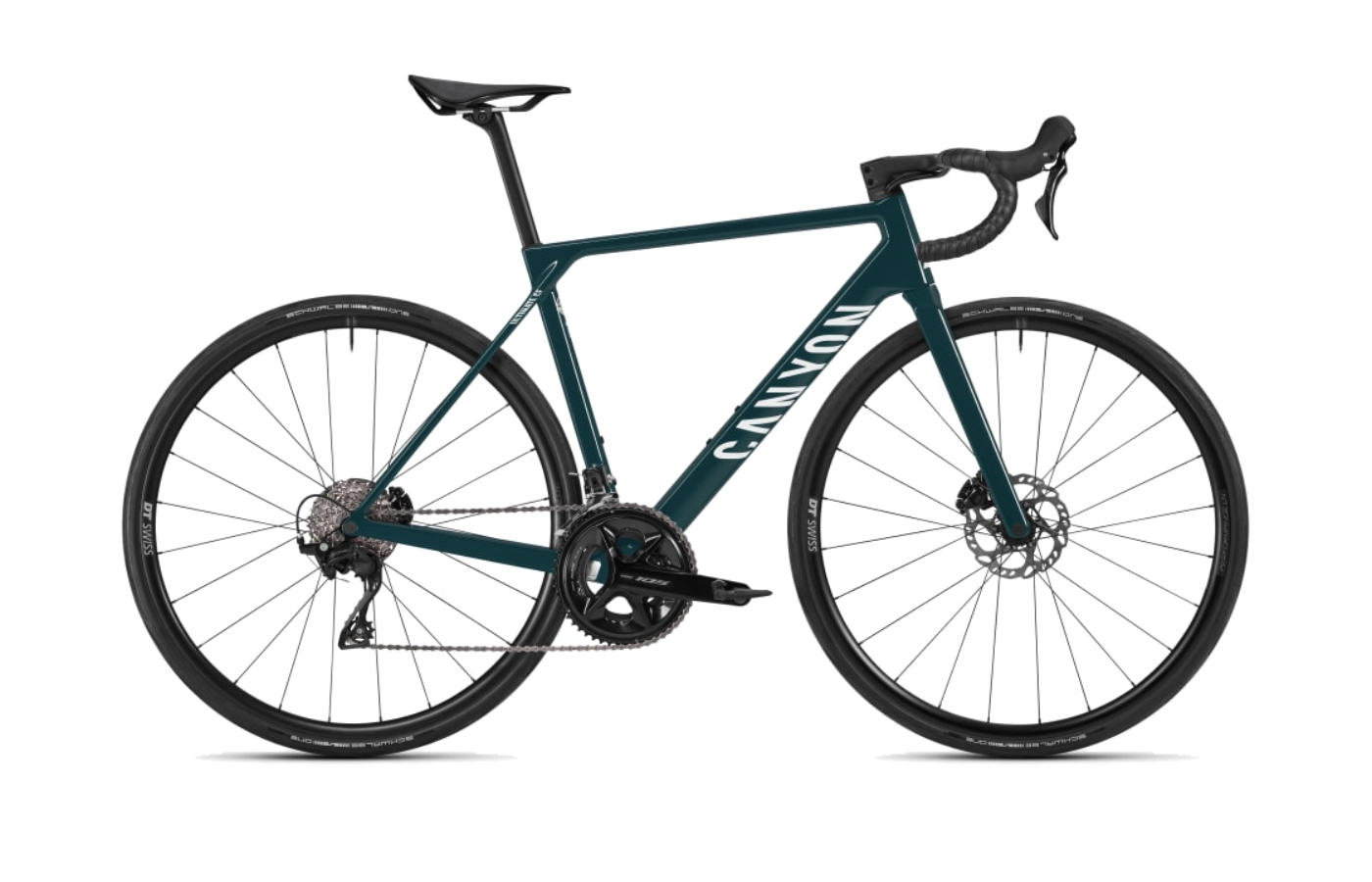
Ultimate
Same all-rounder race brief at direct-to-consumer pricing — the Ultimate undercuts both on cost at every tier, with the catch of no local dealer support and no demo program.
Compare →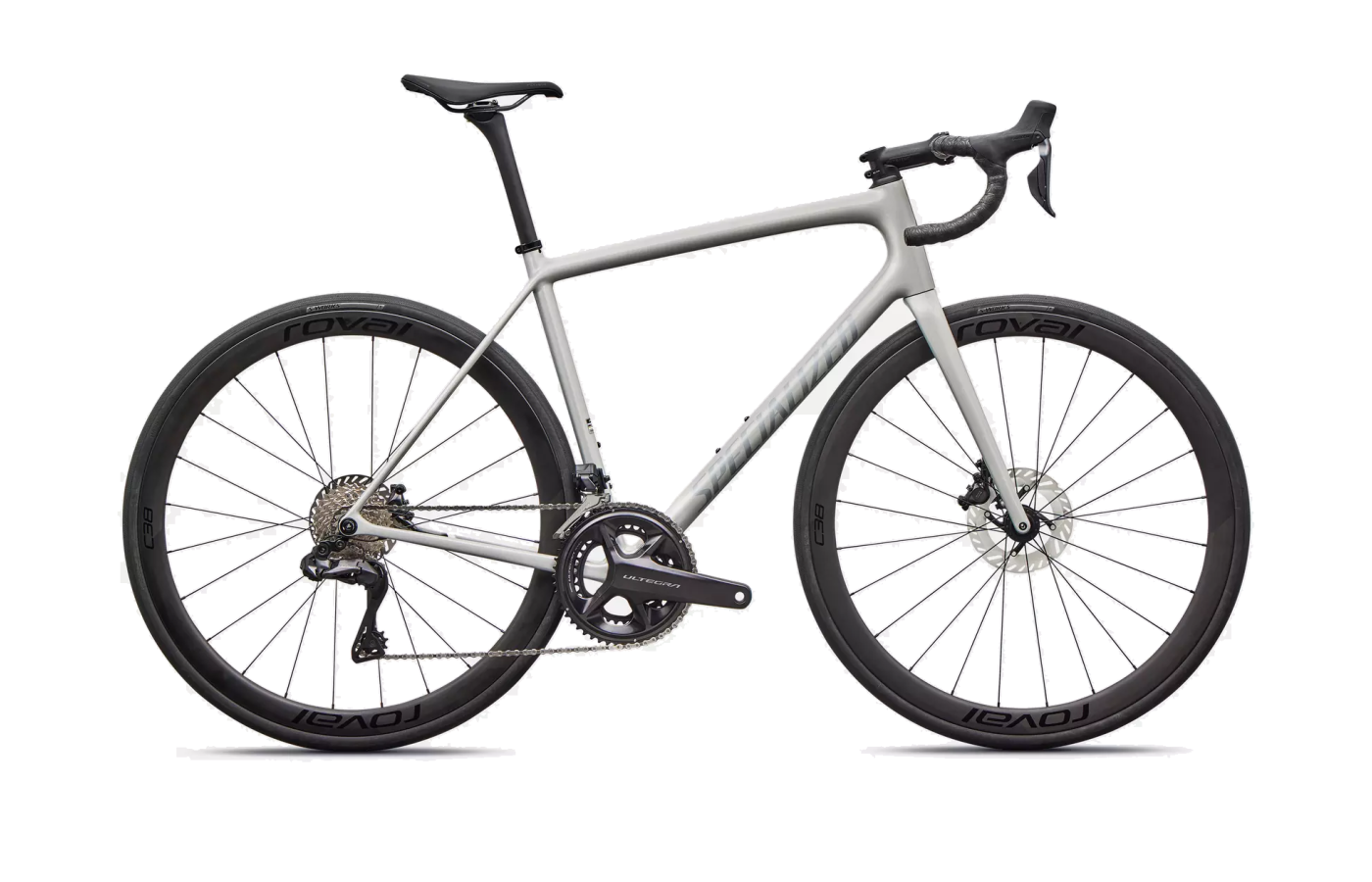
Aethos
If you'd rather save grams than watts: a 5.9 kg classical climber from Specialized, all round tubes, zero integration, and no aero pretense.
Compare →