SuperSix EVO
vsMadone
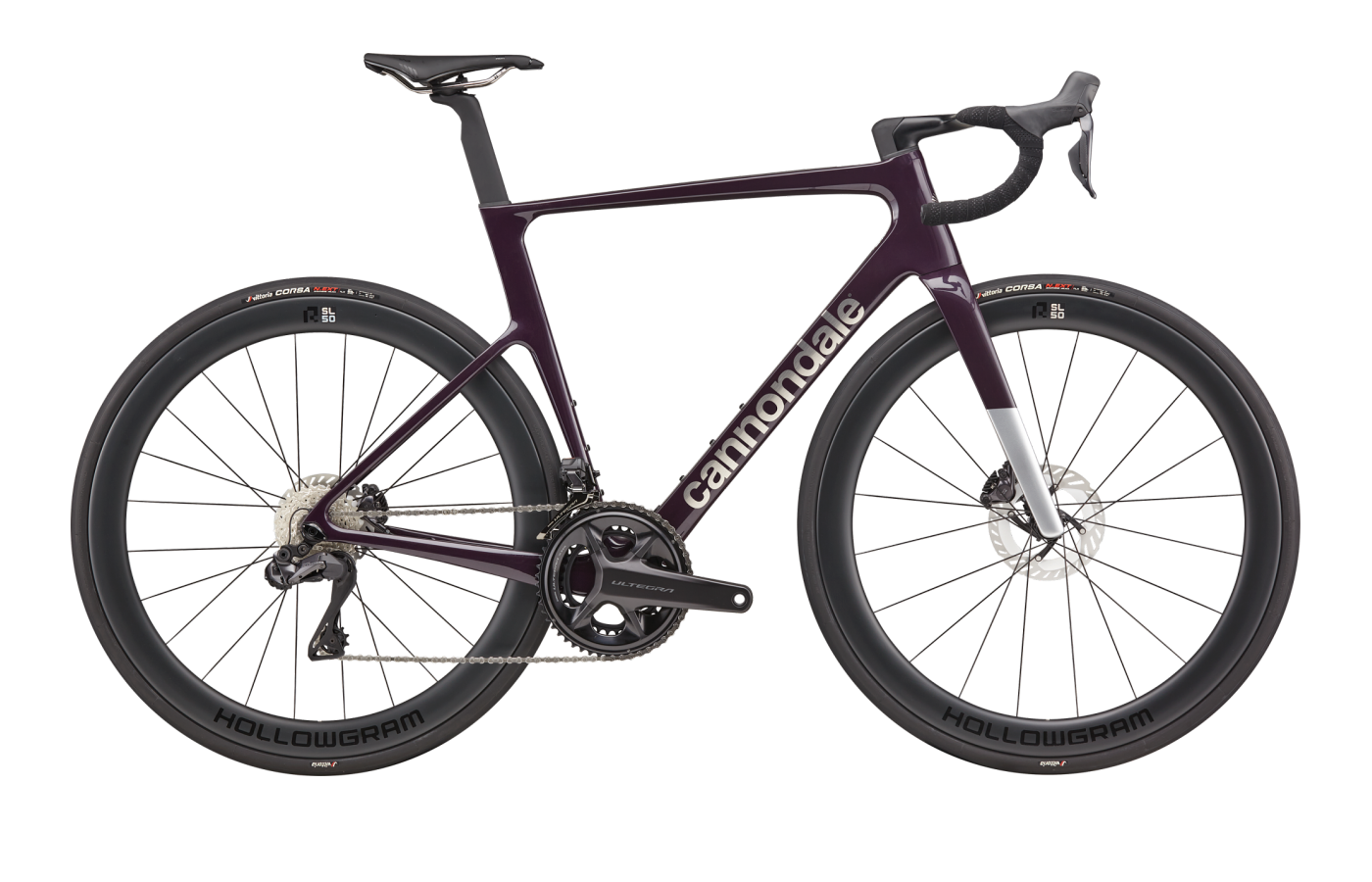
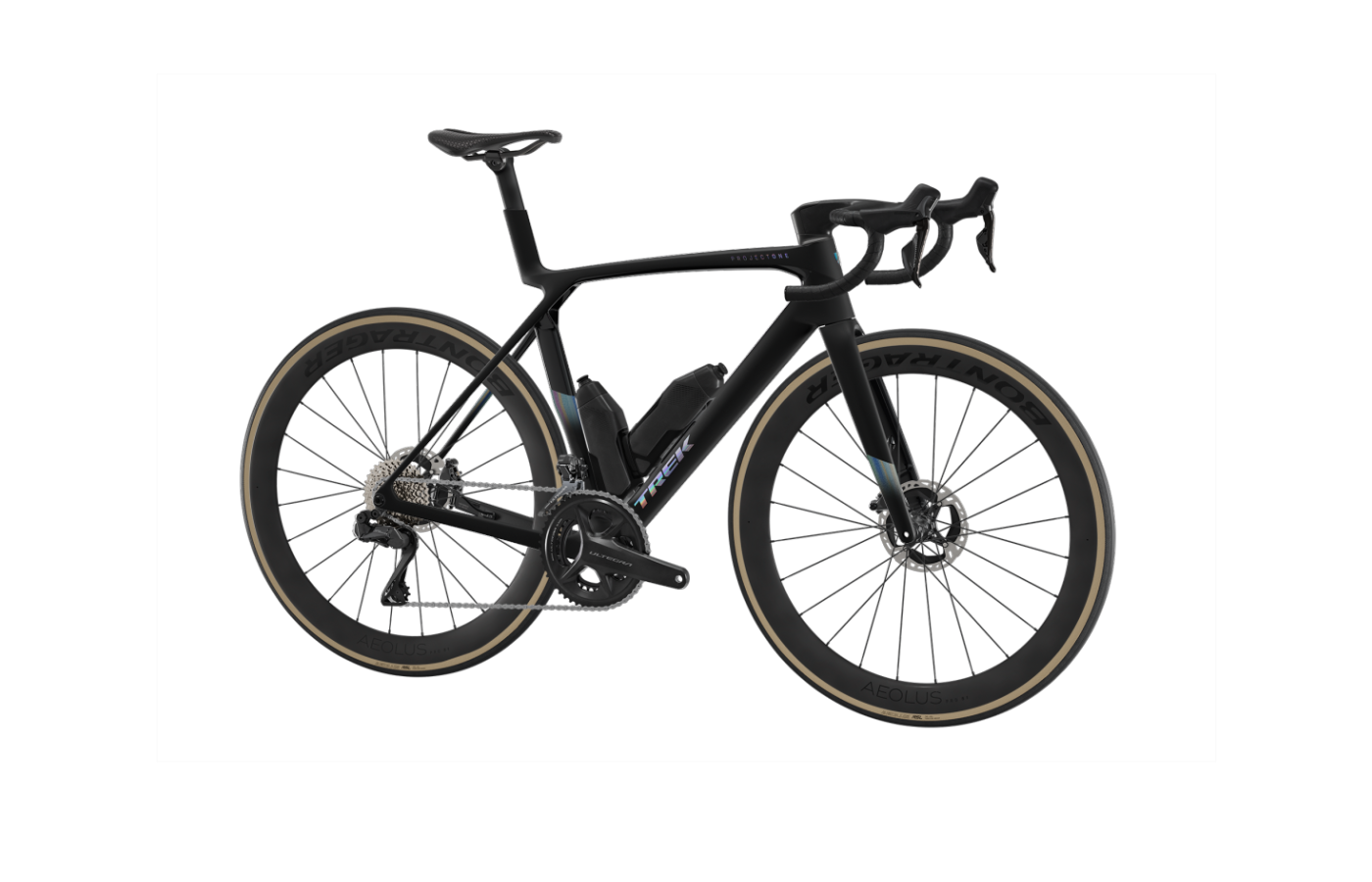
Two all-rounders, two roads to the same place.
The SuperSix EVO refines a decade-old classic — mechanic-friendly, balanced, familiar. The Madone Gen 8 swallowed the Emonda and rebooted the aero-climber from scratch.
SuperSix EVO
- Mechanic-friendly from the ground up — threaded BSA BB, standard-bearing Delta Steerer, Di2 battery out of the seatpost.
- Stable, predictable handling with 58 mm trail and a 1010 mm wheelbase at size 54 — reviewers keep using 'sure-footed' and 'on rails.'
- Wider build range — from a $2,999 105 build up to the $14,999 Lab71, so the same frame platform scales to every budget.
- Stock 25 mm tires on mid-tier builds waste the frame's 32 mm clearance.
- Entry-level HollowGram wheels (DT Swiss R470) feel basic next to the rest of the bike.
Madone
- Genuinely lighter — SLR frame hits 765 g, 332 g below the Gen 7, with SLR 7 complete at 7.22 kg in size ML.
- Rear-end compliance is a real thing — IsoFlow's claimed 80% vertical-compliance gain shows up on chip-seal and long rides.
- UDH and power meters included on SRAM AXS builds — future-proof drivetrain standard, nothing to buy on day one.
- Aggressive stack (546 mm in M) and stiff one-piece cockpit punish riders who need spacers.
- Proprietary aero bottles are required for the full aero claim and only hold 600 ml.
Editor’s analysis
Both brands set out to build one race bike that does everything — they just disagree about whether that means evolution or demolition.
The Cannondale SuperSix EVO Gen 4 is the do-no-harm update: same celebrated race geometry, same shape silhouette, but with the press-fit BB30 finally swapped for a threaded BSA, a Delta Steerer that takes standard bearings, and the Di2 battery moved out of the seatpost. Reviewers across BikeRadar, Bicycling, and Velo all used some version of 'if it ain't broke' to describe it. It climbs, it descends, it corners predictably, and it doesn't punish you in a headwind.
The Trek Madone Gen 8 did the opposite — killed the Emonda, started the frame mold from scratch, and dropped 332 g off the Gen 7 SLR. The IsoFlow seat-tube cutout claims 80% more vertical compliance. The Full System Foil tube shaping and one-piece Aero RSL cockpit treat the whole bike as a single aerofoil. Trek's own testing says 77 seconds per hour faster than the old Emonda, at essentially the same weight.
At identical fit sizes — 54 on the Cannondale, M on the Madone — the numbers diverge in telling ways. Reach is the same (384 mm). But the Madone sits 9 mm lower (546 mm vs 555 mm stack), runs a 1.7-degree steeper head tube (72.9° vs 71.2°), and has a 29 mm shorter wheelbase (981 mm vs 1010 mm). That's a more aggressive, more agile cockpit on the Trek — sharper in corners, less forgiving if you need spacers to reach the bars.
The plain read: the Cannondale SuperSix EVO is the safer buy — traditional fit, standard parts, proven handling, cheaper at the top end. The Trek Madone is the higher-variance play — faster on paper, more compliant over chatter, but geometry and sizing that punish a bad fit decision. Pick by how confident you are in your fit, not by who has the bigger aero claim.
Where the builds differ.
Comparing our editor's-pick builds side-by-side. Winners highlighted row-by-row — lower price and weight, and the better-spec component, each mark a point.
Build variants & pricing
Cannondale scales from $2,999 to $14,999 across nine builds. Trek's Madone runs $3,499 to $13,499, with a clean SL (500-series carbon) to SLR (900-series carbon) split.
Prices are current US MSRP. We've paired the Cannondale Hi-Mod 2 against the Madone SLR 7 Gen 8 — both one-down Ultegra Di2, both on each brand's top-tier carbon. Cannondale's pick runs $1,000 higher, but the spec is closer than any cheaper pairing available.
How they fit, how they steer.
At the fit-picked sizes, reach is identical (384 mm). The Madone sits 9 mm lower in stack, a full 1.7° steeper at the head tube, and 29 mm shorter in wheelbase — more aggressive, more agile, less forgiving.
Which size should I buy?
Cannondale runs seven numerical sizes (44–61); Trek Gen 8 dropped to six T-shirt sizes (XS–XL), so the stack/reach steps are larger on the Trek.
→These are starting points. Flexibility, riding style, and preferred position all shift the answer — if you’re between sizes, a professional fit beats a chart.
What the magazines said.
Published reviews from trusted cycling outlets. Click through for the full write-up.
Which one should you buy?
If you want a proven race bike with standard parts and zero fit drama, get the SuperSix EVO. If you'll commit to a real fit session and want the lightest, smoothest aero bike on paper, get the Madone.
SuperSix EVO
For the rider who wants a top-tier race bike with a traditional fit, threaded BB, standard headset bearings, and a decade of podium pedigree. The kind of bike you buy once and don't second-guess — and the deep build range means the same geometry is there whether you spend $3k or $15k.
Madone
For the rider chasing the lightest, smoothest version of an aero-first race bike — and willing to invest in a proper fit session to land in the sweet spot. Strongest on rolling terrain and long days, where the IsoFlow compliance pays off. Shaky if you need a tall stack or lots of spacers.
Questions buyers actually ask.
Short answers to the things we get emailed about most often.
01Which is lighter?
The Trek Madone Gen 8. Trek claims a 765 g frame and 370 g fork for the SLR, a 332 g reduction over the Gen 7 SLR. Complete bike weights track that: the SLR 9 AXS lands at 7.00 kg in size ML, and the SLR 7 (Ultegra Di2) we've picked comes in at 7.22 kg.
Cannondale doesn't publish frame weight as clearly, but reviews report the top-spec Lab71 with Dura-Ace hits the 6.9 kg UCI limit in a 56. The Hi-Mod 2 Ultegra build will run a bit heavier than Trek's matching SLR 7, though both are well under 8 kg.
02Which climbs better?
Close — and it depends on the tier. Trek's Gen 8 was engineered specifically to replace the Emonda, and reviewers at Bicycling, Cycling News, and Velo all confirm it climbs like the old Emonda at essentially the same weight. The SLR tier is where this shows up; the heavier 500-series SL frames lose a lot of that climbing edge.
The SuperSix EVO's climbing reputation is older and more consistent — it's stayed at the top of 'best-climbing race bike' lists for over a decade. In equivalent flagship trim the two are within a few hundred grams; in Ultegra Di2 trim the Trek SLR 7 is likely the faster climber. On the SL frame, the Cannondale takes it back.
03Which is faster on flat roads?
The Trek Madone, narrowly. Trek claims the Gen 8 SLR exceeds the Gen 7 Madone's aero performance by 0.1 W at 22 mph — essentially parity with the outgoing pure-aero Madone. Cannondale claims the Gen 4 SuperSix EVO shaves 12 W off its predecessor at 45 kph and is 'within a few watts' of a dedicated aero bike (their own SystemSix).
The gap between the two is small. Unless you race flat TTs, neither bike will hold you back.
04What's the tire clearance on each?
SuperSix EVO: 32 mm officially — and reviewers at Velo and BikeRadar note riders successfully running 34 mm with care.
Madone Gen 8: 32 mm officially. Some reviewers (Rydecruz, others) claim 35–38 mm all-road tires will fit, though toe overlap gets worse with larger rubber — several testers reported foot-to-tire contact on smaller sizes even at 28 mm.
Neither is a gravel bike. If you want to bomb fire roads occasionally, both will handle 32s at lower pressure; for anything rougher, look at a Checkpoint or Topstone.
05Are both frames easy to service?
SuperSix EVO Gen 4 — yes. Cannondale's big Gen 4 changes were service-focused: a threaded BSA bottom bracket (replacing the maligned PF30A), a Delta Steerer that uses standard headset bearings, and a Di2 battery moved to the downtube. Reviewers unanimously called these 'mechanic-friendly' wins.
Madone Gen 8 — mostly yes. T47 threaded BB and a UDH (Universal Derailleur Hanger) are both big marks in favor of long-term serviceability. The friction points are the proprietary integrated cockpit (changing bar or stem dimensions is expensive), a reported-fragile headset top-cap cover, and documented seatpost slippage that demands precise torque.
06How do the cockpits compare?
Both ship with a one-piece integrated carbon cockpit on the top tiers — Cannondale's SystemBar R-One (designed with MOMODesign) and Trek's Aero RSL.
Both require buying a new unit to change stem length or bar width. Reviewers repeatedly called the Trek Aero RSL 'stiff as a brick' on long rides; the SystemBar R-One drew less criticism on comfort but gets flak for its fixed geometry.
The Madone's cockpit has a deliberately narrower hood width (3 cm narrower than the drops) for aero tuck — polarizing if you don't like flared bars.
07Which has a better warranty?
Both come with lifetime frame warranties to the original owner against manufacturing defects. Trek is widely cited as 'best in the business' on warranty support — one long-term review documented a cracked Gen 6 frame being replaced with a brand-new Gen 8 SLR under warranty.
Cannondale's warranty is comparable on paper but less celebrated in review write-ups. Both brands offer crash-replacement pricing for frames damaged outside warranty conditions.
08Which is a better fit for a rider who needs spacers?
The Cannondale SuperSix EVO. At size 54 the stack is 555 mm vs 546 mm on the Madone M — 9 mm taller out of the box. That means less reliance on spacers to reach the bars.
The Madone Gen 8 compounds this: reviewers reported needing up to 30 mm of spacers to hit a traditional endurance-style fit, which they said 'degraded handling' and made the front end feel twitchy. On top of that, IsoFlow compliance depends on visible seatpost — riders who slam the post (common when sizing up) lose most of the rear-end comfort the system promises. If you're between sizes or prefer a taller front end, the Cannondale is the less fussy pick.
Similar bikes
If your priorities don’t map cleanly onto either of these, one of these adjacent bikes probably fits better.
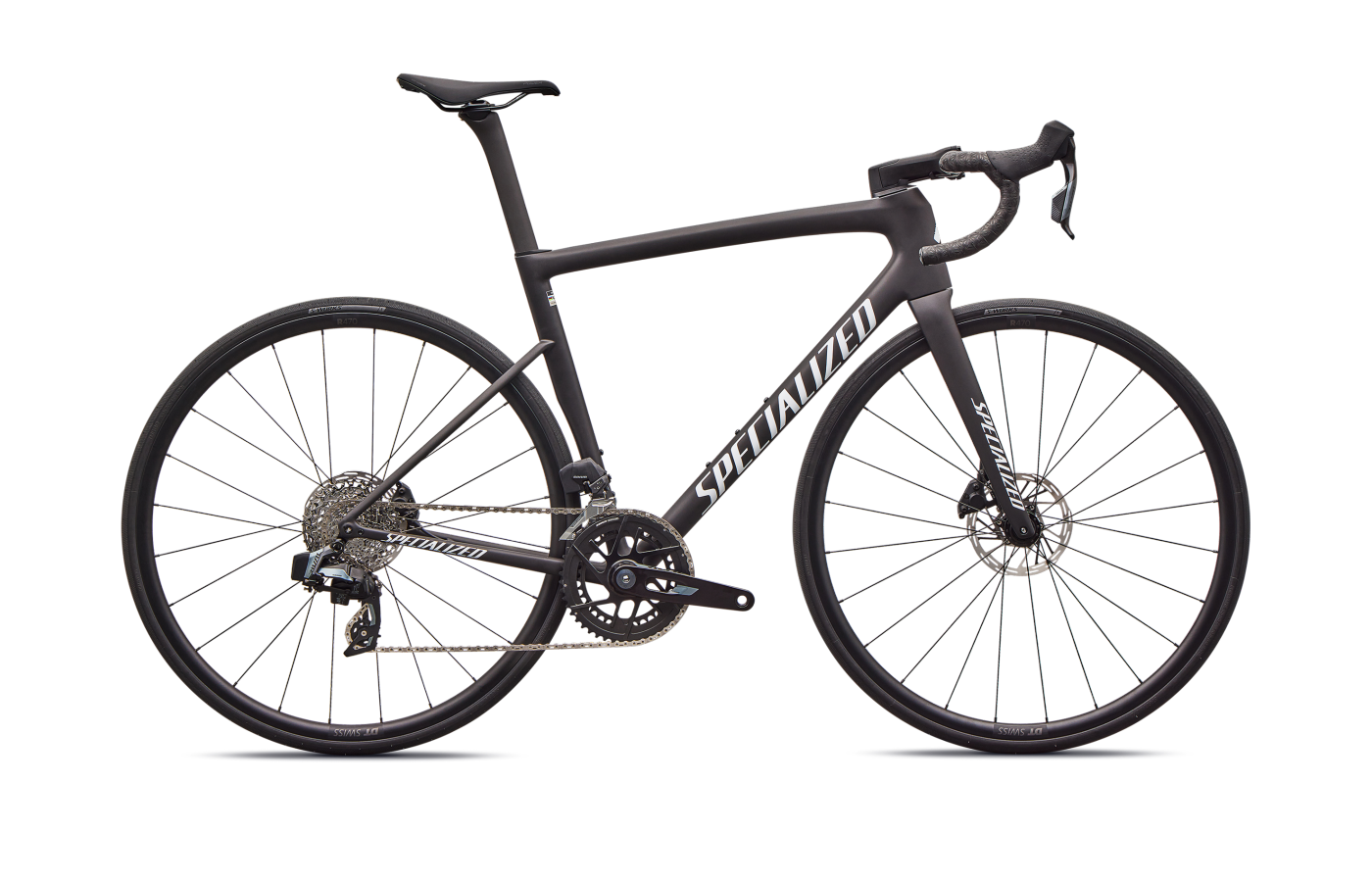
Tarmac
The Tarmac SL8 is the third corner of this triangle — a lighter frame than both (~6.8 kg at the top end), the same do-everything race philosophy, and the deepest dealer network in the US. The natural cross-shop.
Compare →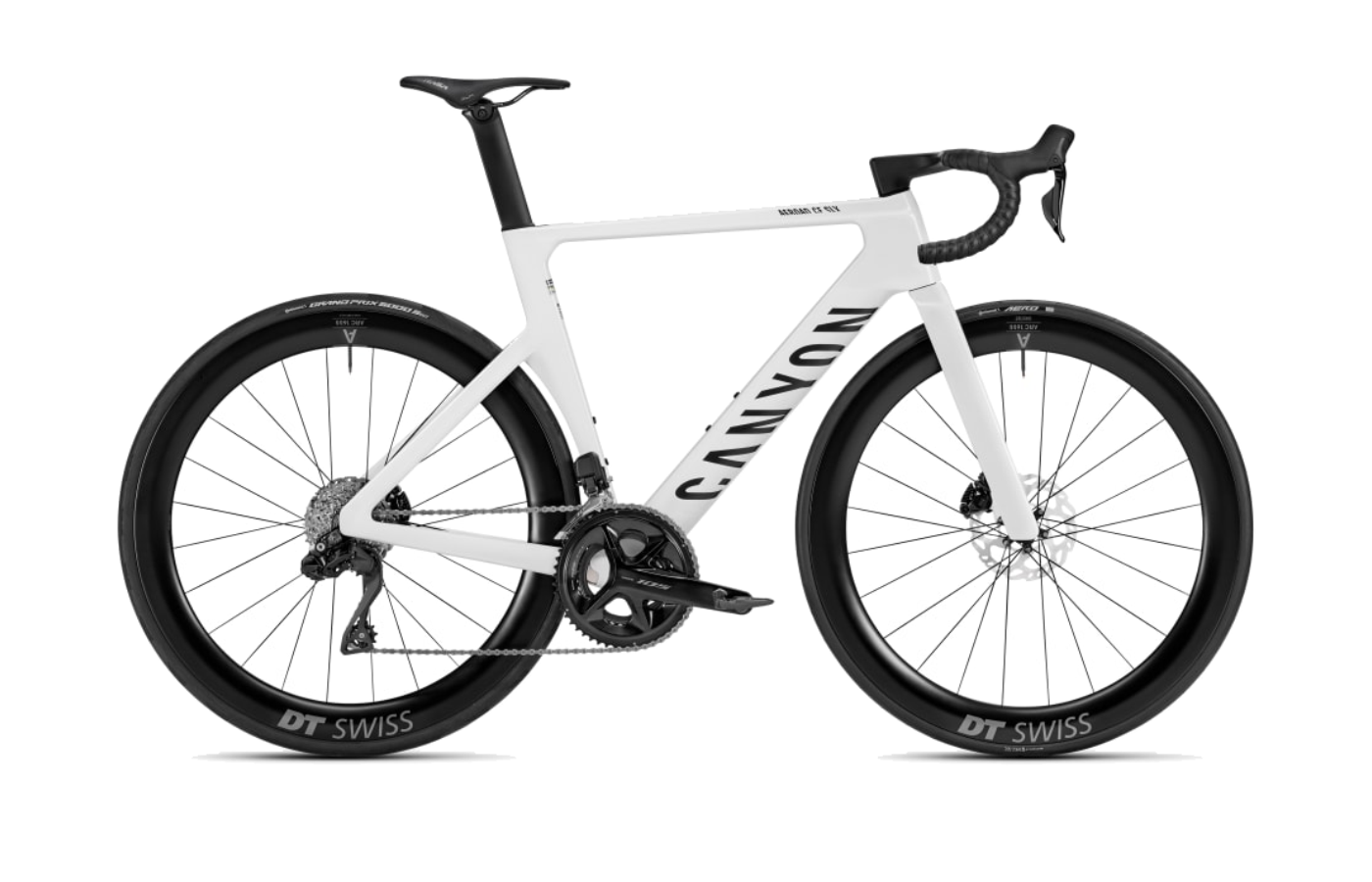
Aeroad
The Canyon Aeroad leans harder into the aero-first identity the Madone flirts with — same flat-road speed, roughly 30% less money, with the direct-to-consumer catch of no dealer support and no demos.
Compare →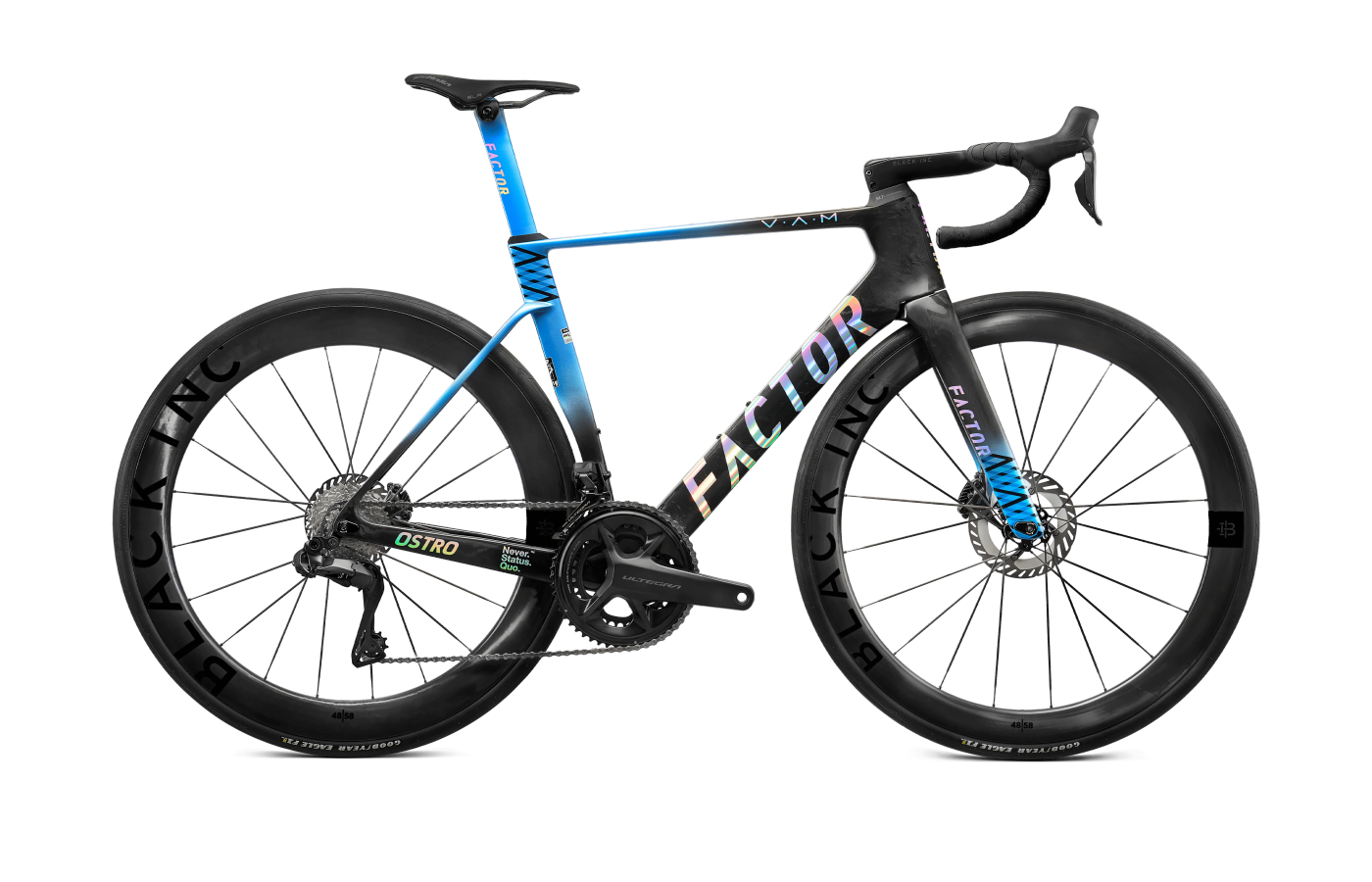
Ostro VAM
The Factor Ostro VAM shares the Madone's aero-climber brief but keeps the visceral, talkative feedback some riders miss on the smoothed-out Trek. Worth a look if you want acceleration you can feel.
Compare →