Grizl
vsDiverge
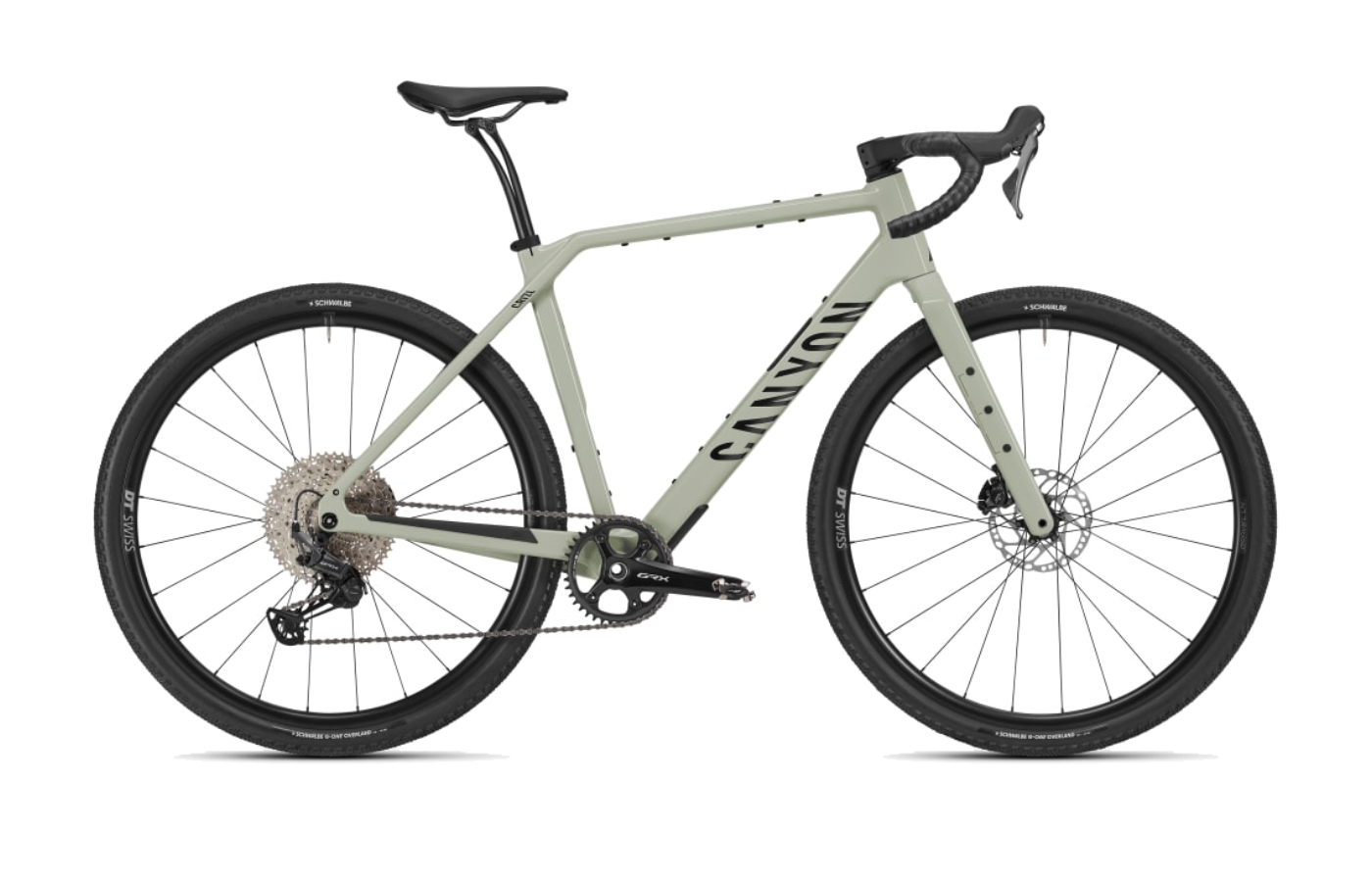
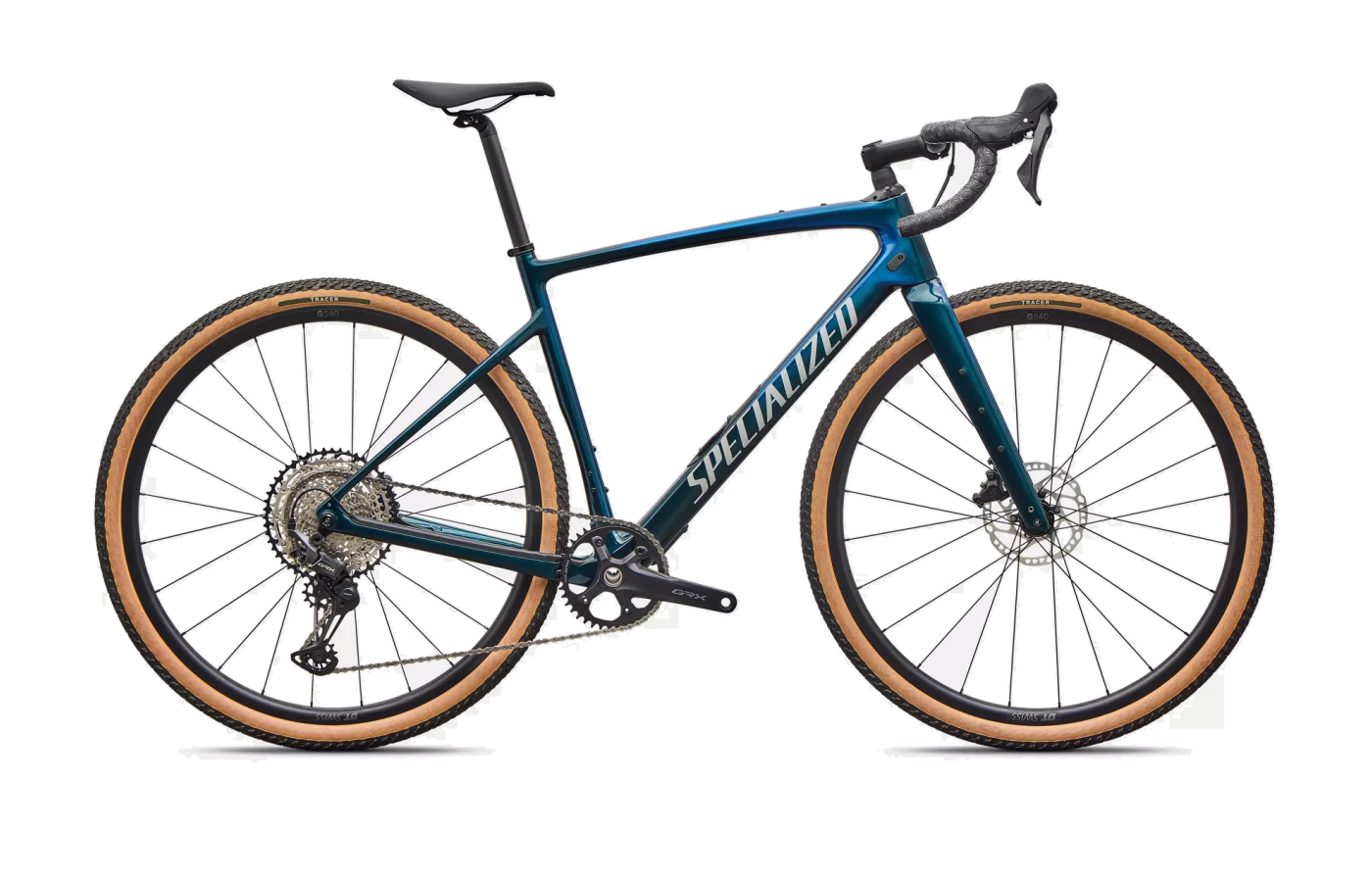
Two adventure rigs, two answers to compliance.
The Grizl leans on tire volume, a flex seatpost, and self-sufficient touring kit. The Diverge bolts a 20 mm shock under the stem and calls it gravel.
Grizl
- 54 mm tire clearance — widest in the category, with room for true 2.1" rubber on backcountry rough.
- ECLIPS dynamo + lights on top builds — a turnkey self-supported power system that aftermarket would run over $1,200.
- Aggressive DTC pricing — full-carbon GRX 12sp builds start at $2,599, well below the Diverge's carbon floor.
- Press-fit BB and headset cable routing complicate home maintenance.
- No electronic-drivetrain option — top build is mechanical GRX 12sp.
Diverge
- Future Shock 3.0 — 20 mm of front-end travel that meaningfully smooths square hits without adding a real fork.
- SWAT 4.0 downtube storage — larger opening than the Grizl's hatch, and extended to the alloy frames.
- Threaded BB and UDH dropout — easier long-term service than press-fit, future-proofed drivetrain.
- Stock 45 mm tires + 85 mm BB drop = persistent pedal strikes; a tire swap is effectively mandatory.
- Carbon range starts at $3,499; full electronic builds command a real premium over equivalent Grizls.
Editor’s analysis
Both bikes have abandoned the road-bike-with-knobbies pretense. The question is where the compliance comes from — rubber and posts, or a sprung front end.
On paper they look like rivals: carbon-framed, 1x-friendly, sub-10 kg, built for long days off pavement. Spend any time with the geometry and the bikepacking story and they pull apart fast. The Canyon Grizl is the loaded-touring rig — slacker 70.25° head angle in size S, 435 mm chainstays across most sizes, 54 mm tire clearance, and a VCLS leaf-spring seatpost reviewers credit with 20 mm of vertical compliance. The Specialized Diverge keeps the Future Shock — 20 mm of front-end travel under the stem — and pairs it with a low 85 mm bottom-bracket drop and 50 mm tire clearance.
The Canyon Grizl's pitch is self-sufficiency. Top-spec ECLIPS builds wire in a SON dynamo hub, a 3,500 mAh Lupine buffer battery, and integrated lights with USB-C output — Bikepacking.com noted the system alone would run over $1,200 USD aftermarket. Even the mid-tier carbon builds get the VCLS post, the 54 mm clearance, the LOAD downtube hatch, and a frame loaded with rack and bottle mounts. Direct-to-consumer pricing pulls the carbon range to $2,599–$4,699 — a tier the Diverge's carbon range only enters at the Sport build.
The Specialized Diverge's pitch is filtered ride feel. Future Shock 3.0 (in three damper grades, 3.1 spring-only through 3.3 with on-the-fly lockout) takes the edge off square hits before they reach your hands. SWAT 4.0 downtube storage now extends to the alloy frames. The threaded BB stays — easier service than the Grizl's press-fit. But the carbon range starts at $3,499 and runs to $10,499, and reviewers near-universally flag the stock 45 mm Tracer tires as a spec miss given the low BB drop — pedal strikes are the headline complaint.
Put another way: the Canyon Grizl is what you ride when the day is measured in bivvies, not laps. The Specialized Diverge is what you ride when you want a freight-train feel on washboards and you don't mind paying for a damper most other gravel bikes don't have.
Where the builds differ.
Comparing our editor's-pick builds side-by-side. Winners highlighted row-by-row — lower price and weight, and the better-spec component, each mark a point.
Build variants & pricing
The Grizl's full-carbon range tops out where the Diverge's only begins. The Diverge runs deeper at the high end with electronic and Future Shock 3.3 builds.
Editor's picks are matched at full-carbon Shimano GRX 12sp mechanical for an apples-to-apples spec comparison. Both platforms also offer alloy entry builds (Grizl AL from $1,799, Diverge E5 from $2,099). The Diverge climbs to $10,499 with SRAM Red XPLR; the Grizl tops out at $4,699 with the ECLIPS dynamo system.
How they fit, how they steer.
At the fit-picked sizes, the Diverge sits 36 mm taller in stack with 10 mm less reach — a more upright cockpit. The Grizl is 0.75° slacker at the head tube and runs 5 mm longer chainstays for loaded stability.
Which size should I buy?
Canyon uses S/M/L labels and tops out at 2XL; Specialized uses numeric 49–61. Both ranges cover roughly the same fit window in the middle.
→These are starting points. Flexibility, riding style, and preferred position all shift the answer — if you’re between sizes, a professional fit beats a chart.
What the magazines said.
Published reviews from trusted cycling outlets. Click through for the full write-up.
Which one should you buy?
If your big rides are bikepacking with gear, get the Grizl. If your big rides are five-hour washboard sessions and you want every hit filtered, get the Diverge.
Grizl
If you load gear, ride remote, and value tire room and integrated power over a sprung front end — this is the platform. The DTC pricing means you can spec carbon and GRX 12sp for what the Diverge charges for alloy.
Diverge
If most of your miles are chunky, washboarded, or loose, and you'll pay a premium to take the edge off your hands and shoulders — the Future Shock earns its keep. Just budget for a tire swap on day one.
Questions buyers actually ask.
Short answers to the things we get emailed about most often.
01Which has more tire clearance?
The Canyon Grizl at 54 mm (about 2.1"), 4 mm more than the Specialized Diverge at an official 50 mm. In practice, Velo and Cycling Weekly both note the Diverge frame can swallow a 2.2" MTB tire with the ISO-standard 4 mm of clearance, so the gap closes if you're willing to run outside the official spec. Both ship with 45 mm Tracer / G-One tires, well below either frame's ceiling.
02Does the Diverge actually need a tire swap out of the box?
Most reviewers think so. BikeRadar, Cycling Weekly, and Velo all flagged frequent pedal strikes on the stock 45 mm Tracers — a consequence of the 85 mm bottom-bracket drop combined with 172.5 mm cranks on the 54 and 56 frames. Logan Jones-Wilkins at Cycling Weekly broke a Garmin power pedal during testing.
Going to a 50 mm tire (or even a 2.2" MTB tire) restores ground clearance and aligns the bike with what the geometry was actually designed around. Plan on the upgrade as part of the purchase budget.
03What's the deal with the Diverge's Future Shock?
Future Shock 3.0 is a 20 mm-travel cartridge under the stem — it sprung-loads the bars and (on 3.2 / 3.3) hydraulically damps them. There are three tiers:
- 3.1 (spring-only, on the alloy and Sport Carbon builds)
- 3.2 (spring + hydraulic damping, fixed)
- 3.3 (spring + hydraulic damping with on-the-fly lockout, Pro and Pro LTD only)
Reviewers call 3.2 occasionally "bouncy" out of the saddle on punchy climbs; 3.3 fixes that but costs $450 to retrofit. The Grizl's answer to the same problem is the VCLS leaf-spring seatpost — rear-wheel compliance instead of front.
04Which is friendlier for bikepacking?
The Grizl is purpose-built for it. Top "Escape" builds add the ECLIPS system: SON dynamo hub, 3,500 mAh Lupine buffer battery, integrated lights, and USB-C output for charging a GPS or phone. The frame has the LOAD downtube hatch, racks-and-fender mounts, and the wider 54 mm tire clearance for high-volume rubber under load.
The Diverge counters with the larger SWAT 4.0 downtube storage (now also on the alloy frames) and a similarly mount-heavy frame, but no integrated power system. For self-supported, multi-day rides the Grizl is the more turnkey kit; the Diverge needs more bolt-on gear to match it.
05How do they compare on weight?
Mid-tier carbon builds land in the same range. Granfondo measured the Grizl CF 7 at 10.17 kg in size L; the Diverge 4 Sport Carbon is 9.79 kg claimed. The Diverge 4 Pro LTD drops to 8.01 kg with SRAM RED XPLR — the Grizl has no comparably light flagship to chase that number.
Neither bike is gunning for the gravel-race podium on weight. If grams matter most, the Specialized Crux or a similarly stripped race platform is a better fit than either.
06Mechanical or electronic shifting?
The Grizl is mechanical-only across the lineup. Top builds run Shimano GRX 12sp mechanical (RX820/RX822); mid-tier runs SRAM Apex XPLR mechanical.
The Diverge offers both. The Sport and Comp Carbon use mechanical Shimano GRX or Apex AXS; the Expert AXS, Expert Di2, Pro, and Pro LTD all run wireless or Di2 electronic systems. If electronic shifting is non-negotiable, the Diverge is the only side of this comparison that sells it.
07Press-fit vs. threaded bottom bracket — does it matter?
The Grizl keeps a press-fit BB; the Diverge uses a threaded BB. Threaded is generally easier to service at home and less prone to creak. Canyon defends its press-fit choice with post-mold milling and per-frame tolerance checks, and recent reviews from Bikepacking.com and Just Ride Bikes report no creak issues. Still, if you do your own work, threaded is one less hassle over the bike's life.
08Can either fit a suspension fork?
The Grizl offers it from the factory: "Rift" builds ship with a DT Swiss F132 One 40 mm-travel suspension fork. Just Ride Bikes called the fork "so much better than a suspension stem," with the trade-off being added weight and a 50-hour service interval.
The Diverge keeps a rigid carbon fork on every build but uses Future Shock under the stem instead — a 20 mm sprung cartridge rather than a true suspension fork. Different philosophy, similar goal.
Similar bikes
If your priorities don’t map cleanly onto either of these, one of these adjacent bikes probably fits better.
Checkpoint
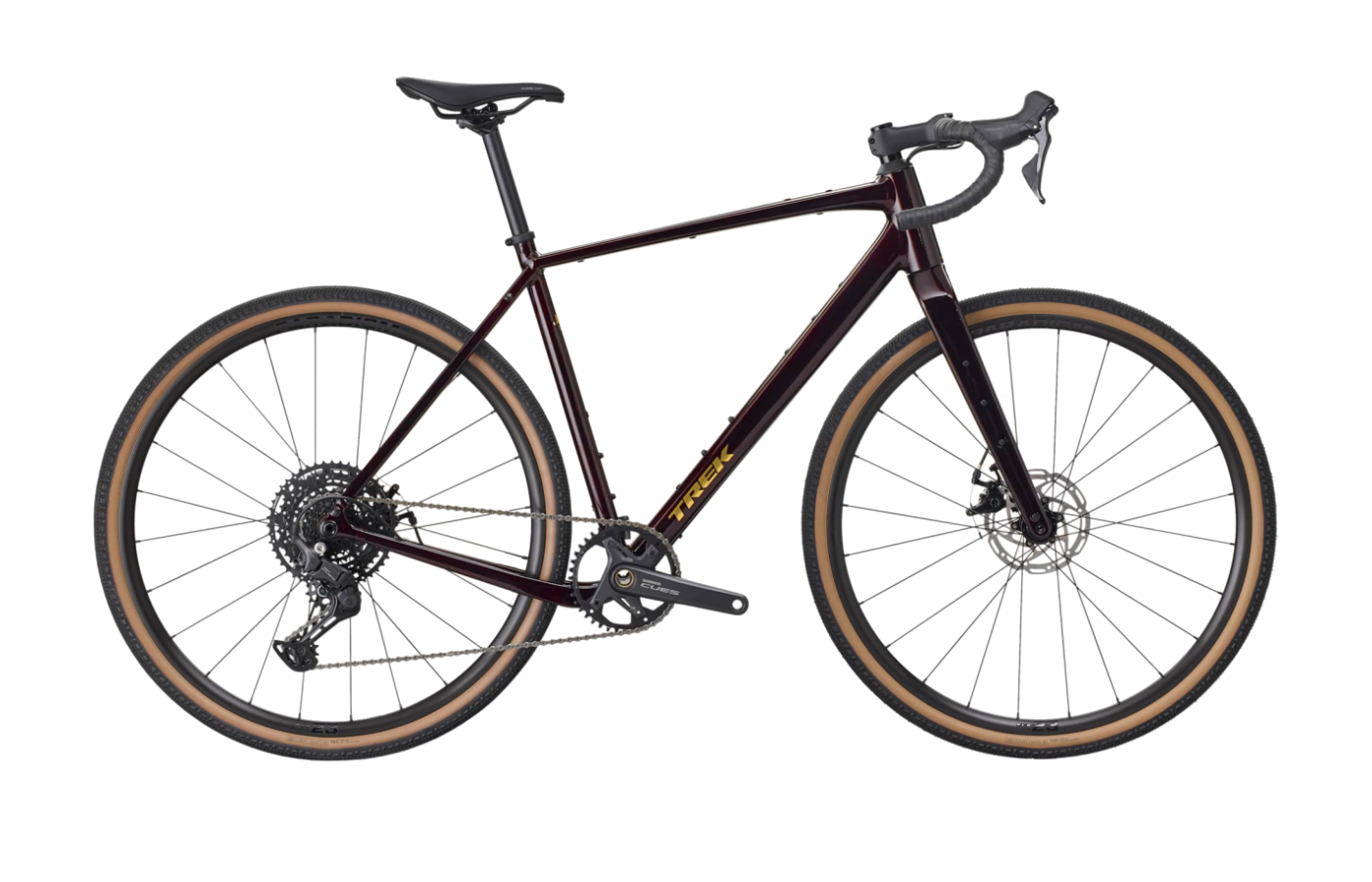
Trek's direct Diverge counter — IsoSpeed decoupler at the seat cluster instead of Future Shock, big internal storage, and a similar mount-heavy adventure frame. Different flavor of compliance, same all-day brief.
Compare →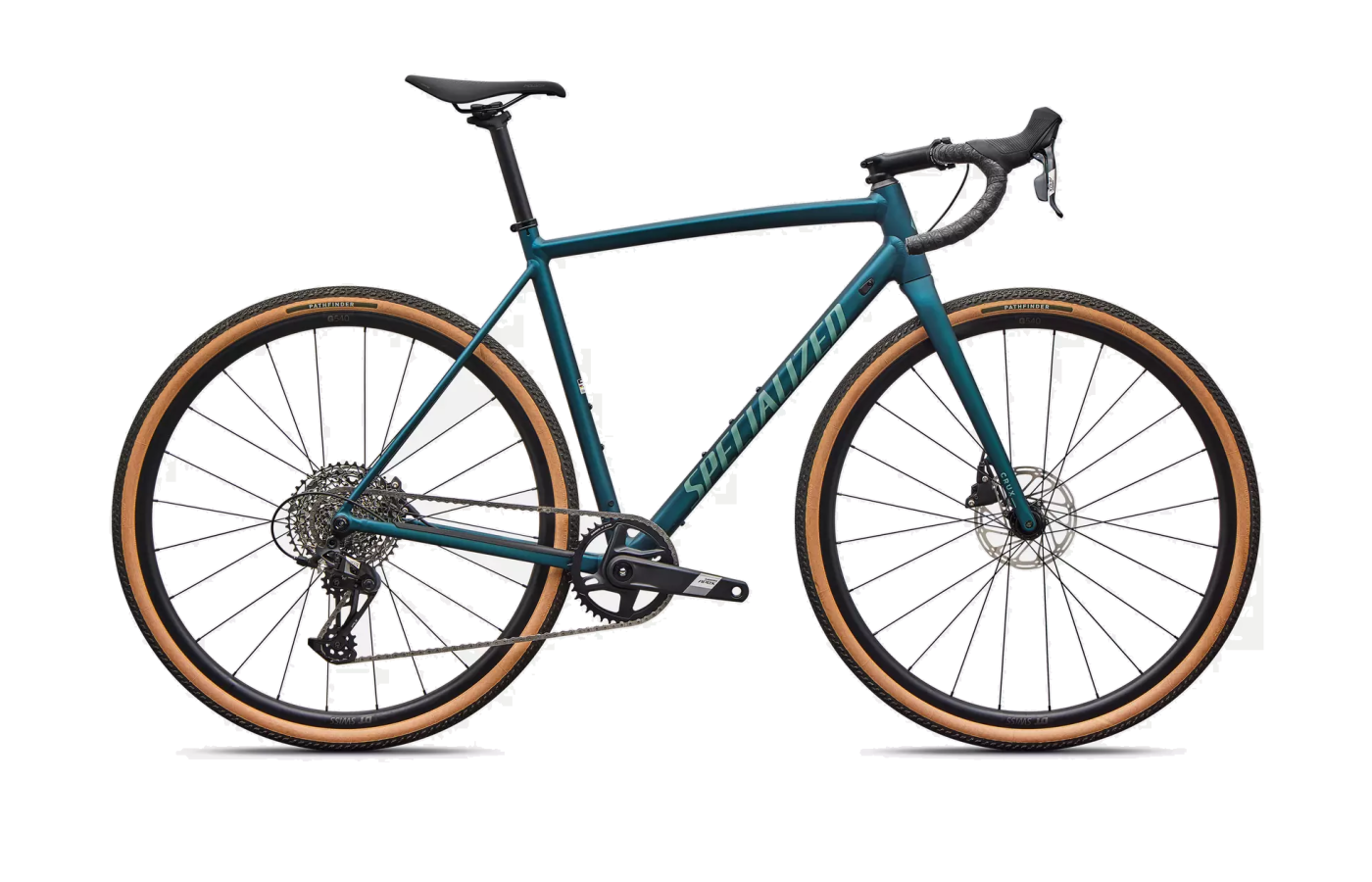
Crux
If you like the Specialized feel but the Diverge's freight-train geometry feels overbuilt, the Crux is the lighter, racier sibling — no Future Shock, no SWAT, much sharper handling for unloaded gravel.
Compare →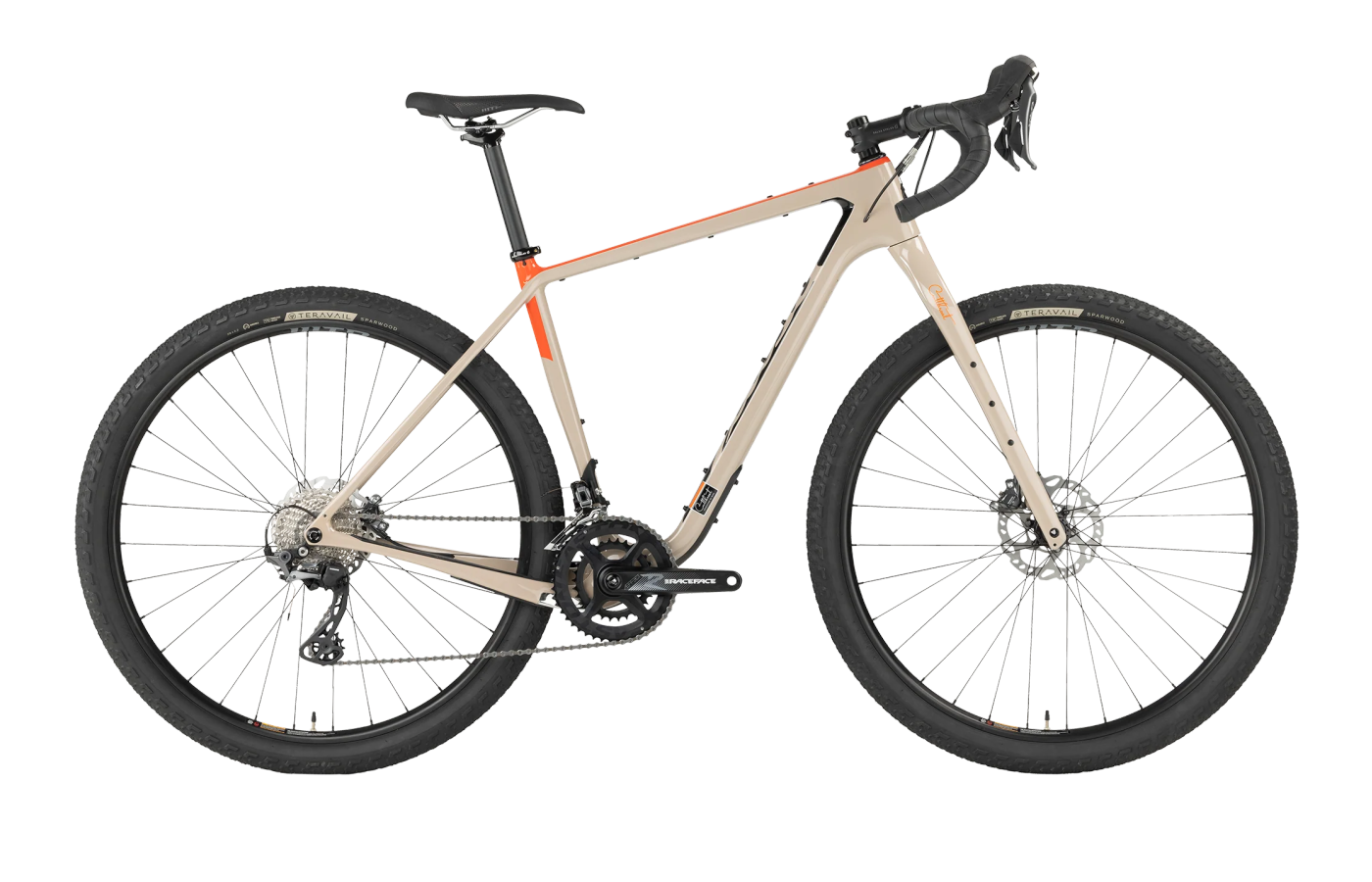
Cutthroat
Drop-bar mountain bike territory. If even the Grizl's 54 mm clearance feels limiting and your rides cross genuine singletrack, the Cutthroat is the benchmark — built around 29 x 2.4" tires and Tour Divide-grade backcountry use.
Compare →