Fargo
vsJourneyer
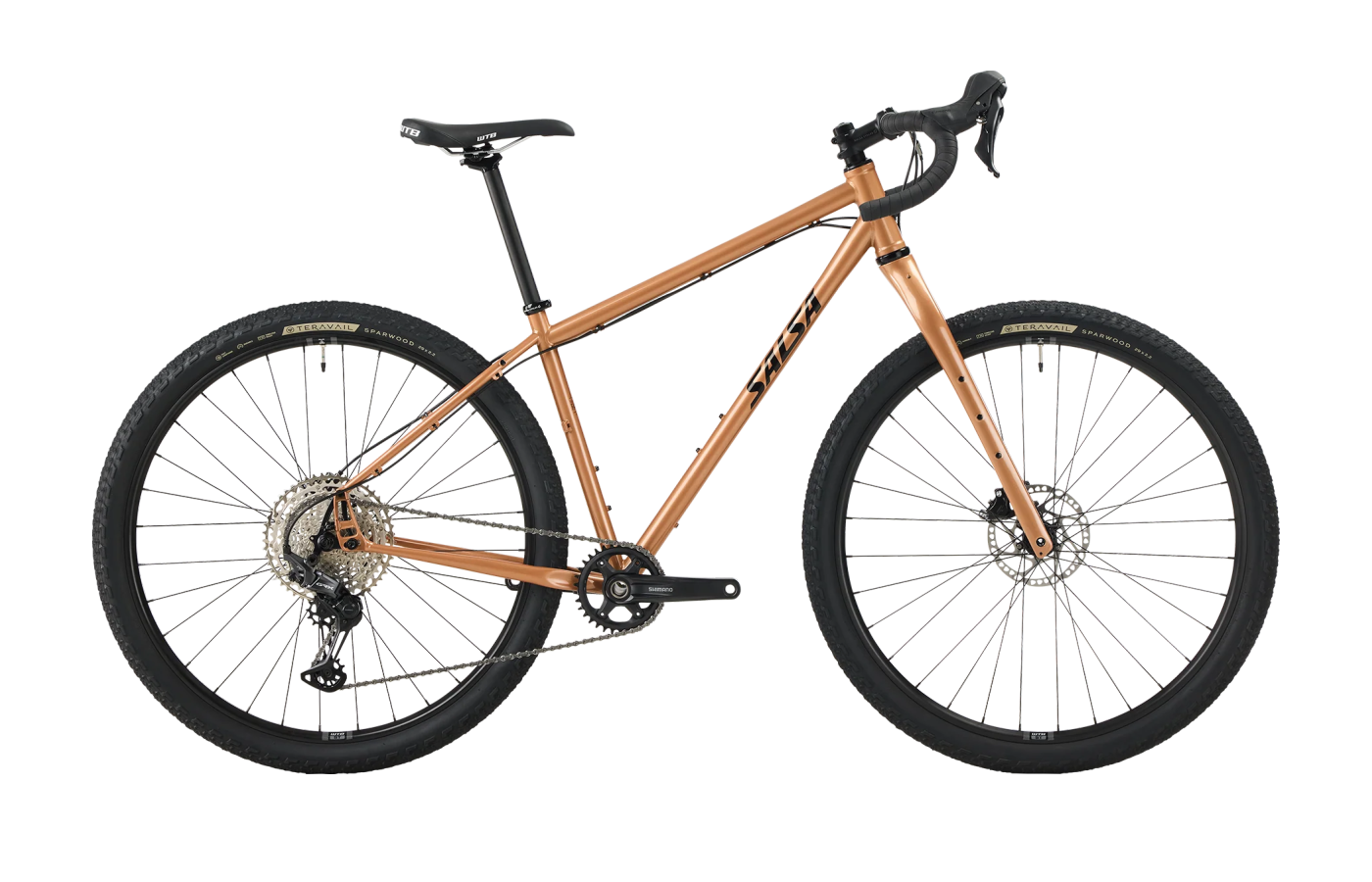
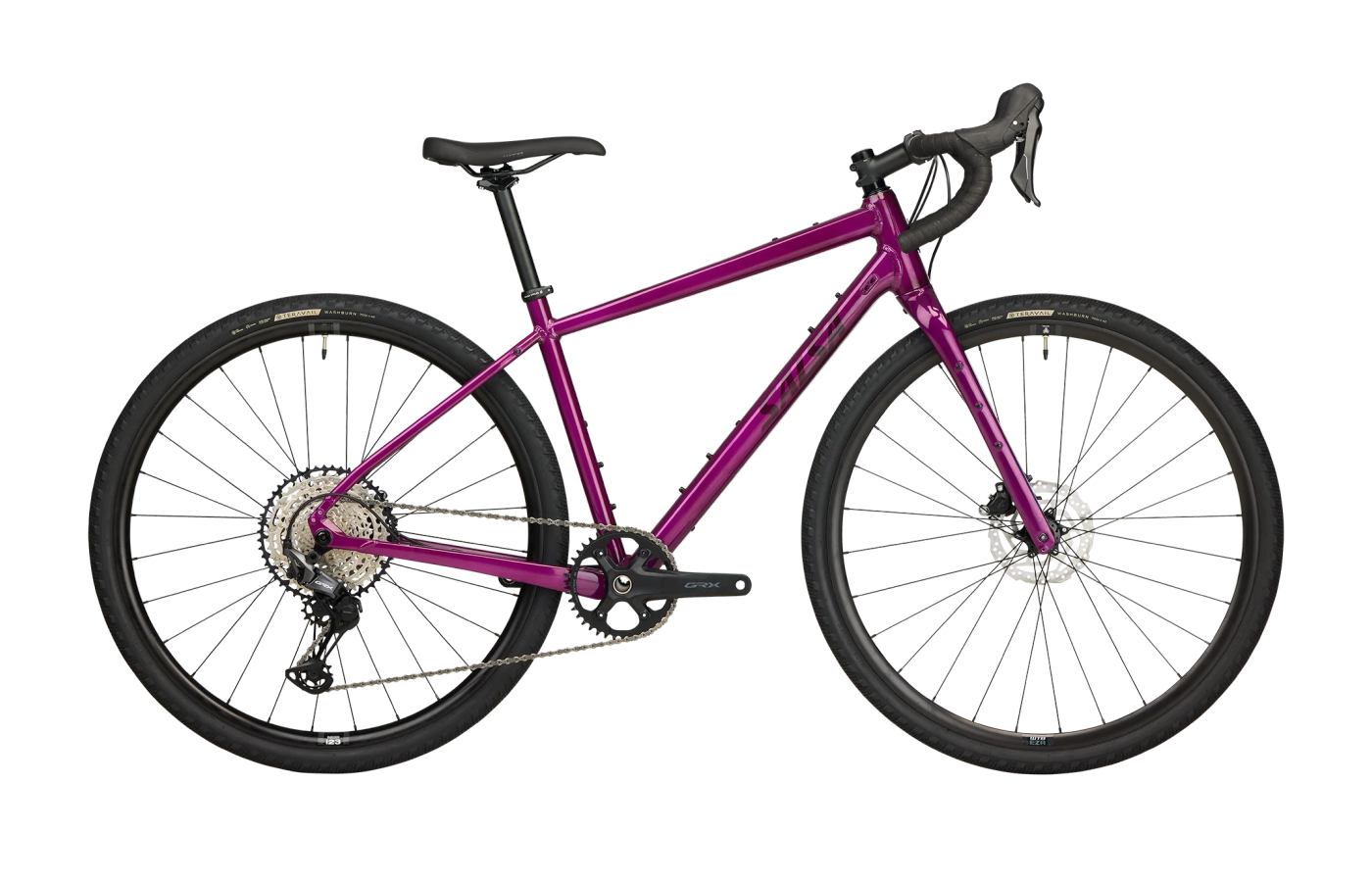
Two Salsa adventure bikes — one for the expedition, one for everything else.
The Fargo is a steel drop-bar 29er built for loaded multi-day routes. The Journeyer is the affordable aluminum all-rounder for everything short of that.
Fargo
- Massive 76 mm tire clearance — ships on 29 x 2.2" mountain-bike tires; goes much wider if you want.
- Steel frame compliance for thousand-mile loaded days where aluminum would beat you up.
- Bikepacking-first hardware — Cutthroat Deluxe carbon fork with abrasion plates, suspension-corrected geometry, mounts everywhere.
- Only two builds, both above $2,500 — no budget entry point.
- GRX 610 build's 27.75 lb claimed weight is heavy by drop-bar gravel standards.
Journeyer
- Fifteen builds across $629–$2,499 — flat or drop bar, 650b or 700c, Claris up to GRX 610.
- "The Happy Bike" — reviewers consistently call out a stable, surprisingly compliant aluminum ride for the money.
- Workhorse mount package — triple bottle bosses, fender and rack mounts, internal dropper routing.
- 50 mm tire clearance is generous for a gravel bike but well short of the Fargo's MTB-grade 76 mm.
- Aluminum frame with stock 2 kg-ish wheels feels its weight on punchy climbs.
Editor’s analysis
Same brand, same gravel-adventure DNA — but the Fargo is a purpose-built bikepacking rig, and the Journeyer is the bike for everyone who doesn't actually need one.
On the surface, both are Salsa adventure bikes with drop bars, GRX 610 hydraulic builds at the top of the range, and a long list of cargo mounts. Look one click deeper and they barely belong in the same conversation. The Salsa Fargo runs on a steel frame, a 76 mm tire clearance window, and 29 x 2.2" Teravail Sparwood mountain-bike tires from the factory. The Salsa Journeyer is heat-treated 6061 aluminum with 50 mm clearance, shipping on 700 x 42 mm Washburns. One is a rigid 29er with drop bars; the other is an all-road bike that happens to take fat tires.
The geometry tells the same story. At our compared sizes, the Salsa Fargo sits 73 mm taller in stack (643 vs 570 mm), 8 mm shorter in reach, and runs a 0.5° slacker head tube angle, longer 445 mm chainstays, and a 32 mm longer wheelbase. That is mountain-bike-with-drops territory — upright cockpit, planted at speed, designed to track straight under a 20 kg bikepacking load. The Salsa Journeyer's geometry is conventional gravel: a touch more stretched out, a touch quicker to turn, neutral and forgiving rather than expedition-stable.
Then there's price and breadth. The Salsa Fargo comes in two builds: $2,599 mechanical Apex 1 or $3,299 GRX 610 1x12. That's it. The Salsa Journeyer comes in fifteen builds spanning $629 (flat-bar Altus) to $2,499 (GRX 610). Want a 650b wheel size? Flat bars? Sora 2x? A sub-$1k aluminum-fork commuter? The Journeyer covers all of it. The Fargo covers exactly one mission — long, loaded, off the pavement, far from a bike shop.
Put another way: if your honest answer to "how often will I bikepack the GDMBR" is "realistically, never," the Salsa Journeyer is the smarter spend. If the answer is "that's literally why I'm buying this bike," the Salsa Fargo is built for it and the Journeyer isn't.
Where the builds differ.
Comparing our editor's-pick builds side-by-side. Winners highlighted row-by-row — lower price and weight, and the better-spec component, each mark a point.
Build variants & pricing
The Salsa Fargo offers two focused builds at the top of the range. The Salsa Journeyer fans out into fifteen, spanning roughly $1,900 of price.
Prices are current US MSRP. The Apex 1 Fargo at $2,599 keeps mechanical brakes — useful if you're touring abroad where bleeding hydraulics in the field is a problem. On the Journeyer side, hydraulic brakes only show up on the GRX 600/610 builds (~$1,344+); everything cheaper runs Tektro mechanical.
How they fit, how they steer.
At the fit-picked sizes, the Salsa Fargo sits 73 mm taller in stack with 8 mm less reach, a 0.5° slacker head tube, 5 mm longer chainstays, and a 32 mm longer wheelbase — bikepacking stability vs all-road agility.
Which size should I buy?
Pick by stack and reach, not by nominal frame size — the Fargo runs taller and shorter at every size than the Journeyer.
→These are starting points. Flexibility, riding style, and preferred position all shift the answer — if you’re between sizes, a professional fit beats a chart.
What the magazines said.
Published reviews from trusted cycling outlets. Click through for the full write-up.
Which one should you buy?
If you're actually going bikepacking on rough terrain, get the Fargo. For everything else — commuting, mixed-surface day rides, light credit-card touring — get the Journeyer.
Fargo
If you're planning multi-day off-pavement routes, want 29 x 2.2" tire room, and need a steel platform that rides comfortably for thousands of loaded miles, this is the bike. The 2025 GRX 610 build adds modern hydraulic stopping and a 10–51T range that finally matches what bikepackers actually want.
Journeyer
If you want one stable, comfortable bike for commutes, mixed-surface weekend rides, and the occasional credit-card tour — and you'd rather not spend $3,000 to do it — the Journeyer is the obvious pick. The build matrix is wide enough that there's a sensible spec at almost any budget.
Questions buyers actually ask.
Short answers to the things we get emailed about most often.
01What's the actual difference between these two?
Frame material, geometry, and intent. The Fargo is steel, with mountain-bike-style tire clearance (76 mm), a slacker head tube, longer chainstays, and a much taller stack — designed as a rigid 29er with drop bars for loaded bikepacking on rough terrain.
The Journeyer is heat-treated aluminum with 50 mm clearance, conventional gravel geometry, and fifteen build options. It's a much more affordable, more versatile all-road bike — but it isn't built for the same expedition use case.
02Which one is faster?
Neither is fast, by gravel-race standards — but the Journeyer is the quicker bike on most surfaces. It rolls on 700 x 42 mm semi-slick Washburns vs. the Fargo's 29 x 2.2" Sparwood mountain tires, has a slightly more stretched riding position, and weighs less per build dollar.
The Fargo gives back outright speed for off-road capability and load-carrying composure. If your priority is covering ground efficiently on pavement and mild gravel, the Journeyer wins.
03Can the Journeyer actually do bikepacking?
Yes — within limits. The Journeyer has the mount package (triple bottle bosses, fork mounts, rack and fender mounts), tubeless-ready wheels, and stable geometry that hold up well under a load. Reviewers explicitly praised it for credit-card and lightweight bikepacking trips.
What it doesn't have is the Fargo's tire clearance for true 29 x 2.2"+ rubber, the steel frame compliance over thousands of loaded miles, or the suspension-corrected geometry. For weekend or week-long routes on dirt roads, the Journeyer is fine. For the GDMBR or Tour Divide, get the Fargo.
04How much tire can each take?
The Fargo clears up to 29 x 3.0" (76 mm) — full mountain-bike territory. It ships on Teravail Sparwood 29 x 2.2" tires.
The Journeyer clears 700c x 50 mm or 650b x 55 mm. Stock tires are Teravail Washburn 700 x 42 mm on the GRX 610 build, with 650b builds shipping 47 mm Washburns. Both are tubeless-ready.
05Why is there only one or two Fargo builds, but fifteen Journeyer builds?
The Fargo is a focused bikepacking platform — Salsa offers the GRX 610 1x12 at $3,299 and the Apex 1 mechanical build at $2,599, plus a $1,199 frameset for custom builds. That's it. Updates are rare; the last frame revision before 2025 was 2017.
The Journeyer is Salsa's broad-appeal gravel/all-road bike, so the lineup spans $629 flat-bar Altus through $2,499 GRX 610 700c, including drop and flat bar, 650b and 700c, mechanical and hydraulic, quick-release and thru-axle. There's a build for almost any budget and use case.
06Mechanical or hydraulic brakes?
Both bikes are available in both. The Fargo Apex 1 ($2,599) is mechanical; the GRX 610 1x12 ($3,299) is hydraulic. On the Journeyer, hydraulics start with the GRX 600 builds around $1,344 — anything cheaper (Sora, CUES on lower trims, Claris, Altus) runs Tektro mechanical.
Hydraulics are more powerful and easier on your hands over long days. Mechanicals are easier to fix in the field with a spare cable, which still matters if you're touring far from a bike shop.
07Is the Fargo's weight increase for 2025 a problem?
Probably not for its intended use. The 2025 GRX 610 1x build is listed at 27.75 lb (Medium), up from the previous Apex 1's 24 lb 8 oz (Large). The reviewer attributes the difference to the heavier Cutthroat Deluxe fork (alloy steerer vs. the prior Firestarter's full carbon) and the hydraulic brake hardware.
For a loaded bikepacking rig where you're carrying 10–20 kg of gear anyway, 1.5 kg of frameset weight is in the noise. For unloaded fast riding, it'd matter — but if that's your priority, you're shopping the wrong bike.
08Which one fits a wider range of riders?
The Journeyer does. It's offered in six sizes (49–60 cm) with very short seat tubes that allow generous standover, plus a flat-bar variant that gives a different reach profile. Reviewers note the unusually short seat tubes mean you may run a lot of exposed seatpost — fit by stack and reach, not nominal size.
The Fargo is offered in five sizes (X-Small through X-Large), with a much taller stack at every size. If you've struggled with cockpit drop on aggressive gravel bikes, the Fargo's upright geometry will feel immediately better.
Similar bikes
If your priorities don’t map cleanly onto either of these, one of these adjacent bikes probably fits better.
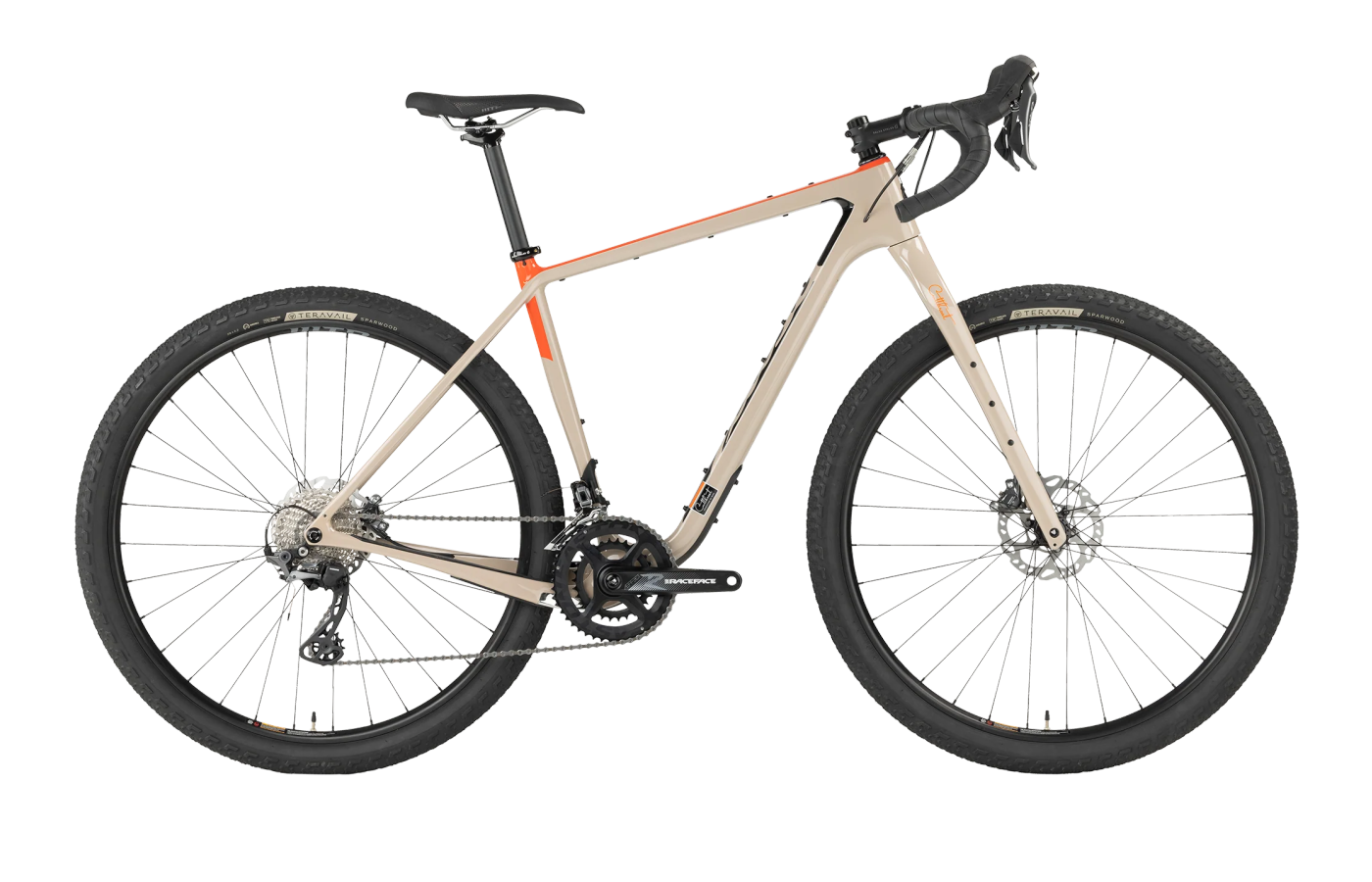
Cutthroat
The carbon Fargo, more or less. If the Salsa Fargo's bikepacking mission appeals but you'd rather have a lighter, racier carbon frame for ultra-distance events like the Tour Divide, the Cutthroat is the obvious step up.
Compare →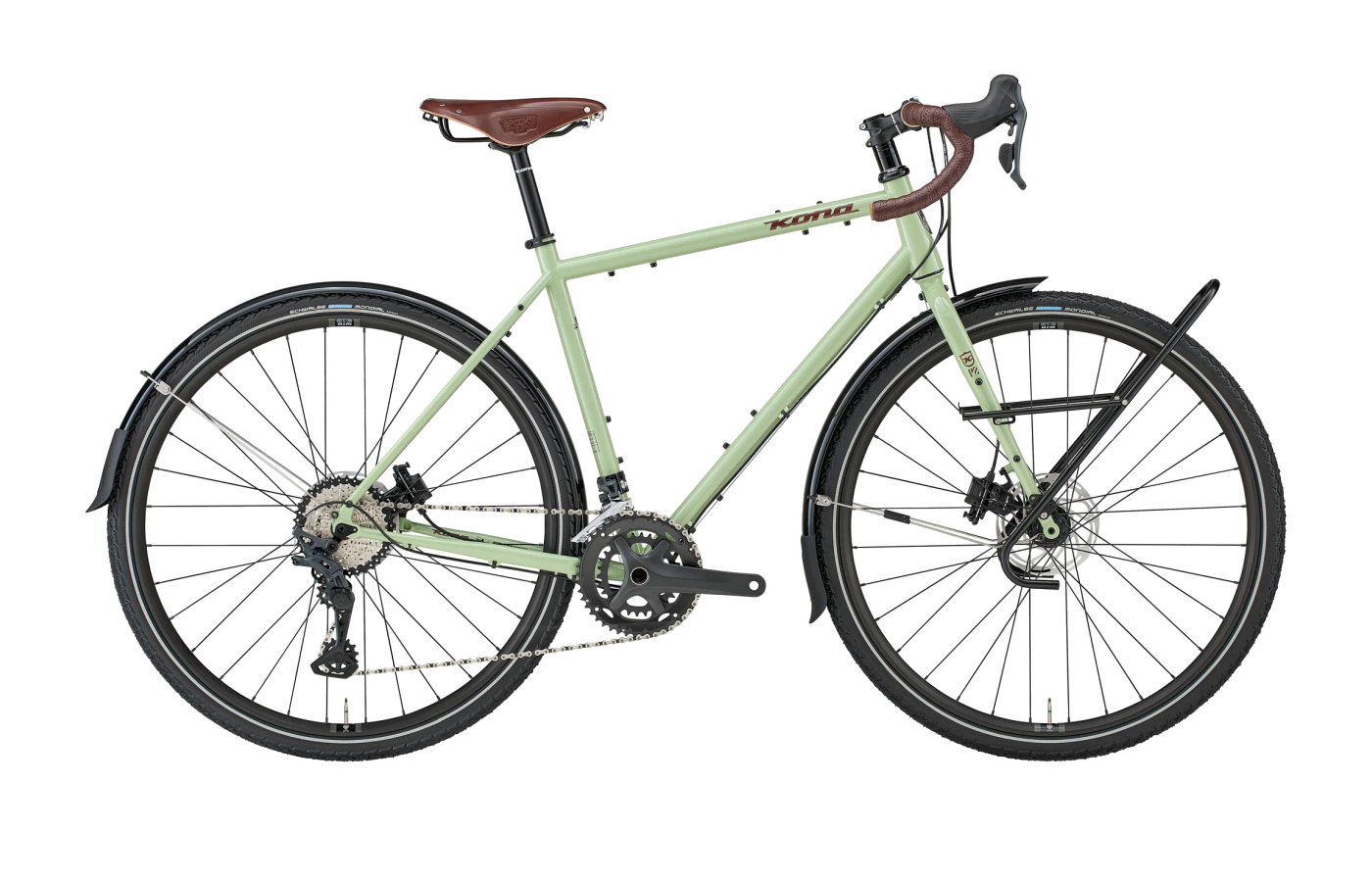
Sutra
Old-school loaded touring done right — steel frame, racks and fenders included, drop bars and a wide-range drivetrain. Less off-road-aggressive than the Salsa Fargo, more set-up-and-go than building a Journeyer for the same job.
Compare →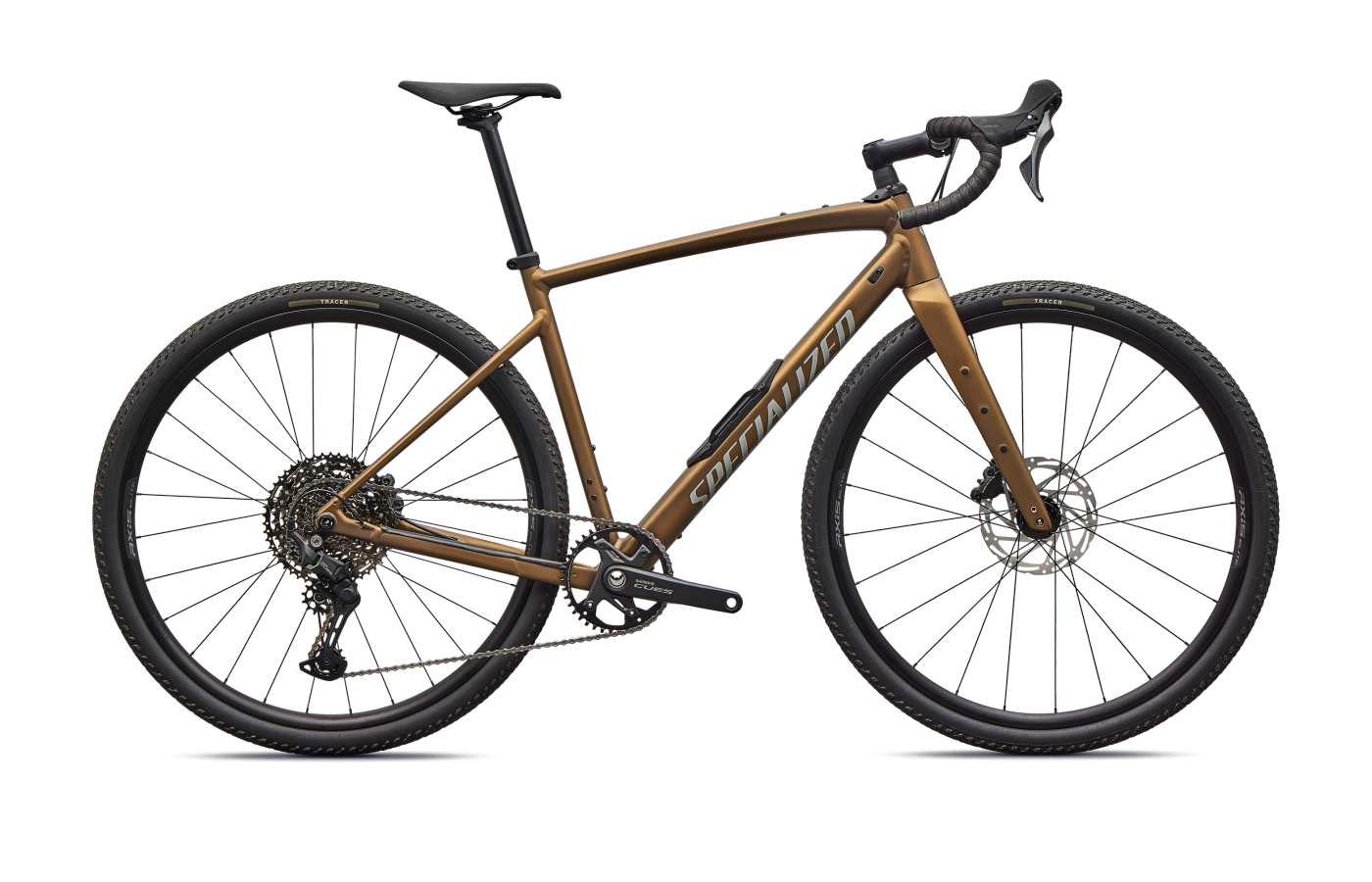
Diverge
Specialized's broad gravel platform with a deeper performance ceiling than the Salsa Journeyer — carbon options, more aggressive geometry on the higher trims, and a wider build matrix that scales from beginner to race-day.
Compare →