Journeyer
vsDiverge
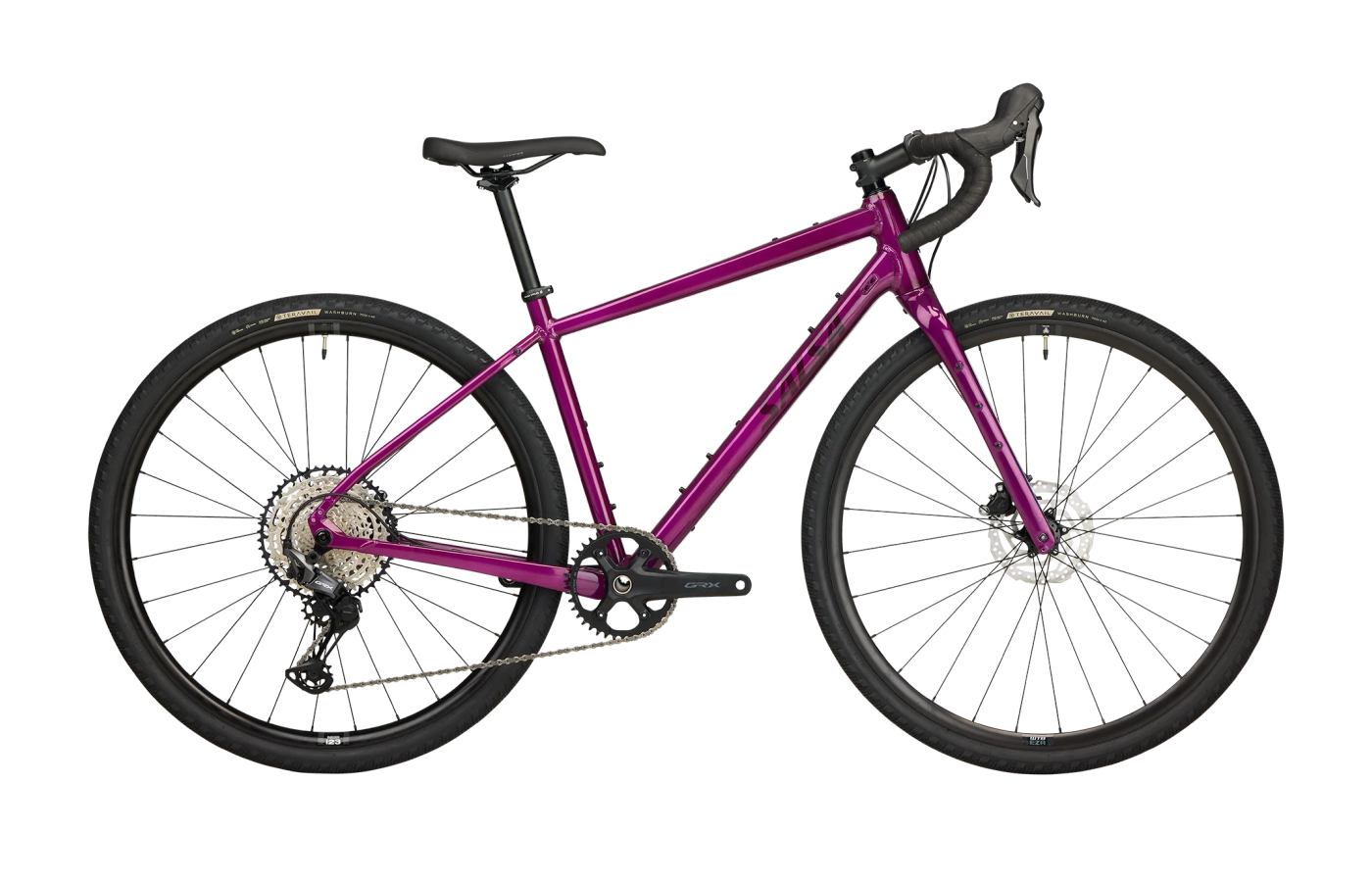
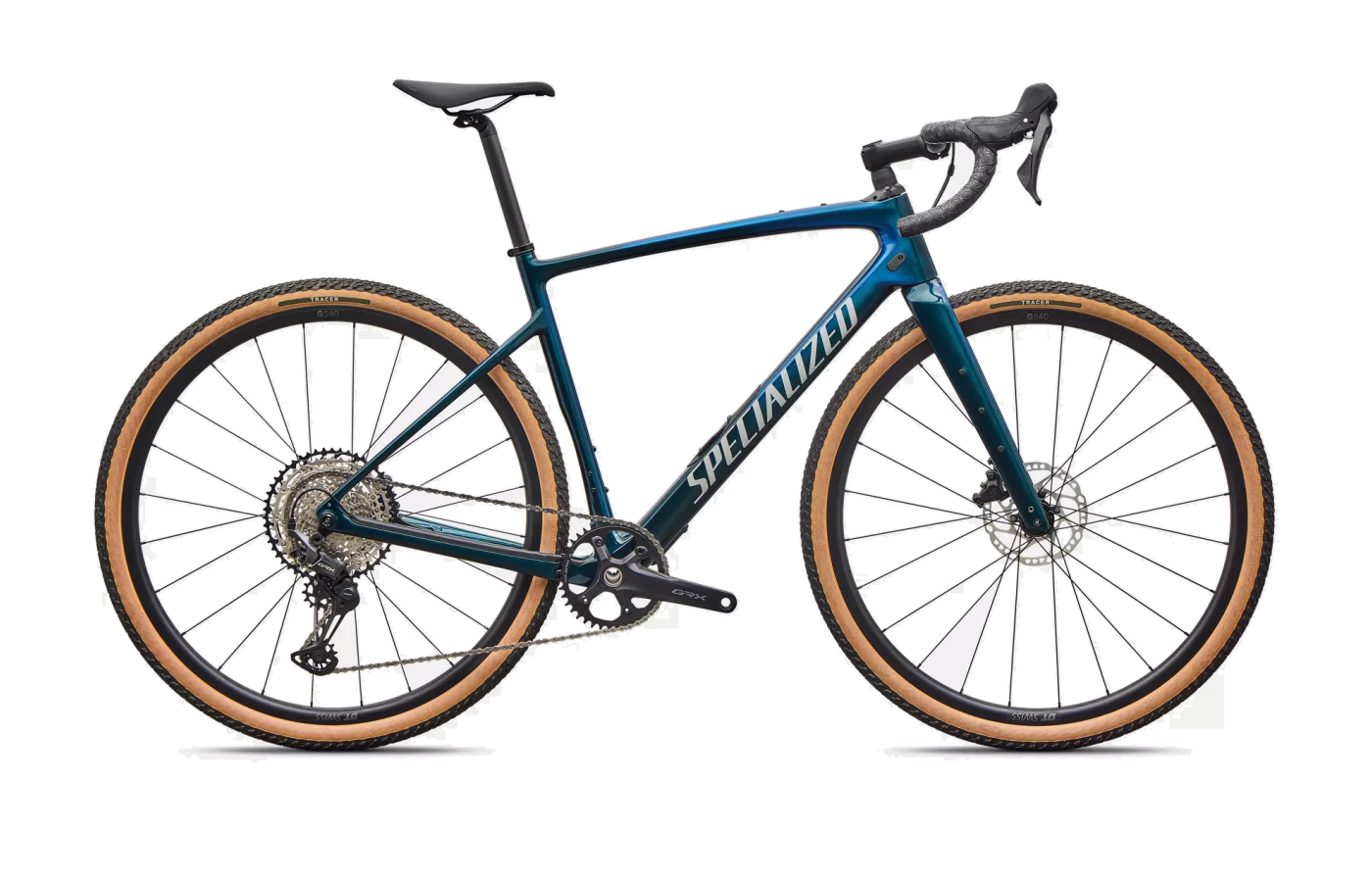
Two gravel bikes, two budgets — and two answers to compliance.
The Salsa Journeyer is the affordable, do-everything aluminum workhorse. The Specialized Diverge is a carbon platform built around an active suspension stem.
Journeyer
- Accessible price floor — builds start at $629 and a hydraulic GRX 610 build tops the lineup at $2,499.
- Fifteen builds across drop bar, flat bar, 700c and 650b — almost certainly a configuration that fits your terrain.
- Stable, planted ride loaded or empty — 1051 mm wheelbase and 440 mm chainstays handle bikepacking weight without complaint.
- Aluminum frame and entry components add weight — Apex 1 build hits 22 lb (10.0 kg) with pedals.
- No active compliance — comfort comes from geometry and tire volume, not damping.
Diverge
- Future Shock 3.0 front end delivers 20 mm of damped vertical travel — measurably reduces hand and shoulder fatigue on chunky terrain.
- Modern, off-road-biased geometry — 71-degree HTA, 85 mm BB drop, 430 mm chainstays push it toward MTB-style stability at speed.
- SWAT 4.0 internal downtube storage on every build — alloy included — for tube, tools, and snacks without strapping bags on.
- Stock 45 mm tires plus the low BB cause frequent pedal strikes — wider tires are an effective day-one upgrade.
- Carbon builds start at $3,499 and the headline price reaches $10,499 — comfortably above the Journeyer ceiling.
Editor’s analysis
On gravel, comfort is currency — and these two bikes spend it very differently.
The Salsa Journeyer is a 6061 aluminum platform that tops out at $2,499 with a Shimano GRX 610 hydraulic mechanical drivetrain. The Specialized Diverge starts at $2,099 in alloy and climbs to $10,499 with SRAM RED XPLR. Same category on paper — same 50 mm tire clearance, same drop-bar gravel intent — but the Diverge is a true performance carbon family with eight builds, and the Journeyer is an accessible workhorse with fifteen, mostly under $1,500.
The compliance philosophies diverge entirely. The Journeyer leans on a tall head tube, slack 69.5-degree front end, 1051 mm wheelbase, and a long exposed seatpost — passive comfort, baked into the geometry. The Diverge is more architectural: a Future Shock 3.0 cartridge above the head tube delivers 20 mm of damped vertical travel, and a Roval Terra carbon seatpost adds 18 mm of rear deflection. Reviewers like BikeRumor call the result "nothing short of brilliant" on roots and chunky doubletrack.
Geometry tells the same story. The Diverge has a steeper 71-degree head angle in size 54, a tighter 1041 mm wheelbase, 430 mm chainstays, and a low 85 mm BB drop — modern, mountain-bike-influenced numbers built for speed off-road. The Journeyer's slack front end and 440 mm chainstays produce the planted, predictable ride that earned it the "Happy Bike" nickname from Velo. One bike wants to push the line; the other wants to ride all day without surprising you.
Put another way: the Journeyer is the bike you buy when the goal is to spend more weekends outside, not more dollars. The Diverge is the bike you buy when off-road racing or rough-route adventure is the actual sport, and you're willing to pay carbon prices for active suspension that flagship aluminum bikes can't replicate.
Where the builds differ.
Comparing our editor's-pick builds side-by-side. Winners highlighted row-by-row — lower price and weight, and the better-spec component, each mark a point.
Build variants & pricing
The Journeyer ladder lives mostly under $1,500 and tops at $2,499; the Diverge ladder starts at $2,099 alloy and reaches $10,499.
Editor's picks above are the closest tier-matched comparison: both run Shimano GRX 12-speed mechanical hydraulic. The price gap ($2,499 vs $3,499) is real — it's what the Diverge's FACT 9r carbon frame, Future Shock 3.1 stem, and SWAT downtube storage cost over the Journeyer's 6061 aluminum platform.
How they fit, how they steer.
Journeyer 55 cm vs Diverge size 54 — the fit-picked sizes for a 5'8" rider on each. The Diverge sits 22 mm taller in stack (592 vs 570 mm), 11 mm longer in reach (387 vs 376), and runs a 1.5-degree steeper head angle, 10 mm shorter chainstays, and a 10 mm tighter wheelbase. Same category, different handling intent.
Which size should I buy?
Recommendations are based on stack, reach, and effective top tube. Both ranges overlap in the middle; the Journeyer extends further at the small end (49 cm) and the Diverge extends further at the large end (61).
→These are starting points. Flexibility, riding style, and preferred position all shift the answer — if you’re between sizes, a professional fit beats a chart.
What the magazines said.
Published reviews from trusted cycling outlets. Click through for the full write-up.
Which one should you buy?
If you want versatile, comfortable gravel for long days and bikepacking on a real budget, get the Salsa Journeyer. If you race or ride aggressive technical gravel and want active front-end compliance, get the Specialized Diverge.
Journeyer
If you want one capable bike for bikepacking, mixed-surface commutes, and weekend gravel exploration without spending $4k+, this is the answer. The geometry rewards long days, the build options span every budget under $2,500, and the frame is loaded with rack and bottle mounts.
Diverge
If your gravel is rough, fast, or genuinely technical, the Future Shock and modern geometry will pay for themselves in reduced fatigue and confident descents. Plan to immediately swap the stock 45 mm tires for 50 mm or wider to eliminate pedal strikes — and make sure you actually want carbon performance, because the cheapest carbon Diverge is more than the priciest Journeyer.
Questions buyers actually ask.
Short answers to the things we get emailed about most often.
01Which is more comfortable on rough gravel?
Both are comfortable, but they get there differently. The Specialized Diverge uses an active Future Shock 3.0 stem (20 mm of damped travel) plus a Roval Terra carbon seatpost (18 mm of rear deflection) — reviewers at BikeRumor describe it as smoothing high-frequency vibration and "keeping hands and arms fresher on long days."
The Salsa Journeyer has no active suspension. It earns its comfort from a slack 69.5-degree head angle, 1051 mm wheelbase, generous tire clearance up to 50 mm, and a long exposed seatpost that flexes naturally. It's why Velo nicknamed it "The Happy Bike." On smooth-to-moderate gravel the difference is small. On chunky doubletrack and roots, the Diverge is meaningfully smoother.
02What's the maximum tire clearance?
Both frames officially clear 50 mm tires in 700c. The Diverge goes further on paper: Specialized publishes a 2.2-inch (roughly 56 mm) MTB tire clearance with the ISO-standard 4 mm of mud margin.
With stock builds: the Journeyer's top GRX 610 build ships with 42 mm Teravail Washburns; the Diverge's entire lineup ships with 45 mm Specialized Tracers. Multiple Diverge reviewers (BikeRadar, Cycling Weekly) recommend swapping to 50 mm immediately to take advantage of the geometry and reduce pedal strikes.
03How do the price ladders compare?
Salsa Journeyer: $629 (Flat Bar Altus 650b) to $2,499 (GRX 610 700c). Fifteen builds, mostly under $1,500. Hydraulic disc brakes only on the GRX 600 and GRX 610 builds at the top end.
Specialized Diverge 4: $2,099 (4 Sport Alloy CUES) to $10,499 (4 Pro LTD with SRAM RED XPLR). Eight builds. Every carbon model gets hydraulic discs and electronic shifting from $3,499 up. The Diverge's price floor is essentially the Journeyer's price ceiling.
04Is the Diverge's Future Shock worth it?
It depends on your terrain. Reviewers consistently report it makes a real difference on roots, chunky gravel, and washboard descents — Specialized claims up to 11 watts of energy savings from absorbing horizontal forces, and athletes like Peter Sagan have publicly endorsed the latest 3.0 generation.
The tradeoffs: there are three tiers (3.1 spring-only, 3.2 hydraulic non-adjustable, 3.3 on-the-fly adjustable), and the lower tiers can feel slightly bouncy when sprinting out of the saddle on smooth pavement. If most of your riding is hardpack and pavement, you're paying for a feature you won't always use. If most of your riding is rough off-road, it's the Diverge's headline reason to exist.
05Are these bikes good for bikepacking?
Yes, both are well-suited. The Journeyer has triple mounts on the fork legs plus top tube, downtube, and seat tube bosses, and Cycling Weekly specifically called out that it "always felt stable and in control" fully loaded.
The Diverge has comparable mounts plus the SWAT 4.0 internal downtube storage door — useful for a tube and tool kit without external straps. The Journeyer's lower price leaves more budget for bags, racks, and the trip itself; the Diverge gives up less comfort over multi-day rough routes thanks to the Future Shock.
06Why pick the GRX 610 (Salsa) vs the 4 Sport Carbon (Specialized) for comparison?
Because they're the closest drivetrain-tier match between the two lineups: both run Shimano GRX 12-speed mechanical with hydraulic discs. That isolates the platform differences — frame material, geometry, Future Shock, storage — from drivetrain noise.
The price gap ($2,499 vs $3,499) is real and informative: it's what the Diverge's FACT 9r carbon frame, Future Shock 3.1 cartridge, and SWAT door cost over the Journeyer's aluminum frame and rigid carbon Waxwing fork. Both bikes scale up from there — the Diverge to $10,499, the Journeyer effectively stops here.
07Which fits a 5'8" rider better?
Both fit fine, but the recommended sizes differ in label and stack. The fit algorithm picks the Journeyer in 55 cm (570 mm stack, 376 mm reach) and the Diverge in 54 (592 mm stack, 387 mm reach). The Diverge sits 22 mm taller and 11 mm longer at the same nominal rider height — partly because the Future Shock adds stack above the head tube, partly because the platform is geometrically more progressive.
If you prefer an upright, neutral cockpit, the Journeyer feels more conservative. If you like a slightly stretched-out, head-down position, the Diverge fits more naturally. Test ride if you can — the difference is more noticeable than the numbers suggest.
08Do I need a power meter?
Not to ride either bike — but if you race, the Diverge makes it easier. The two top Diverge builds (4 Pro at $7,999, 4 Pro LTD at $10,499) ship with a Quarq power meter integrated into the SRAM crank.
No Journeyer build comes with a power meter, and most use mechanical Shimano cranks where pedal-based meters (Favero Assioma, Garmin Rally) are the easiest aftermarket route. Both bikes use standard interfaces, so any aftermarket option will work fine.
Similar bikes
If your priorities don’t map cleanly onto either of these, one of these adjacent bikes probably fits better.
Checkpoint
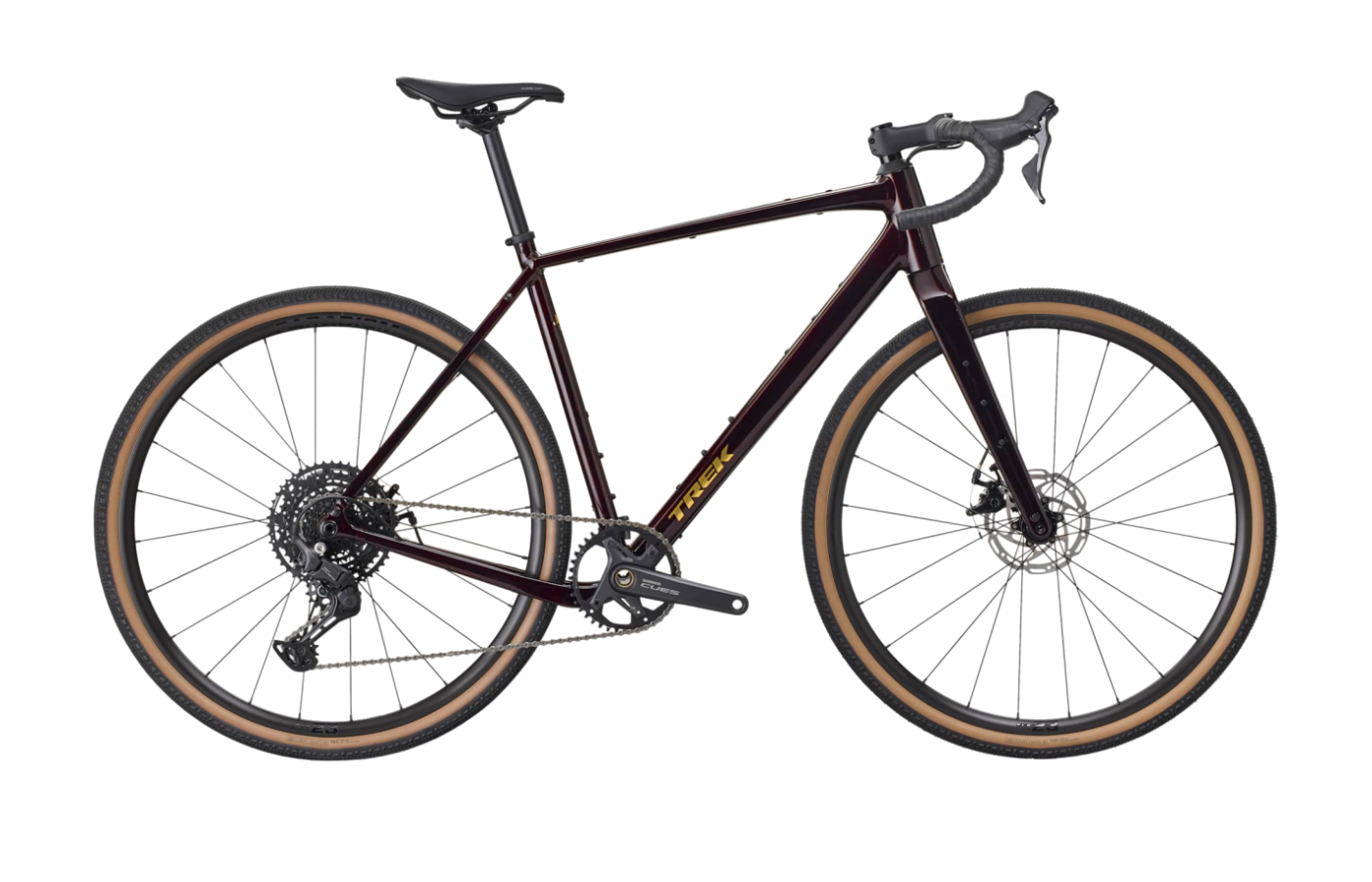
Trek Checkpoint — the direct Diverge competitor without the Future Shock complexity. IsoSpeed decoupler at the seat tube and integrated downtube storage make it the closest analog if you want carbon performance with passive compliance instead of an active stem.
Compare →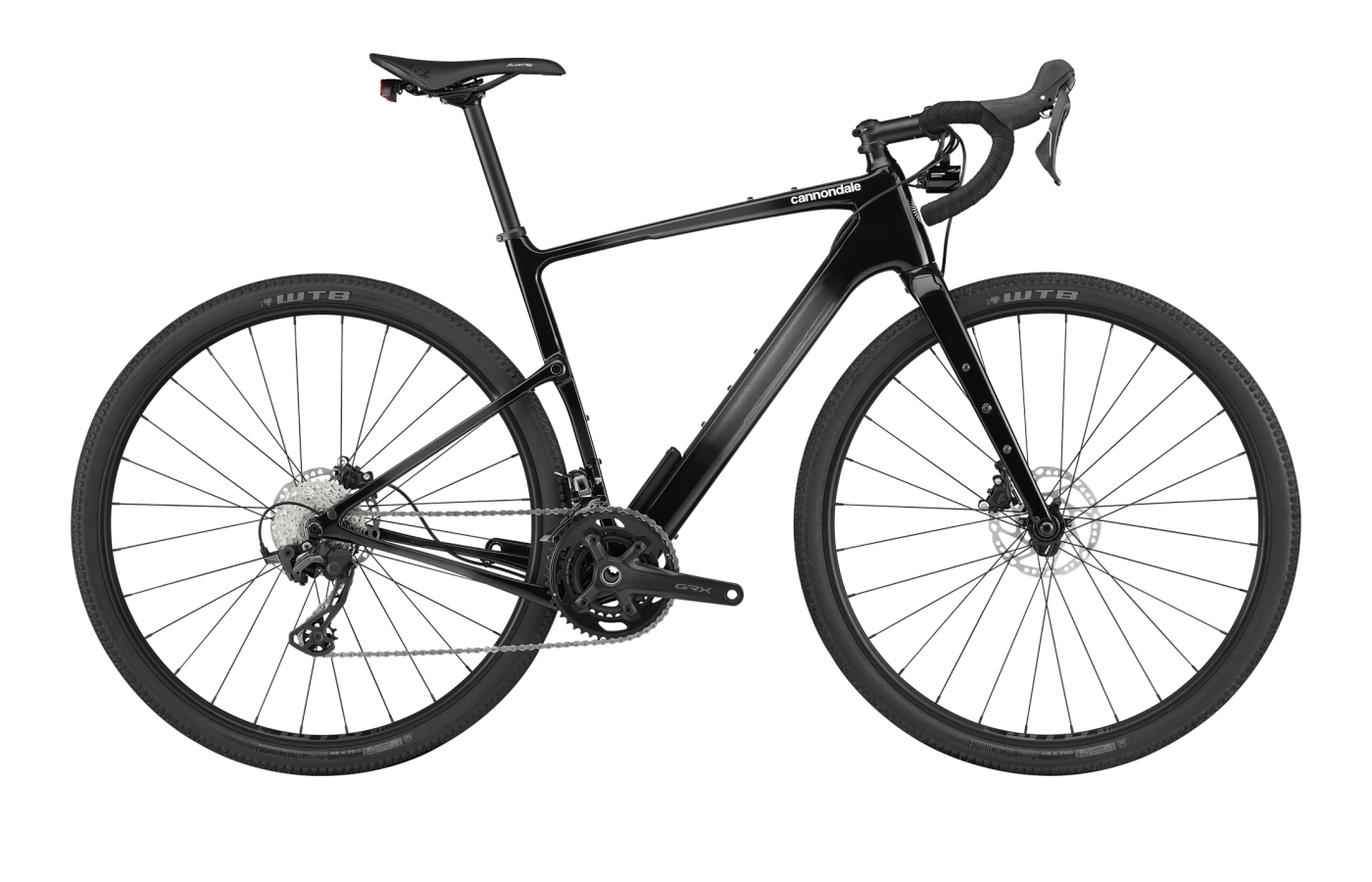
Topstone Carbon
Cannondale Topstone Carbon — its Kingpin pivot at the seatstays delivers up to 30 mm of rear travel, a different answer to the same compliance question. If the Diverge's front-end suspension intrigues you but you want the squish at the back end instead, this is the alternative architecture.
Compare →Grizl
Canyon Grizl — a value-packed, adventure-focused gravel bike that competes directly with the Journeyer's mounting points and bikepacking ethos. Direct-to-consumer pricing means more component for the dollar, with the usual catch: no dealer network for fit help.
Compare →